正確なFTIR分析のためのKBrペレットの調製方法
2026年6月15日
KBrペレットの調製は、以下において最も広く用いられている試料調製法の一つである。 フーリエ変換赤外分光法(FTIR) 固体試料を分析する際。高品質なKBrペレットは、透明で均一であり、汚染や水分による干渉がないものでなければなりません。ペレットに水分、閉じ込められた空気、大きすぎる粒子、あるいは試料の配合比の不均一が含まれている場合、最終的なスペクトルにベースラインのドリフト、散乱、余分な吸収帯、あるいは分解能の低いピークが現れる可能性があります。
このステップバイステップガイドでは、準備方法について解説します FTIR分析用KBrペレット これにより、よりクリーンなスペクトル、より高い再現性、そしてより信頼性の高い分析結果が得られます。
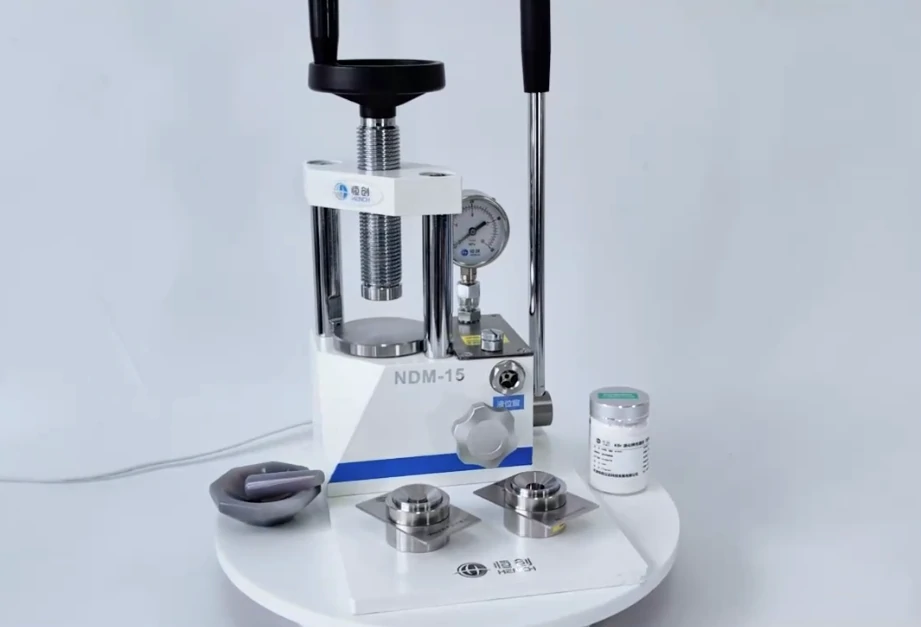
FTIRにおいて、KBrペレットの適切な調製がなぜ重要なのか
FTIR分析において、KBrペレット法は、少量の固体試料を乾燥した臭化カリウム粉末に分散させ、その混合物を薄く透明な円盤状に圧縮することで行われます。なぜなら、 KBrは赤外線透過性がある, これは、赤外光を透過させる理想的なマトリックスとして機能すると同時に、試料の吸収帯を正確に測定することを可能にする。
しかし、ペレットの品質はスペクトルの品質に直接影響します。調製が不十分だと、次のような問題が生じる可能性があります:
- 湿度は約 3400 cm⁻¹ そして 1640 cm⁻¹
- 大きな粒子による光散乱
- 曇りやひび割れのあるペレット
- ベースラインの不安定性
- 信号強度が弱い、またはピークが重なっている
こうした問題を回避するためには、プロセス全体において以下の4つの基本事項に重点を置く必要があります: 乾燥原料、微細な粒子径、均一な混合、および安定した加圧.
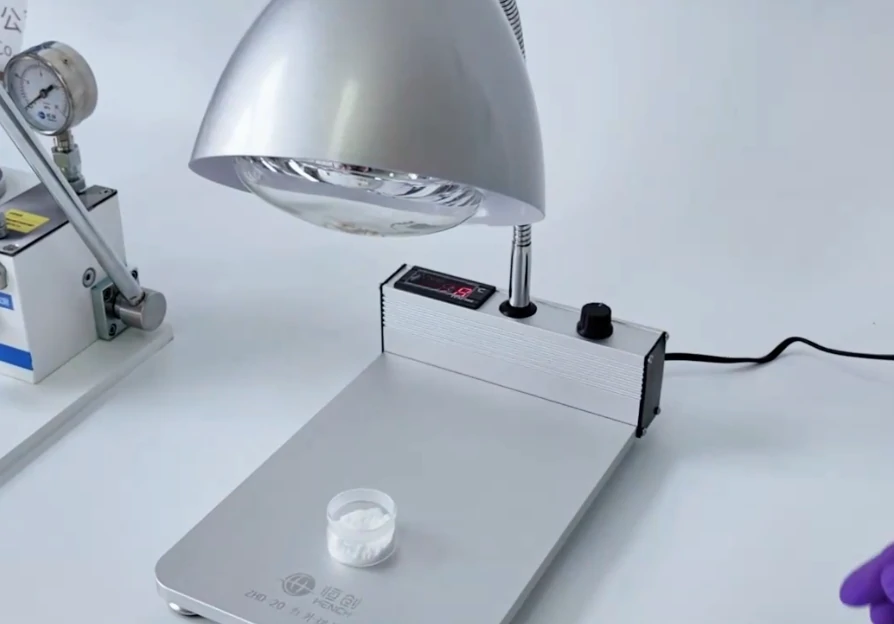
手順 1:ペレット調製前に KBr と試料を乾燥させる
水分は、において最も一般的な干渉源の一つです。 KBrペレットのFTIR分析. 臭化カリウムは吸湿性が非常に高いため、空気中の水分を容易に吸収します。ごくわずかな水分でも、試料のスペクトルに干渉する強い吸収帯が生じることがあります。
ペレットを準備する前に:
- ドライ 分光用グレードのKBr粉末 オーブンで 120°Cで少なくとも1時間
- KBrを デシケーター そして、密閉された乾燥した容器に入れて保管してください
- 固体試料に残留水分や揮発性成分が含まれている場合は、定重量になるまで乾燥させる
- 計量および混合中は、湿った空気への接触を最小限に抑えてください
より高いスペクトル純度が求められる用途では、使用前にKBrを精製または再結晶させることも可能です。
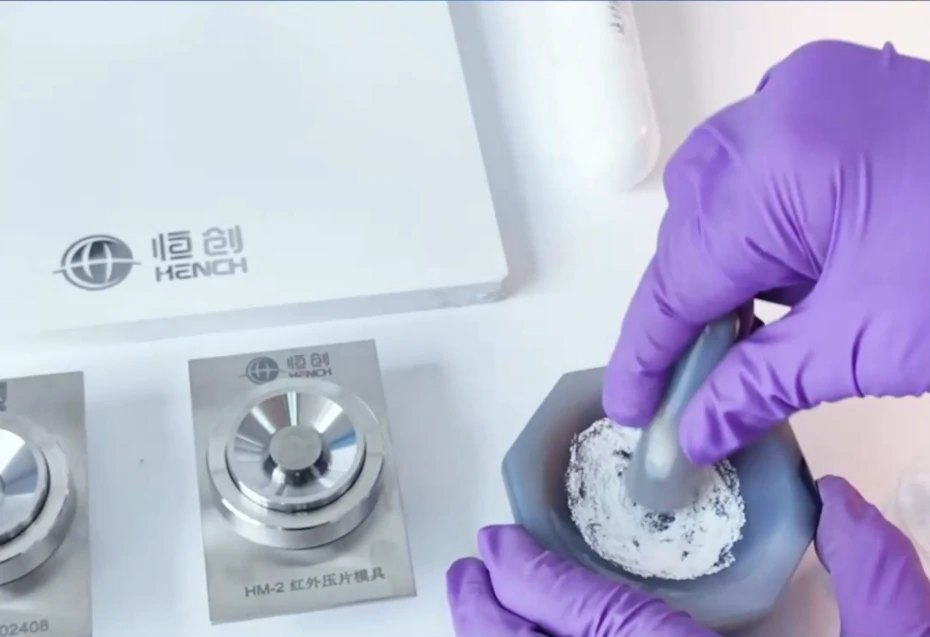
手順 2:KBrを用いて試料を正確に計量し、粉砕する
ペレットの透明度とスペクトルの鮮明さを確保するには、適切な試料対KBr比が不可欠です。ほとんどの場合、 1:100の比率 固体FTIR試料には適しています。
一般的な調製範囲は以下の通りです:
- 1~2 mgの乾燥試料
- 200~250 mgの乾燥KBr粉末
まず、サンプルを清潔な容器に入れ、 瑪瑙モルタル そして、それを十分に粉砕する。次に、乾燥したKBr粉末を加え、混合物がきめ細かくなり、均一になるまで粉砕を続ける。
目標は、散乱を最小限に抑えられるほど微細な粒子を製造することです。理想的には、粉末を 2 μm未満 あるいは、以下を通過できるほど細かい 200~300メッシュ 範囲。完成した混合物は、目に見える粒子や塊、凝集体がなく、均一な状態になっている必要があります。
微粉砕は極めて重要です。なぜなら、粒子の大きさにばらつきがあったり、粒子が大きすぎたりすると、ペレットが濁ったり、FTIRスペクトルのベースラインが不安定になったりすることが多いためです。
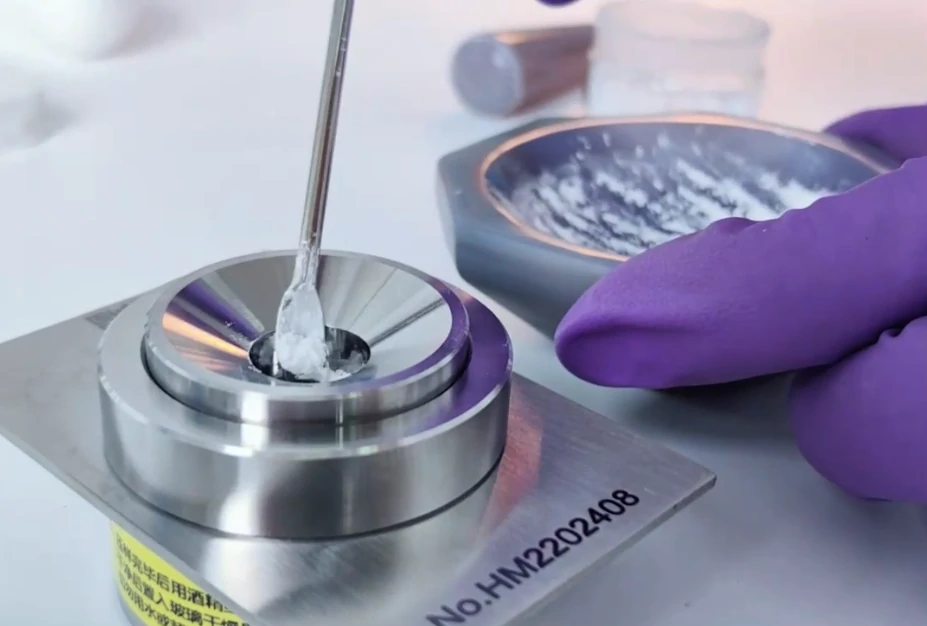
ステップ3:ペレットダイに粉末を均等に充填し、空気を抜く
プレスする前に、 ペレットダイ、上アンビル、下アンビル、および金型スリーブを丁寧に清掃してください。残留する粉末、ほこり、または汚染物質は、ペレットの透明度に影響を与えたり、望ましくないスペクトル上のアーティファクトを引き起こしたりする可能性があります。
混ぜ合わせた粉末を金型の中央に移し、均等に広げます。軽く叩いたり、軽く振ったりすると、粉末が金型の型腔全体に均一に広がり、ペレットの厚みの均一性が向上します。
この段階では、真空脱ガスを強くお勧めします。ダイアセンブリを 真空ポンプ そして、以下の理由により避難する 1~2分 粉末粒子の間に閉じ込められた空気を除去するためです。この工程により、以下のことを防ぐことができます:
- ペレット内部の気泡
- 白い部分や白濁した部分
- 光透過率が低い
- プレス加工後の機械的強度が低い
圧縮前に空気を除去することは、透明で緻密なKBrペレットを製造するための最も効果的な方法の一つです。
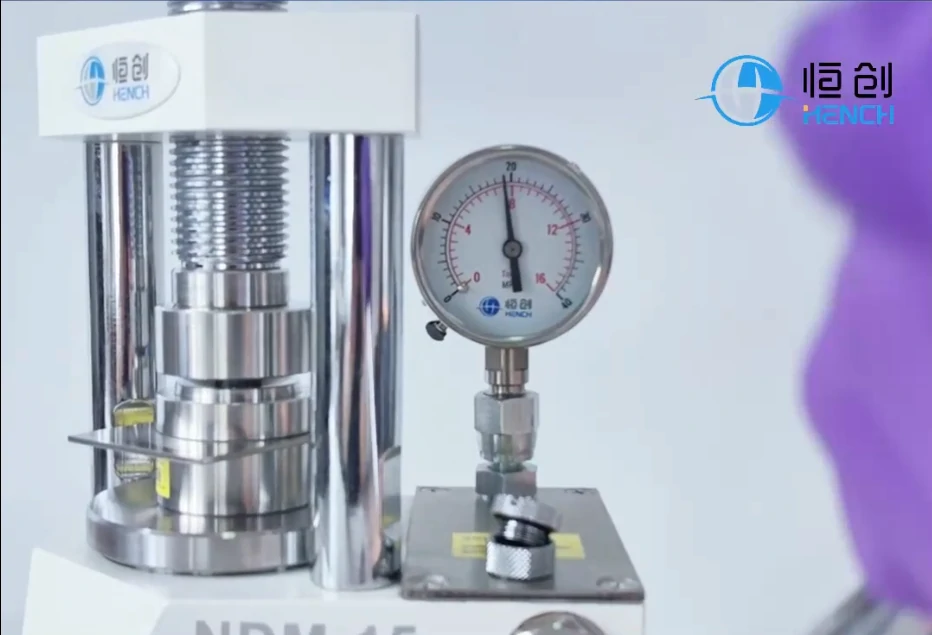
ステップ4:安定した圧力をかけて透明なKBrペレットを成形する
粉末が均一に分散し、脱気が完了したら、真空下でペレットの成形を開始します。力を急激にかけるのではなく、圧力を徐々に上げていきます。
一般的なKBrペレットの用途のほとんどにおいて、圧力は通常、 8~10トン そして、~の間保持され、 1~3分. この段階では、KBr粉末が圧縮され、緻密で透明な円盤状に固まります。
ペレットの破損を防ぐには:
- 圧力をゆっくりと均等に上げていく
- ペレットの密度を高めるために、十分な時間、圧力をかけ続ける
- 押し付けた後は、圧力を徐々に抜いてください
- ペレットにひび割れや裂け目が生じる恐れがあるため、急激な減圧は避けてください
適切にプレスされたペレットは、薄くて滑らかであり、FTIR透過試験を行うのに十分な透明度を備えている必要があります。
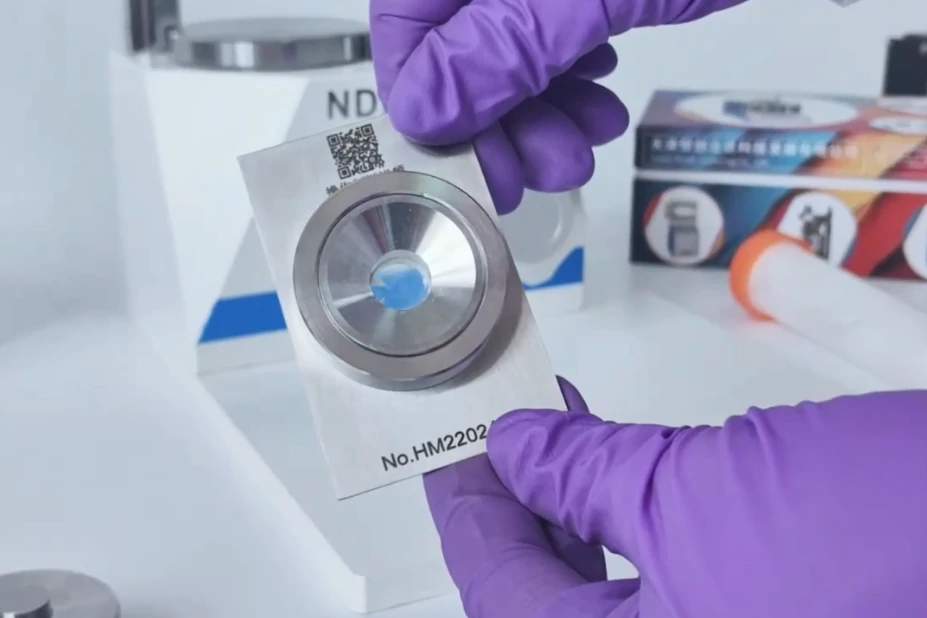
ステップ5:完成したペレットを慎重に取り扱い、直ちにFTIR試験を実施する
圧力を抜いた後、ダイを慎重に取り外し、ペレットを取り出してください。清潔なピンセットを使用し、ペレットの端のみをつまんでください。指紋、湿気、ほこりなどが付着すると、表面がすぐに汚染され、スペクトルの品質が低下する恐れがあります。
透明なペレットをFTIRの試料ホルダーに載せ、できるだけ早く測定を行ってください。KBrは周囲の湿気を吸収しやすいため、測定を遅らせるとスペクトルに影響が出る可能性があります。
テスト終了後:
- ペレットダイは直ちに清掃してください
- 保管前に金型のすべての部品を乾燥させてください
- ダイを腐食、ほこり、および残留試料による汚染から保護してください
また、以下を準備してテストしておくことも良い習慣です。 無処理のKBrペレット これにより、解析の際にマトリックスによるバックグラウンド干渉を差し引いたり、評価したりすることができるようになる。
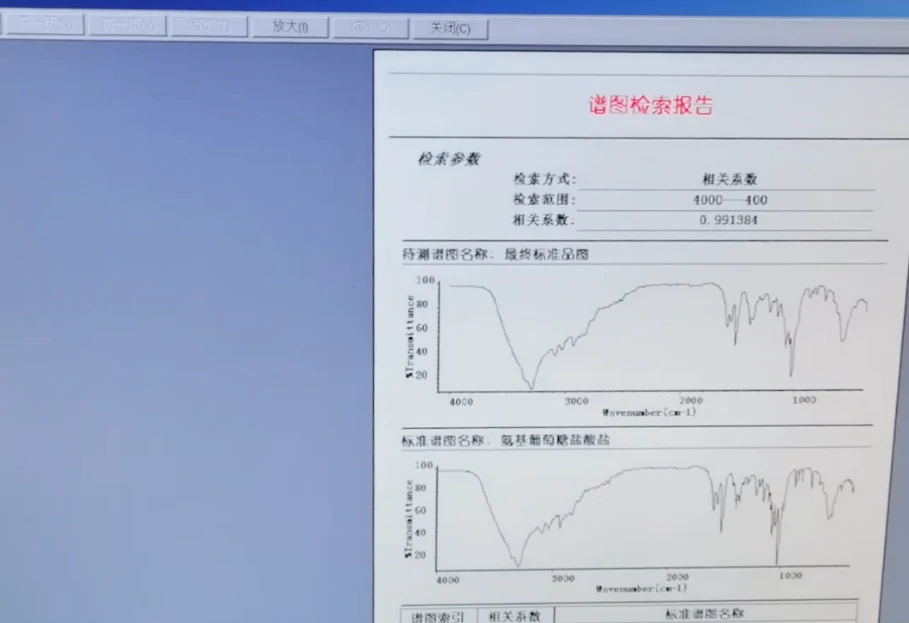
KBrペレット調製におけるよくある問題とその回避方法
手順が単純な場合でも、いくつかのよくある問題によってFTIRデータの品質が低下することがあります。
水分の影響
もし、付近に強い帯が現れた場合 3400 cm⁻¹ そして 1640 cm⁻¹、KBr または試料が十分に乾燥していない可能性があります。常に両方の試料を完全に乾燥させ、KBr はデシケーター内で保管してください。
曇った、または白いペレット
原因は通常、空気の巻き込み、水分、圧力の不均一です。真空脱気とゆっくりした加圧で透明性は大きく改善します。 トラブルシューティング完全ガイド では各原因・診断・対処を順に説明しています。
ベースラインのドリフトと散乱
大きすぎる粒子や粒径が不均一な粒子は、赤外線を散乱させ、ベースラインの不安定さを招きます。多くの場合、より徹底した粉砕と、より良好な粉末の混合が必要となります。
ひび割れや破損したペレット
圧力をかけたり、解放したりする速度が速すぎると、ペレットが破損する可能性があります。ペレットの完全性を保つためには、安定した加圧と緩やかな減圧が不可欠です。
白濁・白色KBrペレット:完全トラブルシューティングガイド
白濁したペレットは赤外光を透過せず散乱します。スペクトルはノイズが増え、弱いバンドが消え、定量分析のベースラインが失われます。原因はほとんどの場合、装置ではなく調製工程にあるため、数ステップで改善できます。
原因1:粉末またはダイの水分
水は赤外域で強く吸収し、KBr粒子の融着も妨げます。開放状態の粉末、洗浄後に乾燥していないダイ、湿度の高い実験室はいずれも、3400 cm⁻¹付近に幅広い水分バンドを持つ乳白色のペレットを生じさせます。粉末を乾燥させ、手順上可能ならダイを加温し、乾燥環境で素早く調製してください。
原因2:空気の巻き込み
粒子間の空気は光を散乱させます。加圧前にダイを1~2分真空引きすると空気を除去でき、白濁対策として最も効果的です。真空が使えない場合は薄く層状に充填し、ゆっくり加圧してください。
原因3:粒子が粗い、または粉砕不足
赤外光の波長より大きい粒子は光を散乱させます。粉末が滑らかに感じられ、ざらつきが見えなくなるまで粉砕します。 瑪瑙モルタル は汚染を避けつつ、硬く清浄な粉砕面を提供します。
原因4:圧力不足または不均一
荷重が小さすぎるとペレットが多孔質になり、大きすぎると割れが生じ、急激な除圧は層状剥離を招きます。標準13 mmダイの公開手順では8~10トンで60~90秒保持し、ゆっくり除圧します。詳しくは 標準作業手順(SOP) をご覧ください。ダイへの充填が均一で、プレスが傾かずに荷重をかけることを確認してください。
原因5:ダイ・乳鉢・粉末の汚染
前回の試料残留物、洗浄溶媒、研磨粉は透明性を下げ、不要なバンドを生じさせます。試料ごとにダイと乳鉢を洗浄・乾燥し、以下を密閉保管します: 分光用高純度粉末 KBr-F or 結晶臭化カリウム KBr-S (未使用時は密閉)
クイック診断表
| 見られる症状 | 最も可能性の高い原因 | 最初に試す対処 |
|---|---|---|
| 全体が乳白色のペレット | Moisture | 粉末とダイを乾燥させ、乾燥剤を確認 |
| 斑点が見える白濁 | 粗い粒子 | より長く均一に粉砕する |
| 中央が不透明で周縁は透明 | 充填の不均一または単動ダイ | 層状に充填し、真空または複動ダイを使用する |
| 白濁しかつ脆い | 圧力不足または急激な除圧 | 荷重を段階的に上げ、ゆっくり除圧する |
| 余分なバンドを伴う白濁 | 汚染 | ダイと乳鉢を清掃し、粉末を交換する |
予防チェックリスト
- 計量前に試料とKBr粉末を乾燥させる。
- 均一で細かい粉末まで粉砕し、十分に混合する。
- ダイが対応していれば真空処理を行う(通常1~2分で十分)。
- 荷重は段階的に加え、規定時間保持する。
- 圧力はゆっくり解放し、バルブを一度に開けない。
- 分光器にセットする前に、光に透かしてペレットを確認する。
- 粉末・ダイ・光学系は以下に保管する: デシケーターまたは防湿キャビネット.
これらの手順後も白濁が残る場合は、複数の条件を同時に変えず、真空・粉砕・圧力のパラメータを一つずつ確認してください。それが原因特定への最短手順です。 KBrペレット調製ハブ では各ステップで使用する装置をまとめています。
高品質なFTIR用KBrペレットのベストプラクティス
常に透明なペレットと信頼性の高いFTIRスペクトルを得るためには、以下の原則を念頭に置いてください:
- 以下のもののみを使用してください 乾燥した分光用グレードのKBr
- 混合する前に、試料を完全に乾燥させてください
- サンプルとKBrの適切な比率を維持する
- 混合物を、非常に細かく、均一な粒子サイズになるまで粉砕する
- プレス加工の前に、真空下で粉末を脱気する
- 徐々に圧をかけ、その状態をしっかりと維持してください
- 完成したペレットは慎重に取り扱い、速やかに試験を行ってください
KBrペレット調製に推奨される機器
信頼性の高いKBrペレットの調製には、乾燥した試料や正しい操作手順だけでなく、安定した実験機器も必要です。A 実験用IRプレス, 精度 ペレット用ダイセット、および真空対応のプレスシステムは、FTIR試料調製におけるペレットの密度、透明度、および再現性の向上に寄与します。日常的な赤外分析を行う研究室では、適切なペレットプレスとダイを選択することで、試料調製時の誤りを大幅に減らし、スペクトルの再現性を高めることができます。
結論
成功した FTIR用KBrペレットの調製 これは、乾燥や粉砕から真空脱ガス、加圧に至るまでの各工程を綿密に管理することにかかっています。粉末が乾燥し、細かく粉砕され、均一に混合され、適切に圧縮されていれば、その結果得られるペレットは高い透明度と優れた分光特性を備えることになります。
標準化された手順に従うことで、検査室は水分による干渉、散乱の影響、およびペレットの欠陥を低減し、最終的には 信号対雑音比が高く、ピークが鮮明で、再現性に優れた高分解能FTIRスペクトル.
よくあるご質問
FTIRペレットに最適なKBrの配合比はどれくらいですか?
一般的な混合比率は約1:100で、例えば、1~2 mgの試料を200~250 mgの乾燥KBr粉末と混合します。
なぜ私のKBrペレットは濁っているのですか?
ペレットが濁ってしまう原因は、多くの場合、水分、閉じ込められた空気、粗い粒子、あるいは圧力のムラによるものです。
FTIRペレットの調製前に、なぜKBrを乾燥させなければならないのですか?
KBrは吸湿性が非常に高く、空気中の水分を吸収するため、FTIRスペクトルに不要なピークが生じることがあります。
KBrペレットの成形には、どのような圧力が用いられますか?
多くの研究所では、ペレットのサイズ、ダイの設計、および試料の特性に応じて、約8~10トンの圧力を用いています。