



FTIR Moisture-proof box / Desiccant
Protect your FTIR spectrometer accessories from moisture damage with Hench Technology's FTIR moisture proof storage boxes. Featuring intelligent humidity control and energy-efficient operation, it's the ideal solution for maintaining optimal storage conditions. Contact us today to learn more or request a quote.
-
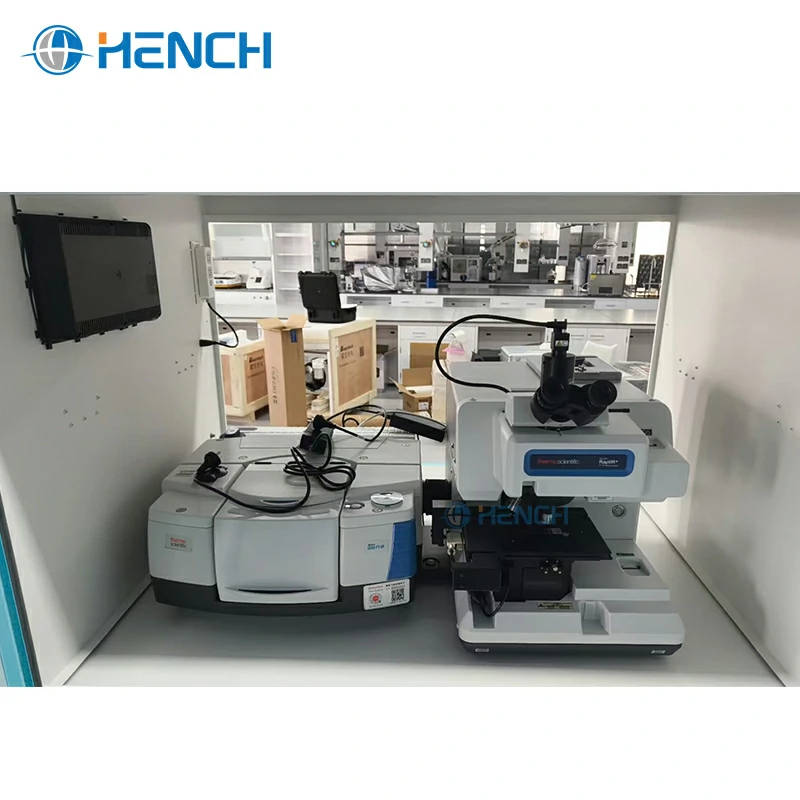
Thermo IS50 FTIR Specialized Anti-moisture Cabinet for Continuous Use
Compatible with Thermo FTIR iS50+ Infrared Microscopes
(or other compatible equipment configurations)
Dimensions: Customizable upon request
Humidity Control Range: 10–50% RH
Warranty: 8 Years
Purpose: Effectively prevents moisture damage to critical components of precision instruments (interferometers, beam splitters, lasers). -
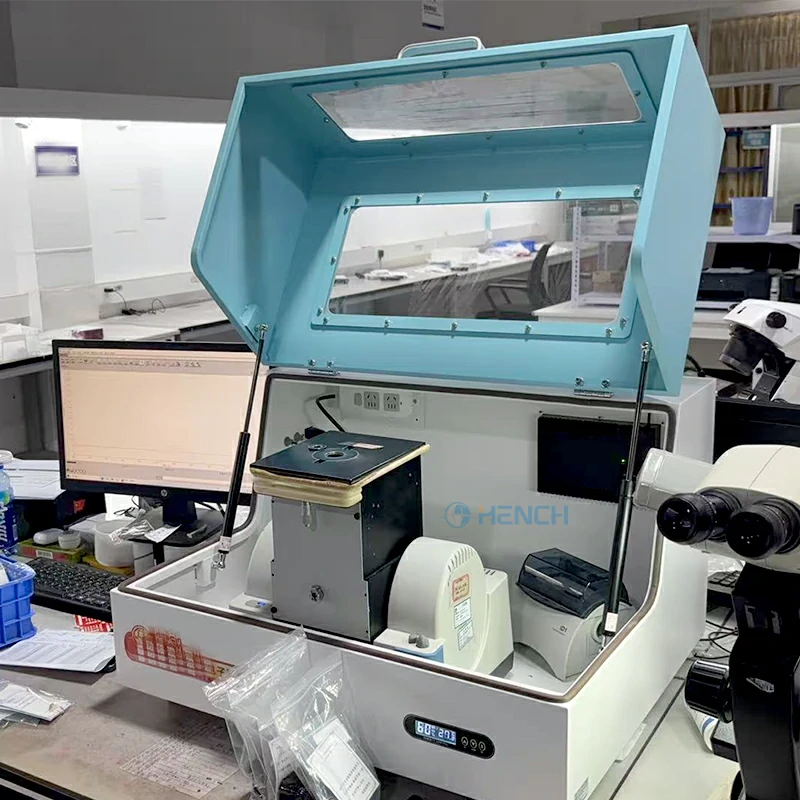
Thermo IS5 FTIR Moisture-proof Box with Intelligent Dehumidification Function
Compatible with Thermo iS5+ Diffuse Reflectance Accessory
Dedicated models available for all FTIR systems
Humidity Control Range: 20–50% RH
External Dimensions: 710 × 670 × 460 mm
Internal Effective Space: 610 × 540 × 390 mm
Weight: 27 kg
Warranty: 8 Years -
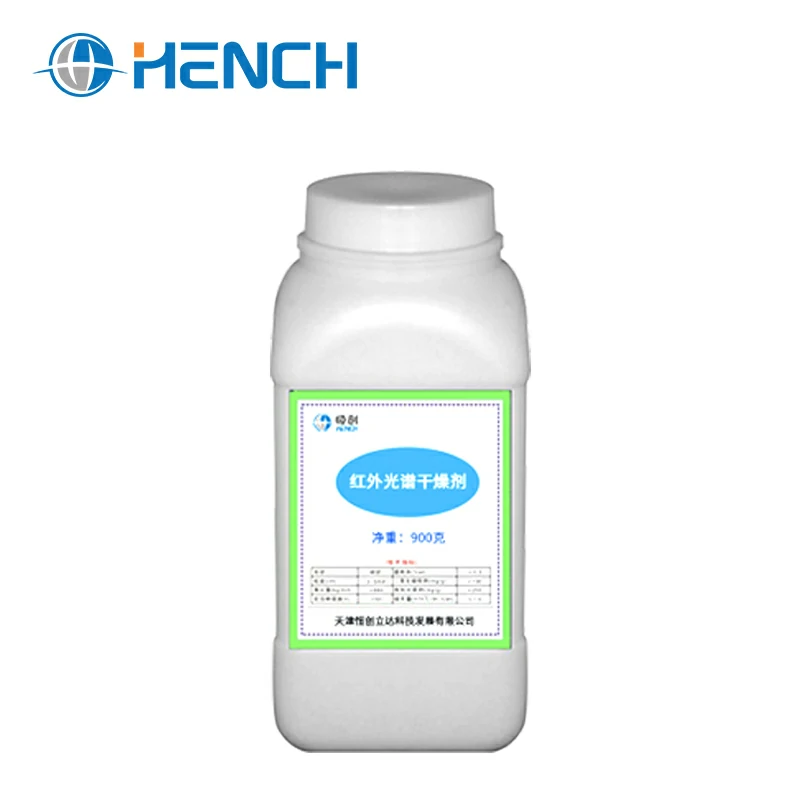
Infrared Spectroscopy Desiccant HW-5
This desiccant has a high efficiency in adsorbing water molecules and can be reused after drying.
This product can be used in conjunction with all brands of...
Fourier transform infrared spectrometer, for example: Beidian Rui Li, Tianjin Port Dong, USA Thermo, USA PE, Germany
Gu Brook, Japan Ishizuka, etc. -
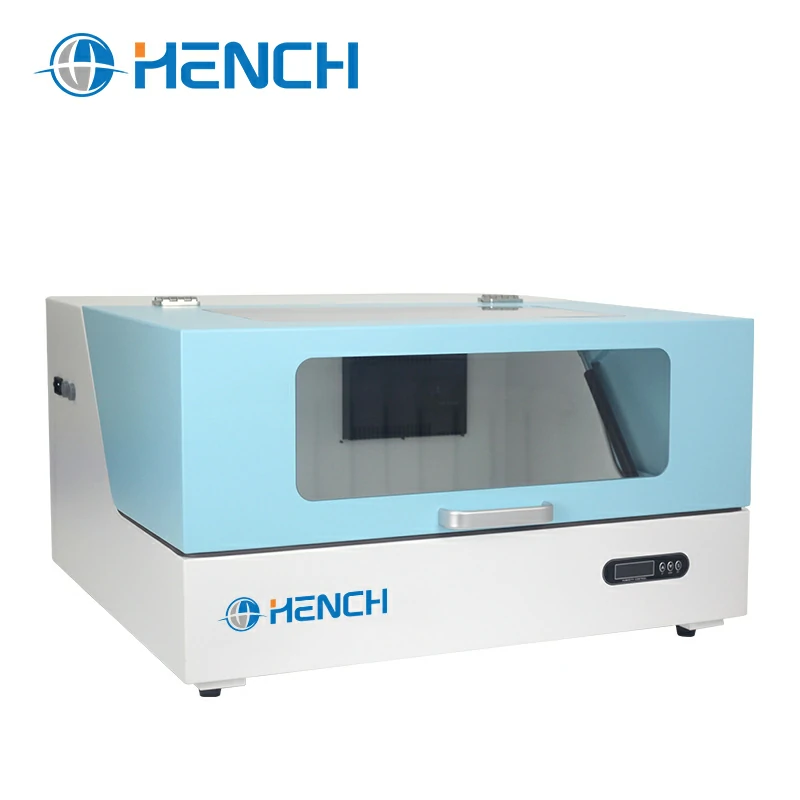
FTIR Dry cabinet Moisture-proof Box Dehumidifier
1.Humidity control range: 25RH% - 50RH%, front-mounted LCD screen with dual display of temperature and humidity.
2.Opening and closing method: The upper cover is designed with a damping hinge for opening and closing. This effectively utilizes the upper space, avoiding the space waste and operational inconvenience caused by double-door design.
3.Line design: Hidden protection design for wiring and power supply lines, and addition of protective boards for PCB circuit boards.
4.Dehumidification system: The intelligent humidity sensing module uses a microcomputer program system with a recyclable and regenerative moisture-absorbing molecular layer membrane to control humidity. If the humidity inside the warehouse exceeds the set humidity level, the system will automatically start dehumidification. There are no consumables.
5.Operation status: Even in the event of power failure, it has the moisture absorption protection function and can still utilize the chemical moisture absorption compensation function to continue dehumidification. The humidity increase within 24 hours will not exceed 10%.
Intelligent Humidity Control for FTIR Accessories
The FTIR Moisture-Proof Box Desiccant utilizes a high-performance electronic dehumidifier core and a microcomputer humidity control system. It offers a humidity control range of 25% RH to 50% RH, ensuring optimal storage conditions for FTIR spectrometer accessories. The system employs a recyclable and regenerative moisture-absorbing molecular layer membrane to control humidity, eliminating the need for consumables.
Energy-Efficient Design with Real-Time Monitoring
Designed for energy efficiency, the moisture proof box operates with low power consumption and features noise-free operation. A front-mounted LCD screen displays real-time temperature and humidity levels, allowing for easy monitoring. In the event of a power failure, the system continues to dehumidify using its chemical moisture absorption compensation function, ensuring that the humidity increase within 24 hours does not exceed 10%.
Technical Parameters Summary
| Technical Feature | Specifications & Standards |
| Humidity Control Range | 25% RH – 50% RH |
| Control Mechanism | Microcomputer program system with regenerative molecular sieve |
| Display Panel | Industrial-grade front-mounted LCD (Temp & Humidity Dual Display) |
| Cabinet Construction | Heavy-duty steel with airtight insulation seals |
| Safety Certification | Power-off passive dehumidification safety compliance |
| Consumables Required | None (Maintenance-free regenerative system) |
Product Specifications & Engineering Highlights
Our advanced moisture proof box units are designed with industrial-grade microcomputer humidity control systems, offering a reliable precision regulation range of 25% RH to 50% RH.
-
Zero-Consumable Dehumidification: Utilizing a highly efficient, recyclable, and regenerative moisture-absorbing molecular layer membrane, our systems eliminate the ongoing cost and hassle of traditional desiccants.
-
Airtight Structural Integrity: Each airtight moisture proof container features high-density sealing technology and top-mounted damping hinges. This structural design ensures maximized interior space utilization and prevents external ambient air infiltration.
-
Power Failure Protection (Chemical Compensation): In the event of an unexpected lab power outage, the cabinet automatically switches to its chemical moisture absorption compensation mode. It restricts the internal humidity increase to less than 10% within a 24-hour window, ensuring uninterrupted protection.
-
Real-Time Monitoring: Equipped with a front-mounted LCD screen providing high-accuracy dual display for both temperature and relative humidity.
Comprehensive Industry & Laboratory Applications
Our moisture proof storage boxes are widely deployed across high-precision research and industrial sectors where contamination-free, humidity-controlled storage is non-negotiable:
-
Spectroscopy & Optical Research: Perfect for storing KBr, NaCl, CaF2, and ZnSe crystalline windows, pellets, pressed dies, and sensitive beam splitters. It prevents surface fogging, structural degradation, and chemical deliquescence caused by ambient humidity.
-
Pharmaceutical & Biomedical Analysis: Used in QA/QC laboratories to protect reference standards, hygroscopic powder samples, and FTIR sampling accessories (such as ATR crystals and transmission cell holders) from moisture absorption prior to analysis.
-
Advanced Materials & Semiconductor Labs: Ideal for storing moisture-sensitive substrates, wafers, electronic sensors, and precision calibration targets that require a strictly regulated relative humidity environment.
-
Chemical & Petrochemical R&D: Protects precise analytical instruments' auxiliary parts and consumables from corrosive moisture damage, ensuring the long-term reproducibility of spectroscopic data.
Universal Compatibility with Leading FTIR Brands
Hench moisture proof storage boxes and dry cabinets provide ideal, standalone ambient-controlled environments that are fully compatible with storage requirements for all major FTIR spectrometer accessories and optical parts, including instruments from:
- Hench FTIR spectrometer
-
Thermo Fisher Scientific (e.g., Nicolet series)
-
PerkinElmer
-
Bruker
-
Shimadzu
-
Other leading domestic and international spectroscopy brands.
Core Components & Technical Infrastructure
The reliability of each Hench moisture proof box relies on industrial-grade, heavy-duty components designed for continuous laboratory operations:
-
Regenerative Electronic Dehumidification Core: Features a high-grade, multi-porous synthetic molecular sieve membrane. This core operates mechanically without the need for chemical desiccant replacements or water drainage systems.
-
Microcomputer Intelligent Control Unit: Built with a programmable microchip processor paired with an imported, high-precision digital humidity and temperature sensor. It ensures real-time detection and rapid-response dehumidification triggering.
-
Reinforced Airtight Enclosure: Constructed from 1.2mm premium cold-rolled steel with an anti-corrosion, anti-static (ESD-safe) powder coating. The perimeter is sealed with a high-performance magnetic rubber gasket to isolate the internal environment entirely.
-
Top-Mounted Damping Hinge Structure: Engineered with a specialized upper-cover vertical opening mechanism. This optimizes laboratory bench space, reduces mechanical vibration when opening, and ensures smooth, controlled closure to protect fragile glass or crystalline contents inside.
Advanced Working Principle
Our airtight moisture proof container operates via a fully automated, cyclical physical adsorption and desorption process managed by the microcomputer system:
[Ambient Detection] -> [Auto-Activation] -> [Molecular Adsorption] -> [Passive Power-Off Safety]
-
Phase 1: Dynamic Moisture Adsorption (Internal Preservation) The high-precision sensor continuously monitors the internal atmosphere. When the relative humidity exceeds your preset target (e.g., >35% RH), the internal shutters of the dehumidification core open. The highly porous molecular sieve membrane rapidly traps water molecules from the air via physical adsorption, dropping the humidity back to the safe zone without generating heat or noise.
-
Phase 2: Automated Thermal Regeneration (External Exhaust) Once the molecular sieve reaches saturation, the microcomputer controls the internal shutters to close (sealing the storage chamber) and opens the external exhaust vents. A brief, low-power internal heating element activates to desorb and expel the trapped moisture outside the cabinet. After cooling, the system resets for the next cycle—achieving a 100% maintenance-free, zero-consumable lifespan.
-
Phase 3: Fail-Safe Chemical Compensation In the event of a sudden laboratory power outage, the mechanical shutters default to a closed state, locking the internal environment. The structural molecular matrix continues to provide passive chemical moisture absorption, restricting the total internal humidity rise to less than 10% RH within a 24-hour period.
About Hench
As a leading lab equipment supplier, Hench Technology is committed to providing high-performance airtight moisture proof container solutions for laboratories worldwide. Our moisture proof cabinets are designed to meet the highest standards of quality and reliability, ensuring that your laboratory operations are efficient and effective.
Why Choose Hench FTIR Moisture-Proof Box
- Stable humidity control vs passive desiccant boxes
- No consumables vs traditional silica gel packs
- Industrial-grade sealing vs standard storage cabinets
- Designed specifically for FTIR instruments (not general storage boxes)
Quality & Manufacturing Standards
- ISO manufacturing system
- Factory inspection process
- Humidity calibration testing
FAQ – FTIR Moisture-Proof Box
What humidity level is safe for FTIR storage?
FTIR instruments generally require a low-humidity environment to ensure stable optical performance. In most laboratory conditions, maintaining 25%–50% relative humidity (RH) is considered safe. However, for high-precision spectroscopy applications, lower humidity levels are often recommended to reduce the risk of moisture interference with infrared signals and optical components.
Can this box be used for other lab instruments?
Yes. Although it is designed for FTIR systems, the moisture-proof box can also be used for other sensitive laboratory instruments and materials, such as analytical balances, optical components, electronic devices, semiconductor samples, and chemical reagents that require controlled humidity storage.
How often does the desiccant need replacement?
The replacement frequency depends on environmental humidity and usage conditions. In general, in a controlled laboratory environment, the desiccant may last several weeks to several months. Some advanced models use regenerative or automatic dehumidification systems, which reduce or eliminate the need for frequent manual replacement.
What is the difference between a dry cabinet and a moisture-proof box?
A dry cabinet is typically a larger storage system designed for long-term humidity control and often uses electronic dehumidification systems. A moisture-proof box for FTIR is usually more compact and is specifically designed to protect sensitive spectroscopy equipment or samples.
In short:
- Dry cabinet = general large-scale humidity control storage
- Moisture-proof box = targeted protection for precision instruments like FTIR systems
Does it work during power failure?
If the system uses passive desiccant materials, it can continue to provide moisture protection without electricity. For electronic humidity control models, moisture protection may gradually decrease during a power outage. However, most designs include sealed structures and backup moisture-absorbing materials to maintain short-term protection during interruptions.