



ニュース
-
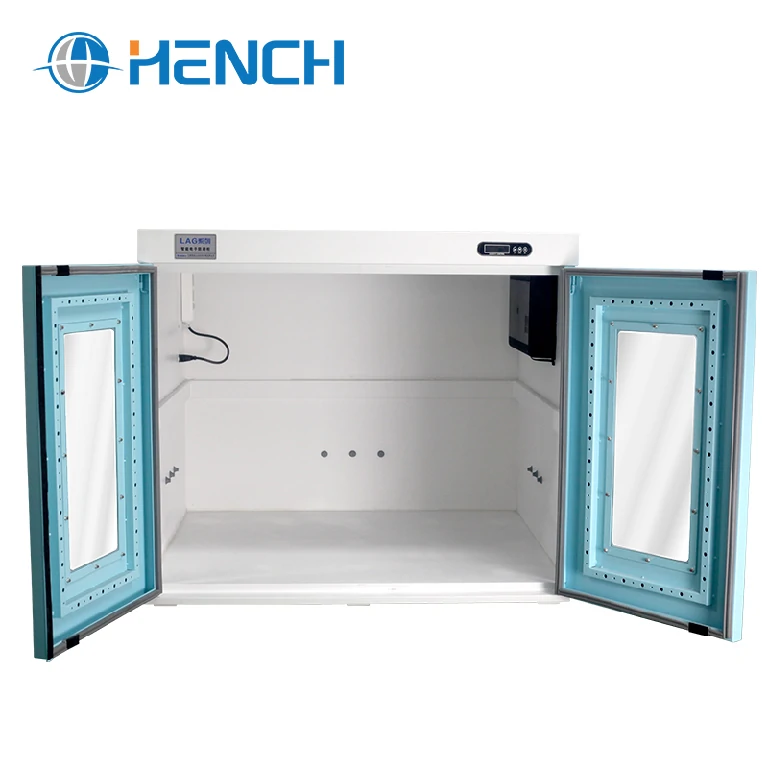
Singapore Laboratory Uses HENCH Anti-Moisture Cabinet for Thermo Scientific Nicolet iN10
読む もっと読むA laboratory in Singapore has recently put a customized HENCH electronic anti-moisture cabinet into daily operation alongside a Thermo Scientific Nicolet iN10 FTIR microscope. The cabinet was designed around the laboratory’s available space, instrument accessories, and storage requirements. The project provides a practical example of how controlled low-humidity storage can support precision infrared analysis. HENCH worked with the customer to configure the cabinet size, internal layout, humidity control, and operating functions for the laboratory environment. Protecting Accessories Used in Micro-FTIR Analysis The Thermo Scientific Nicolet iN10 is a micro-FTIR system designed for infrared analysis of small samples. Micro-FTIR techniques support applications such as contamination analysis, polymer identification, coating analysis, and […]
-
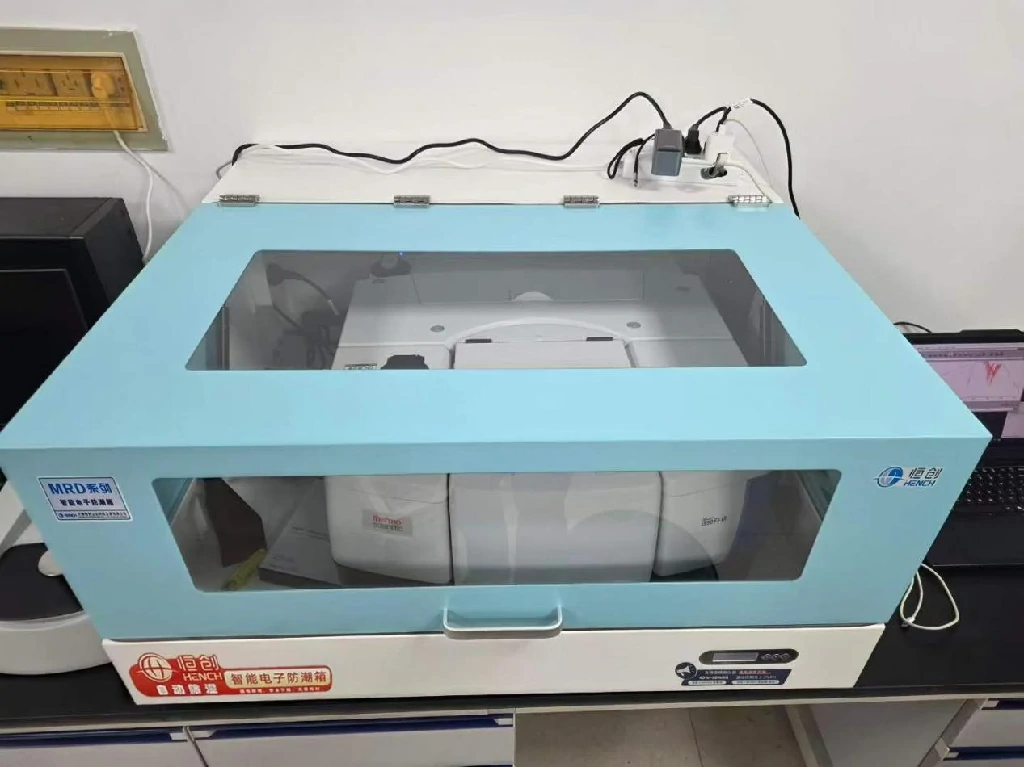
Ensuring Analytical Precision: A Prominent Transportation Group Equips Thermo Fisher iS50 FTIR Spectrometer with HENCH Infrared Desiccator Cabinet
読む もっと読むRecently, a leading transportation engineering group officially procured the HENCH MRD series infrared-dedicated electronic moisture-proof cabinet to pair with their Thermo Fisher Nicolet iS50 Fourier Transform Infrared (FTIR) Spectrometer. This deployment is dedicated to the compositional identification, aging analysis, and quality verification of polymer road materials, asphalt, rubber components, coatings, and various transportation engineering accessories, building a stable and reliable precision testing platform for transport infrastructure material quality control. Transportation engineering materials are chronically exposed to complex outdoor environments, making raw material quality and aging performance directly critical to the safety of roads and bridges. As a core tool for non-destructive, rapid material identification, an infrared spectrometer quickly completes polymer […]
-
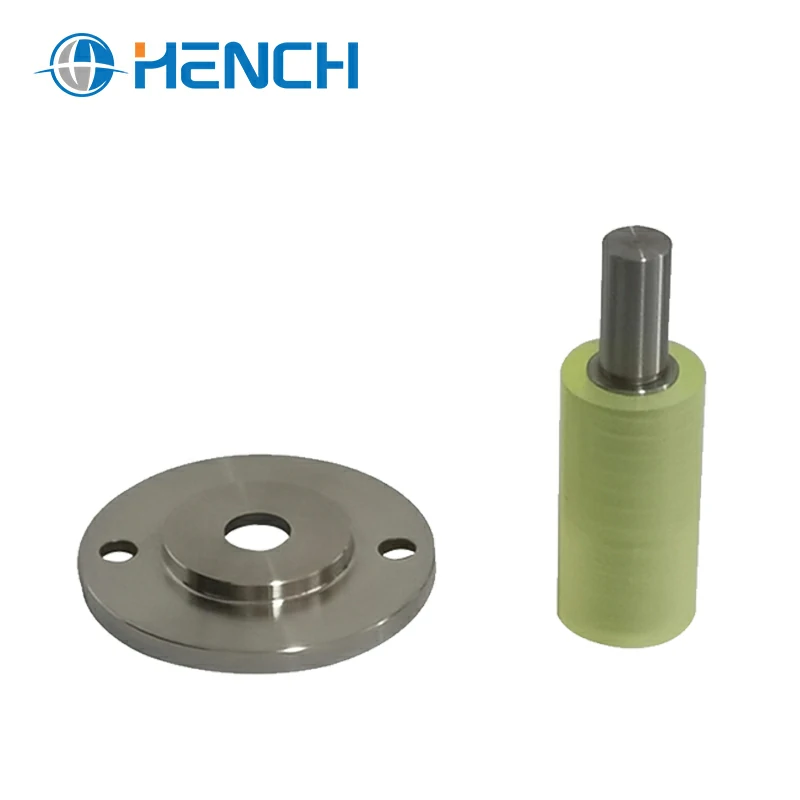
Solid-State Battery R&D Essential: Mold Operation Specifications & Full Scenario Analysis
読む もっと読むThe core challenge in solid-state battery research and development lies in overcoming high solid-solid interfacial resistance. The Tianjin HENCH HMN series pressure-controllable test molds for solid-state batteries adopt high-performance PEEK insulating cavities and stainless steel current-collecting plungers. Under precisely controlled pressure, they enable uniform pellet pressing of solid electrolyte powders, coin-cell stacking and assembly, as well as in-situ electrochemical testing. Serving as core sample preparation and characterization tools for fundamental research in universities and new energy laboratories, these molds are compatible with diverse solid electrolyte systems, including oxides, sulfides, and halides. A complete, high-efficiency experimental workflow can be seamlessly established when paired with laboratory pellet presses, glove boxes, and multi-channel […]
-
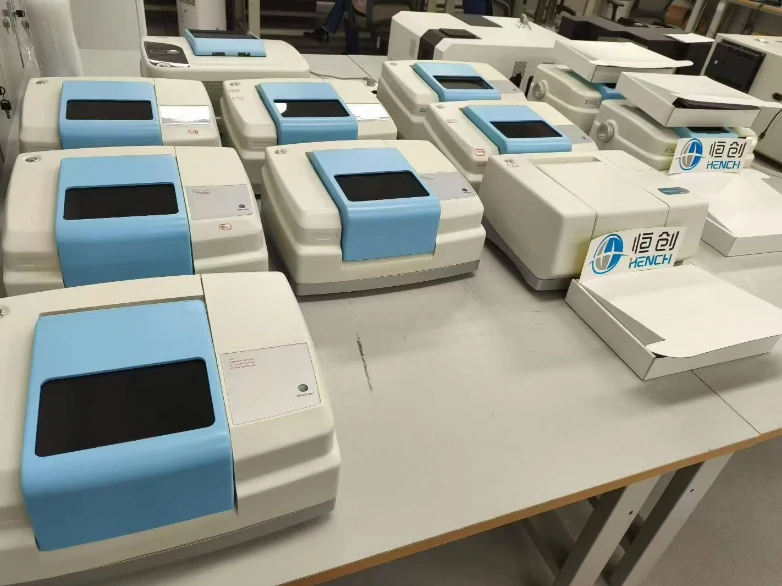
One-stop Supply of Laboratory Precision Testing Equipment to Empower Efficient Upgrading of Scientific Research and Quality Control
読む もっと読むIn the fields of materials research and development, chemical pharmaceuticals, environmental detection, university scientific research, and industrial quality inspection, precision laboratory equipment serves as the core cornerstone for accurate data, efficient experiments, and reliable results. A robust set of stable and highly adaptable testing and sample preparation equipment can dramatically improve experimental efficiency, minimize errors, and ensure compliant, valid test data. As a trusted global lab equipment supplier, Tianjin HENCH Technology Development Co., Ltd. has long been deeply engaged in the field of precision laboratory instruments. We specialize in the R&D, manufacturing, and supply of high-end supporting laboratory hardware. Our core portfolio includes infrared spectrometers, powder tablet presses, heating tablet […]