



FTIR Spectrometers
Hench FTIR spectrometers are laboratory Fourier transform infrared spectrometers for material identification, chemical analysis, quality control and research. The range includes three models, ENERGY-30, LIDA-20 and MATRIX-50, so a laboratory FTIR spectrometer can be matched to routine testing or to more demanding analytical work.
Each system is configured around the samples you measure: solids, powders, films, liquids or gases, with ATR, transmission, KBr pellet preparation, liquid cell or gas cell sampling.
Typical users include pharmaceutical QC, polymer and chemical laboratories, food and agriculture testing, environmental monitoring, forensics and university research groups, with FTIR applications from routine material identification to method development.
Tell us your sample type, required spectral range and resolution, and our team will recommend the right FTIR spectrometer model and accessories. Request a quotation.
-
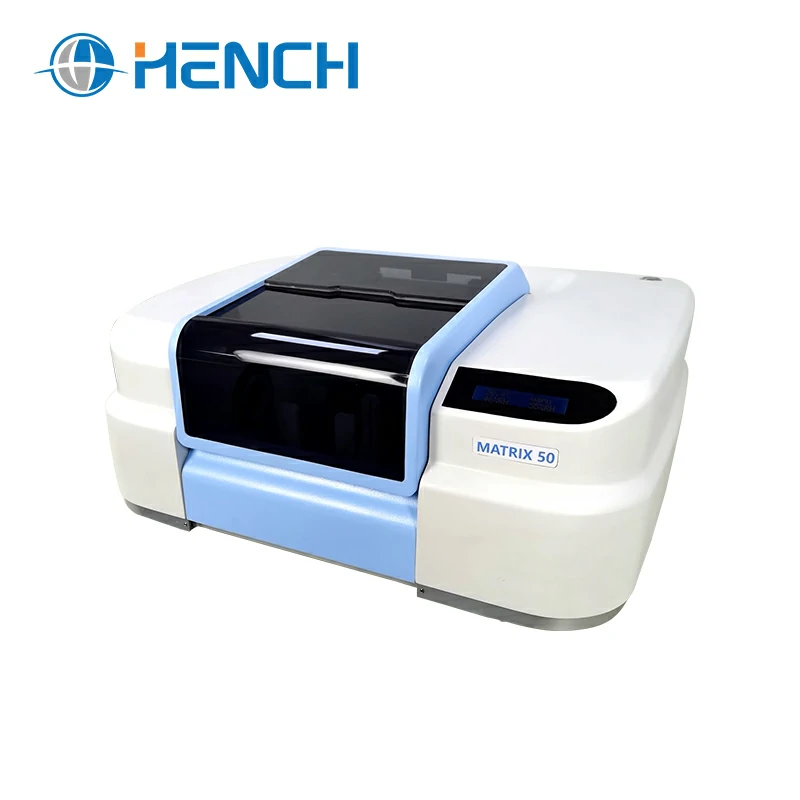
MATRIX-50 Fourier Transform Infrared FTIR Spectrometers
Product Description
Spectral Range: 7800–350 cm⁻¹
Spectral Resolution: ≤1.0 cm⁻¹
Wavenumber Accuracy: ≤0.01 cm⁻¹
Signal-to-Noise Ratio: ≥40,000:1
Beam Splitter: Germanium-coated KBr substrate
Light Source: High-energy, high-efficiency, long-life ceramic light source
Interferometer: Non-orthogonal Michelson
Detector: High-sensitivity DLATGS receiver with moisture-proof film
Compatible Windows Versions: Windows
-
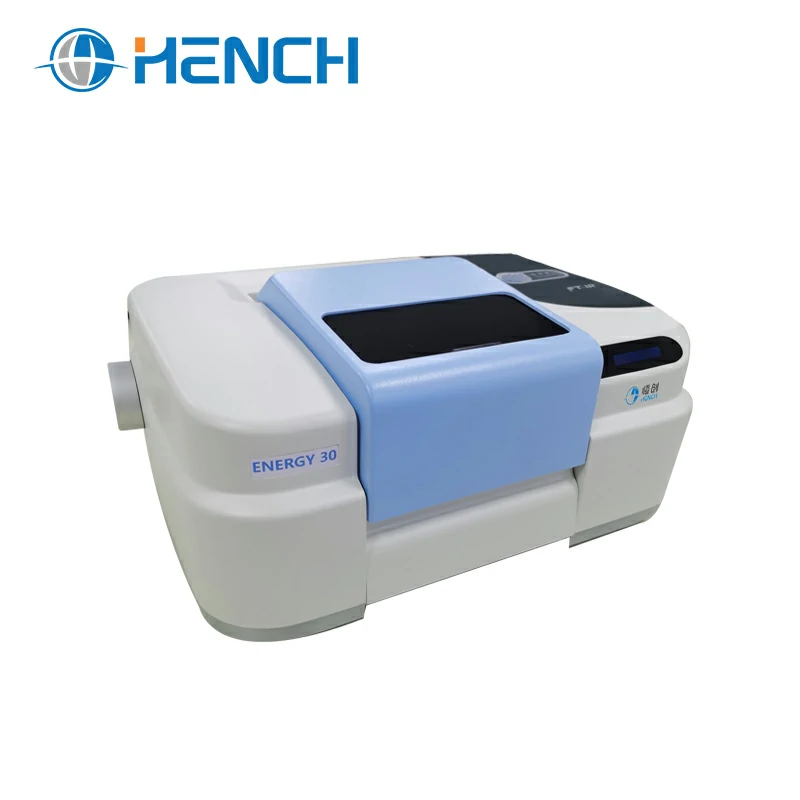
ENERGY 30 Fourier Transform Infrared Spectrometers FTIR
Product Description
Spectral Range: 7800–350 cm⁻¹
Spectral Resolution: ≤1.0 cm⁻¹
Wavenumber Accuracy: ≤0.01 cm⁻¹
Signal-to-Noise Ratio: ≥40,000:1
Beam Splitter: Germanium-coated KBr substrate
Light Source: High-energy, high-efficiency, long-life ceramic light source
Interferometer: Non-orthogonal Michelson
Detector: High-sensitivity DLATGS receiver with moisture-proof film
Dimensions: 450 × 350 × 210 mm
Weight: 13 kg
Data Transfer: USB 2.0 / 3.0
Compatible Windows Versions: Windows 7 / 8 / 8.1 / 10
Legacy Compatibility: Windows XP / Vista
-
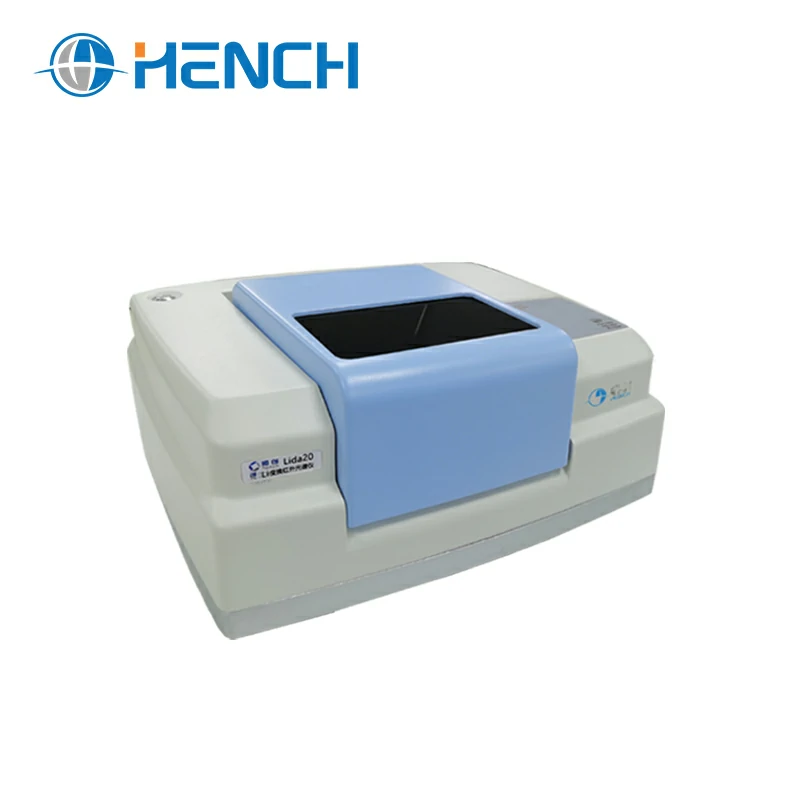
LIDA-20 Fourier Infrared Spectrometer
Product Description
Spectral Range: 7800–350 cm⁻¹
Spectral Resolution: ≤1.0 cm⁻¹
Signal-to-Noise Ratio: ≥15,000:1 (30,000:1 optional)
Beam Splitter: Germanium-coated KBr substrate
Light Source: High-energy, high-efficiency, long-life ceramic light source
Interferometer: Michelson interferometer, 30° incidence
Detector: High-sensitivity DLATGS receiver with moisture-proof film
Dimensions: approx. 440 × 360 × 190 mm
Weight: approx. 14 kg
Data Transfer: USB 2.0 / 3.0
Compatible Windows Versions: Windows XP – Windows 10
FTIR Spectrometer Models Compared
Hench supplies three laboratory FTIR spectrometers for material identification, chemical analysis, quality control and research. The models share a focus on stable optical performance and practical laboratory operation, but they differ in spectral coverage, sensitivity and configuration direction. Use the table below to compare the available models before selecting a configuration.
| Model | Spectral range | Resolution | SNR | Beam splitter | Detector | Best fit |
|---|---|---|---|---|---|---|
| ENERGY-30 FTIR spectrometer | 7800-350 cm-1 | Better than 1.0 cm-1 | 40000:1 | Germanium coating on KBr substrate | High-sensitivity DLATGS | High-precision analysis, high-humidity environments and long-term continuous operation |
| MATRIX-50 FTIR spectrometer | 7800-350 cm-1 | Better than 1.0 cm-1 | 40000:1 | Germanium coating on KBr substrate | High-sensitivity DLATGS | Compact laboratory operation, intelligent software and routine to advanced analysis |
| LIDA-20 FTIR spectrometer | 800-3500 cm-1 | Better than 1.0 cm-1 | 15000:1 | Germanium coating on KBr substrate | High-sensitivity DLATGS | Cost-effective routine quality control, teaching, materials science, petrochemicals and food safety |
Specifications are based on the current product configurations. Because detectors, beam splitters and sampling accessories can be selected for different applications, confirm the final configuration with Hench before ordering.
How to Choose an FTIR Spectrometer
Start with the sample and the analytical requirement, not only with the model number. The sample form usually determines the sampling accessory, while the analytical objective determines the required spectral range, resolution and signal-to-noise performance. For laboratories preparing many similar samples, automation and software workflow may also affect the choice.
The most important selection factors are:
- Spectral range: choose a range that covers the absorption bands of the materials being analysed.
- Spectral resolution: select the resolution needed to separate the closest absorption bands of interest.
- Signal-to-noise ratio: important for weak bands, trace components and demanding research work.
- Sampling method: ATR, transmission, KBr pellet, liquid cell or gas cell according to the sample form.
- Software and data workflow: library search, quantitative analysis, reporting and method storage.
- Accessories: the accessory ecosystem should match the current samples and future laboratory work.
| Sample type or application | Recommended sampling | Model direction | Related page |
|---|---|---|---|
| Solid or powder | KBr pellet or ATR | ENERGY-30 or LIDA-20 | KBr pellet preparation |
| Film or coating | Transmission or ATR | MATRIX-50 or ENERGY-30 | FTIR accessories |
| Liquid | Liquid cell or ATR | ENERGY-30 or MATRIX-50 | IR sample preparation |
| Gas | Gas cell | ENERGY-30 or MATRIX-50 | Gas sampling accessories |
| Routine quality control | ATR and spectrum library search | LIDA-20 or MATRIX-50 | Request a configuration |
| Research and method development | ATR, transmission or external reflection | ENERGY-30 | FTIR spectrometer selection guide |
FTIR Spectrometer Applications
FTIR spectroscopy is used wherever a laboratory needs rapid molecular information from a sample. The same instrument platform can support different applications when it is configured with the appropriate sampling accessory and method.
Pharmaceutical Quality Control
FTIR is used for raw material identification, excipient verification, polymorph characterization and routine quality control. Stable spectral performance and reliable library search support batch-to-batch consistency in pharmaceutical laboratories.
Polymer and Materials Science
Polymer, composite and coating laboratories use FTIR to identify functional groups, monitor curing and degradation, compare formulations and investigate surface treatment. Transmission, ATR and reflectance methods can be selected according to the sample form.
Chemical and Petrochemical Analysis
Chemical manufacturers use FTIR for raw material verification, reaction monitoring, contaminant detection and batch confirmation. The technique provides fast molecular information for both production support and laboratory troubleshooting.
Food and Agriculture
FTIR supports food and agricultural laboratories in composition analysis, authenticity checks, adulterant screening and process consistency monitoring. Sampling methods can be adapted to powders, liquids, films and pastes.
Environmental Monitoring
Environmental and industrial hygiene laboratories use FTIR for air quality monitoring, gas analysis, volatile organic compound detection and other applications where molecular information is required. Gas cells and suitable detectors can be configured for the measurement.
Research and Academia
Universities and research institutes use FTIR for chemistry, physics, biology and material research. The platform supports method development, structure investigation and comparative studies when the instrument is configured with the required accessories and software functions.
FTIR Spectrometer Manufacturer and Quality Control
Tianjin Hench Technology Co., Ltd. develops and manufactures FTIR accessories, laboratory hydraulic presses and the tooling used with them, and supplies FTIR spectrometers for laboratory analysis. The company has more than 10 years of manufacturing experience and serves pharmaceutical, chemical, environmental, food and materials laboratories.
A dedicated R&D team has developed more than 20 proprietary products, supported by 50+ engineers and technicians. The company holds 12 invention patents and 28 utility model patents covering product development and production. The infrared spectroscopy and hydraulic press products are CE certified.
Before shipment, component suppliers test their parts, and the Hench quality control team verifies the performance and running speed of the finished equipment. Customers are welcome to inspect the equipment at the factory, and the testing process can be recorded on video when an on-site visit is not practical. OEM production and custom configurations are accepted, including pressure range, electrical supply, interface language, mould configuration and other machine parameters.
Hench serves customers in more than 20 countries and 10 regions. Typical users include university laboratories, research institutes, chemical and pharmaceutical companies, material testing laboratories and industrial quality control teams.
Installation, Training and After-Sales Support
- One-year warranty with lifetime after-sales service after the warranty period.
- Introductory video before shipment explaining the instrument features and operation.
- Engineer visits for installation, testing and staff training when required.
- Remote support for straightforward issues, with engineer assistance for more complex problems.
- Method-development support for application-specific workflows.
FTIR Accessories and Sample Preparation
The sampling accessory is often the difference between a routine measurement and a difficult one. Hench can supply compatible accessories according to the selected instrument and analytical method, including:
- ATR and reflectance attachments
- KBr pellet preparation equipment
- Liquid cells and cuvettes
- Gas cells
- Film and slide holders
- Sample racks and sample holders
- IR sample preparation equipment
- Laboratory presses and dies for pellet preparation
For workflows that combine infrared spectroscopy with other sample preparation methods, see the FTIR vs Raman comparison or the XRF sample preparation section.
Frequently Asked Questions
What is the difference between ENERGY-30, MATRIX-50 and LIDA-20?
ENERGY-30 and MATRIX-50 both cover 7800-350 cm-1 with a resolution better than 1.0 cm-1 and a 40000:1 signal-to-noise ratio. ENERGY-30 is positioned for high-precision and high-humidity laboratory environments, while MATRIX-50 is a compact, software-oriented configuration. LIDA-20 covers 800-3500 cm-1 with a 15000:1 signal-to-noise ratio and is positioned for cost-effective routine quality control and teaching.
Which FTIR spectrometer is suitable for pharmaceutical quality control?
Pharmaceutical QC usually requires stable spectral performance, reliable library search and a suitable sampling method. ATR is common for routine screening, while transmission and KBr pellet methods can be used where the method requires. The final model and accessory configuration should be selected according to the sample form and the required resolution.
Can one FTIR spectrometer use both ATR and KBr pellet sampling?
Yes, when the instrument is configured with the appropriate sampling accessories. ATR provides fast surface measurement, while KBr pellet preparation is used for transmission analysis. Both methods can be supported by the same FTIR platform when the accessories and sample preparation equipment are compatible.
What sample types can these FTIR spectrometers measure?
The instruments can support solids, powders, films, coatings, liquids and gases when the correct sampling accessory is selected. The sample form and the analytical objective determine whether ATR, transmission, KBr pellet, liquid cell or gas cell sampling is appropriate.
What accessories are needed for powder samples?
Common options include an agate mortar for grinding, KBr powder for pellet preparation, a pellet die of the required diameter and a laboratory press to form the pellet. ATR can also be used for some powders, depending on the particle size and the information required.
Is OEM or custom configuration available?
Yes. OEM production and custom configurations are accepted. The required pressure range, electrical supply, interface language, mould configuration and other machine parameters can be discussed with the Hench technical team.
What is included in installation and training?
Hench provides an introductory operation video before shipment, remote support for routine questions and engineer visits for installation, testing and staff training when required. The service scope is confirmed with the order and the destination.
How do I request a configuration or quotation?
Send the sample type, required spectral range and resolution, sampling method and laboratory conditions through the contact page. The Hench team will recommend the appropriate FTIR spectrometer model and accessories and provide a quotation.
Request an FTIR Spectrometer Configuration
Tell us the sample type, required spectral range and resolution, sampling method and laboratory conditions. Hench will recommend the FTIR spectrometer model and accessories for the application and provide a quotation.
Request an FTIR spectrometer quotation
Reviewed by the Hench Technical Team. Last updated: October 2026.