



ペレット成形金型シリーズ
-
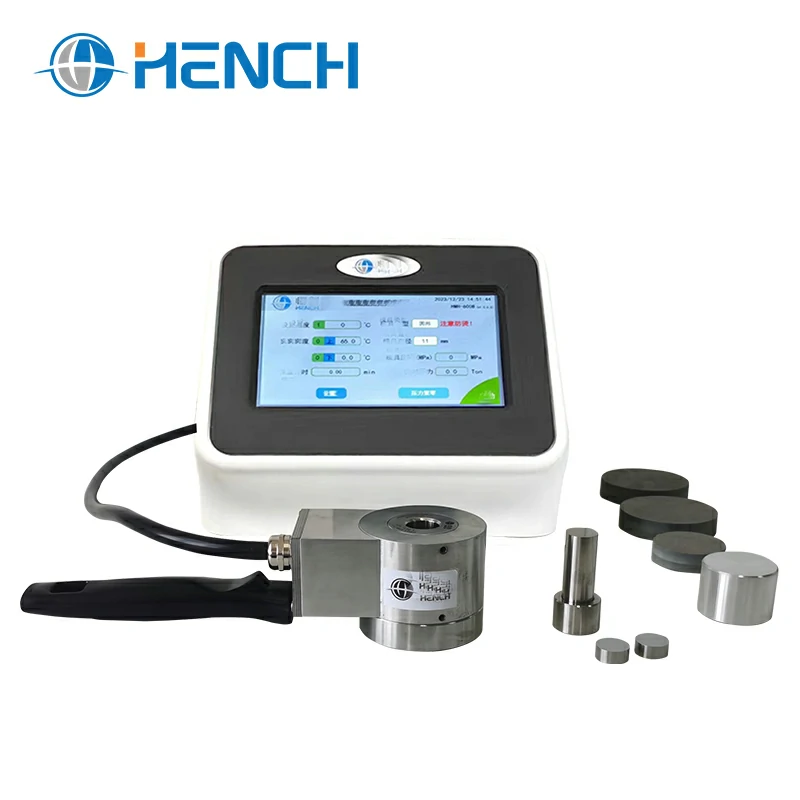
円形電熱ダイス 300℃/500℃ HCH
モデル:HCH
サンプルサイズ:Φ3.0-100mm
金型材質:9Cr18
圧痕硬度:HRC58
キャビティ深さ:45mm
サイズ:78x138mm
重量:2.7Kg
サイズと重量はダイスの直径によって決まる。
-
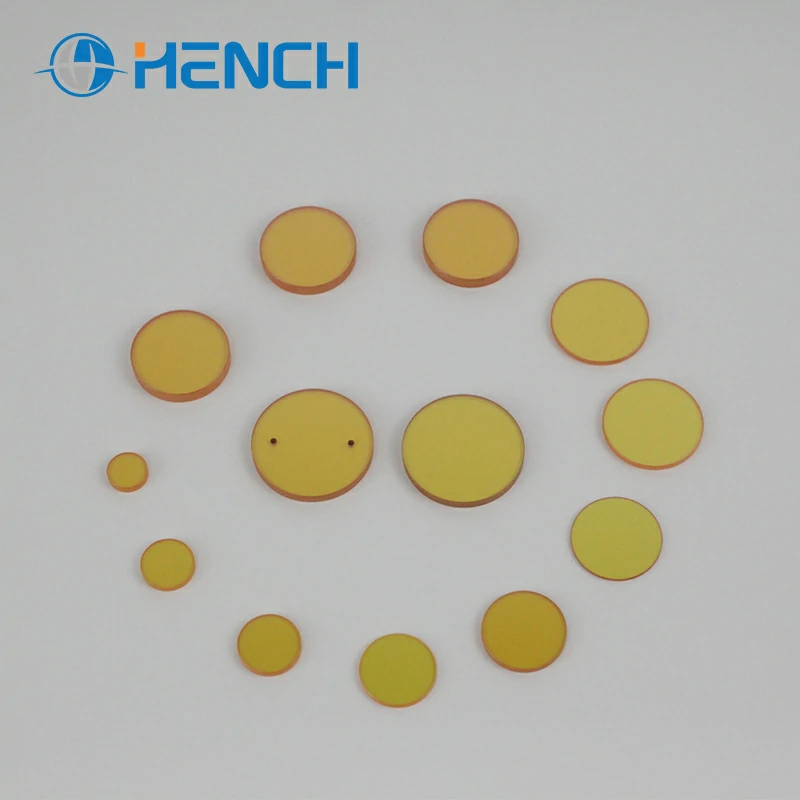
ZnSeウィンドウ セレン化亜鉛ウィンドウシート
体積吸収係数:10.6 Mm 0.0005/cm
屈折率温度変化率:10.6 lm 61x10-6/°C
屈折率不均一性:632.8nm<6x10⁻⁶
熱伝導率:0.18w/cm/°c
比熱:0.356J/g/c
線膨張係数:20℃:7.57x10⁻⁶/°C
-
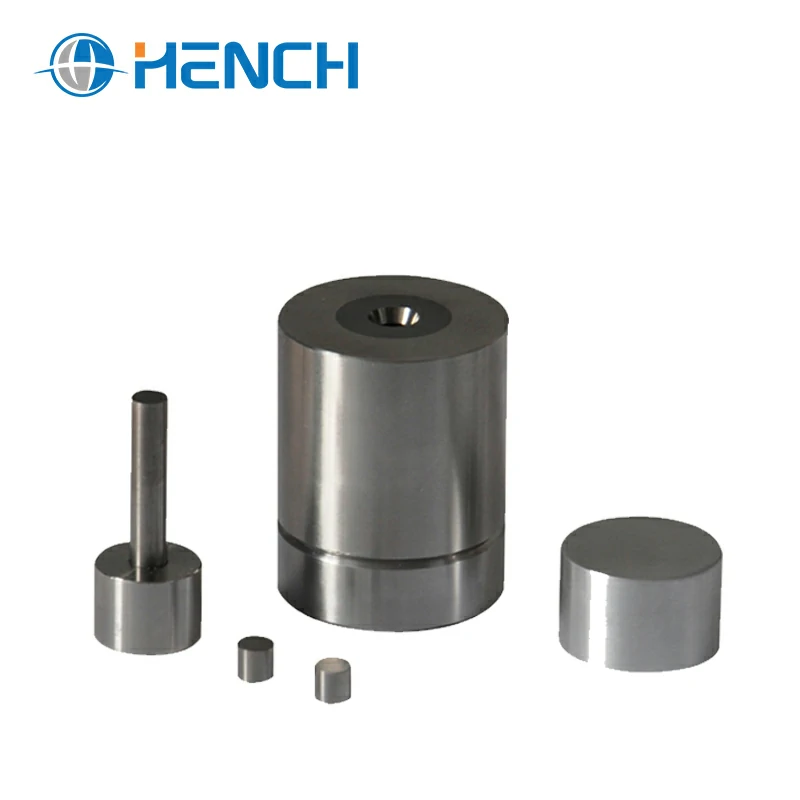
超硬ダイ 2-50mm HMW
モデル:HMW
サンプルサイズ:2-50mm
金型材質:YT15
圧子硬度:HRC90
キャビティ深さ:30/40/45/50mm
サイズ:43~150mm
重量:0.78~7Kg
-
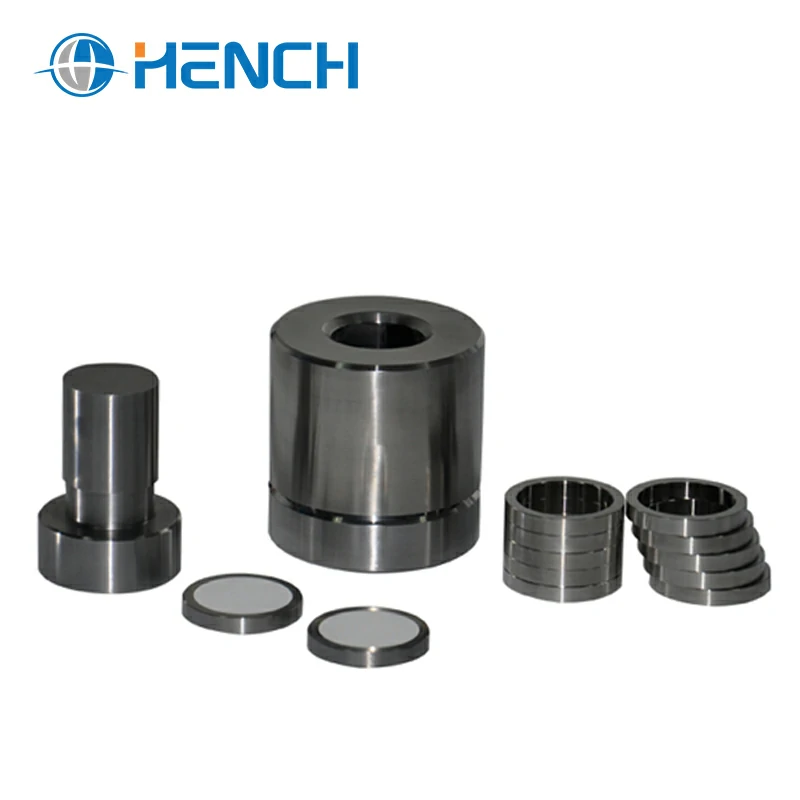
蛍光特殊鋼リングダイ 40/32mm HMP
モデル:HMP
金型材質:9Cr18
圧子硬度:HRC58
サンプルサイズ:40/32mm
キャビティ深さ:45mm
境界寸法:73 X133mm
金型重量:3.2Kg
-
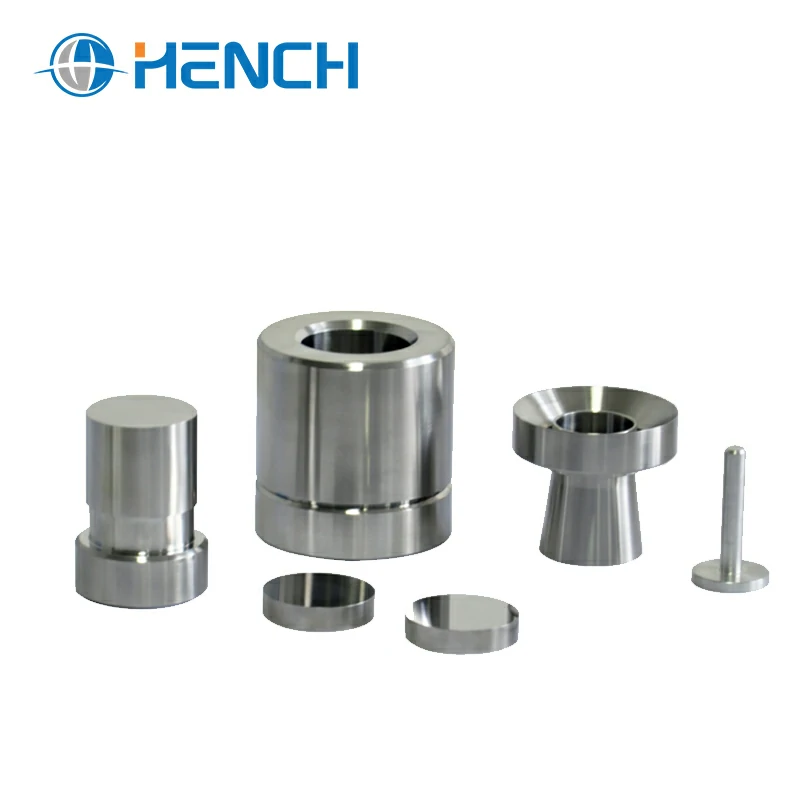
蛍光性ホウ酸ダイ 40/32mm HMP
モデル:HMP
金型材質:9Cr18
圧子硬度:HRC58
サンプルサイズ:40/32mm
キャビティ深さ:45mm
境界寸法:73 X133mm
金型重量:3.2Kg
-
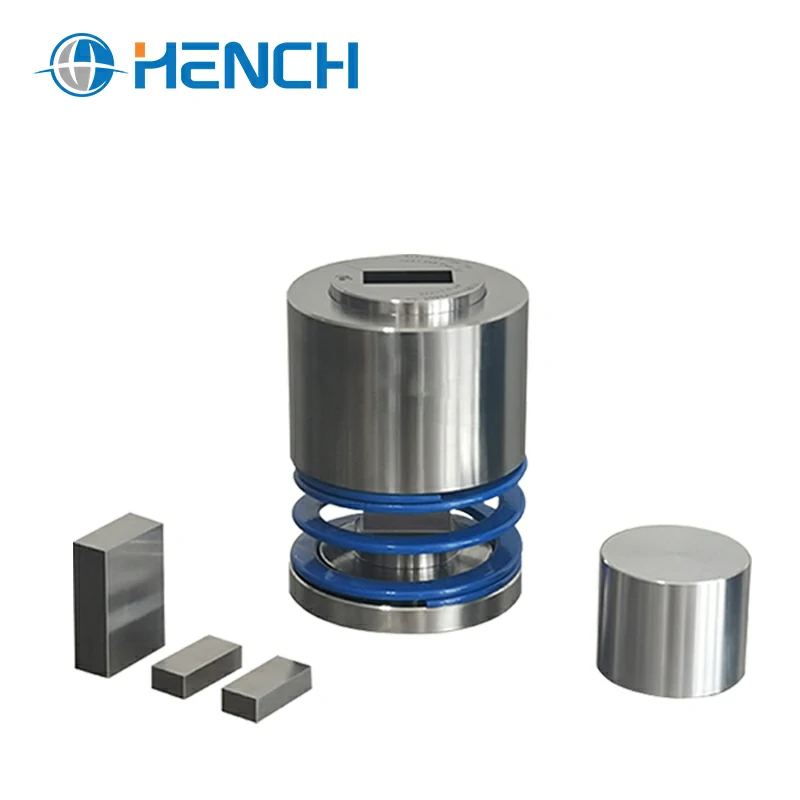
角型双方向加圧金型 3-20mm HMT
モデル:HMS
金型材質:9Cr18
圧子硬度:HRC58
サンプルサイズ:3-20mm
キャビティ深さ:40mm
境界次元: 88 X175mm
金型重量:3.0Kg
信頼性の高い生産を実現する高性能ペレットマシン金型
私たちの ペレットマシンダイ シリーズは、正確なペレット形成と長持ちする性能を保証します。工業用および実験室用に設計されたこれらのダイは、均一なサイズと密度を保証し、材料の無駄を減らして生産性を向上させます。特殊な用途には 円筒金型, 蛍光ホウ酸ダイそして 超硬ダイ 多様な加工ニーズに応える
最適な試料調製のための耐久性のあるペレットプレス金型ソリューション
当社のペレットプレス金型は、精度と弾力性のために設計されています。各ペレットプレスダイセットは、高圧下での繰り返しの使用に耐えるよう、高品質の材料で作られています。錠剤のプレス、粉末の圧縮、試料の前処理に理想的なこれらのダイは、実験室や産業用途で一貫した品質を維持しながら効率を高めます。
Product Category Navigation
To help procurement managers quickly navigate our comprehensive manufacturing index, Hench organizes its precision engineering molds into seven distinct, certified sub-series aligned with specific laboratory behaviors:
-
Cylindrical Dies: The global industry standard for routine dry powder compaction, specifically optimized for fabricating perfectly uniform, round solid tablets and analytical pellets.
-
Fluorescent Borate Dies: Highly specialized sample preparation matrices engineered explicitly for XRF analysis, allowing seamless compression of boric acid-backed or ring-jacketed geological samples.
-
Sintered Carbide Dies: Fabricated from ultra-hard tungsten carbide materials to process highly abrasive ceramic, mineral, or hard metallic powders under extreme, sustained tonnage without cavity scoring.
-
Circular / Square Blown Dies: Engineered with flat-surface platen parameters to facilitate advanced film blowing, resin flattening, and uniform polymer sheet preparation.
-
Special Shaped Dies: Fully custom-engineered toolings tailored to non-standard dimensions, multi-bore requirements, and bespoke geometric designs based on proprietary research blueprints.
-
Square / Rectangular Pressing Dies: Precision geometric molds providing linear, multi-axial pressure consolidation for structural material science, metallurgy, and battery electrode testing.
-
Electric Heating Dies: Advanced temperature-controlled mold assemblies featuring integrated heating elements for simultaneous application of thermal energy and mechanical load during composite curing.
The Comprehensive Pellet Die Comparison Table
To streamline your vendor screening and procurement processes, this technical matrix maps our official sub-categories to their primary scientific target environments:
| Official Die Category | Ejected Sample Profile | Primary Spectroscopy & Analysis | Recommended System Integration |
| 円筒金型 | Round Solid Tablet | Routine FTIR Spectroscopy & KBr Analysis | Manual & Automatic Benchtop Presses |
| 蛍光ホウ酸ダイ | Boric Acid Jacketed Disk | High-Throughput XRF Elemental Mapping | Automated Heavy-Duty Hydraulic Presses |
| 超硬焼結金型 | Ultra-Dense Round Pellet | Hard Alloys, Ceramics & Powder Metallurgy | Industrial High-Tonnage Systems |
| 丸型/角型ブロー金型 | Thin Polymer/Resin Film | Polymeric Materials & Rheological Testing | Film Blowing Platens & Dedicated Presses |
| 特殊形状金型 | Bespoke Custom Geometry | Unique Proprietary Research Protocols | Tailored Hydraulic Press Platens |
| 正方形/長方形プレス金型 | Rectangular Solid Block | Battery Anode/Cathode & Material Evaluation | Manual & Motorized Laboratory Presses |
| 電気加熱金型 | Thermoplastic Flattened Disk | Polymer Thermal Curing & Hot Compaction | Temperature-Controlled Heating Systems |
Typical Applications & Industrial Testing Methods
The utility of a Hench hydraulic pellet die extends across a broad spectrum of critical scientific disciplines, each requiring a unique approach to structural compaction:
-
FTIR Spectroscopy & Optical Clarity: In molecular characterization, achieving a high degree of optical transmission is vital. Our specialized FTIR Pellet Die and KBr Pellet Die configurations within the Cylindrical Dies lineup apply smooth, unvaried pressure to drive out micro-air pockets, creating clear, translucent disks that maximize infrared beam transmission.
-
XRF Elemental Analysis & Surface Flatness: For X-ray Fluorescence spectrometry, sample homogeneity directly dictates signal accuracy. Our Fluorescent Borate Dies compact complex geological ores, mining concentrates, and cement powders using protective boric acid backing to form flat, highly consolidated disks capable of maintaining their structural integrity under high-vacuum analytical conditions.
-
Advanced Material Science & Energy Storage: Researching solid-state battery cells demands flawless powder compaction without internal structural layering. Utilizing our Square / Rectangular Pressing Dies or heavy-duty Powder Press Die systems allows technicians to fabricate uniform anode, cathode, and solid electrolyte blocks, optimizing ion conductivity data for next-generation energy research.
-
Industrial Quality Control & Polymer R&D: From testing technical ceramics like zirconia and alumina to shaping raw plastics, our Sintered Carbide Dies and Circular / Square Blown Dies allow material engineers to process highly abrasive substances or evaluate melt-blowing properties directly on a laboratory scale.
Powder Compatibility & Matrix Pairing Guide
A common challenge in laboratory procurement is determining whether a specific mold sub-category can safely compress a unique particulate substance without causing scratching or premature die failure. Hench dies are chemically and mechanically verified for an extensive material matrix:
| Targeted Material Matrix | Core Laboratory Property | Recommended Official Sub-Category | Operational Engineering Benefit |
| KBr Powder | Soft optical salts | 円筒金型 | Standard tool steel execution provides an exceptionally polished internal path to clear optical clarity. |
| Cement Powder, Mineral Concentrates, & Raw Ceramic Powder | High abrasiveness and uneven particulate flow | 超硬焼結金型 | Ultra-hard tungsten carbide matrices completely prevent internal micro-scoring on plunger walls. |
| Mining Elements & Geological Samples | High-volume spectral scanning and ring-jacket setups | 蛍光ホウ酸ダイ | Delivers the specific specialized ring-die environment required for cross-contamination-free binding. |
| Thermal-Responsive Polymer Powders | Heat-sensitive composite matrices | 電気加熱金型 | Provides controlled, localized environmental heating to encourage uniform melting and curing. |
| General Polymers & Synthetics | Thin-layer profiling and sheet testing | 丸型/角型ブロー金型 | Parallel flat-surface platens pair seamlessly with workflows optimized for flat film blowing. |
Strategic Buying Guide: How to Choose Your Pellet Press Die
Selecting the correct ペレットプレス金型セット requires a careful balance between your final sample dimensions, material characteristics, and the capabilities of your hydraulic press.
- First, define your analytical methodology. If your primary task is infrared spectroscopy, a 13mm cylindrical die remains the undisputed global standard for KBr sample prep. For elemental analysis via XRF, however, you will need to choose our Fluorescent Borate series—typically utilizing a 32mm or 40mm boundary—supported by a boric acid substrate or steel jacket ring to prevent the compressed mineral disk from crumbling during handling.
- Second, evaluate the physical nature of your powder. Soft pharmaceuticals and chemical binders respond perfectly to standard tool steel. In contrast, if you are conducting heavy powder metallurgy, compressing metallic alloys, or shaping hard technical ceramics, investing in our Sintered Carbide series is highly recommended. The extreme hardness of carbide prevents internal scratching, ensuring that your pellets emerge with clean edges and that the die retains its tight dimensional tolerances across thousands of continuous pressing cycles.
Die Metallurgy & Material Engineering Analysis
To maximize the operational lifespan of your laboratory die set, Hench offers three premium metallurgical compositions engineered for distinct laboratory environments:
-
Premium 9Cr18 Tool Steel (HRC 58): Our standard engineering material. It offers an exceptional balance of tensile strength and wear resistance, making it the ideal choice for routine laboratory pellet preparation and general spectroscopy.
-
YT15 Tungsten Carbide (HRC 90): Engineered for extreme durability. This ultra-hard composite forms the core of our 超硬焼結金型, completely resisting the abrasive scoring caused by carbide powders, metal alloys, and hard minerals under high-tonnage settings.
-
High-Grade Stainless Steel (HRC 60): Specifically treated for corrosive or highly humid environments. It prevents oxidation and pitting when working with acidic chemical compounds or moisture-rich samples, preserving the mirror finish of the internal cavity.
Compatible Equipment & Complete Workflow Integration
ヘンチ ペレットプレスダイ units are engineered to interface flawlessly with our comprehensive line of hydraulic pressing machinery, allowing laboratories to build a fully integrated sample preparation station:
-
Manual Hydraulic Press Series — Compact, benchtop hand-pumped presses ideal for low-throughput laboratories pairing with standard 13mm KBr dies.
-
Automatic Hydraulic Press Series — Programmable, PLC-controlled motorized systems built to drive our heavy-duty industrial molds and XRF steel ring dies with perfect repeatability.
-
Heated Hydraulic Press Systems — Designed to supply the electrical and thermal infrastructure required to operate our digital 電気加熱金型.
-
Vacuum & Isostatic Pressing Units — Specialized pressure networks configured to support air-free compaction and multi-directional powder consolidation.
Commercial Value: Why Global Procurement Managers Choose Hench
As a dedicated ペレットプレスダイ manufacturer, Hench Technology bridges the gap between precision toolmaking and scientific application. Our manufacturing process centers on tight dimensional tolerances, ensuring that the clearance between the plunger and the die bore effectively eliminates powder leakage without binding under pressure. By mirror-polishing every internal component to a flawless finish, we minimize the friction that frequently leads to pellet cracking during extraction.
We provide extensive OEM and custom design services for international distribution networks, university tenders, and proprietary industrial laboratories—tailoring bore diameters, multi-cavity geometries, and specialized outer casings to meet any unique scientific protocol with reliable global delivery and lifetime engineering support.
よくある質問
Q1:実験室で使用されるペレットプレスダイとは何ですか?
A laboratory ペレットプレスダイ is a high-strength, precision-machined mold assembly used to compress loose powder samples into solid, uniform tablets, discs, or briquettes. This compaction is a required step for downstream analytical testing methods, primarily FTIR and XRF spectroscopy, where sample density and surface flatness alter the accuracy of the analytical beam.
Q2:蛍光ホウ酸ダイの用途は何ですか?
当社の蛍光ホウ酸ダイは、X線蛍光( XRF )サンプル調製用に特別に設計されています。それらは、緩い粉末試料(セメント、鉱物、または土壌など)を支持的なホウ酸塩基上に直接圧縮するか、または保護リング内に埋め込むことを可能にし、分光計内の高真空下で試料が崩壊するのを防ぎます。
Q3:標準的なスチールダイスよりも焼結カーバイドダイスを選択する必要があるのはいつですか?
非常に研磨性の高い材料、硬質金属粉末、地質鉱石、または高度な技術セラミックを使用する場合は、当社の焼結炭化物金型を選択する必要があります。極端なタングステンカーバイド硬度( HRC 90 )は、プレス中に内部チャンバーが傷ついたり傷ついたりするのを防ぎ、長い工具寿命を保証します。
Q4:円形/四角形の吹き抜け金型は、標準的なプレス金型とどのように異なりますか?
標準的なプレスダイは、乾燥粉末を厚く固体のペレットに圧縮します。対照的に、円形/四角形のブローダイは、プラスチックフィルム試験およびレオロジー評価のために、加熱された未加工ポリマー樹脂を超薄型の均一なシートに延伸またはブローするように設計された、平らで最適化されたプラテン構造を特徴としています。
Q5:Henchは正確な温度に合わせて電熱ダイをカスタマイズできますか?
はい。当社の電気加熱ダイは、ローカライズされた発熱体とデジタル熱センサーを統合しています。それらは、既存の加熱油圧プレスとシームレスにインターフェースするために、ターゲットの最大温度制限と物理的なプラテンサイズに関して完全にカスタマイズできます。
Q6:ダイからの排出時にペレットが割れたり積層したりすることがあるのはなぜですか?
ペレット割れは、典型的には、粉末マトリックス内に閉じ込められた空気、材料の弾性限界を超える過加圧、または引っ掻かれた内部ダイキャビティによって引き起こされる。専用の排気可能なダイを使用すると、サンプルから空気を引き出すのに役立ちますが、ダイに鏡面研磨された空洞があることを確認することで、ペレット抽出中に構造的破損を引き起こす摩擦を最小限に抑えることができます。
Q7:精密検査室のペレットダイはどのように清掃およびメンテナンスする必要がありますか?
各プレスサイクルの後、ダイを分解し、アセトンやイソプロピルアルコールなどの適切な揮発性溶媒で飽和した低糸くずの実験室用ワイプですべての表面を慎重に拭きます。特にKBrのような腐食性塩をプレスした後、コンポーネントを完全に乾燥させ、微小なピッチングを防ぐためにダイセットを低湿度の乾燥機に保管することが重要です。
Q8:Henchは、ユニークなジオメトリや特定の自動化されたワークフローに合わせて金型をカスタマイズできますか?
はい。一次メーカーとして、Henchは特殊形状金型シリーズを通じて完全なOEMおよびカスタムエンジニアリングサービスを提供しています。お客様の特定の青写真パラメータとトン数要件に基づいて、長方形の金型、マルチボアペレットダイ、特殊なリング構成、またはカスタム寸法のツーリングを設計および製造することができます。
ヘンチ・テクノロジーについて
ヘンチ・テクノロジーは、精密金型製造において30年以上の専門知識を有し、世界中の産業界にサービスを提供しています。信頼されるペレットダイのプロバイダーとして、当社は技術革新、品質、顧客満足に重点を置いています。当社の専門チームは、すべてのダイが厳格な基準を満たしていることを保証し、研究所や産業用ペレット成形プロジェクトに信頼性の高いソリューションを提供しています。当社の詳細については ヘンチ・テクノロジー.