MRDのデシケーターキャビネットが、インドネシアの高湿度環境下で島津製作所のIRAffinity FTIR分光計を保護
2026年6月11日
In tropical regions such as Indonesia, laboratories often face significant challenges in protecting sensitive analytical instruments from excessive humidity. High moisture levels can negatively affect instrument performance, shorten component lifespan, and compromise data accuracy.
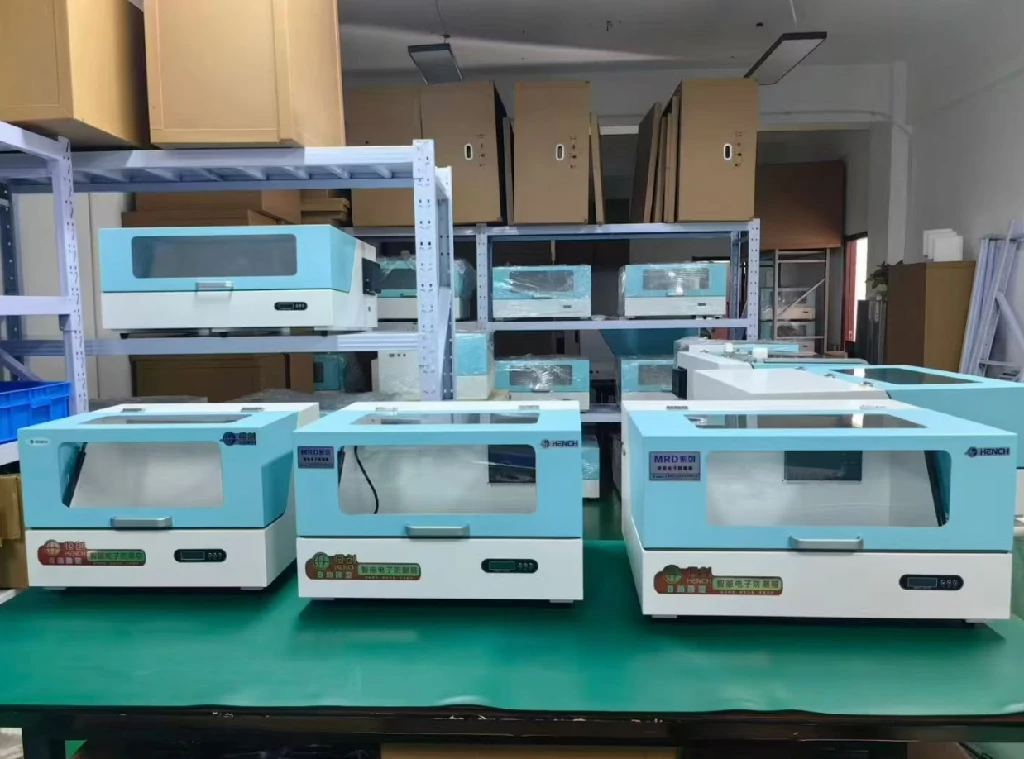
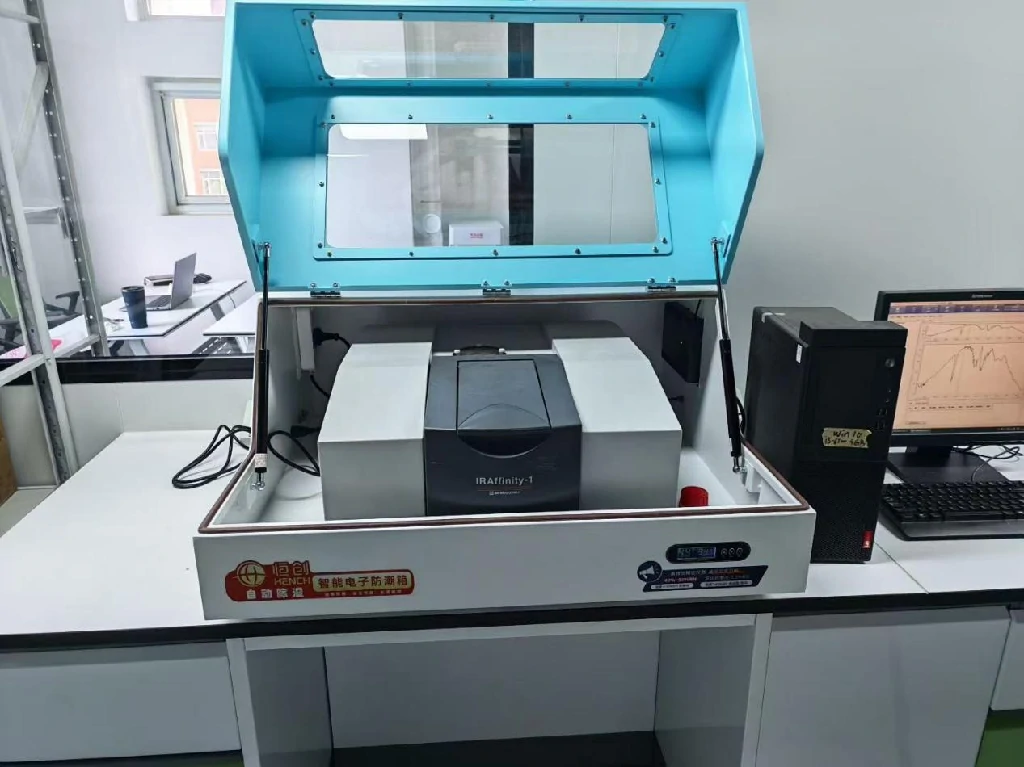
Recently, a leading Indonesian advanced materials company successfully installed a customized MRD Desiccator Cabinet from Hench to protect its Shimadzu IRAffinity-1S FTIR Spectrometer. Designed specifically for the Shimadzu Affinity series, the cabinet provides continuous humidity control and long-term protection for critical optical components, ensuring stable analytical performance in demanding environmental conditions.
The Challenge: High Humidity Threatens FTIR Performance
Fourier Transform Infrared (FTIR) spectroscopy plays a critical role in material characterization, quality control, and research and development activities.
However, FTIR instruments are particularly sensitive to moisture.
The core optical components of the Shimadzu IRAffinity series, including beam splitters, interferometers, detectors, and optical windows, can be affected by excessive humidity. In tropical climates where relative humidity frequently exceeds 70% RH, laboratories often encounter:
- Optical window fogging
- コーティングの劣化
- Baseline drift
- Optical alignment instability
- Reduced detector performance
- Increased maintenance costs
For laboratories that rely on accurate spectral analysis, humidity-related issues can lead to unreliable test results and unexpected instrument downtime.
Before implementing the MRD Desiccator Cabinet, the customer relied on conventional desiccants and room-level humidity control systems. However, these methods presented several limitations:
- Inconsistent humidity control
- Frequent desiccant replacement
- Limited protection during power outages
- Difficulty maintaining recommended humidity levels for FTIR equipment
As a result, the laboratory sought a more reliable and long-term solution specifically designed for FTIR instrument protection.
The Solution: Customized MRD Desiccator Cabinet for Shimadzu IRAffinity
To address the customer’s requirements, Hench supplied an MRD Series Desiccator Cabinet engineered specifically for the Shimadzu IRAffinity FTIR spectrometer.
The cabinet is designed to provide stable low-humidity storage and operational protection while allowing convenient instrument access during daily laboratory use.
Precision Humidity Control
The MRD cabinet maintains a controlled internal environment with humidity levels typically stabilized around 40% RH or lower.
This significantly reduces the risk of moisture-related damage to sensitive optical components and helps maintain consistent instrument performance.
Dedicated Design for Shimadzu IRAffinity Instruments
Unlike general-purpose storage cabinets, the MRD model is specifically designed to accommodate the dimensions and operating requirements of the Shimadzu Affinity series.
The customized design ensures:
- Optimal instrument fit
- Easy access for routine operation
- Efficient humidity protection
- Improved laboratory space utilization
Continuous Protection During High-Humidity Seasons
Indonesia’s tropical climate presents year-round humidity challenges, especially during rainy seasons.
The MRD Desiccator Cabinet provides continuous environmental protection regardless of external weather conditions, helping laboratories maintain stable operating conditions throughout the year.
Reduced Maintenance Requirements
By minimizing moisture exposure, the cabinet helps protect critical FTIR components from premature deterioration.
This contributes to:
- Lower maintenance costs
- Reduced downtime
- Extended instrument lifespan
- Improved laboratory productivity
Results: Stable FTIR Operation and Reliable Analytical Data
Since installation, the customer has reported significant improvements in instrument stability and laboratory efficiency.
Key benefits include:
Stable Humidity Environment
The cabinet consistently maintains humidity around 40% RH, meeting the recommended environmental conditions for FTIR operation.
Improved Instrument Reliability
Reduced moisture exposure has helped eliminate concerns regarding optical component degradation and humidity-related performance fluctuations.
Enhanced Data Consistency
Stable operating conditions contribute to improved baseline stability and more reliable spectral results for materials analysis applications.
Greater Confidence in Laboratory Operations
Laboratory personnel can focus on research and testing activities without concerns about environmental damage to valuable analytical equipment.
According to the laboratory manager:
“Indonesia’s high humidity has always been a concern for our FTIR instrument. Since installing the MRD Desiccator Cabinet, humidity has remained stable, and the instrument operates much more reliably. It has completely eliminated our concerns about moisture-related damage.”
Why Moisture Protection Matters for FTIR Laboratories
Environmental control is one of the most important factors influencing FTIR instrument performance.
Maintaining appropriate humidity levels helps laboratories:
- Protect sensitive optical components
- Improve baseline stability
- Reduce maintenance frequency
- Extend instrument service life
- Ensure accurate analytical results
For laboratories located in tropical, coastal, or high-humidity regions, a dedicated FTIR desiccator cabinet can provide a cost-effective solution for long-term instrument protection.
Hench Desiccator Cabinets for Laboratory Instrument Protection
Hench specializes in developing customized moisture protection solutions for analytical instruments used in research, quality control, and industrial laboratories.
The MRD Series Desiccator Cabinet is designed to support:
- FTIR Spectrometers
- Infrared Analysis Systems
- Optical Instruments
- Laboratory Testing Equipment
- Precision Analytical Instruments
By combining intelligent humidity control, customized design, and reliable performance, Hench helps laboratories maintain optimal operating environments for their most valuable equipment.
As global demand for advanced materials research and analytical testing continues to grow, Hench remains committed to delivering innovative laboratory protection solutions that improve instrument reliability and support accurate scientific analysis.