HENCH 40-Ton Manual Pellet Press for XRF Sample Preparation with Boric Acid Mold
8月 8, 2026
The HENCH 40-ton manual pellet press is a reliable ラボプレス designed for X-ray Fluorescence (XRF) sample preparation. Combined with a high-precision boric acid mold, it provides an efficient pelletizing solution for ores, minerals, building materials and various powder samples.
With stable hydraulic performance, accurate pressure control and simple manual operation, this manual pellet press is widely used in geological laboratories, material research institutes, mining testing centers and third-party analytical laboratories. It produces compact, flat and crack-resistant pellets that meet the requirements of XRF spectrometric analysis.
Featuring a maximum pressing capacity of 40 tons, the hydraulic system delivers uniform pressure output throughout the sample preparation process. The equipment does not require an external power supply, making it suitable for routine laboratory operations where stable and convenient sample preparation is required.
For laboratories requiring different pressing capacities and configurations, HENCH also provides a complete range of laboratory press solutions for various sample preparation applications.
Key Features of the 40-Ton Manual Pellet Press
The HENCH hydraulic pellet press combines reliable mechanical design with easy operation to improve sample preparation efficiency.
Stable 40-Ton Hydraulic Pressing Performance
The press adopts a high-quality hydraulic structure that provides smooth and consistent pressure application. The 40-ton rated capacity allows users to prepare different powder samples with excellent forming results while maintaining reliable long-term operation.
The stable pressure output helps ensure uniform sample density, reducing inconsistencies caused by uneven compression during XRF sample preparation.
No External Power Supply Required
Unlike electric laboratory presses, the manual hydraulic design eliminates the need for electrical power during operation. This makes the equipment suitable for laboratories with limited power availability or applications requiring flexible installation.
The compact structure and independent operation mode allow users to easily integrate the press into different laboratory environments.
Uniform Pellet Formation
With accurate pressure control and a precision boric acid mold, the equipment creates dense and uniform sample pellets with:
- Smooth testing surfaces;
- Clear pellet edges;
- Strong structural stability;
- Reduced powder shedding.
These characteristics help improve the accuracy and repeatability of XRF spectrometric analysis.
Simple Operation and Low Maintenance
The manual operating system features a straightforward workflow with a short learning curve. Operators can quickly master standardized pellet preparation procedures without complicated training.
The durable hydraulic components also reduce maintenance requirements and provide reliable performance for daily laboratory use.
Boric Acid Mold Pelletizing Process for XRF Testing
The boric acid mold adopts a classic “sandwich” sample preparation structure, which is especially suitable for lightweight, loose or non-binding powder samples.
During pellet preparation, boric acid powder is placed above and below the test sample to form a protective supporting layer. This structure helps prevent common problems during pressing, including:
- Sample cracking;
- Powder scattering;
- Pellet deformation;
- Poor sample forming.
Compared with direct powder pressing methods, the boric acid substrate method provides better pellet stability and a cleaner testing surface. It reduces measurement errors caused by uneven sample distribution, surface defects and powder loss during XRF testing.
By combining the HENCH manual pellet press with a precision boric acid mold, laboratories can achieve consistent sample preparation results and improve testing efficiency.
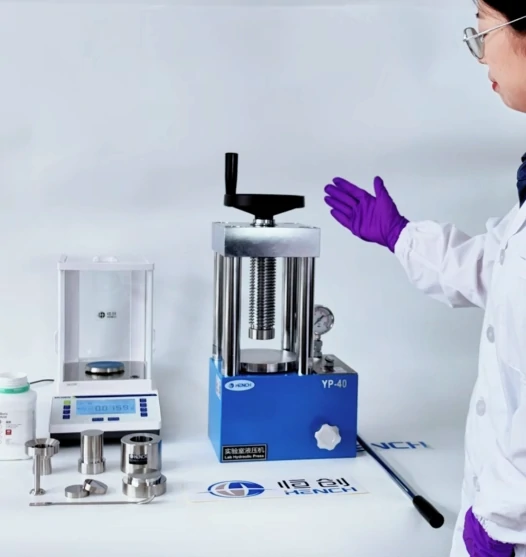
How to Prepare XRF Samples with a Manual Pellet Press
Proper preparation procedures are essential for producing high-quality XRF pellets. The following steps help ensure stable and repeatable results.
Step 1: Clean and Inspect the Mold Components
Before operation, clean all mold components carefully, including the die sleeve, upper punch and lower punch. Use lint-free paper to remove residual powder and prevent sample contamination.
At the same time, inspect the hydraulic system to ensure normal operation. Check that:
- The hydraulic circuit works smoothly;
- The pressure gauge resets accurately;
- The relief valve operates properly.
These inspections help maintain pressing accuracy and equipment reliability.
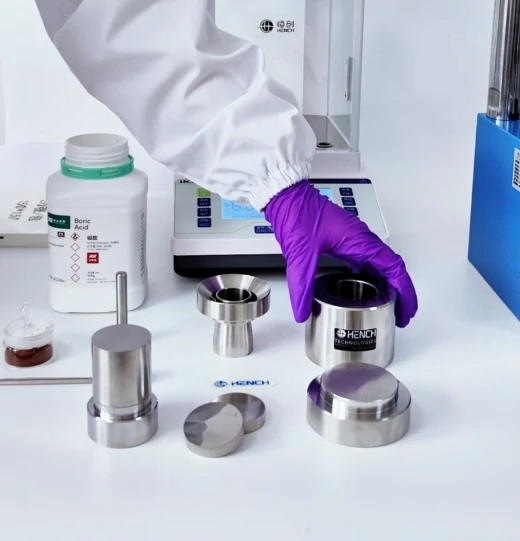
Step 2: Prepare the Sample Materials
Before pelletizing, fully dry the test powder and boric acid material. Moisture inside the sample is one of the main causes of:
- Pellet cracking;
- Mold sticking;
- Internal separation;
- Poor forming quality.
Dry materials help achieve stronger and more stable pellets.
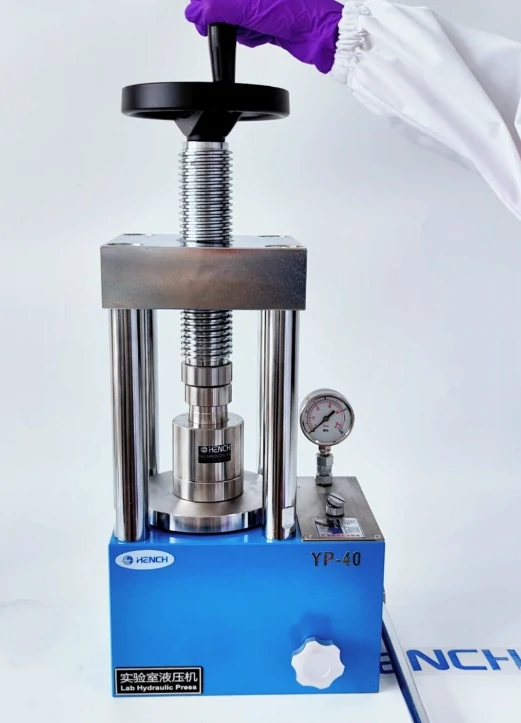
Step 3: Load the Boric Acid Mold
Place the lower punch into the die sleeve and add a uniform layer of boric acid powder at the bottom. Level and lightly compact the powder layer.
Next, add the prepared sample powder evenly. Avoid uneven distribution, excessive accumulation or surface depressions.
Finally, add another layer of boric acid powder to completely cover the sample, creating a stable three-layer structure. Install the upper punch carefully for pressing.
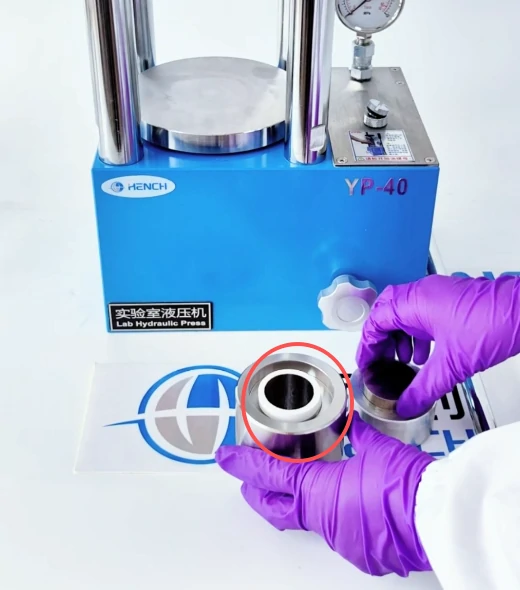
Step 4: Perform Hydraulic Pressing
Place the assembled mold at the center of the press working table. Correct positioning ensures vertical force transmission and prevents uneven pressure distribution, mold wear and inconsistent pellet thickness.
Before increasing pressure, loosen the relief valve and operate the hydraulic handle several times to remove air from the oil circuit. Then close the valve and gradually increase pressure.
For most powder samples, the recommended pressing pressure is generally between 15 and 25 tons. Once the target pressure is reached, maintain pressure for approximately 30 to 60 seconds.
This pressure holding process allows:
- Internal air release;
- Better powder compression;
- Improved pellet density;
- Reduced internal stress.
After pressing, slowly release the pressure and remove the mold after the hydraulic plunger fully retracts.
Invert the mold and perform a secondary light pressing process for pellet ejection. The finished pellet wrapped with boric acid can then be removed for XRF testing.
Advantages of Using a Laboratory Press for Powder Sample Preparation
A professional ラボプレス provides more consistent results compared with uncontrolled manual pressing methods.
The HENCH 40-ton manual pellet press offers several advantages:
| Advantage | ベネフィット |
|---|---|
| Stable hydraulic pressure | Ensures consistent pellet density |
| Boric acid mold compatibility | Suitable for loose and non-adhesive powders |
| Manual operation | Flexible use without power supply |
| Compact structure | Saves laboratory space |
| Repeatable preparation process | Improves XRF testing reliability |
The combination of controlled hydraulic pressing and standardized mold design makes this equipment an effective solution for laboratories requiring accurate powder sample preparation.
Applications of HENCH 40-Ton Manual Pellet Press
The HENCH manual pellet press is suitable for a wide range of XRF sample preparation applications, including:
- Geological sample analysis;
- Mining and mineral testing;
- Cement and building material inspection;
- Powder metallurgy research;
- Chemical material analysis;
- University and research laboratories;
- Third-party testing services.
Its reliable performance and simple operation make it suitable for both routine testing environments and professional research applications.
Operation and Maintenance Safety Guidelines
To ensure safe operation and extend equipment service life, users should follow proper maintenance procedures.
Never exceed the maximum pressure limit of 40 tons. Excessive pressure may damage the hydraulic cylinder, mold components or other mechanical parts.
During pressing, keep hands and body away from the area directly above the mold to maintain laboratory safety.
After each operation:
- Clean all mold components immediately;
- Remove remaining powder residue;
- Dry the surfaces thoroughly;
- Store the mold in a clean and dry environment.
Proper maintenance helps prevent corrosion, surface damage and reduced pressing accuracy.
Reliable XRF Sample Preparation Solution from HENCH
The HENCH 40-ton manual pellet press with boric acid mold provides laboratories with a practical and reliable solution for powder sample preparation.
Through stable hydraulic performance, simple operation and consistent pellet forming quality, it supports accurate XRF analysis across multiple industries.
Whether used for geological testing, material research or industrial laboratory analysis, this manual pellet press delivers efficient sample preparation with dependable performance.
For more sample preparation equipment options, HENCH provides a complete range of laboratory press solutions to meet different testing requirements.