Singapore Laboratory Uses HENCH Anti-Moisture Cabinet for Thermo Scientific Nicolet iN10
September 24, 2026
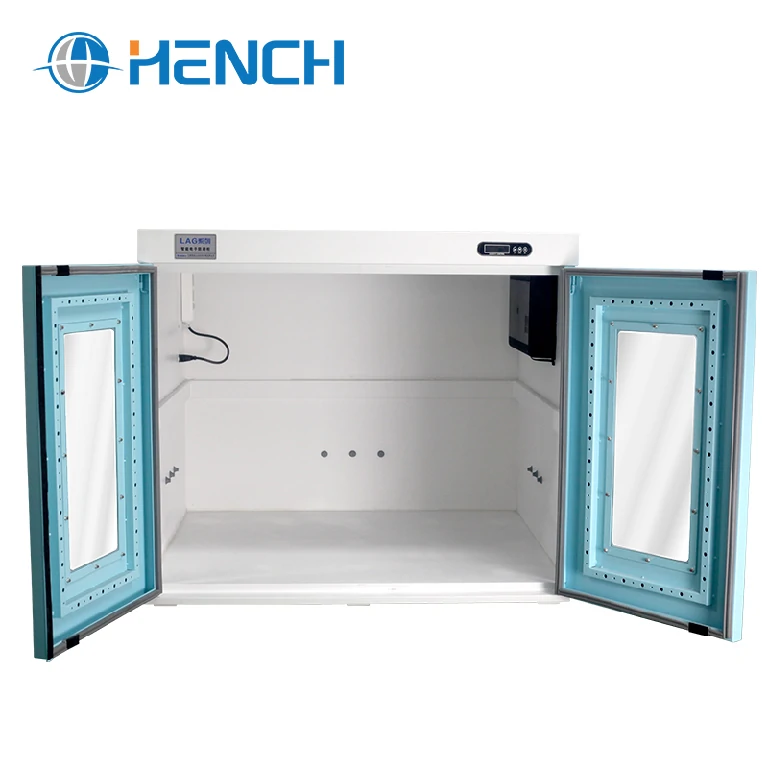
A laboratory in Singapore has recently put a customized HENCH electronic anti-moisture cabinet into daily operation alongside a Thermo Scientific Nicolet iN10 FTIR microscope. The cabinet was designed around the laboratory’s available space, instrument accessories, and storage requirements.
The project provides a practical example of how controlled low-humidity storage can support precision infrared analysis. HENCH worked with the customer to configure the cabinet size, internal layout, humidity control, and operating functions for the laboratory environment.
Protecting Accessories Used in Micro-FTIR Analysis
The Thermo Scientific Nicolet iN10 is a micro-FTIR system designed for infrared analysis of small samples. Micro-FTIR techniques support applications such as contamination analysis, polymer identification, coating analysis, and material characterization.
Many accessories and consumables used with infrared analysis can be sensitive to moisture. These may include infrared windows, potassium bromide components, optical accessories, and prepared samples.
A humid laboratory environment can increase the risk of moisture-related problems during storage. Condensation, surface contamination, and degradation can affect sensitive components and may create additional maintenance requirements.
For laboratories operating expensive analytical instruments, storage conditions therefore form part of the overall equipment management strategy. Keeping frequently used accessories in a controlled environment can also make daily testing workflows easier to manage.

A Customized Storage Solution for the Singapore Laboratory
The customer required a storage cabinet that could fit the existing laboratory layout while providing controlled low-humidity storage.
HENCH configured the cabinet according to the available installation space and the types of materials that needed to be stored. The design considered cabinet dimensions, shelf arrangement, humidity control, access, and day-to-day laboratory use.
The cabinet uses a humidity sensing and control system to monitor the internal environment. Its dehumidification system maintains a controlled low-humidity space for moisture-sensitive components and laboratory materials.
The enclosed cabinet structure also helps reduce exposure to airborne dust. This provides an additional layer of protection for optical accessories and other sensitive items.
Internal shelves can be adjusted according to the size of different items. This allows the same cabinet to accommodate both smaller accessories and larger equipment components without wasting storage space.

Humidity Control for Precision Laboratory Storage
Humidity control was one of the key requirements for this project.
An electronic anti-moisture cabinet needs to maintain a stable internal environment rather than simply remove moisture at startup. The control system therefore monitors humidity and activates dehumidification according to the set operating conditions.
Continuous operation helps maintain the required storage environment without relying on frequent manual intervention. This is particularly useful for laboratories where sensitive accessories remain inside the cabinet between testing cycles.
The system also provides a practical way to organize moisture-sensitive materials. Instead of storing different accessories across multiple locations, the laboratory can keep commonly used items within one controlled storage area.
For laboratories using FTIR, Raman, XRF, and other analytical equipment, the same principle can apply to different types of moisture-sensitive components.

Installation and Commissioning in Singapore
The HENCH team supported the customer during cabinet installation and commissioning.
The process included cabinet positioning, parameter adjustment, and operating guidance. The configuration was reviewed according to the customer’s laboratory environment and daily usage requirements.
HENCH also considered the relationship between instrument operation and accessory storage. This helped integrate the cabinet into the laboratory workflow rather than treating it as a standalone storage unit.
After commissioning, the cabinet entered routine use alongside the Nicolet iN10 system.
The completed installation provides dedicated low-humidity storage for accessories and materials used during infrared analysis. It also gives laboratory personnel a more organized way to manage moisture-sensitive items.

Designed Around the Laboratory, Not a Standard Cabinet Size
Laboratory environments often have limited floor space and different equipment layouts. A standard cabinet configuration may not always match the actual storage requirements.
This project therefore focused on customization rather than a fixed cabinet arrangement.
The cabinet dimensions were matched to the available space. Shelf positions were configured around the customer’s storage needs. Humidity control settings were also selected according to the intended application.
This approach allows the storage solution to work within an existing laboratory layout while keeping daily access practical.
HENCH provides similar application-specific solutions for different analytical instruments. For example, laboratories working with Thermo Scientific FTIR systems can consider the Thermo Scientific FTIR anti-moisture cabinet as a reference for dedicated moisture-controlled storage.
Supporting Daily Laboratory Management
The value of an anti-moisture cabinet extends beyond moisture removal.
A controlled cabinet creates a dedicated location for sensitive accessories and consumables. This can simplify inventory organization and reduce unnecessary exposure to ambient laboratory humidity.
Adjustable shelving also supports different storage requirements as laboratory workflows change. Frequently used items can remain accessible, while less frequently used components can stay protected inside the controlled environment.
Continuous humidity monitoring provides another layer of operational control. Laboratory personnel can manage storage conditions without repeatedly checking the cabinet manually.
For precision analysis laboratories, these details can contribute to more consistent equipment management and a cleaner working environment.
A Practical Example of Precision Equipment Support
The Singapore installation demonstrates the role of environmental support equipment in a precision analysis laboratory.
The FTIR microscope handles the analytical task, while the anti-moisture cabinet supports the storage conditions required by sensitive accessories and materials. Both parts contribute to a complete laboratory workflow.
This type of setup can be relevant to laboratories working with polymers, electronic materials, pharmaceuticals, chemicals, and other moisture-sensitive samples or components.
The exact cabinet configuration should depend on the instrument type, storage materials, available space, target humidity range, and operating requirements.
HENCH can develop the cabinet configuration around these conditions rather than applying the same specification to every laboratory.
HENCH Laboratory Moisture-Control Solutions
HENCH focuses on environmental support equipment for precision analytical laboratories. Its solutions cover moisture-controlled storage for applications involving FTIR, Raman, XRF, and other analytical instruments.
The company provides customized cabinet configurations based on laboratory space, storage requirements, humidity targets, and equipment accessories. Support can cover solution design, cabinet configuration, delivery, commissioning, and after-sales service.
The Singapore project with the Thermo Scientific Nicolet iN10 demonstrates how a customized anti-moisture cabinet can become part of a laboratory’s daily analytical workflow. By combining controlled humidity with practical storage organization, the solution provides dedicated environmental protection for sensitive accessories and materials.
Project Highlights
| Item | Project Details |
|---|---|
| Project location | Singapore |
| Application | Micro-FTIR laboratory |
| Analytical instrument | Thermo Scientific Nicolet iN10 |
| Supporting equipment | Electronic anti-moisture cabinet |
| Main requirement | Low-humidity storage |
| Configuration | Customized cabinet size and internal layout |
| Control | Electronic humidity sensing and dehumidification |
| Installation | Positioning, commissioning, and operation guidance |
| Status | Installed and in routine use |
References
- Thermo Fisher Scientific, Nicolet iN10 Infrared Microscope: Thermo Fisher Scientific
- HENCH, FTIR laboratory anti-moisture cabinet solution: HENCH FTIR