



Serie de matrices de moldeo de pellets
Descubra nuestros matriz de granulado diseñada para ofrecer precisión y durabilidad en el moldeo de pelets. Optimice su producción y consiga resultados uniformes. Para consultas o soluciones personalizadas, Póngase en contacto con nosotros ¡hoy!
-
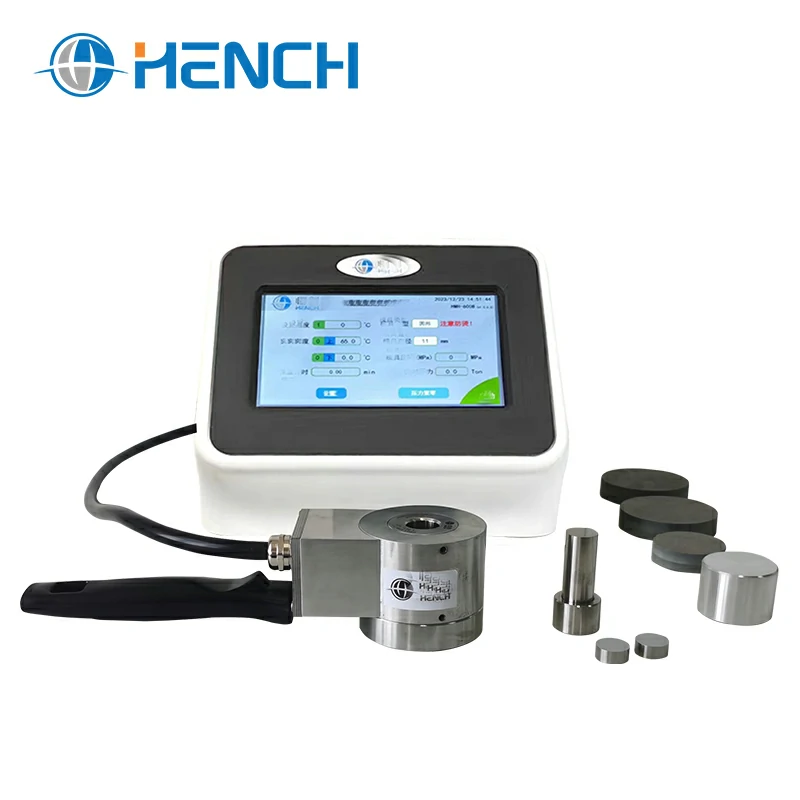
Matriz de calentamiento eléctrico circular 300℃/500℃ HCH
Modelo:HCH
Tamaño de la muestra:Φ3,0-100mm
Material de la matriz:9Cr18
Dureza de indentación:HRC58
Profundidad de la cavidad:45mm
Tamaño:78x138mm
Peso: 2,7 kg.
El tamaño y el peso se determinan en función del diámetro de la matriz.
-
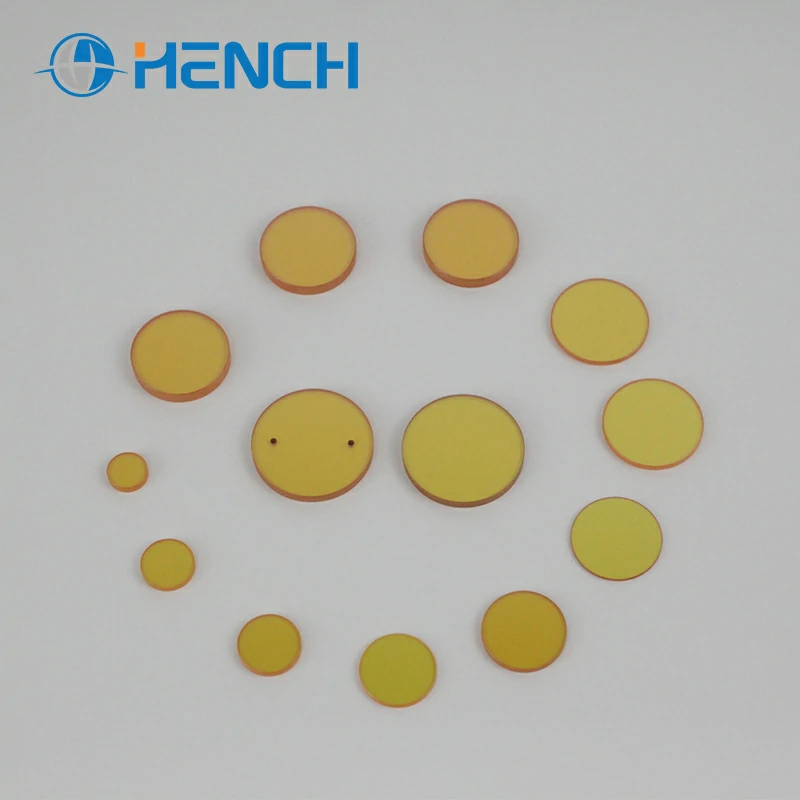
Ventana ZnSe Hoja de seleniuro de zinc
Coeficiente de absorción aparente:10,6 Mm 0,0005/cm
Tasa de cambio de temperatura del índice de refracción:10,6 lm 61x10-6/°C
Inhomogeneidad del índice de refracción:632.8nm<6x10⁻⁶
Pirocondu ctividad:0,18w/cm/°c
Calor específico:0,356J/g/c
coeficiente de dilatación lineal:20℃:7,57x10⁻⁶/°C
-
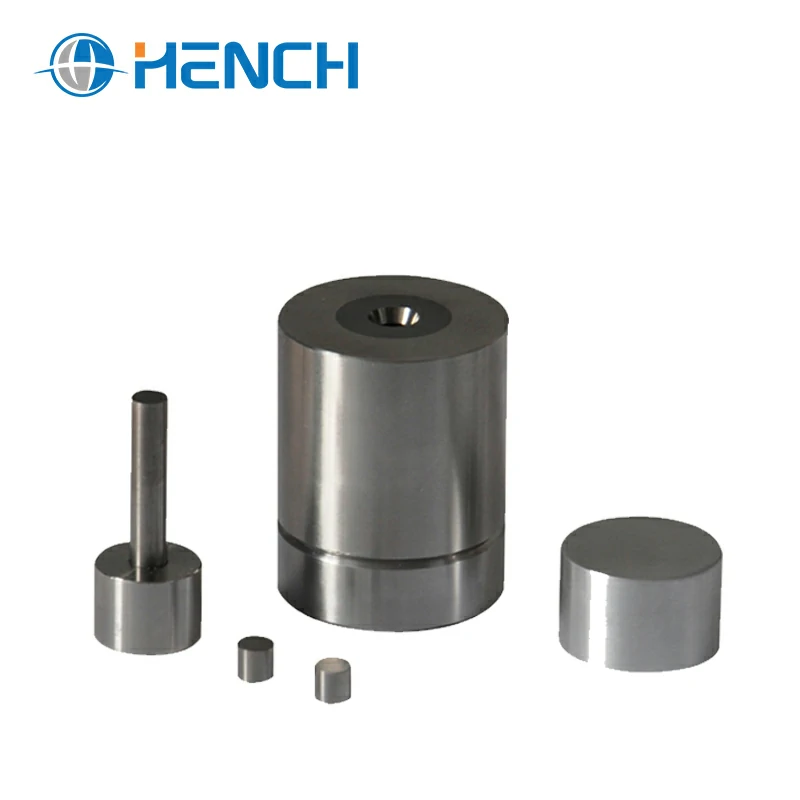
matriz de carburo sinterizado 2-50mm HMW
Modelo:HMW
Tamaño de la muestra: 2-50 mm
Material del molde:YT15
Dureza del penetrador:HRC90
Profundidad de la cavidad:30/40/45/50mm
Tamaño:43~150mm
Peso:0,78~7Kg
-
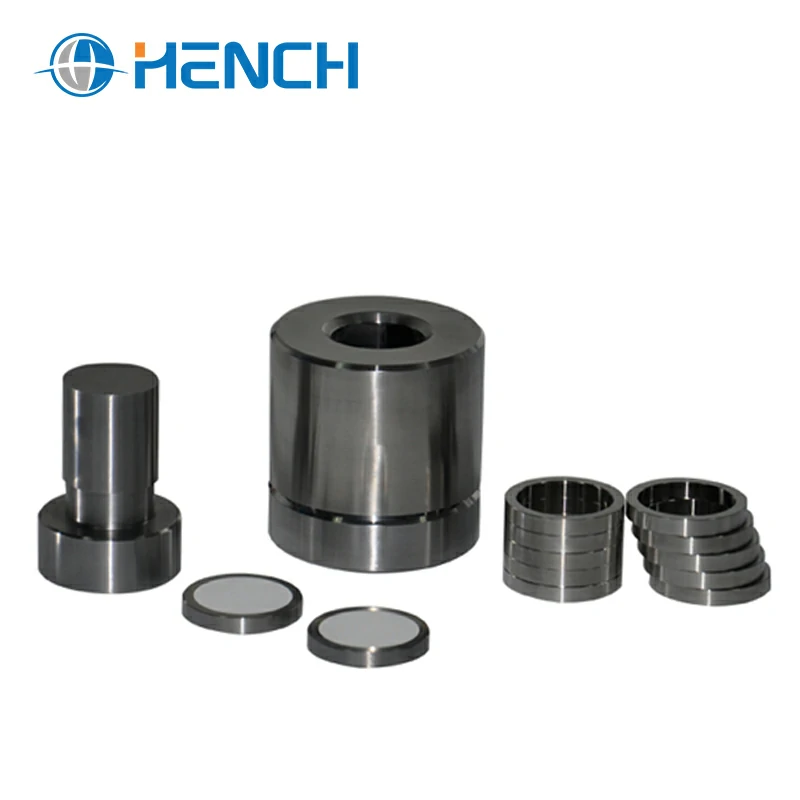
Troquel anular de acero especial fluorescente 40/32 mm HMP
Modelo:HMP
Material del molde:9Cr18
Dureza del penetrador:HRC58
Tamaño de la muestra:40/32mm
Profundidad de la cavidad:45mm
Dimensión límite:73 X133mm
Peso del troquel:3,2Kg
-
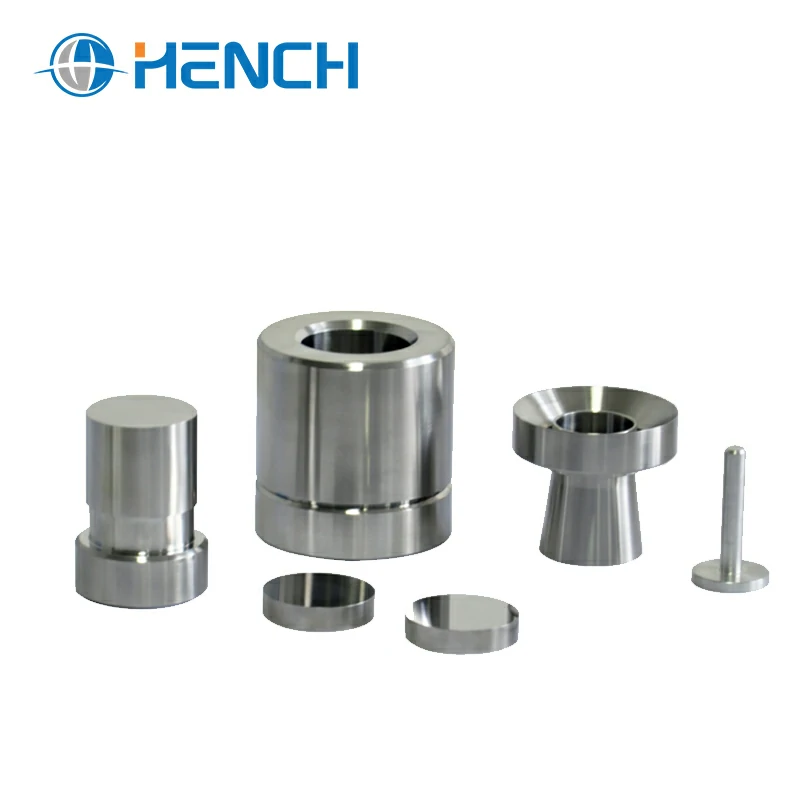
Troquel de borato fluorescente específico 40/32mm HMP
Modelo:HMP
Material del molde:9Cr18
Dureza del penetrador:HRC58
Tamaño de la muestra:40/32mm
Profundidad de la cavidad:45mm
Dimensión límite:73 X133mm
Peso del troquel:3,2Kg
-
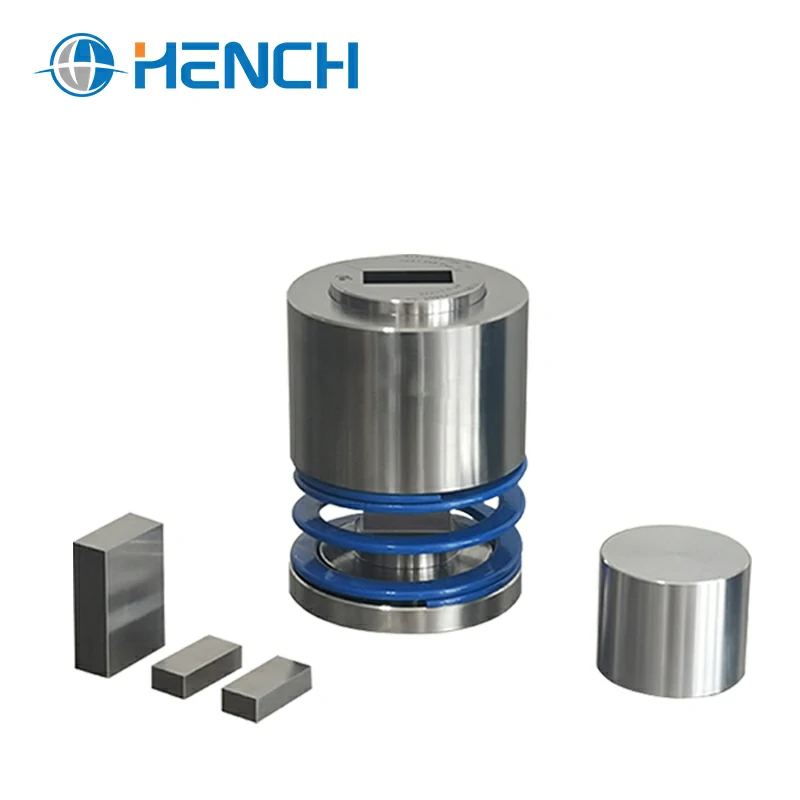
Matriz de presurización bidireccional cuadrada 3-20mm HMT
Modelo:HMS
Material del molde:9Cr18
Dureza del penetrador:HRC58
Tamaño de la muestra: 3-20 mm
Profundidad de la cavidad:40 mm
Dimensión límite:88 X175mm
Peso del troquel:3,0Kg
Matrices de alto rendimiento para peletizadoras para una producción fiable
Nuestra matriz de la peletizadora garantiza una formación de gránulos precisa y un rendimiento duradero. Diseñadas para uso industrial y de laboratorio, estas matrices garantizan un tamaño y densidad uniformes, reduciendo el desperdicio de material y mejorando la productividad. Para aplicaciones especializadas, explore nuestra Matrices cilíndricas, Matrices de borato fluorescentey Matrices de carburo sinterizado para satisfacer diversas necesidades de procesamiento.
Soluciones duraderas de prensas de granulado para una preparación óptima de las muestras
Nuestros troqueles para prensas de granulado están diseñados para ofrecer precisión y resistencia. Cada juego de troqueles para prensas de granulado está fabricado con materiales de alta calidad para resistir el uso repetido a alta presión. Ideales para el prensado de comprimidos, la compactación de polvos y la preparación de muestras, estas matrices mejoran la eficiencia al tiempo que mantienen una calidad constante para aplicaciones industriales y de laboratorio.
Product Category Navigation
To help procurement managers quickly navigate our comprehensive manufacturing index, Hench organizes its precision engineering molds into seven distinct, certified sub-series aligned with specific laboratory behaviors:
-
Cylindrical Dies: The global industry standard for routine dry powder compaction, specifically optimized for fabricating perfectly uniform, round solid tablets and analytical pellets.
-
Fluorescent Borate Dies: Highly specialized sample preparation matrices engineered explicitly for XRF analysis, allowing seamless compression of boric acid-backed or ring-jacketed geological samples.
-
Sintered Carbide Dies: Fabricated from ultra-hard tungsten carbide materials to process highly abrasive ceramic, mineral, or hard metallic powders under extreme, sustained tonnage without cavity scoring.
-
Circular / Square Blown Dies: Engineered with flat-surface platen parameters to facilitate advanced film blowing, resin flattening, and uniform polymer sheet preparation.
-
Special Shaped Dies: Fully custom-engineered toolings tailored to non-standard dimensions, multi-bore requirements, and bespoke geometric designs based on proprietary research blueprints.
-
Square / Rectangular Pressing Dies: Precision geometric molds providing linear, multi-axial pressure consolidation for structural material science, metallurgy, and battery electrode testing.
-
Electric Heating Dies: Advanced temperature-controlled mold assemblies featuring integrated heating elements for simultaneous application of thermal energy and mechanical load during composite curing.
The Comprehensive Pellet Die Comparison Table
To streamline your vendor screening and procurement processes, this technical matrix maps our official sub-categories to their primary scientific target environments:
| Official Die Category | Ejected Sample Profile | Primary Spectroscopy & Analysis | Recommended System Integration |
| Matrices cilíndricas | Round Solid Tablet | Routine FTIR Spectroscopy & KBr Analysis | Manual & Automatic Benchtop Presses |
| Troqueles de borato fluorescente | Boric Acid Jacketed Disk | High-Throughput XRF Elemental Mapping | Automated Heavy-Duty Hydraulic Presses |
| Matrices de carburo sinterizado | Ultra-Dense Round Pellet | Hard Alloys, Ceramics & Powder Metallurgy | Industrial High-Tonnage Systems |
| Troqueles soplados circulares / cuadrados | Thin Polymer/Resin Film | Polymeric Materials & Rheological Testing | Film Blowing Platens & Dedicated Presses |
| Troqueles con formas especiales | Bespoke Custom Geometry | Unique Proprietary Research Protocols | Tailored Hydraulic Press Platens |
| Troqueles de prensado cuadrados / rectangulares | Rectangular Solid Block | Battery Anode/Cathode & Material Evaluation | Manual & Motorized Laboratory Presses |
| Calefacción eléctrica Dies | Thermoplastic Flattened Disk | Polymer Thermal Curing & Hot Compaction | Temperature-Controlled Heating Systems |
Typical Applications & Industrial Testing Methods
The utility of a Hench hydraulic pellet die extends across a broad spectrum of critical scientific disciplines, each requiring a unique approach to structural compaction:
-
FTIR Spectroscopy & Optical Clarity: In molecular characterization, achieving a high degree of optical transmission is vital. Our specialized FTIR Pellet Die and KBr Pellet Die configurations within the Cylindrical Dies lineup apply smooth, unvaried pressure to drive out micro-air pockets, creating clear, translucent disks that maximize infrared beam transmission.
-
XRF Elemental Analysis & Surface Flatness: For X-ray Fluorescence spectrometry, sample homogeneity directly dictates signal accuracy. Our Fluorescent Borate Dies compact complex geological ores, mining concentrates, and cement powders using protective boric acid backing to form flat, highly consolidated disks capable of maintaining their structural integrity under high-vacuum analytical conditions.
-
Advanced Material Science & Energy Storage: Researching solid-state battery cells demands flawless powder compaction without internal structural layering. Utilizing our Square / Rectangular Pressing Dies or heavy-duty Powder Press Die systems allows technicians to fabricate uniform anode, cathode, and solid electrolyte blocks, optimizing ion conductivity data for next-generation energy research.
-
Industrial Quality Control & Polymer R&D: From testing technical ceramics like zirconia and alumina to shaping raw plastics, our Sintered Carbide Dies and Circular / Square Blown Dies allow material engineers to process highly abrasive substances or evaluate melt-blowing properties directly on a laboratory scale.
Powder Compatibility & Matrix Pairing Guide
A common challenge in laboratory procurement is determining whether a specific mold sub-category can safely compress a unique particulate substance without causing scratching or premature die failure. Hench dies are chemically and mechanically verified for an extensive material matrix:
| Targeted Material Matrix | Core Laboratory Property | Recommended Official Sub-Category | Operational Engineering Benefit |
| KBr Powder | Soft optical salts | Matrices cilíndricas | Standard tool steel execution provides an exceptionally polished internal path to clear optical clarity. |
| Cement Powder, Mineral Concentrates, & Raw Ceramic Powder | High abrasiveness and uneven particulate flow | Matrices de carburo sinterizado | Ultra-hard tungsten carbide matrices completely prevent internal micro-scoring on plunger walls. |
| Mining Elements & Geological Samples | High-volume spectral scanning and ring-jacket setups | Troqueles de borato fluorescente | Delivers the specific specialized ring-die environment required for cross-contamination-free binding. |
| Thermal-Responsive Polymer Powders | Heat-sensitive composite matrices | Calefacción eléctrica Dies | Provides controlled, localized environmental heating to encourage uniform melting and curing. |
| General Polymers & Synthetics | Thin-layer profiling and sheet testing | Troqueles soplados circulares / cuadrados | Parallel flat-surface platens pair seamlessly with workflows optimized for flat film blowing. |
Strategic Buying Guide: How to Choose Your Pellet Press Die
Selecting the correct juego de troqueles para prensa de pellets requires a careful balance between your final sample dimensions, material characteristics, and the capabilities of your hydraulic press.
- First, define your analytical methodology. If your primary task is infrared spectroscopy, a 13mm cylindrical die remains the undisputed global standard for KBr sample prep. For elemental analysis via XRF, however, you will need to choose our Fluorescent Borate series—typically utilizing a 32mm or 40mm boundary—supported by a boric acid substrate or steel jacket ring to prevent the compressed mineral disk from crumbling during handling.
- Second, evaluate the physical nature of your powder. Soft pharmaceuticals and chemical binders respond perfectly to standard tool steel. In contrast, if you are conducting heavy powder metallurgy, compressing metallic alloys, or shaping hard technical ceramics, investing in our Sintered Carbide series is highly recommended. The extreme hardness of carbide prevents internal scratching, ensuring that your pellets emerge with clean edges and that the die retains its tight dimensional tolerances across thousands of continuous pressing cycles.
Die Metallurgy & Material Engineering Analysis
To maximize the operational lifespan of your laboratory die set, Hench offers three premium metallurgical compositions engineered for distinct laboratory environments:
-
Premium 9Cr18 Tool Steel (HRC 58): Our standard engineering material. It offers an exceptional balance of tensile strength and wear resistance, making it the ideal choice for routine laboratory pellet preparation and general spectroscopy.
-
YT15 Tungsten Carbide (HRC 90): Engineered for extreme durability. This ultra-hard composite forms the core of our Matrices de carburo sinterizado, completely resisting the abrasive scoring caused by carbide powders, metal alloys, and hard minerals under high-tonnage settings.
-
High-Grade Stainless Steel (HRC 60): Specifically treated for corrosive or highly humid environments. It prevents oxidation and pitting when working with acidic chemical compounds or moisture-rich samples, preserving the mirror finish of the internal cavity.
Compatible Equipment & Complete Workflow Integration
Hench pellet press die units are engineered to interface flawlessly with our comprehensive line of hydraulic pressing machinery, allowing laboratories to build a fully integrated sample preparation station:
-
Manual Hydraulic Press Series — Compact, benchtop hand-pumped presses ideal for low-throughput laboratories pairing with standard 13mm KBr dies.
-
Automatic Hydraulic Press Series — Programmable, PLC-controlled motorized systems built to drive our heavy-duty industrial molds and XRF steel ring dies with perfect repeatability.
-
Heated Hydraulic Press Systems — Designed to supply the electrical and thermal infrastructure required to operate our digital Calefacción eléctrica Dies.
-
Vacuum & Isostatic Pressing Units — Specialized pressure networks configured to support air-free compaction and multi-directional powder consolidation.
Commercial Value: Why Global Procurement Managers Choose Hench
As a dedicated pellet press die manufacturer, Hench Technology bridges the gap between precision toolmaking and scientific application. Our manufacturing process centers on tight dimensional tolerances, ensuring that the clearance between the plunger and the die bore effectively eliminates powder leakage without binding under pressure. By mirror-polishing every internal component to a flawless finish, we minimize the friction that frequently leads to pellet cracking during extraction.
We provide extensive OEM and custom design services for international distribution networks, university tenders, and proprietary industrial laboratories—tailoring bore diameters, multi-cavity geometries, and specialized outer casings to meet any unique scientific protocol with reliable global delivery and lifetime engineering support.
Preguntas frecuentes
Q1: What is a pellet press die used for in a laboratory setting?
A laboratory pellet press die is a high-strength, precision-machined mold assembly used to compress loose powder samples into solid, uniform tablets, discs, or briquettes. This compaction is a required step for downstream analytical testing methods, primarily FTIR and XRF spectroscopy, where sample density and surface flatness alter the accuracy of the analytical beam.
Q2: What are Fluorescent Borate Dies used for?
Our Fluorescent Borate Dies are specifically engineered for X-ray Fluorescence (XRF) sample preparation. They allow loose powder samples (like cement, minerals, or soil) to be compressed directly onto a supportive boric acid base or embedded within protective rings, preventing sample crumbling under high vacuum inside spectrometers.
Q3: When should I choose Sintered Carbide Dies over standard steel dies?
You should select our Sintered Carbide Dies when working with highly abrasive materials, hard metal powders, geological ores, or advanced technical ceramics. The extreme tungsten carbide hardness (HRC 90) prevents the internal chamber from being scratched or scored during pressing, ensuring a long tooling lifespan.
Q4: How do Circular / Square Blown Dies differ from standard pressing dies?
Standard pressing dies compress dry powder into thick, solid pellets. In contrast, Circular / Square Blown Dies feature flat, optimized platen structures designed to stretch or blow heated raw polymer resins into ultra-thin, uniform sheets for plastic film testing and rheological evaluations.
Q5: Can Hench customize Electric Heating Dies for precise temperatures?
Yes. Our Electric Heating Dies integrate localized heating elements and digital thermal sensors. They can be fully customized regarding targeted maximum temperature limits and physical platen sizes to interface seamlessly with your existing heated hydraulic presses.
Q6: Why do pellets sometimes crack or laminate upon ejection from the die?
Pellet cracking is typically caused by trapped air within the powder matrix, over-pressurization past the material's elastic limit, or a scratched internal die cavity. Using specialized evacuable dies can help pull air out of the sample, while ensuring your die has a mirror-polished cavity minimizes the friction that causes structural failure during pellet extraction.
Q7: How should a precision laboratory pellet die be cleaned and maintained?
After each pressing cycle, disassemble the die and carefully wipe all surfaces with low-lint laboratory wipes saturated with an appropriate volatile solvent, such as acetone or isopropyl alcohol. It is critical to dry the components completely, particularly after pressing corrosive salts like KBr, and store the die set in a low-humidity desiccator to prevent micro-pitting.
Q8: Can Hench customize dies for unique geometries or specific automated workflows?
Yes. As a primary manufacturer, Hench provides full OEM and custom engineering services through our Special Shaped Dies series. We can design and fabricate rectangular molds, multi-bore pellet dies, specialized ring configurations, or custom-dimensioned toolings based on your specific blueprint parameters and tonnage requirements.
Acerca de Hench Technology
Hench Technology cuenta con más de 30 años de experiencia en la fabricación de troqueles de precisión, al servicio de industrias de todo el mundo. Como proveedor de confianza de matrices para pellets, nos centramos en la innovación, la calidad y la satisfacción del cliente. Nuestro dedicado equipo se asegura de que cada matriz cumpla con estrictas normas, ofreciendo soluciones fiables para laboratorios y proyectos industriales de moldeo de pellets. Más información sobre nuestra empresa en Tecnología Hench.