How Does a 60-Ton Electric Pellet Press with Square Split Mold Streamline Laboratory Powder Compaction?
10月 23, 2026
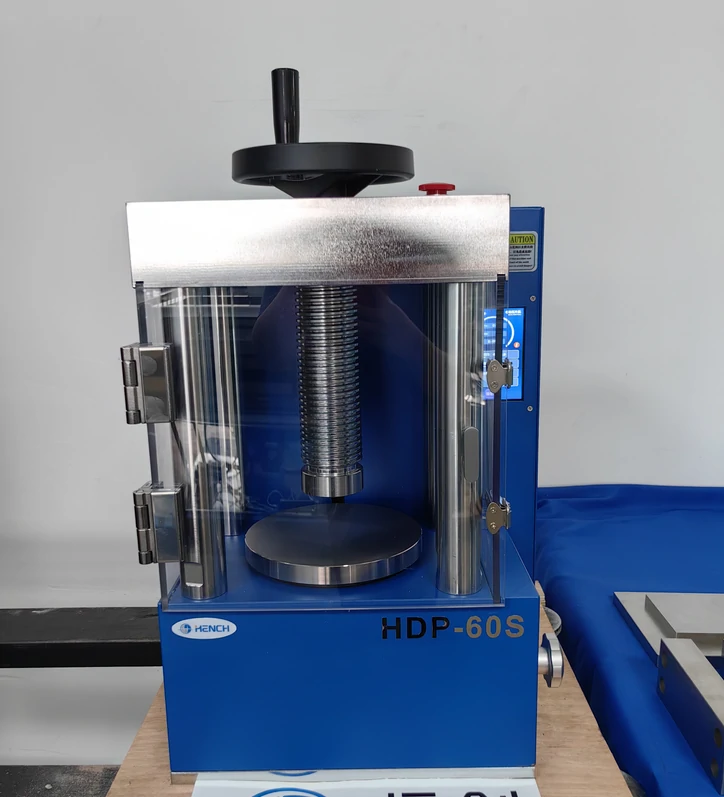
In laboratory testing such as material characterization, XRF analysis, and FTIR spectroscopy, pellet surface flatness and density determine data precision. The Hench 60-ton electric pellet press paired with a square split mold compresses inorganic powders, technical ceramics, industrial catalysts, and mineral samples. Automated electric pressure control eliminates human variation during loading cycles, while the square split mold simplifies assembly and sample retrieval. This integrated system delivers an efficient powder sample preparation solution for academic institutions, research facilities, and quality inspection laboratories.
Pre-Startup Inspection and Sample Preparation Protocol
Thorough inspection prevents equipment wear and ensures consistent pellet quality before starting the compaction cycle. Technicians should clean the press platen and mold cavity to clear residual powder and oil residues. Operators must check electrical connections and hydraulic oil lines for leakage while resetting system pressure to zero.
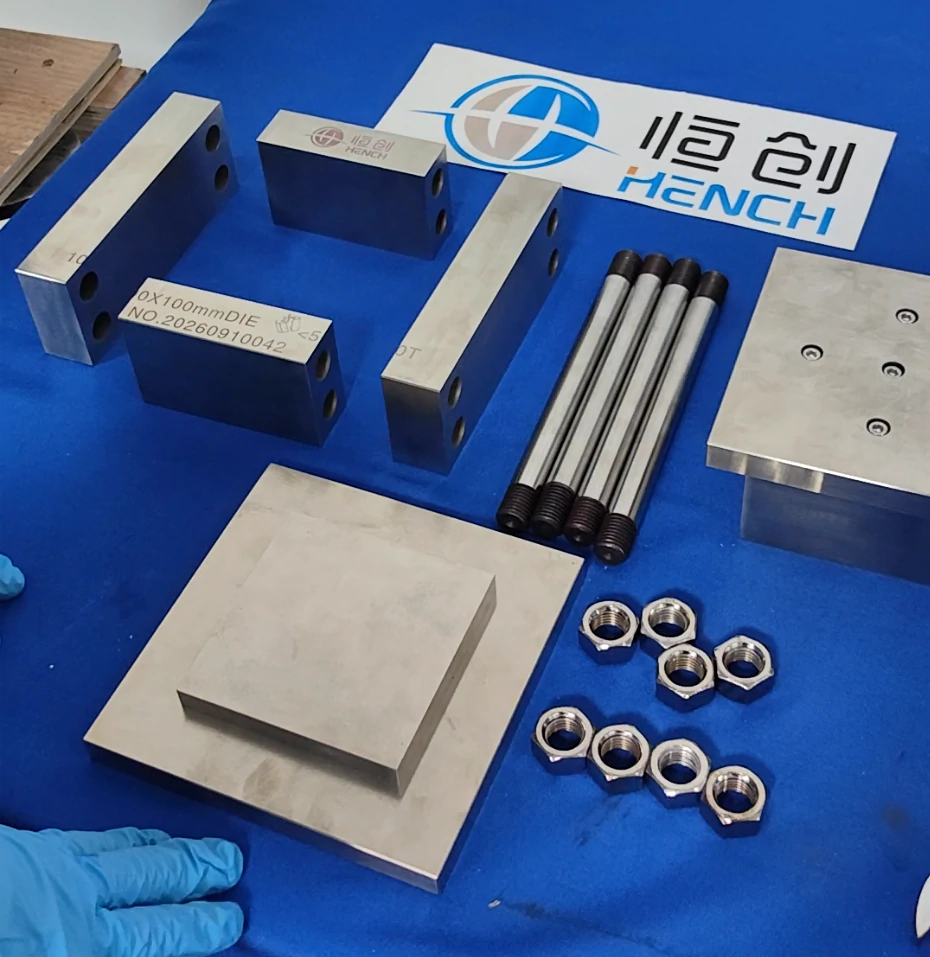
- Disassemble all components of the square split mold carefully.
- Clean and dry internal surfaces using lint-free cloths.
- Reassemble mold segments tightly without misalignment to prevent powder leaks.
- Weigh out the required powder sample precisely on an analytical balance.
- Spread powder uniformly inside the mold cavity and tap gently to level the bed.
- Mix necessary binding agents thoroughly before loading to prevent pellet cracking.
Operating Parameters and Performance Specifications
| Parameter / Feature | Technical Specification | Operational Benefit |
| Maximum Hydraulic Pressure | 60 Tons (Electric Driven) | Compresses dense inorganic and ceramic powders easily |
| Mold Configuration | High-Hardness Alloy Square Split Mold | Prevents pellet shearing during demolding |
| Pressure Control System | Precision Electric Hydraulic Valve | Eliminates operator force variation |
| Dwell Time Adjustment | Programmable Hold Control | Ensures complete particle de-airing and compaction |
| 安全機能 | Overpressure Protection Shield | Protects laboratory personnel during high-pressure cycles |
Precision Pressurization and Centered Loading Procedure
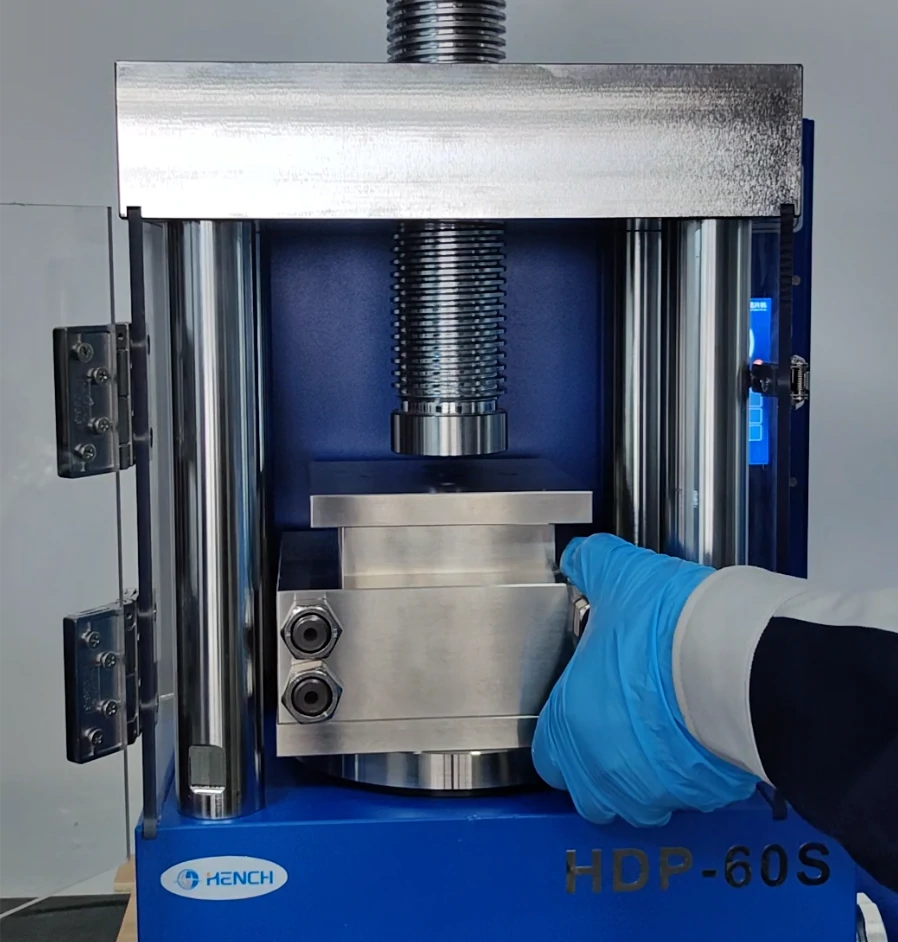
Operators must place the assembled square split mold at the geometric center of the press platen. Centered loading distributes hydraulic force evenly across internal mold surfaces. Eccentric loading damages precision molds and causes uneven platen wear.
After positioning the mold, operators input target pressure values and holding times on the control interface. Integrating an automated 電動油圧プレス into laboratory workflows ensures consistent force application across multiple batches. The pump raises hydraulic pressure smoothly to the specified target. Maintaining dwell pressure allows air trapped between powder particles to escape, eliminating internal voids. Once the holding period completes, operators release hydraulic pressure gradually. Rapid pressure drops cause elastic springback, resulting in sample lamination or horizontal cracks.
Mold Disassembly, Pellet Inspection, and Routine Maintenance
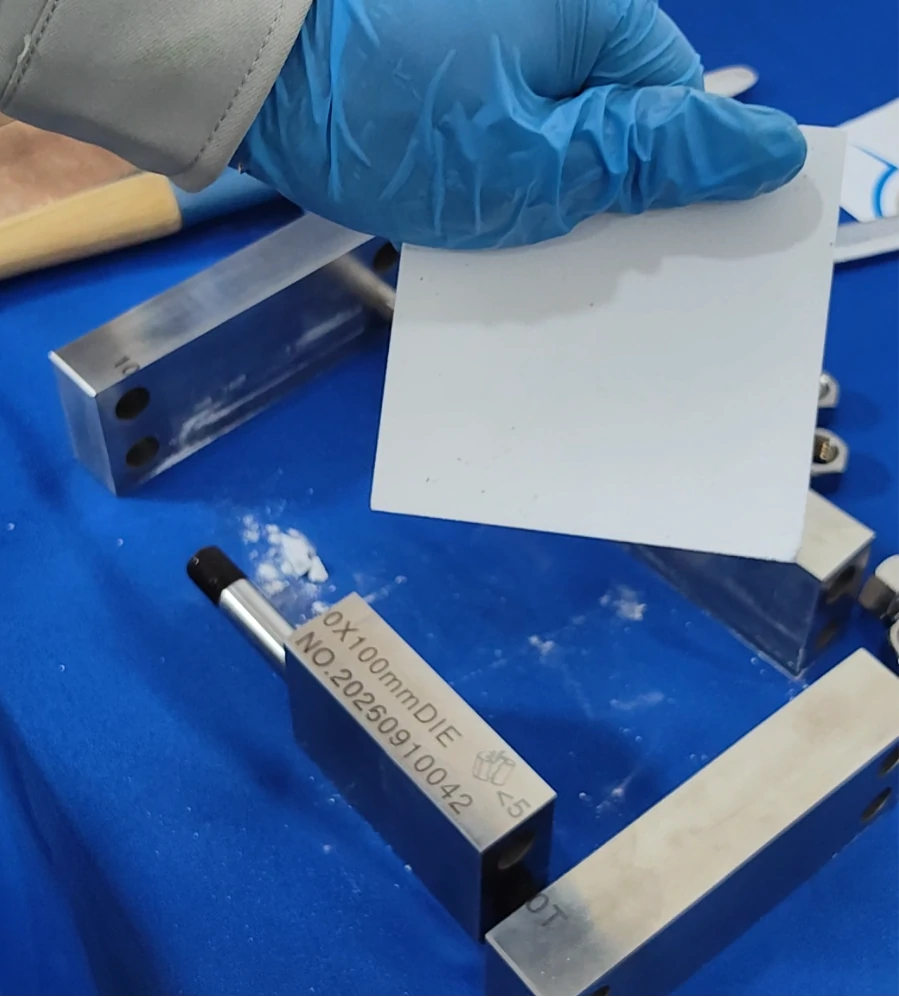
After complete depressurization, operators remove the square split mold from the pressing chamber. Technicians remove the outer mold sleeve carefully to release the square pellet without applying lateral force.
- Handle formed square pellets carefully using clean laboratory tweezers.
- Inspect pellet surfaces for edge chipping, micro-cracks, or surface bubbles.
- Transfer qualified intact pellets directly to XRF or FTIR spectrometers for testing.
- Brush residual powder from split joints using a soft dust-free brush.
- Avoid scraping mold surfaces with metallic tools to prevent scratches.
- Store cleaned dry mold components inside a desiccator cabinet to prevent oxidation.
- Reset the hydraulic press, disconnect main power, and complete the equipment logbook.
The motorized workflow delivers high operational efficiency and excellent repeatability. The 60-ton pressure capacity handles hard refractory powders effectively. The split mold structure minimizes sample breakage during demolding compared to standard one-piece dies. Consistent operation reduces sample defects, improves analytical data parallelism, and supports continuous batch processing in busy analytical laboratories.