.png)
.png)


Laboratory Hydraulic Press Machines for FTIR
Laboratory press is a precision hydraulic press machine designed specifically for scientific research, analytical sample preparation, and material testing. Unlike industrial hydraulic presses, which prioritize maximum force, lab hydraulic presses focus on controlled pressure, repeatability, safety, and compliance with industry standards.
Hench offers a comprehensive portfolio of laboratory hydraulic presses to meet diverse laboratory and light industrial requirements, covering applications from routine sample preparation to advanced material research.
| Press Type | Key Features | Typical Applications |
|---|---|---|
| Manual & Digital Presses | Compact bench-top design, manual or digital pressure control, precise force adjustment | Low-throughput laboratories, educational use, small-sample and analytical pellet preparation |
| Automatic Presses | Fully programmable operation, high repeatability, automated pressing cycles | High-throughput research labs, quality control environments, standardized sample preparation |
| Heated Presses | Integrated temperature control, stable heating system, pressure–temperature synchronization | Polymers, composites, thermoplastic materials, advanced material processing |
| Vacuum Presses | Vacuum-assisted pressing, minimized air entrapment, improved density uniformity | Sensitive powders, analytical samples, materials prone to oxidation or porosity |
| Isostatic Presses | Multi-directional uniform pressure, liquid pressure transmission principle | Ceramics, pharmaceuticals, powder metallurgy, specialized material research |
This full lineup ensures laboratories can find the right laboratory press or lab hydraulic press machine for FTIR, XRF, or general sample preparation, delivering precision, repeatability, and compliance with ASTM and ISO standards.
Contact us to get the latest lab hydraulic press machine prices.
-
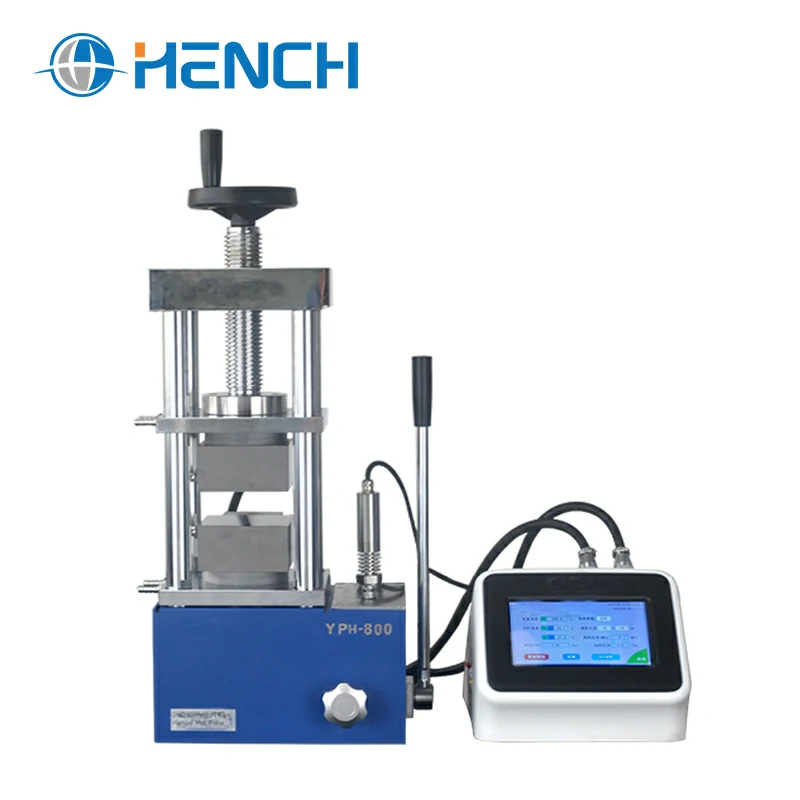
Hot Tablet Press Handheld YPH-800C
-
Pressure & Cylinder: 0–24T pressure limit with a 95mm diameter piston diameter and 30mm stroke.
-
Thermal Performance: Max. 300℃ heating range (thermostat up to 800℃ powered by a 1300W aluminum heating core and premium imported mica insulation.
-
Molding Space: Equipped with 100×100 electroplated polished plates and an 80×140 effective working space.
-
Smart Control: 7" LCD touchscreen supporting English/Chinese toggle. Displays automated MPa pressure conversion via PCB program, with customizable control accuracy up to 0.1T/ ±0.1℃.
-
Advanced Profile: 5-stage programmable temperature control (auto-heating, auto-insulation, natural cooling) with manual unlimited dwell time.
-
Safety & Structural Design: Rigid 4-column positioning with an upper plate screw suspension design; features an automated high-temperature alert >5℃ anti-scald prompt).
-
Power & Dimensions: 220V (50Hz/60Hz) / Optional 110V; compact footprint with a 68kg total system weight.
-
-
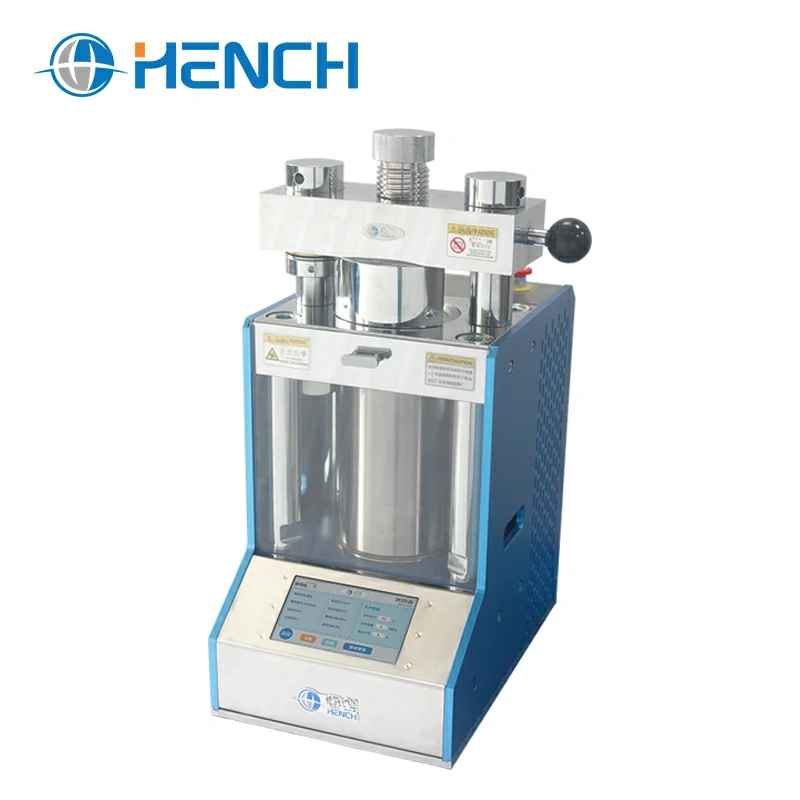
20/30/40/60/100-ton Fully Automatic Isostatic Desktop Tablet Press Machine HAP-J
-
Max Isostatic Pressure: < 300 Pa (Customizable up to 500 Pa for extreme powder densification).
-
Vessel Architecture: Ф50 x 150 mm chamber forged from premium integrated 3Cr13 die steel (weldless design for maximum fatigue resistance).
-
Multi-Stage Auto-Programming: 5-segment automated pressure profiling (expandable to 15 segments) managing automated ramp, dwell, and depressurization sequences.
-
Dual-Unit Auto-Conversion: Intelligent UI automatically converts and directly displays hydraulic cylinder tonnage (0.5 ~ 60 T) into actual sample pressure (MPa).
-
Flexible Dwell-Time Control: Infinite holding time (N seconds) with the ability to program distinct, independent holding durations for each individual segment.
-
Dual-Layer Physical Shielding: Heavy-duty 10mm aluminum oxide plate + 6mm plexiglass protective door acting as a highly secure passive blast shield.
-
Active Safety Matrix: Smart overpressure auto-relief, cylinder stroke-limit protection, and an instant mechanical/software emergency stop.
-
Data Traceability Engine: Internal storage logs up to 10,000 historical runs, exportable instantly via an onboard USB port for compliant lab auditing.
-
-
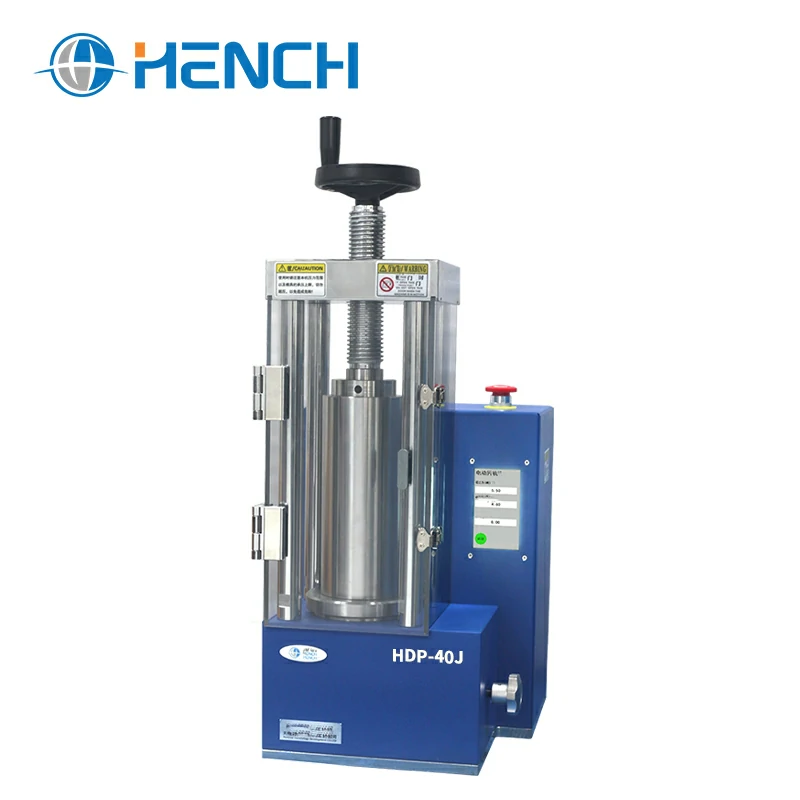
20/40/60-ton Isostatic Electric Press Machine HDP-J
-
Tonnage & Pressure: High-precision range of 0.5–40.0T with a maximum isostatic pressure of ≤300 MPa (500 MPa customizable).
-
Chamber Specification: Φ40 × 150 mm cavity constructed from heavy-duty, corrosion-resistant 3Cr13 die steel.
-
Advanced Digital Control: 4.5-inch English LCD touch screen with electric PCB program buffer for precise auto-pressurization and unlimited dwell-time.
-
Exceptional Stability: Pressure drift of ≤1 MPa / 10 min ensures ultimate sample density and structural consistency.
-
Zero-Leakage Forging: Monolithic integrated forged structure prevents frame deformation and hydraulic oil weeping under high pressure.
-
Comprehensive Safety: Built-in 5mm plexiglass protective door with snap lock, leakage protection, and instant emergency stop.
-
-
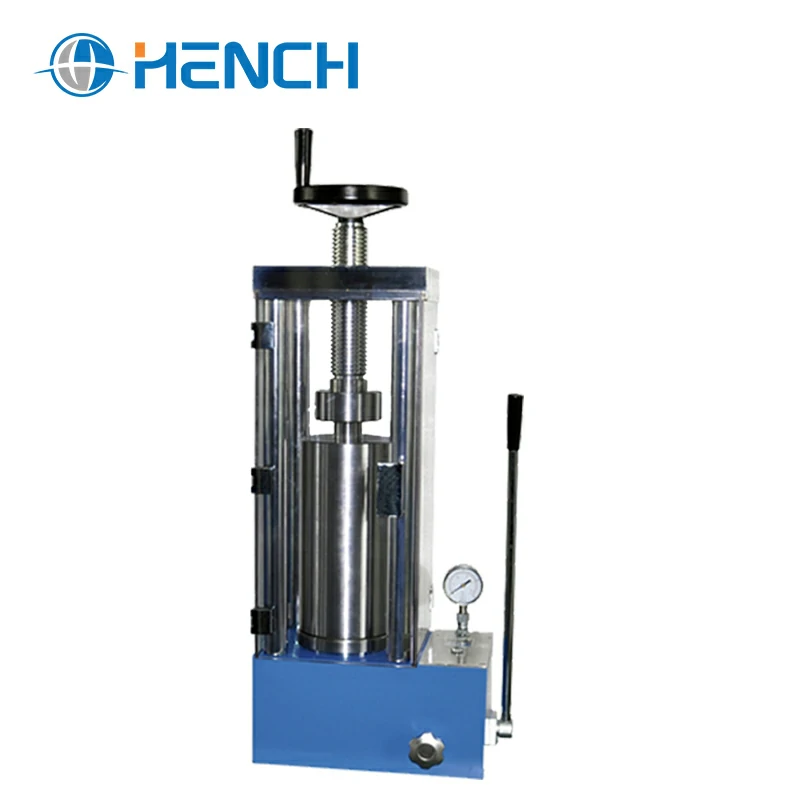
12/20/40/60-ton Manual Hot Isostatic Pressing Machine YP-J/S
Model:YP-12/20/40/60J/S
Pressure range:0-20T/21.4Mpa
Pressure conversion:1Mpa=0.98t
Piston diameter:Φ110mm
Travel of piston:≤30mm
Cavity size:30x150mm
Cavity material:3 chrome 13# die steel
Maximum pressure:≤300Mpa (500Mpa can be customized)
Pressure gage:Pointer (dual scale display)/Optional digital display (accuracy 0.01Mpa)
Equipment protection:Side opening 5mm high strength plexiglass protective door, translation snap lock safe and convenient
Pressure die:Manual pressure/manual slow pressure
Environment temperature:9°C-42°C
Pressure relief mode:Manual pressure relief
Size:305x195x605mm
Weight:105Kg
-
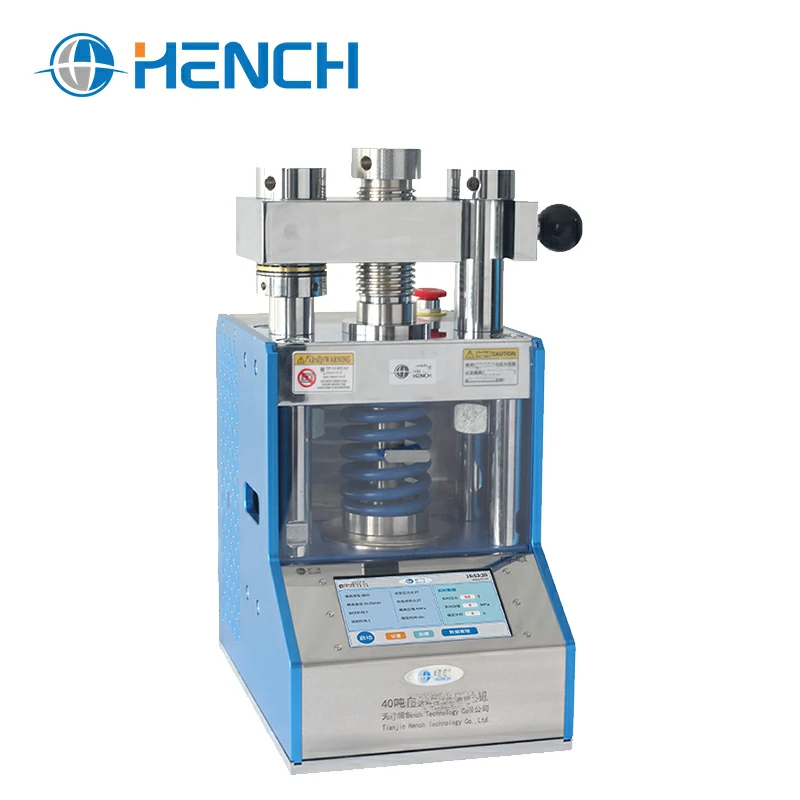
30/40/60-ton Automatic Fluorescent Tablet Hyd Press Machine FTP-X
Model:FTP-30/40/60X
Pressure range:0.5-40T
Piston diameter:Φ130mm
Autocontrol:Savta intelligent program is used to control the five-stage pressurization
Pressure mode:Program automatic pressure - automatic pressure - timing pressure - automatic pressure relief
Die specification:40-32mm(Die specifications can be customized)
-
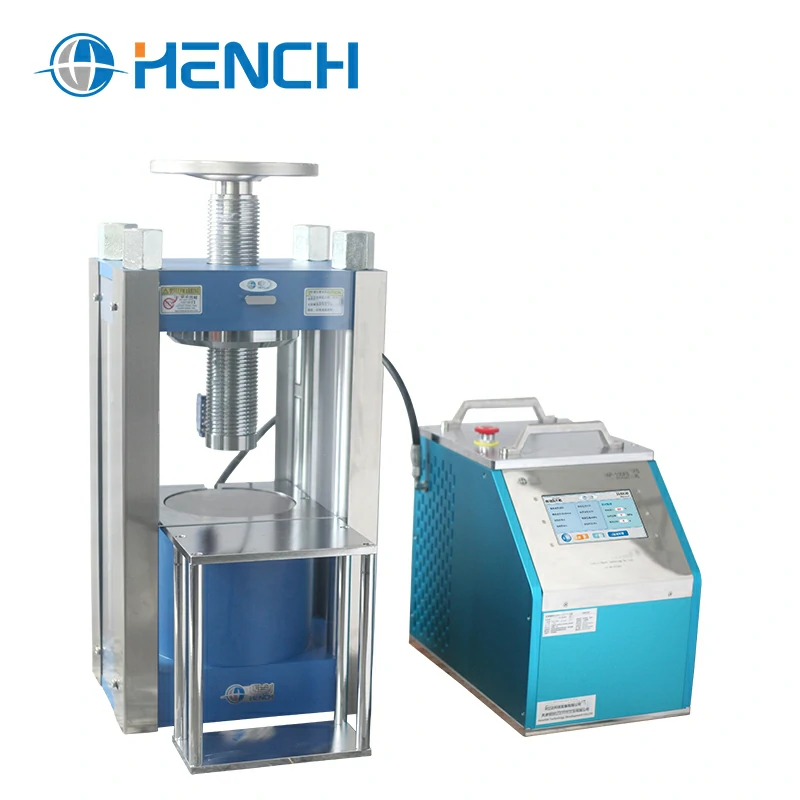
65/100/150/200-ton Modular Automatic Powder Press Machine HAP-FS
Model:HAP-65/100/150/200FS
Pressure range:1-100T
Cylinder diameter:Φ200mm
Input Power:220V(50Hz/60Hz)/Customizable110V
Equipment power:1500W
Effective space:260x260x230mm
Main engine size:380x520x735mm
Main engine weight:451Kg
Control box size:300x480x480mm
Control box weight:85Kg
Lab Hydraulic Presses for Scientific Sample Preparation
Hench offers a complete range of laboratory hydraulic presses designed for FTIR, XRF, material testing, pharmaceutical research, and industrial sample preparation. Our presses combine precision, repeatability, and safety with compliance to international laboratory standards (ASTM / ISO), making them reliable solutions for both research and quality control laboratories.
Whether you need manual, digital, automatic, heated, or vacuum lab hydraulic presses, Hench provides machines suitable for various sample types and analytical workflows.
Applications of Hydraulic Press Machines
Hydraulic press machines are widely used in laboratory research, material testing, and industrial production where controlled pressure, stable forming, and repeatable sample preparation are required. Depending on the application, different pressure levels, molds, and temperature control systems are applied to achieve accurate and consistent results.
Laboratory Applications
Hydraulic presses play a critical role in laboratory sample preparation, especially in spectroscopy and material analysis workflows.
- FTIR pellet preparation using KBr or other binding agents
- XRF sample pressing for elemental composition analysis
- IR spectroscopy sample molding for optical measurement accuracy
- Thin film and powder sample compaction for research testing
- Analytical sample shaping for laboratory quality control
These applications require high precision pressure control and stable pressing performance to ensure repeatable and contamination-free sample formation.
Industrial Applications
In industrial environments, hydraulic presses are used for shaping, forming, and testing a wide range of materials under controlled force conditions.
- Composite material testing for strength and durability evaluation
- Polymer forming and molding under heat and pressure
- Ceramic powder pressing for structural component production
- Metal powder compaction for industrial manufacturing processes
- Material deformation testing under high-load conditions
Industrial hydraulic presses are designed for higher durability, continuous operation, and consistent force output across large production cycles.
Research & Academic Applications
Hydraulic press systems are essential tools in universities, research institutes, and material science laboratories where advanced material studies are conducted.
- University laboratories for physics and chemistry experiments
- Material science research centers for structural analysis
- Engineering departments for mechanical property testing
- R&D institutions developing new composite and polymer materials
- Academic research on powder metallurgy and solid-state materials
These environments require flexible, precise, and reliable pressing systems that can adapt to diverse experimental requirements.
Why Applications Matter for Hydraulic Press Selection
Different applications require different machine configurations. Selecting the correct hydraulic press depends on several key factors:
- Required pressure range (Tons)
- Sample material type (powder, polymer, ceramic, metal)
- Temperature or heating requirements
- Level of automation (manual, semi-automatic, fully automatic)
- Precision and repeatability needs
Understanding the application ensures better sample quality, improved testing accuracy, and higher operational efficiency.
Laboratory Hydraulic Press Selection Guide
To help laboratories quickly identify the most suitable laboratory press for their application, Hench provides the following selection guide based on operation type and pressure capacity. This decision matrix simplifies comparison and ensures optimal performance for FTIR, XRF, and advanced material research.
1. Selection by Operation Type
Hench provides multiple types of lab hydraulic presses, each designed for specific laboratory applications:
Manual Laboratory Press
Hand-operated pumps generate pressure for routine sample preparation. Ideal for educational labs and low-throughput environments.
-
Compact bench-top design
-
Adjustable pressure up to 30–40 tons
-
Manual or digital display for accurate monitoring
-
Suitable for FTIR and XRF pellet preparation
Automatic Hydraulic Press Machine
Electrically powered, programmable presses with automated pressure ramps, dwell times, and release cycles. Suitable for high-throughput laboratories requiring repeatable results and minimal manual intervention.
-
Pressure range: 10–60 tons
-
Fully programmable cycles
-
Optional heating for polymer/composite testing
-
Compatible with multiple die sizes and materials
Vacuum Hydraulic Press
Applies pressure under reduced air conditions to minimize trapped air and improve pellet density, especially for sensitive or low-porosity materials.
-
Vacuum-assisted pressing
-
Optional heating and digital pressure control
-
Compatible with FTIR and XRF dies
-
Ensures uniform, high-quality sample preparation
Heated Laboratory Press
Combines controlled pressure with temperature regulation for polymers, composites, and advanced materials research.
-
Temperature control up to 300°C
-
Accurate pressure control with PLC/PID system
-
Safety interlocks for laboratory compliance
-
Optional data acquisition for reproducible results
Isostatic Pressing Machines
Used for specialized research and advanced material compaction, providing uniform pressure distribution in multiple directions. Suitable for ceramic, pharmaceutical, and materials research applications.
-
Manual and automatic models available
-
High-pressure uniformity
-
Optional heated or vacuum configurations
-
Supports experimental reproducibility
2. Selection by Pressure Capacity
Choosing the correct tonnage is critical for achieving proper sample density and analytical accuracy.
-
15 Ton Hydraulic Press
Recommended for FTIR KBr pellets, routine powder compaction, and small-diameter dies. -
24 Ton Hydraulic Press
Suitable for higher-density pellets, larger die sizes, and multi-purpose laboratory applications. -
40–60 Ton Hydraulic Press
Ideal for XRF sample preparation, battery materials, ceramics, and advanced materials research requiring higher compaction forces and superior uniformity.
Technical Specifications and Standards Compliance:
| Press Type | Pressure Range | Control Mode | Temperature Control | Industry Standard | Typical Applications |
|---|---|---|---|---|---|
| Manual Laboratory Press | 5–30 Ton | Manual pump | Ambient | ASTM / ISO compatible | FTIR sample prep, educational labs |
| Digital Laboratory Press | 5–40 Ton | Digital gauge | Ambient | ASTM / ISO compatible | FTIR & XRF pellet pressing |
| Automatic Hydraulic Press Machine | 10–60 Ton | Programmable | Optional heating | ASTM / ISO compliant | High-throughput analytical labs |
| Vacuum Laboratory Press | 10–40 Ton | Vacuum assisted | Optional heating | ASTM / ISO compliant | High-density pellets, sensitive powders |
| Heated Laboratory Press | 10–50 Ton | Pressure + temperature | Up to 300°C | ASTM / ISO compliant | Polymers, composites, advanced materials |
Contact us to get the latest lab hydraulic press machine prices.
Hench Advantages
Hench lab hydraulic presses integrate state-of-the-art control systems for precision and safety:
-
PLC & PID Control for precise pressure and temperature management
-
Digital touch-screen interface for monitoring and programmable cycles
-
Automated pressure ramping and release for repeatable pellet quality
-
Safety interlocks and emergency stop for operator protection
-
Optional data acquisition and recording for analytical documentation
These features ensure laboratory staff can maintain consistent sample quality while complying with safety regulations.
About Hench
Hench is a leading lab pressing machine manufacturer with over 20 years of experience. Our products are trusted worldwide in research institutions, universities, and industrial laboratories. We focus on precision, reliability, safety, and compliance, ensuring every laboratory press meets rigorous scientific requirements.
Our Advantages:
-
High-precision hydraulic press machines for consistent sample preparation
-
Multiple series covering manual, digital, automatic, vacuum, and heated applications
-
Fully compatible with FTIR and XRF pellet dies
-
Designed to comply with ASTM and ISO laboratory standards
-
Robust design ensures long-term stability and reliable performance
-
Dedicated technical support and after-sales service for laboratory clients
Trusted by Research and Industrial Labs
Hench lab hydraulic presses have been adopted by leading laboratories for FTIR, XRF, and material research, demonstrating our commitment to quality, compliance, and laboratory success.
Frequently Asked Questions
Q1: What is the difference between a laboratory press and an industrial hydraulic press?
Laboratory press is designed for precise, controlled pressure applications in small-scale sample preparation, focusing on repeatability, safety, and compliance with ASTM/ISO standards. An industrial press prioritizes high force for large-scale manufacturing but often lacks fine control suitable for lab samples.
Q2: Which Hench lab hydraulic press is suitable for FTIR or XRF sample preparation?
Hench digital, automatic, and vacuum laboratory presses are ideal for FTIR and XRF pellet preparation. These presses provide uniform pressure distribution, precise control, and compatibility with standard pellet dies. Heated or vacuum options may be selected based on sample material sensitivity.
Q3: Do Hench lab hydraulic presses comply with industry standards?
Yes. All Hench presses are designed to meet ASTM and ISO standards for laboratory sample preparation, including temperature uniformity, platen parallelism, and pressure accuracy. Compliance ensures reliable analytical results and laboratory safety.
Q4: Are Hench presses equipped with safety and automation features?
Absolutely. Our presses include:
-
PLC & PID control for precise pressure and temperature management
-
Digital touch-screen interface for programmable cycles
-
Automated pressure ramping and release
-
Emergency stop and safety interlocks
-
Optional data acquisition for record-keeping
Q5: Can Hench lab hydraulic presses be used for polymers, composites, or sensitive powders?
Yes. Heated presses are ideal for polymers and composites, while vacuum presses minimize air entrapment for sensitive powders. Hench offers multiple configurations to meet diverse lab applications.
Q6: How do I maintain and calibrate a Hench laboratory press?
Routine maintenance includes:
-
Checking hydraulic fluid levels and replacing if necessary
-
Inspecting seals, valves, and piston for leaks or wear
-
Cleaning platen surfaces before and after use
-
Calibrating pressure gauges and digital controls periodically
Hench provides detailed manuals and technical support to ensure long-term performance.