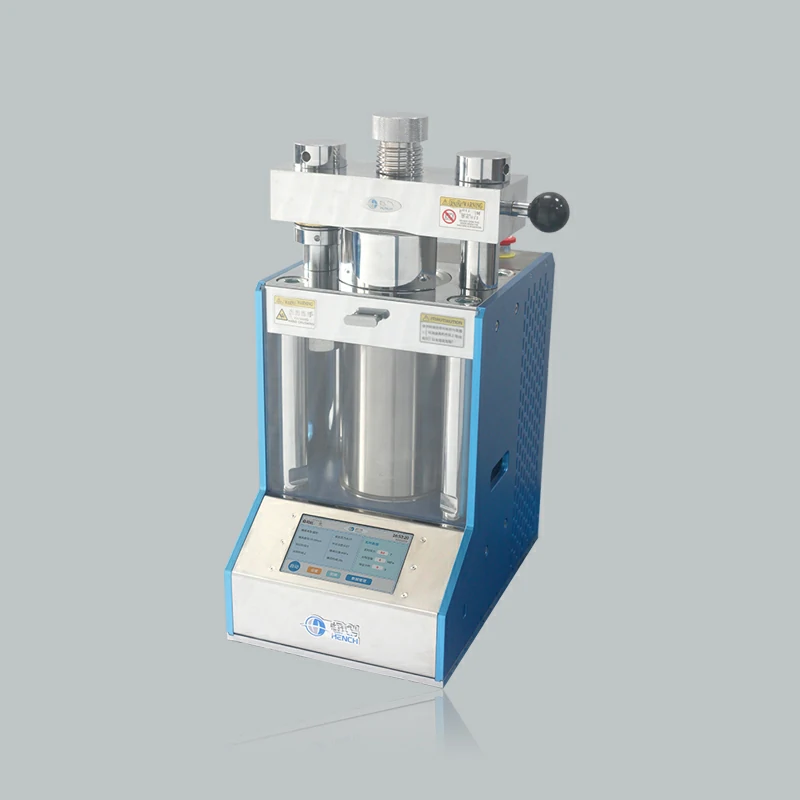
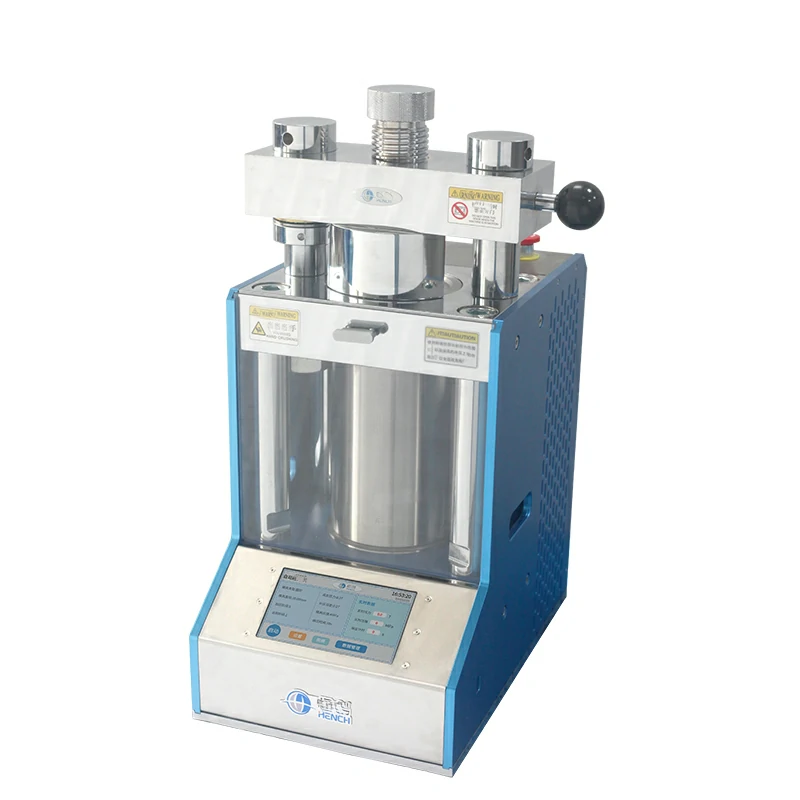
20/30/40/60/100-ton Fully Automatic Isostatic Desktop Tablet Press Machine HAP-J
Isostatic Desktop Tablet Press Machine Product Features
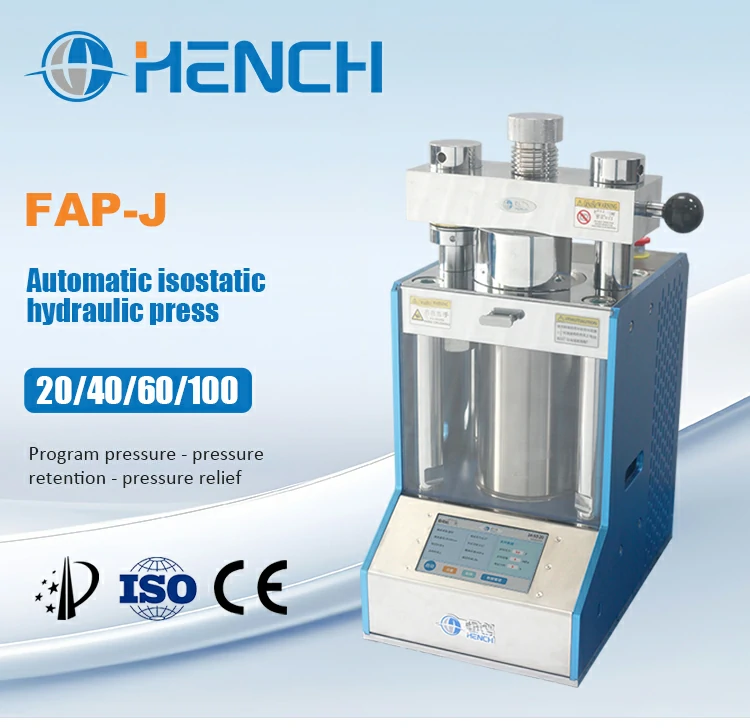
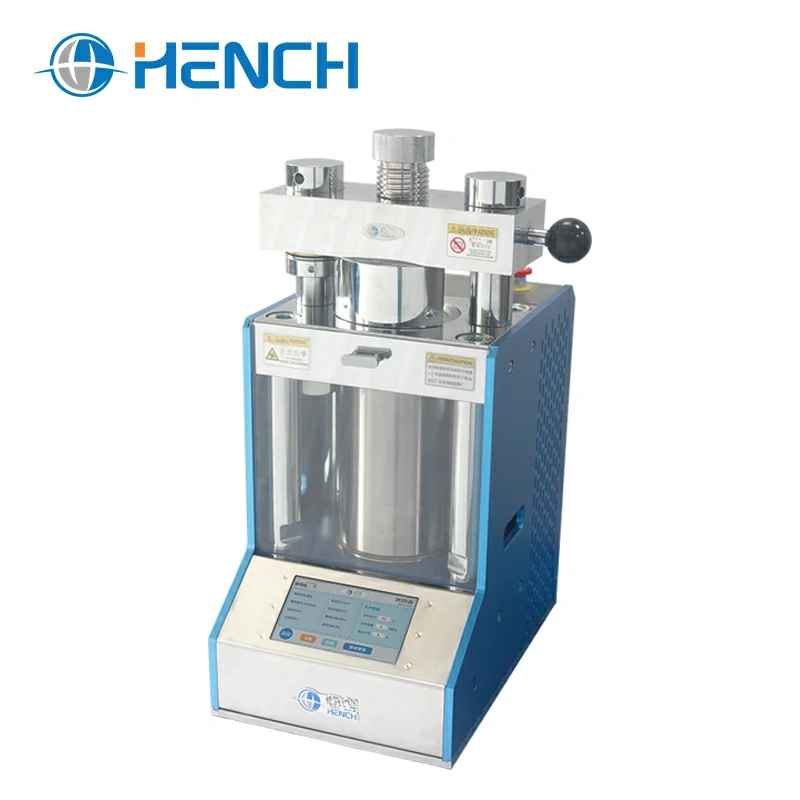
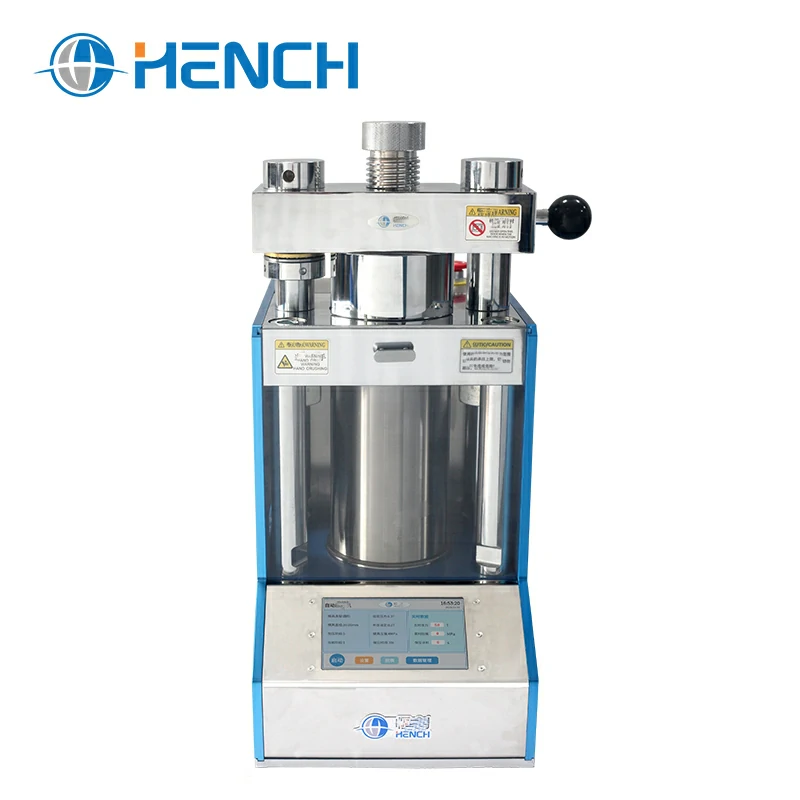
HAP-J series automatic isostatic press adopts upper plate rocker arm knot structure, more convenient operation,automatic program operation: program pressures low pressure -pressure retention -pressure replenishment - periodic pressure relief, etc.
Key Features
-
Available in 20T, 30T, 40T, 60T, and 100T models, with programmable pressing cycles for maximum reproducibility.
-
Compact desktop design allows easy integration into labs while maintaining high stability and precision.
-
Advanced control system with LCD interface for setting pressure, dwell time, and pressing sequence.
-
The robust hydraulic mechanism ensures consistent pressure, reflecting the quality of professional hydraulic press machines.
-
Suitable for frequent lab use, easy maintenance, and efficient operation, making it a valuable addition to any lab supplies inventory.
Product Description
| Instrument model | HAP-J series-20J | HAP-J series-40J | HAP-J series-60J | HAP-J series-100J |
| Pressure limit | 0-20T | 0-40T | 0-60T | 0-100T |
| Cylinder diameter | 110mm | 130mm | 152mm | 202mm |
| Pressurization process | Program pressure - program pressure retention - program pressure relief | |||
| Dwell time | 0-999.59(min) | |||
| Pressure conversion | Automatic pressure conversion based on sample size | |||
| Display Interface | 7-inch Smart Touch LCD Screen | |||
| Safety Shielding | 4mm electroplated sprayed steel plate protection +3mm plexiglass door | |||
| Lsostatic pressure | 0-300Mpa | 0-302Mpa | 0-502Mpa | |
| Chamber Dimensions (ID × H) | 30x150mm | 50x150mm | 60x150mm | |
| Cylinder stroke | 50mm | 52mm | ||
| Characteristic | Upper plate shaking alarm structure, more convenient operation | |||
| Dimensions (W × D × H) | 240x390x562mm | 280x460x662mm | 300x500x682mm | 330x580x720mm |
| Power supply | 220V(50Hz/60Hz) | 220V/1500W | ||
| Weight | 121Kg | 180Kg | 241Kg | 352Kg |
-
Working Medium: Ultra-pure hydraulic oil (Premium #46 Anti-wear).
-
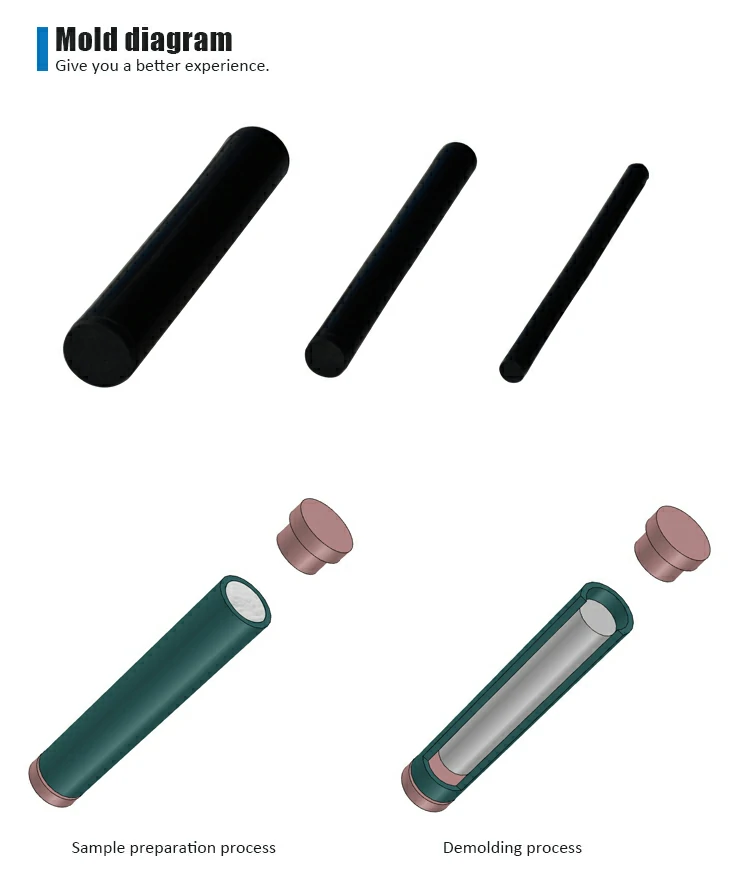
Sample Protection: 100% contamination-free. Samples are triple-sealed in high-elasticity silicone bladders before submersion, fully isolating them from the medium.
-
Pressure Vessel Compliance: Forged from premium 3Cr13 die steel. Every unit undergoes rigorous Ultrasonic Non-Destructive Testing (NDT) to ensure flawless safety under 300–500 MPa. Meets international high-pressure vessel safety standards.
-
Programmable Pressure Rates:
-
Pressurization Speed: 0.1-10.0 MPa/s (Fully adjustable via UI).
-
Depressurization Speed: ≤0.5 MPa/s (Controlled multi-stage linear release to prevent pellet micro-cracking).
-
Why Choose Cold Isostatic Pressing (CIP)?
| Feature | Conventional Die Pressing | HAP-J Desktop CIP |
| Pressure Profile | Unidirectional (Axial) load; severe wall friction losses. | 360° Omnidirectional fluid pressure; absolute uniformity. |
| Green Density | Density gradient defects (Dense top, loose core). | 100% Homogeneous density throughout the pellet. |
| Sintering Result | Prone to warping, delamination, and uneven shrinkage. | Defect-free sintering with high geometric precision. |
Advanced Multi-Segment Control: The 7" touch screen displays real-time Pressure-Time (P-t) curves, automating your custom multi-step profiles (Rapid ramp →Dwell → Slow stepped release).
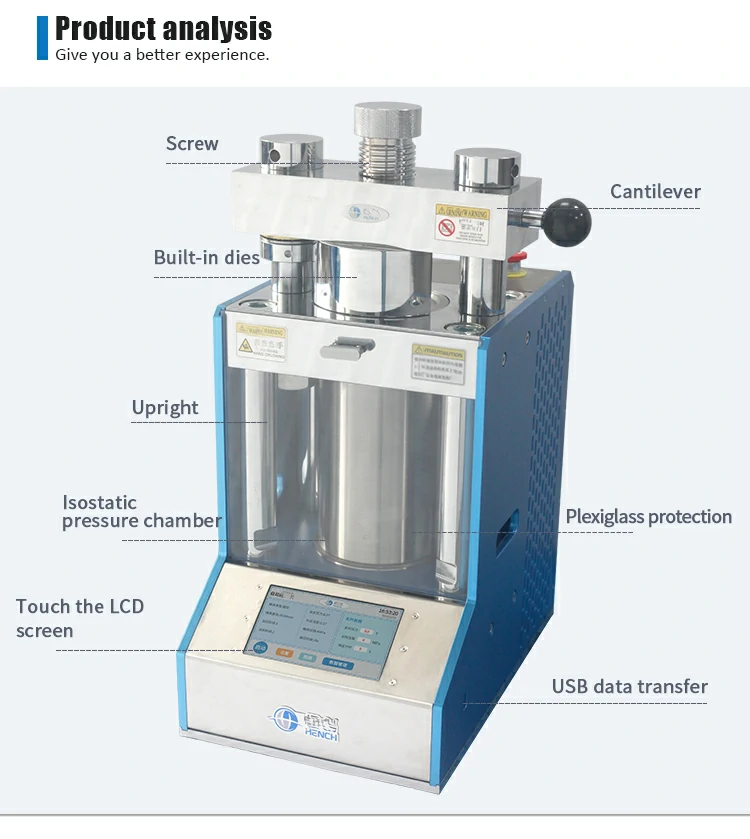
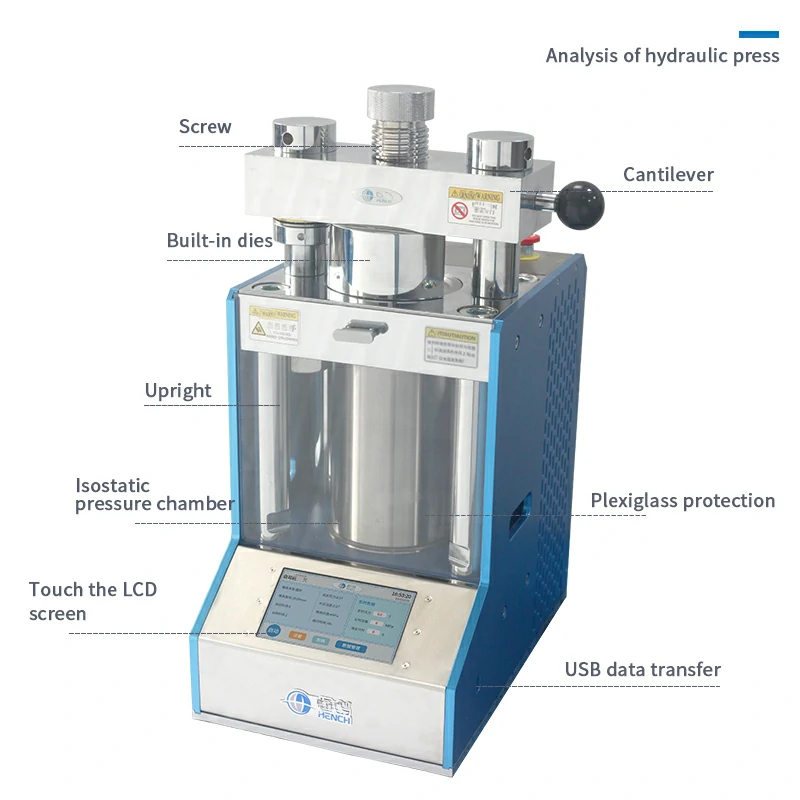
Detailed Overview of Core Components and Functions
Precision Pressing System:
- Screw: A high-strength, precision-engineered screw that ensures constant and accurate pressure transmission.
- Built-in Dies: The core pressing components, ensuring consistency in the molding of samples.
- Cantilever: An ergonomically designed operating handle that provides precise manual adjustment capabilities.
- Upright: A robust column structure that guarantees the overall stability and compressive strength of the equipment.
Intelligent and Safety Features:
- Isostatic Pressure Chamber: The core vacuum/high-pressure working zone, enabling multi-dimensional, uniform pressing.
- Plexiglass Protection: A highly transparent protective panel that not only safeguards the operator but also serves as a clear viewing window for monitoring the real-time working status.
Human-Machine Interaction and Data Management:
- Touch LCD Screen: An intelligent operating terminal featuring a fully Chinese/graphical interface, enabling one-touch operation and real-time status monitoring.
- USB Data Transfer: A conveniently located USB port on the side of the unit, allowing for easy export and analysis of experimental data, thereby facilitating efficient digital management.
Application Notes & Bladder Selection
The HAP-J Series Desktop Cold Isostatic Press (CIP) overcomes the density-gradient limitations of conventional die pressing. By delivering 360° omnidirectional fluid pressure within its specialized Isostatic Pressure Chamber, it is the premier choice for advanced material synthesis across global R&D and industrial sectors.
1. Solid-State Batteries & Advanced Energy Storage
-
Target Materials: Sulfide, oxide, and polymer-based solid-state electrolytes (e.g., LLZO, LGPS).
-
The Challenge: Micro-cracks, grain boundary resistance, and air-sensitivity degrade battery performance.
-
Our Solution: The HAP-J’s ultra-high pressure eliminates internal voids, maximizing ionic conductivity. Combined with custom-sealed vacuum bladders, it prevents ambient contamination during high-pressure compaction.
2. Advanced Technical Ceramics & Semiconductors
-
Target Materials: Alumina ($\text{Al}_2\text{O}_3$), Zirconia ($\text{ZrO}_2$), Silicon Carbide ($\text{SiC}$), and high-purity sputtering targets.
-
The Challenge: Uneven "green density" causes severe warping, cracking, or dimensional distortion during high-temperature sintering.
-
Our Solution: Uniform fluid compression guarantees 100% homogeneous density throughout the pellet. The Touch LCD Screen allows precise multi-segment programming for slow, linear depressurization—preventing stress-induced fracturing.
3. Powder Metallurgy & Refractory Metals
-
Target Materials: Tungsten ($\text{W}$), Molybdenum ($\text{Mo}$), Titanium alloys, and porous metal implants.
-
The Challenge: High-hardness metal powders exhibit poor compressibility and severe mold-wall friction in conventional dies.
-
Our Solution: Delivering up to 500 MPa of isotropic force, the system bypasses friction losses to achieve high-density, binder-free near-net-shape blanks, reducing subsequent machining costs.
4. Pharmaceutical & Biochemical Research
-
Target Materials: Controlled-release drug tablets, high-density powder formulations, and bio-scaffolds.
-
The Challenge: Conventional mechanical pressing can cause capping, lamination, or chemical degradation due to localized heat.
-
Our Solution: Pure hydraulic, cold-compaction ensures zero thermal stress on bio-active ingredients, while the fully enclosed, contamination-free chamber meets strict laboratory hygiene standards.
| Target Application | Target Pressure | Target Dwell Time | Recommended Bladder Size |
| Solid-State Electrolytes (e.g., Sulfides/Oxides) | 200 ~ 250 MPa | 3 ~ 5 min | Ф10 mm/Ф15 mm(High-tightness) |
| Advanced Technical Ceramics (AlzОs, Zr0₂) | 300 ~ 400 MPa | 2 ~ 3 min | Ф20 mm/Ф30 mm(High-elasticity) |
| Refractory Powder Metallurgy (W, Mo) | > 400 MPa | 5 min | Custom Heavy-duty Bladders |
Step-by-Step Operating Guide
This guide outlines the standard protocol for operating the HAP-J Series Desktop CIP. Follow these steps to ensure uniform powder compaction, zero sample contamination, and absolute laboratory safety.
Phase 1: Pre-Check & Sample Preparation
-
Inspecting the Working Medium: Check the liquid level inside the Isostatic Pressure Chamber. Ensure the premium #46 hydraulic oil is clean and filled to the designated mark.
-
Powder Loading: Pour your target material (e.g., solid-state electrolyte or ceramic powder) into the high-elasticity silicone/rubber bladder.
-
Vacuum Sealing (Critical): Expel all ambient air from the bladder to create a vacuum-like state. Securely seal the bladder neck using heavy-duty sealing clips or specialized ties.
Note: Proper sealing prevents the hydraulic medium from penetrating the bladder and contaminating your sample under ultra-high pressure.
Phase 2: Loading & Mechanical Locking
-
Loading the Chamber: Swing open the upper assembly using the Cantilever. Gently lower the sealed sample bladder into the center of the pressure vessel.
-
Engaging the Screw: Swing the upper yoke back into place. Rotate the top Screw downward until the upper sealing plug is firmly and completely seated into the mouth of the chamber.
-
Closing the Shield: Fully slide shut the Plexiglass Protection.
Safety Interlock: The system’s smart sensors will prevent any pressurization cycle if the safety shield is left open.
Phase 3: Smart UI UI Programming & Execution
-
Setting the Recipe: Power on the Touch LCD Screen. Input your multi-segment pressure profile based on your material's characteristics:
-
Segment 1 (Ramp): Set the pressurization rate (e.g., 5.0 MPa/s) up to 200 MPa.
-
Segment 2 (Dwell): Set the target Dwell Time (e.g., 3 min) to allow complete, omnidirectional density equalization.
-
Segment 3 (Release): Set a controlled, slow Depressurization rate (< 0.5 Pa/s) to prevent micro-cracking during spring-back.
-
-
Initiating the Cycle: Click the "Start" button on the LCD screen. The automated internal hydraulic pump will begin the cycle, displaying a real-time Pressure-Time (P-t) curve on the screen.
Phase 4: Automated Release & Retrieval
-
Automated Depressurization: Once the dwell timer hits zero, the HAP-J automatically executes a controlled pressure release. Wait until the LCD screen registers exactly 0MPa.
-
Unlocking the Vessel: Slide open the plexiglass shield. Rotate the Screw upward to release the mechanical seal, and use the Cantilever to swing the assembly clear.
-
Sample Retrieval: Carefully extract the bladder from the chamber. Wipe any residual oil off the exterior of the bladder before opening the clips to retrieve your perfectly compacted, high-density green body.
-
Data Export (Optional): Plug a flash drive into the USB Data Transfer port on the side of the chassis to instantly export the run's P-t graph for your lab's audit trails or academic papers.
About Hench
Hench Technology Co., Ltd., based in Tianjin, China, specializes in laboratory and industrial press solutions. Hench offers a full range of high-quality hydraulic press machines designed for durability, safety, and precision. Their desktop and industrial tablet presses integrate seamlessly for research and production, providing professional support and proven quality worldwide.