Why Is a Hot Press Machine Used for Sample Preparation in the Laboratory?
June 3, 2026
In material testing laboratories, polymer research centers, chemical analysis facilities, and new material development projects, sample preparation quality directly impacts the accuracy of experimental results and the reliability of product evaluations.
Many laboratories already use conventional cold pressing equipment and often ask an important question: Why is a hot press machine still necessary for sample preparation?
The answer lies in the limitations of cold pressing technology. Traditional cold pressing relies solely on mechanical force to compact materials, making it difficult to eliminate internal voids, improve material flow, or achieve complete consolidation. As a result, samples may suffer from poor density, cracking, delamination, trapped air, and inconsistent performance.
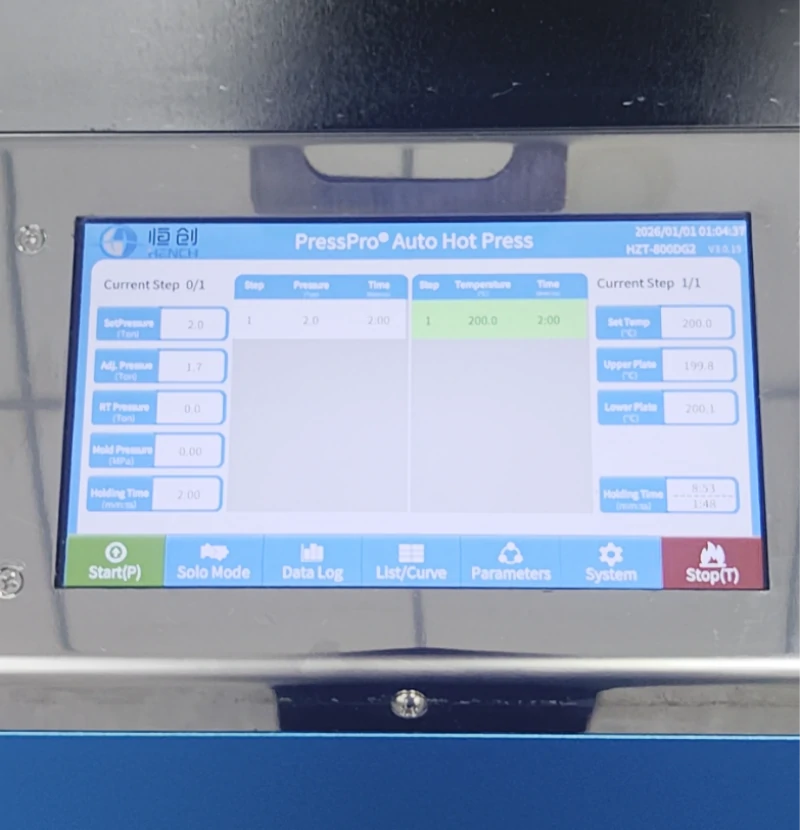
A hot press machine overcomes these challenges through the combined action of heat and pressure, enabling superior material molding and significantly improving sample quality. For many laboratory and industrial applications, it has become an essential tool for ensuring testing accuracy, product qualification, and process consistency.
The Limitations of Cold Pressing for Sample Preparation
Cold pressing works effectively for certain materials, but it has clear limitations when processing polymers, rubber compounds, composite powders, and other advanced materials.
At room temperature, many materials exhibit:
- Low molecular activity
- Poor flowability
- Limited particle fusion capability
- High internal porosity after compression
When compressed without heating, particles are forced together mechanically but cannot fully bond. This often leads to:
- Loose internal structures
- Surface defects
- Delamination
- Cracking
- Inconsistent density distribution
These defects can negatively affect both product performance and laboratory testing results.
How Heat and Pressure Work Together
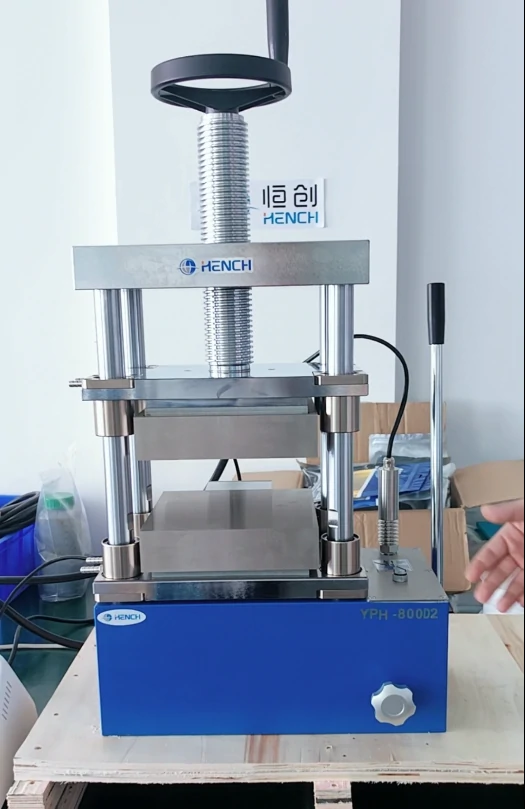
The primary function of a hot press machine is to facilitate material plasticization and densification.
Materials such as:
- Plastics
- Rubber
- Resins
- EVA compounds
- Modified polymers
- Composite materials
typically exist in powder, pellet, or granular form before processing.
When heated to their softening or melting temperatures, molecular mobility increases significantly. The material becomes more fluid and can flow into microscopic gaps between particles.
Combined with controlled hydraulic pressure, the material is compressed into a dense and uniform structure.
This process helps:
- Eliminate internal voids
- Remove trapped air
- Improve particle bonding
- Increase density
- Produce smoother surfaces
- Improve dimensional consistency
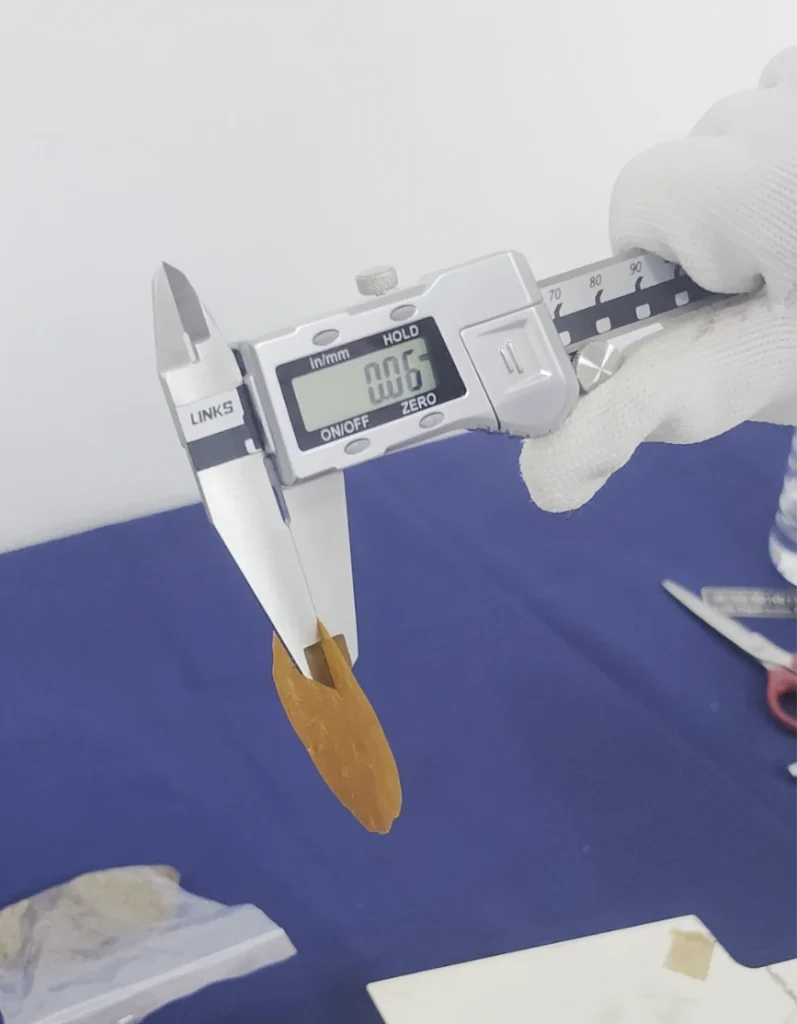
As a result, laboratories can obtain high-quality specimens with uniform thickness and superior structural integrity.
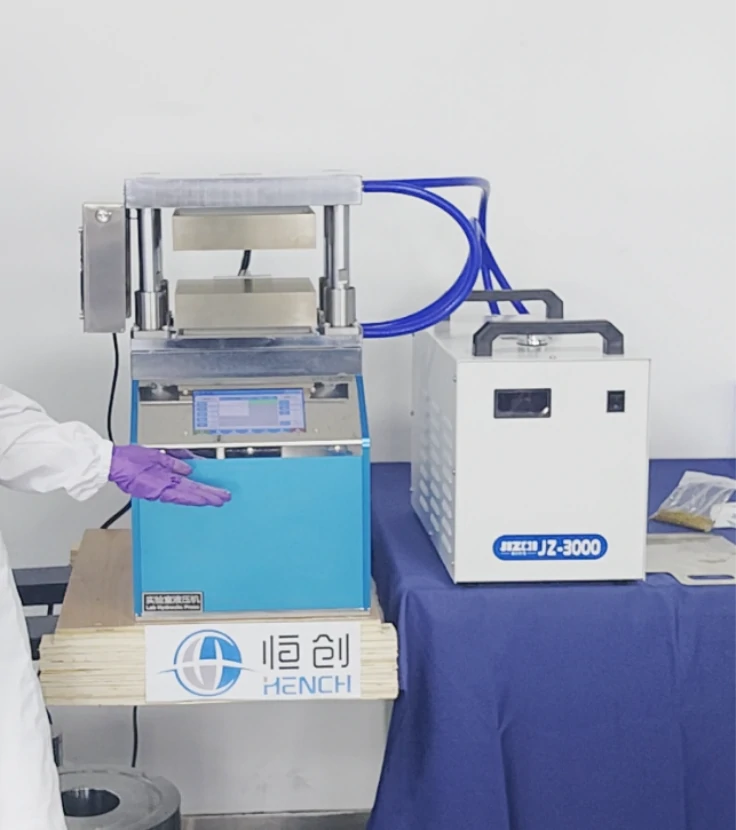
For laboratories seeking reliable thermal molding performance, a Manual Heated Hydraulic Press provides an effective solution for precise temperature and pressure control during sample preparation.
Improving Testing Accuracy and Data Reliability
Sample quality directly influences the outcome of many laboratory tests.
Applications such as:
- FTIR analysis
- Mechanical tensile testing
- Hardness testing
- Thermal analysis
- Flame retardancy testing
- Material characterization
all require highly consistent specimens.
Cold-pressed samples often contain internal stress and microscopic air pockets. Over time, these defects may cause:
- Warping
- Deformation
- Cracking
- Density variations
These structural inconsistencies introduce measurement errors and reduce test repeatability.
Hot pressing effectively minimizes these issues by creating a more homogeneous material structure. During heating, internal stress is released, while trapped air and voids are significantly reduced.
The result is:
- Better dimensional stability
- Improved repeatability
- More reliable experimental data
- Higher compliance with testing standards
For research institutions, quality inspection laboratories, and manufacturing facilities, this consistency is essential for generating trustworthy and reproducible results.
Supporting Material Curing and Chemical Reactions
Another major advantage of hot press technology is its ability to facilitate chemical and structural transformations that cannot occur under cold pressing conditions.
Many materials require elevated temperatures to complete critical reactions, including:
- Rubber vulcanization
- Resin cross-linking
- Composite material curing
- Thermoset polymer processing
Mechanical pressure alone cannot initiate these reactions.
Only under controlled heat and pressure can materials achieve full curing and stable performance characteristics.
This allows manufacturers and researchers to:
- Complete molding and curing in a single process
- Improve product performance
- Enhance material stability
- Reduce post-processing requirements
These capabilities make hot pressing indispensable for advanced material development and quality assurance applications.
Better Performance for Difficult-to-Form Materials
Certain materials are particularly challenging to prepare using conventional methods.
Examples include:
- Graphite powders
- Ceramic powders
- Mineral powders
- Composite modified materials
- Specialty functional powders
These materials often exhibit poor cohesion and are prone to fragmentation after molding.
Heat-assisted pressing promotes micro-bonding between particles, improving overall structural strength and reducing the risk of:
- Crumbling
- Powder loss
- Edge defects
- Sample breakage
As a result, laboratories can achieve significantly higher sample qualification rates and improved testing efficiency.
Why Laboratories Choose Heated Hydraulic Press Systems
Compared with conventional cold presses, heated hydraulic press systems provide several critical advantages:
- Enhanced material flow
- Improved sample density
- Reduced internal defects
- Better surface quality
- Higher testing accuracy
- Improved repeatability
- Support for thermal curing processes
- Increased sample qualification rates
These benefits make heated hydraulic presses a preferred choice for laboratories involved in materials science, polymer research, chemical analysis, quality control, and academic research.
Conclusion
A hot press machine is far more than an upgraded version of a cold press. It is a specialized sample preparation solution designed to overcome the limitations of room-temperature compression.
By combining controlled heat with hydraulic pressure, laboratories can produce samples that are denser, more uniform, and more reliable for testing. The technology effectively eliminates common defects such as cracking, delamination, trapped air, and structural instability while enabling curing and molding processes that cold pressing cannot achieve.
Whether for rubber, plastics, resins, composites, or advanced functional materials, a Manual Heated Hydraulic Press plays a critical role in ensuring standardized sample preparation, accurate experimental data, and efficient research and development workflows.