...
  • ホーム
  • How FTIR Is Used in the Pharmaceutical Industry for API and Excipient Analysis

How FTIR Is Used in the Pharmaceutical Industry for API and Excipient Analysis

2月 3, 2026

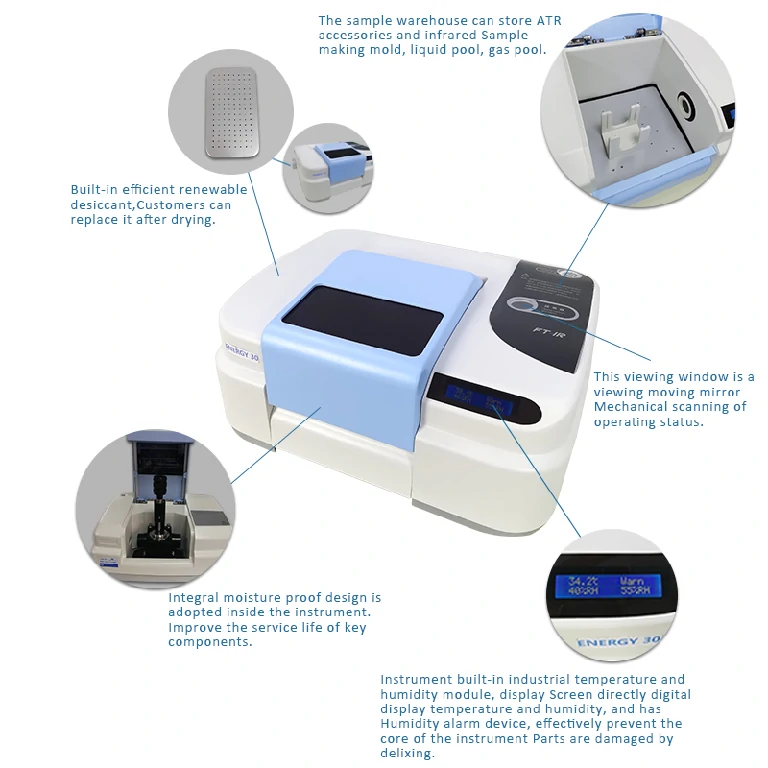
Fourier Transform Infrared Spectroscopy (FTIR) has become a cornerstone analytical technique in the pharmaceutical industry for the identification, verification, and quality control of active pharmaceutical ingredients (APIs) and excipients. Instruments such as the Hengchuang ENERGY-30 FTIR are widely adopted because they combine rapid analysis, non-destructive testing, high sensitivity, and strong molecular specificity.

In pharmaceutical manufacturing, a critical question must be answered repeatedly: can every incoming raw material and every finished product be verified quickly, reliably, and in compliance with regulatory standards? FTIR provides a clear and practical answer. It enables quality control across the entire lifecycle of drug production, from raw material inspection to formulation development and finished product release.

FTIR for API and Excipient Analysis

Core Applications of FTIR in Active Pharmaceutical Ingredient (API) Analysis

Active pharmaceutical ingredients determine the therapeutic performance and safety of drugs. Any deviation in chemical structure, crystal form, or purity can lead to reduced efficacy, instability, or regulatory non-compliance. FTIR plays a central role in controlling these critical quality attributes.

Structural Confirmation and Authenticity Identification of APIs

FTIR analysis is based on molecular vibrational behavior. Functional groups such as hydroxyl (OH), carbonyl (C=O), amino (NH), and aromatic rings absorb infrared radiation at characteristic frequencies, forming a unique spectral fingerprint for each compound.

In pharmaceutical practice, this capability is essential during both research and production. During development, FTIR confirms the chemical structure of newly synthesized APIs. During manufacturing, it is used for incoming raw material inspection to prevent counterfeit or substandard APIs from entering the production process.

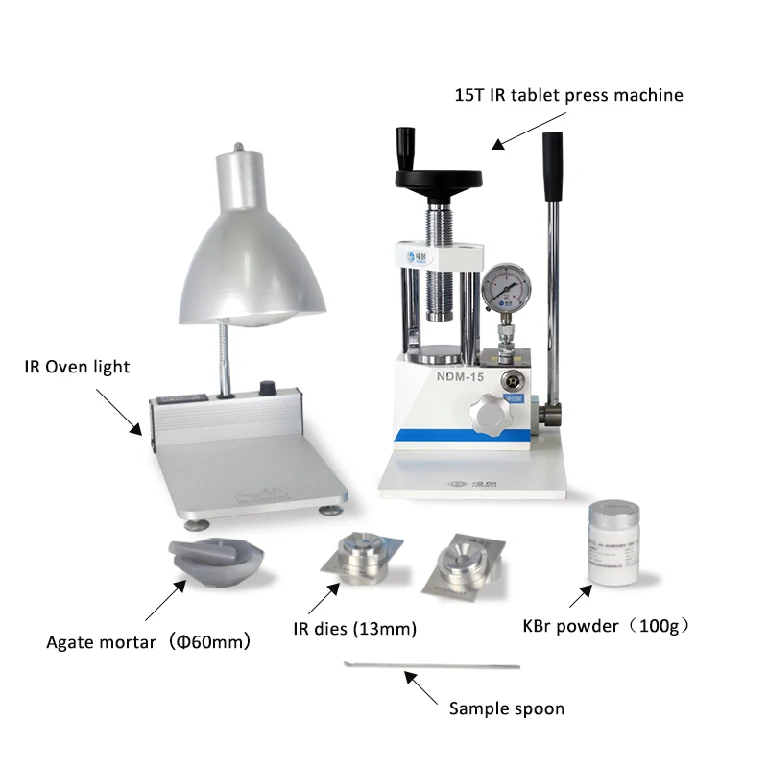
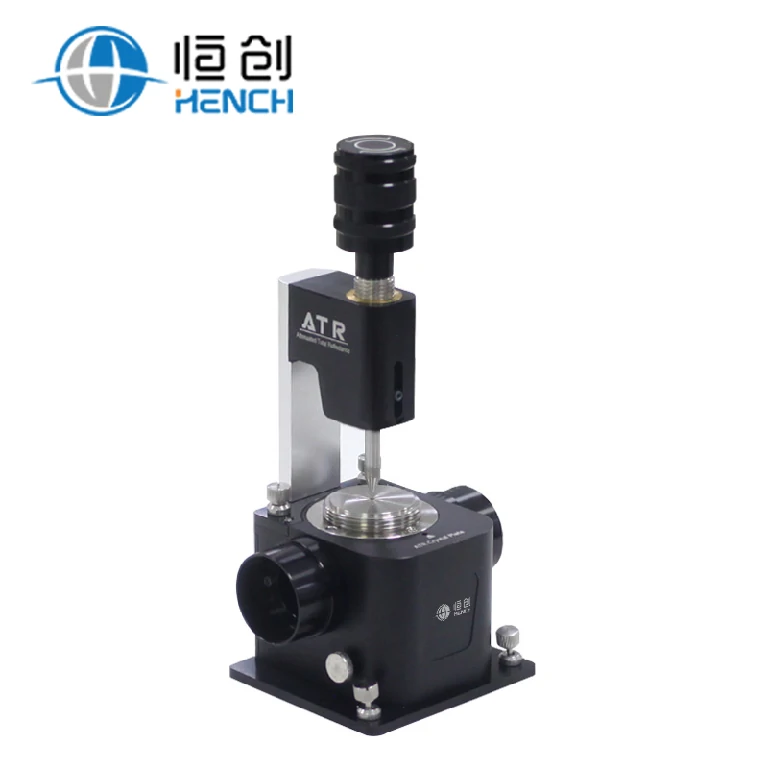
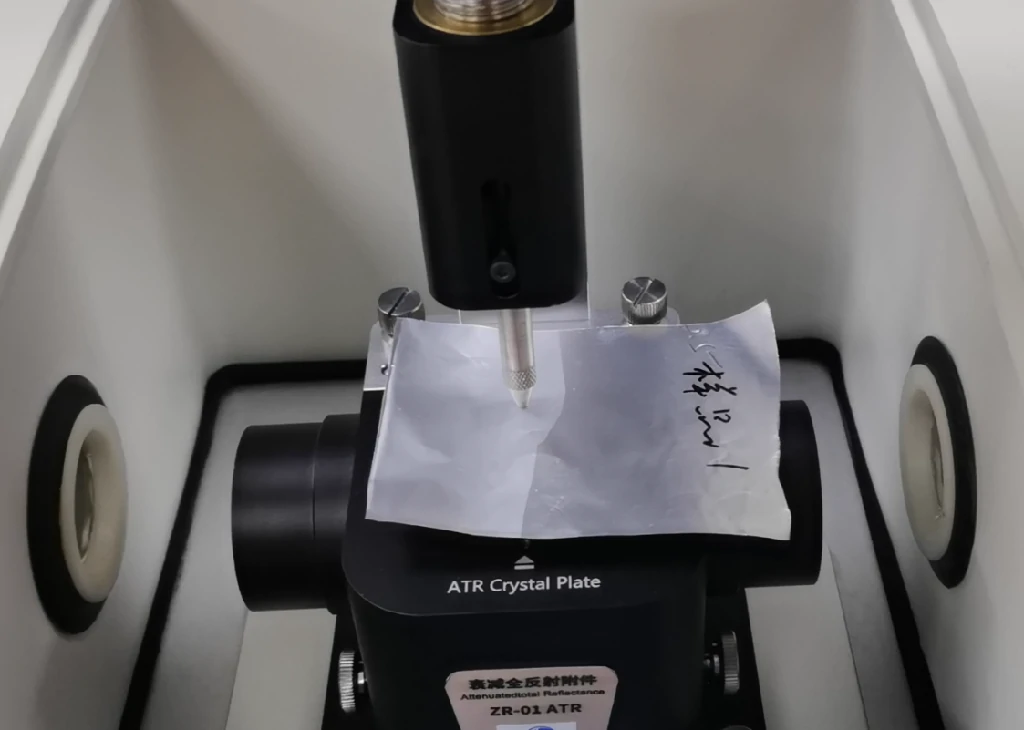
Two sampling methods are commonly used. The potassium bromide (KBr) pellet method involves mixing the API with dry KBr, grinding the mixture thoroughly, and pressing it into a transparent pellet. This method provides high spectral quality and is widely accepted as a standard pharmacopoeial approach. The attenuated total reflection (ATR) method requires minimal or no sample preparation, allowing direct measurement of solid or liquid samples placed on the ATR crystal. ATR is particularly useful for trace samples or heat-sensitive materials.

Spectral interpretation relies on comparison with certified reference spectra from pharmacopoeias or validated in-house libraries. Matching peak positions and relative intensities confirm identity, while additional peaks or peak shifts indicate structural discrepancies or adulteration.

FTIR for API and Excipient Analysis

Typical FTIR Applications for API Structural Confirmation

Analysis AspectFTIR Detection FocusApplication Scenario主な利点
Functional group identificationOH, C=O, NH, aromatic peaksAPI structure verificationHigh specificity
Raw material authenticityOverall fingerprint matchingIncoming inspectionRapid screening
Batch consistencyPeak position and intensity comparisonBatch-to-batch QCHigh repeatability
Trace analysisSurface-sensitive ATR detectionLimited API samplesMinimal sample usage
Typical FTIR Applications for API Structural Confirmation

Comparison of FTIR Sampling Methods for APIs

パラメータKBrペレット法ATR Method
Sample preparationGrinding and pellet pressingMinimal or none
Sample consumptionmg-levelμg-level
DestructivenessDestructiveNon-destructive
Spectral qualityVery high高い
Suitable useReference analysisRapid routine testing
Comparison of Common FTIR Sampling Methods in API Analysis

Crystal Form Identification and Crystal Purity Control

Many APIs exhibit polymorphism, where the same molecule can exist in different crystal forms. These forms differ in intermolecular interactions such as hydrogen bonding and van der Waals forces, resulting in measurable changes in infrared absorption behavior.

FTIR detects polymorphic differences through shifts, splitting, or intensity changes in characteristic peaks. In production environments, this enables rapid monitoring of crystal form consistency during process optimization and routine quality control. While X-ray diffraction remains the definitive method for crystal structure determination, FTIR provides a faster and more economical solution for routine screening and early detection of undesired crystal transformations.

API Purity Assessment and Impurity Screening

FTIR is effective for detecting impurities that introduce new functional groups or alter existing absorption patterns. Organic impurities often generate additional peaks, while inorganic contaminants such as sulfates or carbonates show strong, characteristic absorption bands.

Residual solvents can also be screened using FTIR. Many commonly used organic solvents display distinct infrared absorption features, enabling qualitative or semi-quantitative evaluation before confirmatory chromatographic analysis.

Impurity TypeIR FeatureDetection PurposeLimitation
Organic impuritiesNew functional group peaksQualitative screeningPeak overlap possible
Residual solventsSolvent-specific bandsRapid identificationLimited quantification
Inorganic saltsStrong ionic vibration peaksQualitative detectionLower sensitivity
FTIR-Based Screening of Common API Impurities

Stability Studies and Degradation Monitoring

During accelerated stability testing and long-term storage, APIs may undergo degradation processes such as oxidation or hydrolysis. FTIR allows continuous monitoring of these changes by identifying new absorption peaks or reductions in original characteristic bands.

This capability supports shelf-life determination and helps manufacturers understand degradation pathways, ensuring consistent product quality throughout the intended lifecycle.

FTIR for API and Excipient Analysis

Core Applications of FTIR in Pharmaceutical Excipient Analysis

Although excipients lack pharmacological activity, they are essential for drug formulation, stability, and performance. FTIR is widely used for excipient identification, purity assessment, and compatibility evaluation.

Identification and Authenticity Verification of Excipients

Common pharmaceutical excipients such as starch, lactose, microcrystalline cellulose, and magnesium stearate each possess distinctive infrared spectra. FTIR enables rapid differentiation between excipients with similar physical appearances but different chemical compositions.

ATR-based FTIR is particularly suitable for excipient identification during incoming inspection, as it requires no complex sample preparation and minimizes the risk of formulation errors caused by material mix-ups.

ExcipientKey Absorption Peaks (cm⁻¹)Functional Assignment
Starch~3400, 1640, 1160OH stretching, glycosidic bonds
Lactose~3400, 1640, 1080OH and C–O stretching
Microcrystalline cellulose~3350, 1060, 898β-glycosidic bonds
Magnesium stearate~1560, 1410COO⁻ stretching
Characteristic FTIR Peaks of Common Pharmaceutical Excipients

Purity Control and Moisture Assessment of Excipients

FTIR can detect residual monomers, additives, or degradation products in excipients by identifying their characteristic absorption features. Moisture content is another critical parameter. Free water produces broad infrared absorption bands, allowing semi-quantitative moisture evaluation.

Although precise moisture quantification requires complementary methods, FTIR provides a fast and effective preliminary assessment to support process control decisions.

API–Excipient Compatibility Studies

Compatibility between APIs and excipients is essential during formulation development. Chemical or physical interactions may result in degradation, crystal transformation, or reduced bioavailability.

In compatibility testing, API–excipient mixtures are stored under stress conditions such as elevated temperature, humidity, or light exposure. FTIR spectra of the mixtures are compared with spectra of the individual components.

FTIR ObservationInterpretationCompatibility Judgment
Simple spectral superpositionNo interactionCompatible
New absorption peaksChemical interactionIncompatible
Peak shiftsIntermolecular interactionPotential risk
Peak disappearanceDegradationUnacceptable
FTIR Criteria for API–Excipient Compatibility Evaluation
FTIR for API and Excipient Analysis

Practical Advantages and Limitations of FTIR

FTIR offers fast analysis, minimal sample consumption, and non-destructive testing options. High automation reduces operator dependency, and methods align with international pharmacopoeial standards.

However, careful sample preparation and appropriate reference standards are essential. FTIR is primarily qualitative or semi-quantitative and should be combined with chromatographic methods for precise quantification.

結論

FTIR is an indispensable analytical tool in pharmaceutical manufacturing. Its ability to support API identification, crystal form monitoring, impurity screening, excipient verification, and compatibility studies makes it essential for ensuring drug quality, safety, and regulatory compliance.

参考文献

  1. Fourier Transform Infrared Spectra: Applications to Chemical Systems – foundational text on FTIR spectra interpretation and chemical system applications.
    https://www.sciencedirect.com/book/9780122541018/fourier-transform-infrared-spectra
  2. Applications of Fourier transform infrared spectroscopy to pharmaceutical preparations – review of FTIR usage in drug characterization and quality control.
    https://pubmed.ncbi.nlm.nih.gov/32116058/
  3. Application of FTIR for quantitative analysis of pharmaceutical compounds – research on FTIR quantification methods in pharmaceutical analysis, showing method sensitivity and practical use.
    https://pubmed.ncbi.nlm.nih.gov/25659814/
  4. The Power of FTIR Spectroscopy for Faster, Safer Pharmaceutical Formulations – Specac Ltd – industry resource explaining FTIR advantages in formulation development and quality control.
    https://specac.com/ftir-applications/the-power-of-ftir-spectroscopy-for-faster-safer-pharmaceutical-formulations/
  5. Diffuse Reflectance Infrared Fourier Transform Spectroscopy – technical overview of an FTIR sampling technique useful for powders and bulk samples.
    https://en.wikipedia.org/wiki/Diffuse_reflectance_infrared_Fourier_transform_spectroscopy

メッセージを残す

×

メッセージを残す