



Five Key Factors Affecting the Resolution of Infrared Spectroscopy
1月 9, 2026
The resolution of infrared spectroscopy determines how clearly spectral peaks are separated, how accurately peak positions are identified, and how reliably overlapping signals can be analyzed. In Fourier Transform Infrared Spectroscopy (FTIRアクセサリー), resolution is not controlled by a single parameter but by a combination of hardware performance, optical quality, and data processing settings. The five most critical factors are outlined below.
1. Moving Mirror Travel Distance of the Interferometer
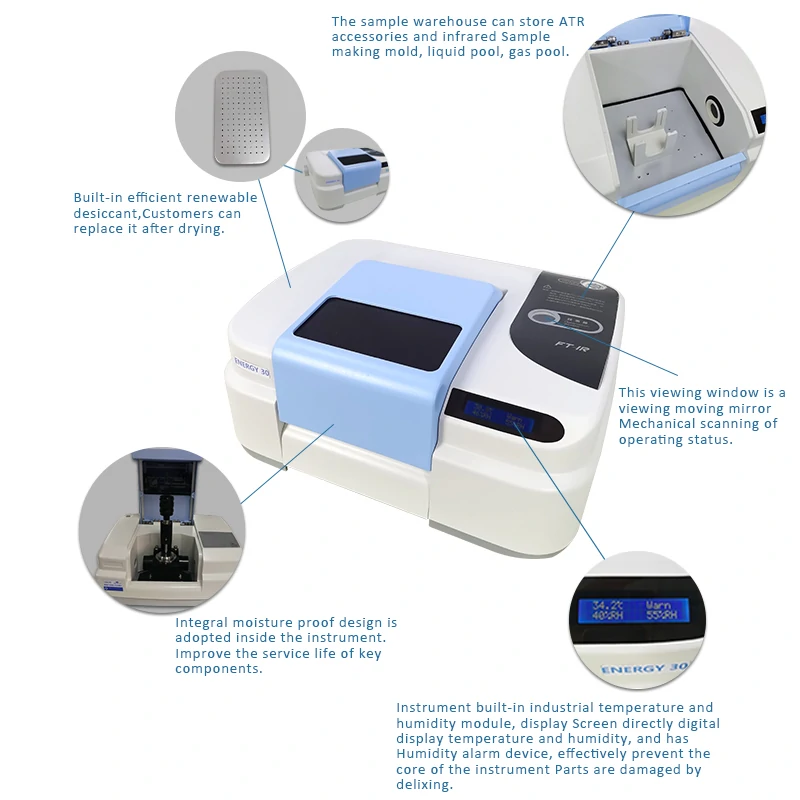
The moving mirror displacement in the interferometer is the fundamental hardware factor governing FTIR resolution. Resolution is inversely proportional to the maximum optical path difference generated by the moving mirror.
In simplified terms, a longer mirror travel distance produces a larger optical path difference, resulting in higher spectral resolution. The theoretical relationship clearly shows this dependence: increasing the mirror displacement directly improves the instrument’s ability to distinguish closely spaced absorption bands.
For example, when the moving mirror displacement reaches 1 cm, the achievable resolution can be as high as 0.5 cm⁻¹. If the displacement is limited to 0.1 cm due to mechanical constraints or positioning accuracy, the resolution may drop to around 5 cm⁻¹. This explains why high-resolution FTIR systems typically feature precision mirror drives and extended scan ranges.
2. Detector Response Performance
The detector plays a decisive role in how faithfully interferogram signals are captured and converted into spectral data. Key detector characteristics affecting resolution include sensitivity, response speed, and noise level.
A highly sensitive detector can capture weak infrared signals without excessive signal averaging. Low detector noise helps preserve fine spectral details and prevents baseline fluctuations from masking narrow peaks. In contrast, detectors with slow response times may introduce signal distortion during rapid mirror scanning, reducing effective resolution.
Among commonly used detectors, MCT (mercury cadmium telluride) detectors generally outperform DTGS (deuterated triglycine sulfate) detectors in terms of response speed and sensitivity. As a result, MCT detectors are preferred for high-resolution or time-sensitive FTIR measurements.
3. Stability and Energy Distribution of the Infrared Light Source
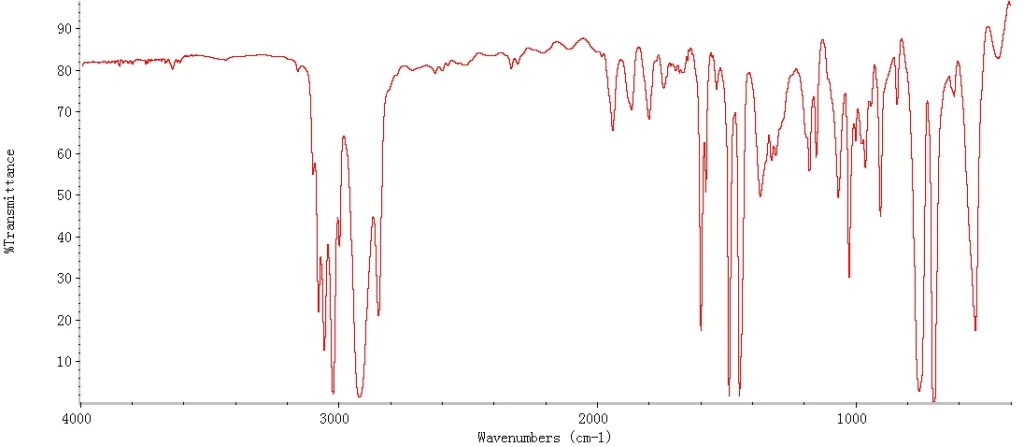
The infrared light source influences resolution indirectly through signal stability and spectral energy distribution. Fluctuations in source output can lead to baseline drift, which reduces the clarity of weak or closely spaced absorption peaks.
Uneven energy distribution across the infrared spectrum may result in insufficient signal intensity in certain wavenumber regions, making high-resolution analysis impossible in those ranges. In addition, light source aging or power degradation can further deteriorate spectral quality over time.
High-quality FTIR systems typically use stable broadband sources such as silicon carbide rods or advanced ceramic emitters. These sources provide uniform and consistent energy output across near-, mid-, and far-infrared regions, supporting reliable high-resolution measurements.
4. Optical System Precision and Stray Light Control
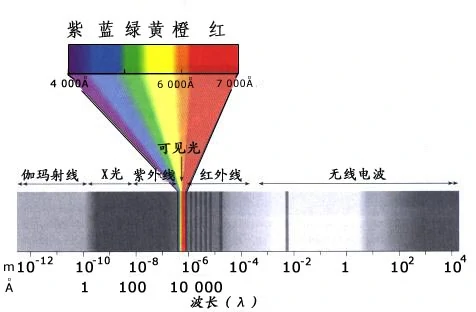
The optical system’s accuracy directly affects the coherence of the interference signal and, consequently, spectral resolution. Factors such as lens quality, optical alignment, and stray light suppression are especially critical.
Surface scratches, contamination, or coating damage on optical components can cause scattering and stray light, which broadens spectral peaks. Poor optical alignment reduces interference contrast, while misalignment of key components such as the beam splitter can significantly distort the interferogram.
Using high-quality beam splitters, including KBr or Ge-coated KBr types, combined with precise optical alignment and routine calibration, helps minimize stray light and preserves high-resolution performance.
5. Data Acquisition and Processing Parameters
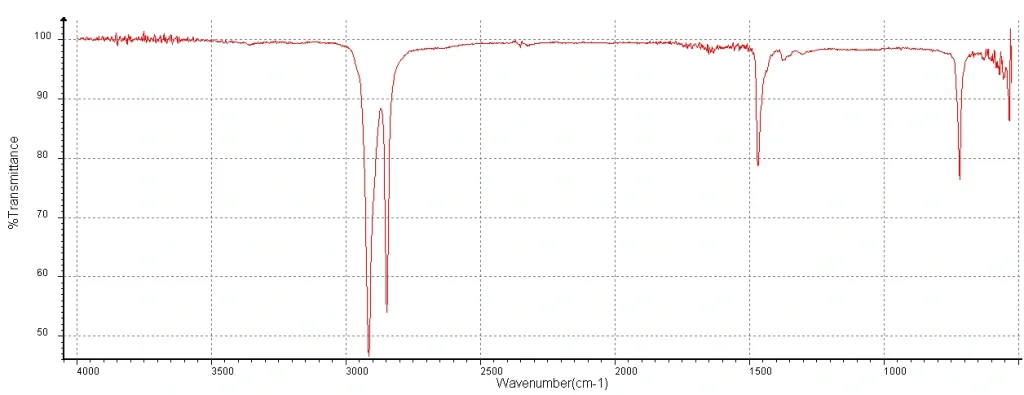
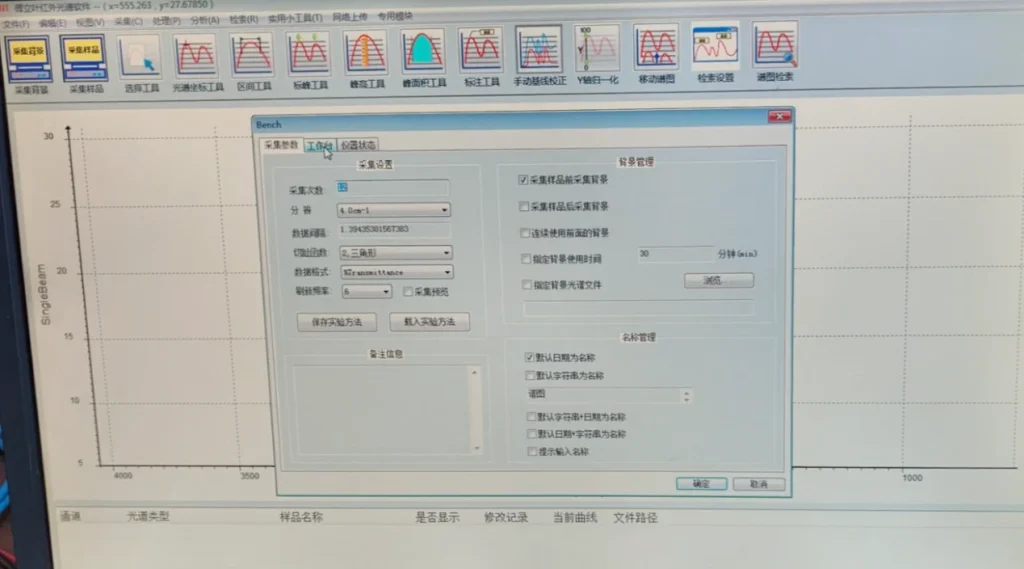
Software-level data acquisition and processing settings strongly influence the final spectral resolution displayed in the spectrum. Several parameters must be carefully optimized.
Increasing the number of scans improves the signal-to-noise ratio through averaging, making narrow peaks easier to resolve. However, excessive scan counts increase measurement time without proportional gains in resolution.
Sampling interval selection is equally important. Too coarse a sampling interval causes loss of fine interferogram details, while overly fine sampling generates redundant data without practical resolution benefits.
Apodization or cutoff functions are used to suppress edge effects and reduce Gibbs oscillations. While necessary, excessive apodization can broaden spectral peaks and reduce true resolution. A balanced approach is essential to maintain both peak shape and resolving power.
| Factor | Impact on Resolution | Optimizing Strategy |
| Moving Mirror Travel Distance | The longer the travel distance, the better the resolution, as it increases the optical path difference. | Use precision mirror drives, ensure mechanical stability, and extend the travel range for higher resolution. |
| Detector Performance | Sensitivity, response speed, and low noise improve the detector’s ability to capture fine spectral details. | Choose detectors like MCT (Mercury Cadmium Telluride) for high-resolution and fast response times. |
| Light Source Stability | Fluctuating or uneven energy from the light source can lead to poor resolution, especially in weak peaks. | Use stable and uniform energy sources like silicon carbide rods for better resolution across the spectrum. |
| Optical System Precision | Optical alignment issues and stray light lead to distorted or broader spectral peaks, lowering resolution. | Regular optical calibration, high-quality beam splitters, and clean lenses minimize stray light. |
| Data Acquisition Parameters | Scan count, sampling interval, and apodization affect the final resolution by optimizing signal-to-noise ratio and peak sharpness. | Fine-tune scan settings, sampling intervals, and apodization functions to balance speed and resolution quality. |
結論
When selecting an FTIR system, understanding these five core factors is crucial to ensuring high-resolution measurements. By carefully optimizing each aspect—ranging from moving mirror travel distance to detector and light source performance—laboratories and manufacturers can achieve superior spectral resolution, ensuring accurate and reliable analysis for various applications.
By paying attention to these technical details, users can maximize the performance of their FTIR systems, making informed choices when purchasing or upgrading equipment.