FTIR in Plastics and Polymer Identification: Key Applications and Advantages
1月 15, 2026
FTIRアクセサリー (Fourier Transform Infrared Spectroscopy) has become an essential analytical tool for identifying plastics and polymers. The principle of FTIR relies on the characteristic absorption of infrared light by different functional groups in polymer molecules. By comparing the sample spectrum to a spectral database, FTIR enables rapid qualitative, quantitative, and structural analysis. Its applications span research and development, production quality control, compliance testing, and recycling processes.

Quick Identification of Raw Materials and Authenticity Verification
Plastics come in various types, including PE, PP, PVC, ABS, PET, and PC, each with unique molecular structures and corresponding infrared absorption peaks. For example:
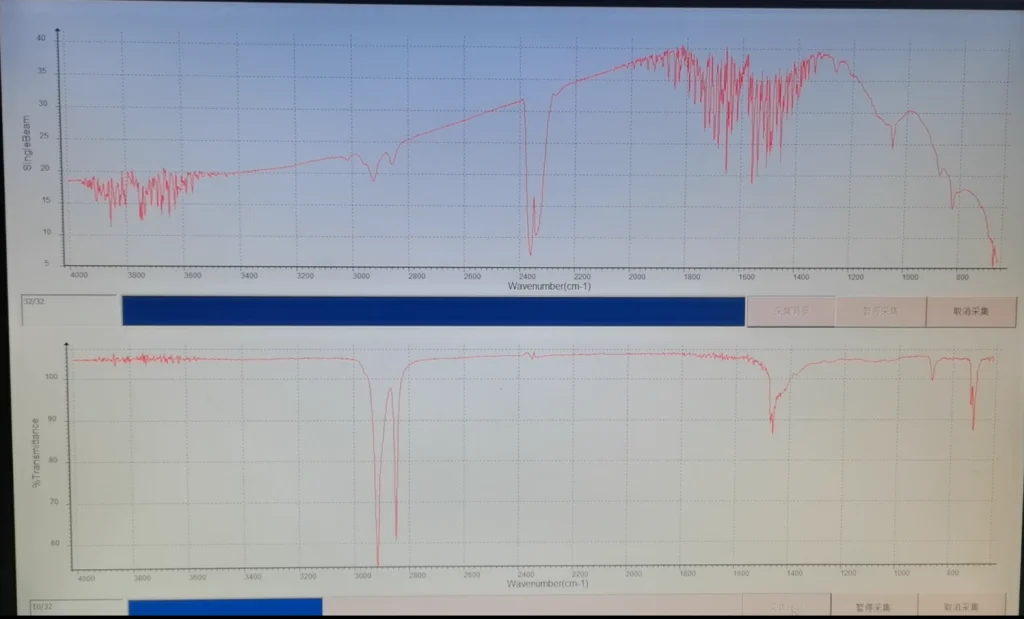
- Polyethylene (PE) exhibits strong C–H stretching peaks at 2920 cm⁻¹ and 2850 cm⁻¹, along with a CH₂ bending peak at 1460 cm⁻¹.
- Polyvinyl chloride (PVC) shows an additional C–Cl stretching vibration near 720 cm⁻¹.
FTIR allows manufacturers to quickly confirm whether incoming raw materials meet order specifications, preventing quality issues caused by material mix-ups. Quality inspection agencies can also verify claims of authenticity in plastic products, helping prevent fraud in the market.

Analysis of Blend and Composite Polymer Components
Many commercial plastics are produced as blends (e.g., PP/PE blends, ABS/PVC alloys) or composites (e.g., glass fiber reinforced PA, filled PP). FTIR can qualitatively identify multiple components and provide semi-quantitative insights.
- For blends, the relative intensity of characteristic peaks can indicate the proportion of each component.
- For composites, FTIR can distinguish between the matrix resin, fillers, and reinforcing agents, providing a clear view of the material composition.
This application supports polymer formulation development and ensures consistent product performance across production batches.
Characterization of Polymer Structure and Verification of Modifications
FTIR is crucial in polymer modification research, including grafting, crosslinking, and copolymerization. The technique accurately detects functional group changes and confirms whether modifications are successful.
For instance:
- Polyethylene grafted with maleic anhydride exhibits a new peak at 1780 cm⁻¹ corresponding to an anhydride carbonyl group.
- Crosslinked polyethylene (XLPE) shows variations in the CH₂ vibration peak due to molecular chain network formation.
FTIR can also assess polymer branching, crystallinity, and other structural parameters, offering a theoretical basis for material performance optimization.

Monitoring Aging and Degradation Behavior
Plastics degrade over time due to exposure to light, heat, and humidity, producing oxidative groups such as carbonyl and hydroxyl. FTIR tracks aging by monitoring changes in characteristic peaks.
For example:
- Aged polypropylene (PP) develops a carbonyl (C=O) absorption peak near 1720 cm⁻¹, with intensity increasing over time.
This capability supports lifetime prediction, weather resistance testing, and guides the addition of stabilizers like antioxidants and light stabilizers to improve material durability.
Detection of Additives and Compliance Screening
Plastics often contain additives, including plasticizers, flame retardants, and antioxidants, some of which are regulated by environmental standards. FTIR can rapidly detect these substances.
- Phthalate plasticizers, for example, show ester carbonyl absorption near 1730 cm⁻¹ and C–O–C stretching around 1280 cm⁻¹.
By matching these spectral features, FTIR ensures compliance with regulations such as RoHS and REACH, which is critical for global market access.
Identification and Purity Analysis of Recycled Plastics
In recycling, FTIR efficiently sorts mixed plastic waste, differentiates polymer types (e.g., PET vs HDPE), and identifies impurities such as paper, metal, or other plastics. This ensures the purity of recycled materials and enhances the quality of recycled products.

Core Advantages of FTIR in Plastic Analysis
- Fast and Efficient: Each test takes only a few seconds, ideal for batch screening.
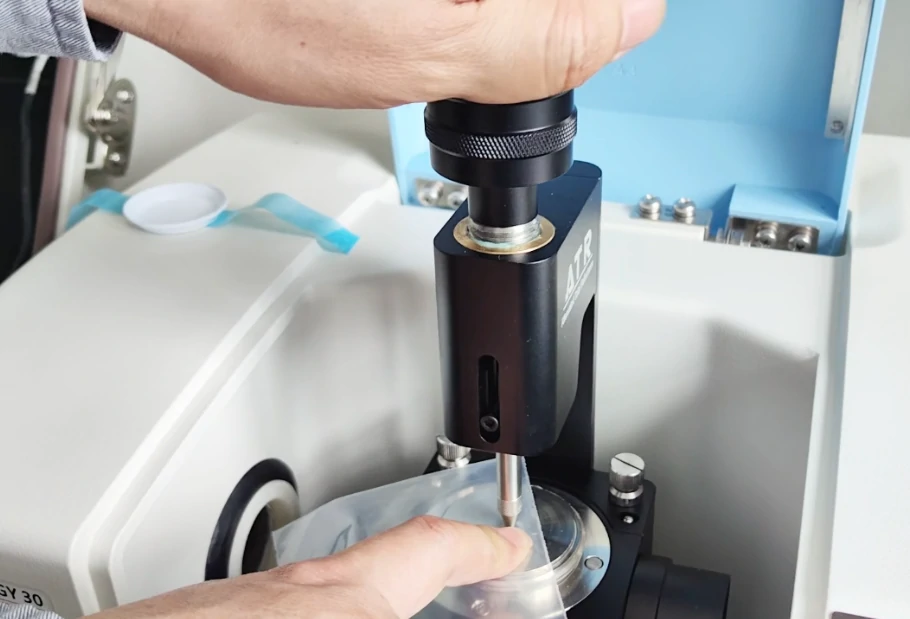
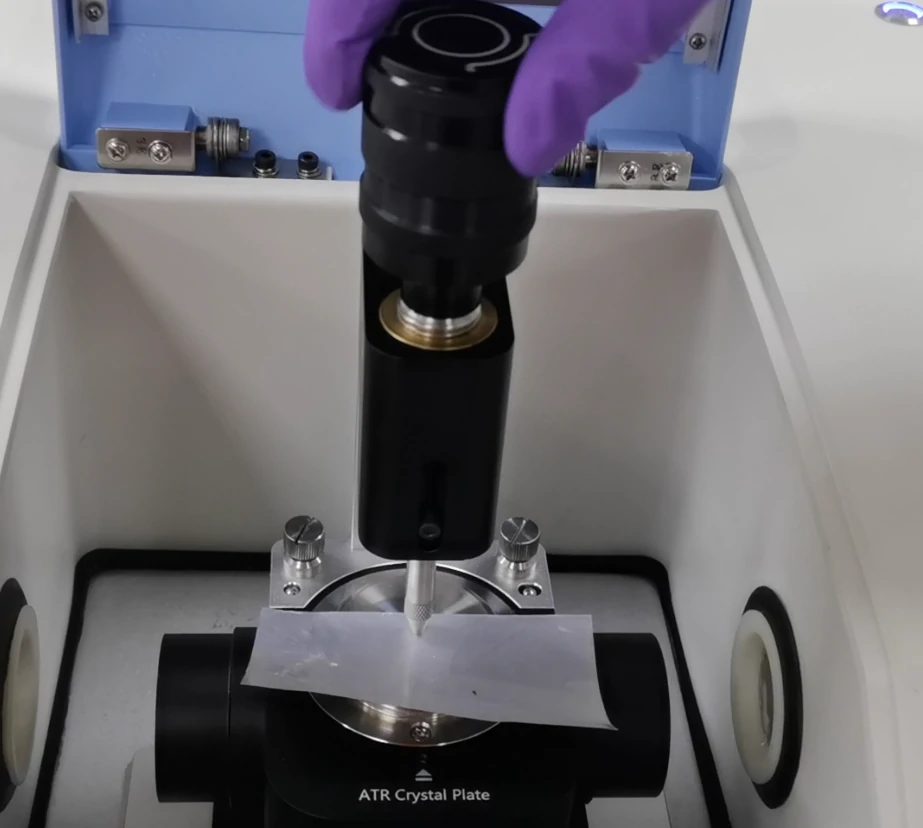
- 非破壊: ATR mode allows testing of solid, film, or particle samples without complex preparation.
- Cost-Effective: Compared to MS or NMR, FTIR is inexpensive to operate, making it suitable for routine quality control in production and inspection labs.
FTIR has proven indispensable for plastics and polymer industries, offering speed, precision, and cost-effective analysis that supports R&D, quality assurance, compliance, and recycling operations.
| Plastic Type | FTIR Characteristic Peaks | Application Scenario | Testing Focus |
| ポリエチレン(PE) | 2920, 2850 cm⁻¹ (C–H) | Raw Material Identification | Verify material composition |
| 1460 cm⁻¹ (CH₂) | |||
| Polyvinyl Chloride (PVC) | 720 cm⁻¹ (C–Cl) | Authenticity Verification | Detect counterfeit products |
| PP / PE Blends | Mixed C–H Peaks | Blend & Composite Analysis | Determine component ratios |
| ABS / PVC Alloys | Aromatic & C–Cl Peaks | Composite Material Analysis | Identify blend and fillers |
| Aged Polypropylene (PP) | 1720 cm⁻¹ (C=O) | Aging & Degradation Monitoring | Assess oxidation & aging |
| Phthalate Plasticizers | 1730 cm⁻¹ (C–O Ester) | Additive & Compliance Testing | Check for restricted additives |
| 1280 cm⁻¹ (C–O–C) | |||
| Recycled Plastics | Various Mixed Peaks | Recycling & Purity Analysis | Identify polymers & impurities |