A Practical 5-Step Guide: How to Read FTIR Spectra for Accurate Results in 2025
12月 18, 2025

要旨
Fourier-Transform Infrared (FTIR) spectroscopy is a cornerstone analytical technique for molecular identification and characterization. This document provides a comprehensive framework for interpreting FTIR spectra, a skill indispensable across scientific disciplines. It systematically deconstructs the process, beginning with the foundational principles of molecular vibrations and their interaction with infrared radiation. The discussion navigates the standard layout of an FTIR spectrum, delineating the significance of the x-axis (wavenumber) and y-axis (transmittance or absorbance). A structured, five-step methodology is presented to guide the analyst from an initial examination of the spectrum to a conclusive identification. The guide emphasizes a detailed analysis of the two primary spectral zones: the functional group region (4000–1500 cm⁻¹) and the fingerprint region (1500–400 cm⁻¹). It further explores the diagnostic value of peak characteristics, including intensity, shape, and precise position, which provide nuanced information about the molecular environment. The objective is to equip both novices and experienced practitioners with the proficiency to read FTIR spectra accurately and confidently.
要点
- Divide the spectrum into the functional group (4000-1500 cm⁻¹) and fingerprint (1500-400 cm⁻¹) regions.
- Identify major functional groups by locating their characteristic peaks in the high-frequency region first.
- Analyze peak shapes; broad peaks often indicate hydrogen bonding (O-H), while sharp peaks suggest otherwise.
- Use the complex fingerprint region to confirm identity by matching it with a known spectral library.
- Learning how to read FTIR spectra is a systematic process of deduction and verification.
- Recognize and disregard common artifacts from atmospheric CO₂ and water moisture for cleaner analysis.
- Evaluate subtle shifts in peak position to understand the molecule's specific chemical environment.
目次
- Step 1: Understand the Fundamental Principles and Your Spectrum's Layout
- Step 2: Analyze the Functional Group Region (4000–1500 cm⁻¹)
- Step 3: Master the Fingerprint Region (1500–400 cm⁻¹)
- Step 4: Evaluate Peak Characteristics: Intensity, Shape, and Position
- Step 5: Synthesize Information and Avoid Common Pitfalls
- よくある質問(FAQ)
- 結論
- 参考文献
Step 1: Understand the Fundamental Principles and Your Spectrum's Layout
Before one can begin to interpret the intricate lines and curves of an FTIR spectrum, it is necessary to grasp the fundamental narrative it tells. An FTIR spectrum is not merely a random assortment of peaks and troughs; it is a molecular fingerprint, a unique signature rendered from the interaction between infrared light and matter. To learn how to read FTIR spectra is to learn the language of molecular vibrations. This initial step is about building a solid foundation—understanding what the spectrum represents and how it is organized. It is here we establish the ground rules for our analytical journey, ensuring we can navigate the spectral map with clarity and purpose.
The Language of Vibrations: What an FTIR Spectrum Represents
At the heart of infrared spectroscopy lies a simple yet profound physical phenomenon: the vibration of chemical bonds. Imagine two atoms connected by a bond as two balls connected by a spring. This system is not static; it is in constant motion. The atoms can stretch back and forth, like the spring compressing and extending, or they can bend and twist in various ways relative to each other. These motions are not random; they occur at specific, quantized frequencies, determined by the mass of the atoms and the strength of the bond connecting them.
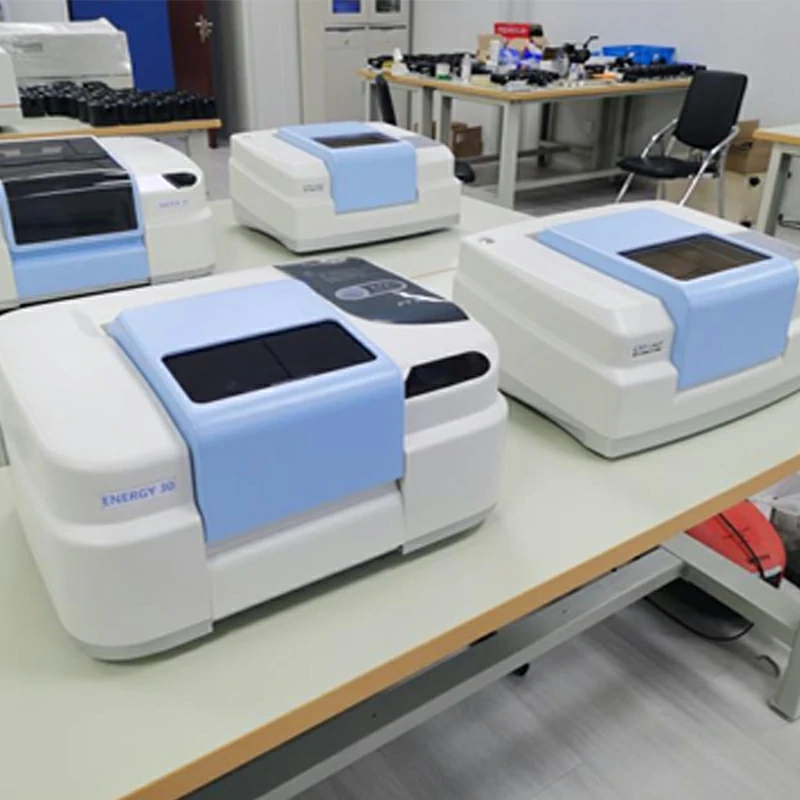
When a molecule is exposed to infrared radiation, it absorbs energy, but only at frequencies that perfectly match its own natural vibrational frequencies. An FTIR spectrometer, such as the state-of-the-art フーリエ変換赤外分光計, measures this absorption process. It shines a broad range of infrared frequencies through a sample and detects which frequencies are absorbed and to what extent. The resulting spectrum is a plot showing the amount of light that passed through the sample (transmittance) or was absorbed by it (absorbance) at each frequency. Each downward peak in a transmittance spectrum (or upward peak in an absorbance spectrum) corresponds to a specific vibrational mode of a bond within the molecule. Therefore, by identifying these peaks, we can deduce which types of bonds—and by extension, which functional groups—are present in the sample. This is why FTIR spectroscopy is such a powerful tool for identifying unknown substances and verifying the structure of synthesized compounds.
Navigating the Spectral Map: Wavenumber vs. Transmittance/Absorbance
A typical FTIR spectrum has two axes that form the map of our molecular investigation. A thoughtful examination of these axes is a prerequisite for any meaningful analysis.
The horizontal axis, or x-axis, represents the frequency of the infrared light, expressed in a unit called wavenumbers (cm⁻¹). Wavenumbers are directly proportional to both energy and frequency (E = hν) and are defined as the reciprocal of the wavelength in centimeters (cm). This unit is favored by spectroscopists because it provides a linear scale with values that are convenient to work with. The mid-infrared region, which is most commonly used for analysis, spans from 4000 cm⁻¹ on the left (higher energy) to 400 cm⁻¹ on the right (lower energy). Think of this axis as a lineup of all the different energies of light that were shone on the sample.
The vertical axis, or y-axis, quantifies the interaction of the light with the sample. It can be presented in one of two ways: percent transmittance (%T) or absorbance (A).
- Percent Transmittance (%T): This scale measures the percentage of light that passes through the sample at each wavenumber. The baseline, where no light is absorbed, is at 100%T. An absorption event is represented by a downward-pointing peak, indicating a decrease in transmitted light. A value of 0%T would mean all light at that frequency was absorbed.
- Absorbance (A): This scale measures the amount of light absorbed by the sample. It is logarithmically related to transmittance by the equation A = -log(%T/100). In an absorbance spectrum, the baseline is at zero, and absorptions appear as upward-pointing peaks. Absorbance is particularly useful for quantitative analysis because, according to the Beer-Lambert Law, it is directly proportional to the concentration of the substance being analyzed.
While both formats convey the same information, most contemporary spectral interpretation and library searching are performed using absorbance spectra. For the purpose of learning how to read FTIR spectra, it is beneficial to be comfortable with both representations.
The Two Major Territories: Functional Group and Fingerprint Regions
The FTIR spectrum is conventionally divided into two principal regions, each providing a different type of information. Understanding the role of each territory is vital for a systematic and effective analysis.
The Functional Group Region (4000 cm⁻¹ to approximately 1500 cm⁻¹) This higher-energy portion of the spectrum is where the simplest and most predictable vibrations occur. These are primarily stretching vibrations involving just two atoms, such as O-H, N-H, C-H, C=O, C=C, and C≡C. Because these vibrations are relatively isolated from the rest of the molecule, their absorption frequencies are highly characteristic of the specific functional group. For example, a strong, broad absorption around 3300 cm⁻¹ is a classic indicator of an alcohol's O-H group, while a sharp, intense peak near 1715 cm⁻¹ almost certainly points to a carbonyl (C=O) group. This region provides the first crucial clues about the class of compound you are analyzing. It allows you to quickly identify the key functional groups present in the molecule.
The Fingerprint Region (1500 cm⁻¹ to approximately 400 cm⁻¹) This lower-energy portion of the spectrum is significantly more complex. It contains a dense and intricate pattern of peaks arising from all sorts of vibrations, including complex stretching modes and a multitude of bending vibrations (like scissoring, rocking, wagging, and twisting). These vibrations involve coordinated movements of many atoms across the molecular skeleton. Consequently, the pattern of peaks in this region is exquisitely sensitive to the exact structure of the entire molecule. Even minor differences between two molecules, such as the difference between isomers, will result in a dramatically different pattern here.
While some specific absorptions in this region can be assigned (for example, C-O stretches or aromatic substitution patterns), its primary power lies in its uniqueness. It is called the "fingerprint region" because the pattern of peaks is a unique identifier for a specific compound. The most reliable way to use this region is to compare the spectrum of an unknown sample to a database of spectra from known compounds. A perfect match in the fingerprint region is considered definitive proof of identity.
Step 2: Analyze the Functional Group Region (4000–1500 cm⁻¹)
Having established the fundamental layout of the spectral map, our investigation now moves to the first major territory: the functional group region. This expanse, from 4000 cm⁻¹ down to about 1500 cm⁻¹, is our primary scouting ground. It is here that we find the most distinct and recognizable signals—the clear signposts that point toward the identity of our unknown compound. The absorptions in this region are generally due to simple stretching vibrations of bonds containing hydrogen or multiple bonds (double and triple bonds). Because these vibrations are relatively high in energy and somewhat isolated from the rest of the molecular framework, they appear in predictable locations. Our task in this step is to systematically scan this region, identify these characteristic peaks, and begin assembling a list of the functional groups present in our sample.
Decoding High-Frequency Stretches: X-H Bonds
The highest-energy portion of the functional group region, from roughly 4000 cm⁻¹ to 2500 cm⁻¹, is dominated by the stretching vibrations of bonds involving a hydrogen atom (X-H). The low mass of the hydrogen atom is the reason these vibrations occur at such high frequencies. Careful examination of these peaks provides invaluable information.
O-H Stretch (≈3600–3200 cm⁻¹): The hydroxyl (O-H) group is one of the most easily recognizable features in an FTIR spectrum. Its appearance is profoundly affected by hydrogen bonding.
- Alcohols and Phenols: In a liquid or solid sample where hydrogen bonding is prevalent, the O-H stretch appears as a very broad, strong, and smooth U-shaped peak centered around 3300 cm⁻¹. The breadth of the peak is a direct result of the wide range of hydrogen bond strengths present in the sample at any given moment.
- Carboxylic Acids: The O-H stretch in a carboxylic acid is even more distinctive. Due to strong dimeric hydrogen bonding, it manifests as an extremely broad and often messy absorption that can span from 3300 cm⁻¹ all the way down to 2500 cm⁻¹, frequently overlapping with the C-H stretching region.
- Free O-H: In a very dilute solution in a non-polar solvent or in the gas phase, where hydrogen bonding is minimized, the O-H group gives rise to a sharp, weak-to-medium intensity peak around 3600 cm⁻¹.
N-H Stretch (≈3500–3300 cm⁻¹): The stretching of the nitrogen-hydrogen bond in amines and amides also appears in this region. Unlike the O-H stretch, the N-H stretch is typically sharper and less intense. The number of peaks observed is diagnostic:
- Primary Amines (R-NH₂) show two medium-intensity peaks, corresponding to the symmetric and asymmetric stretching modes of the two N-H bonds.
- Secondary Amines (R₂N-H) show a single, weaker peak.
- Tertiary Amines (R₃N) have no N-H bond and thus show no absorption in this region. Amide N-H stretches also appear here, generally near 3300 cm⁻¹ as a medium peak, which can be broadened by hydrogen bonding.
C-H Stretch (≈3300–2800 cm⁻¹): Almost every organic molecule contains carbon-hydrogen bonds, so you will almost always see absorptions in this area. The key is to look at the precise position and shape of these peaks to determine the type of carbon atom the hydrogen is attached to.
- Alkyne C-H (≈3300 cm⁻¹): The C-H bond of a terminal alkyne (sp-hybridized carbon) gives a strong, sharp peak right at 3300 cm⁻¹. Its sharpness and distinct location make it easy to spot.
- Alkene and Aromatic C-H (≈3100–3000 cm⁻¹): The C-H bonds on sp²-hybridized carbons (alkenes and aromatics) absorb at slightly higher frequencies than their alkane counterparts. These peaks are typically of medium intensity and appear as a cluster of absorptions just to the left of 3000 cm⁻¹.
- Alkane C-H (≈3000–2850 cm⁻¹): The C-H bonds on sp³-hybridized carbons (alkanes) absorb just to the right of 3000 cm⁻¹. These are usually strong, sharp peaks. An aldehyde C-H stretch also appears in this region, typically as a pair of weaker peaks around 2830 cm⁻¹ and 2730 cm⁻¹.
Investigating Triple and Double Bonds
Moving to a slightly lower energy range, between 2500 cm⁻¹ and 1500 cm⁻¹, we encounter the stretching vibrations of triple and double bonds. These absorptions are often very intense and provide some of the most reliable diagnostic information in the entire spectrum.
Triple Bonds (C≡C and C≡N, ≈2260–2100 cm⁻¹): This region is relatively quiet, so any peak appearing here is significant.
- Alkyne (C≡C): The carbon-carbon triple bond stretch appears around 2260–2100 cm⁻¹. Its intensity is variable. In terminal alkynes, it is often weak to medium. In internal, symmetrically substituted alkynes, the change in dipole moment during the vibration can be very small or even zero, causing the peak to be extremely weak or entirely absent.
- Nitrile (C≡N): The carbon-nitrogen triple bond of a nitrile absorbs in a similar range, around 2260–2220 cm⁻¹. This peak is usually of medium intensity and relatively sharp.
Double Bonds (C=O, C=C, C=N, ≈1850–1550 cm⁻¹): This is arguably the most important part of the functional group region.
- Carbonyl (C=O): The carbonyl stretch is one of the most prominent features in infrared spectroscopy. It gives rise to a very strong, sharp peak typically found between 1850 cm⁻¹ and 1650 cm⁻¹. The exact position of this peak is highly diagnostic of the type of carbonyl compound (Cooley & Tukey, 1965). The table below illustrates the sensitivity of the C=O stretch to its molecular environment. Factors like conjugation (which lowers the frequency) and ring strain (which increases it) cause predictable shifts.
- Alkene (C=C): The carbon-carbon double bond stretch appears around 1680–1620 cm⁻¹. Its intensity is variable, from medium to weak. Conjugation with other double bonds or carbonyl groups can increase its intensity and lower its frequency.
- Aromatic Rings: Aromatic compounds typically show a pair of medium-to-strong peaks in the 1600–1450 cm⁻¹ range, which arise from the stretching of the carbon-carbon bonds within the ring.
- Imine (C=N): The carbon-nitrogen double bond absorbs around 1650 cm⁻¹, but it is generally weaker and less reliable for diagnosis than the C=O stretch.
| Wavenumber Range (cm⁻¹) | Functional Group | Bond Vibration | Appearance (Intensity, Shape) |
|---|---|---|---|
| 3600–3200 | Alcohol, Phenol | O-H stretch | Strong, very broad (H-bonded) |
| 3300–2500 | Carboxylic Acid | O-H stretch | Very strong, extremely broad |
| 3500–3300 | Primary Amine | N-H stretch | Medium, two sharp peaks |
| 3400–3300 | Secondary Amine | N-H stretch | Weak to medium, one sharp peak |
| ~3300 | Terminal Alkyne | C-H stretch | Strong, sharp |
| 3100–3000 | Alkene, Aromatic | C-H stretch | Medium, sharp |
| 3000–2850 | Alkane | C-H stretch | Strong, sharp |
| 2260–2220 | Nitrile | C≡N stretch | Medium, sharp |
| 2260–2100 | Alkyne | C≡C stretch | Weak to medium, sharp |
| 1760–1665 | Carbonyl Compounds | C=O stretch | Very strong, sharp |
| 1680–1620 | Alkene | C=C stretch | Variable intensity, sharp |
Step 3: Master the Fingerprint Region (1500–400 cm⁻¹)
After methodically identifying the principal actors in the functional group region, we descend into the more crowded and chaotic landscape of the fingerprint region. Spanning from approximately 1500 cm⁻¹ down to 400 cm⁻¹, this area of the spectrum is where the true individuality of a molecule is expressed. While the functional group region tells us about the component parts of a molecule, the fingerprint region reveals the unique way those parts are assembled into a whole. The absorptions here are due to a complex interplay of bending vibrations and skeletal vibrations involving large portions of the molecule. Learning how to read FTIR spectra effectively requires an appreciation for the subtle art of interpreting this region—not just for isolated clues, but for the holistic pattern that serves as the ultimate confirmation of a compound's identity.
The Complexity of the Molecular "Signature"
Why is this region so intricate? Unlike the simple, two-atom stretching motions seen at higher energies, the vibrations in the fingerprint region are much more complex. They include:
- Bending Vibrations: These involve changes in the angles between bonds. Common types include scissoring, rocking, wagging, and twisting. Imagine the C-H bonds on a CH₂ group. They can bend in-plane towards each other (scissoring) or away from each other (rocking), or they can move out-of-plane together (wagging) or in opposition (twisting). Each of these motions has a distinct, albeit lower, energy.
- Skeletal Vibrations: These are collective oscillations of the entire carbon framework of the molecule, much like the way a complex bridge structure might vibrate.
Because these vibrations are coupled—meaning the motion of one bond affects the motion of its neighbors—their frequencies are highly sensitive to the overall molecular geometry. Two molecules might have the exact same functional groups (e.g., they are isomers), but the subtle differences in their three-dimensional structure will lead to completely different patterns of coupled vibrations. This is why the fingerprint region is so powerful. The probability of two different compounds having the exact same absorption pattern in this region is virtually zero. It is the molecular equivalent of a human fingerprint: a unique and definitive identifier.
Identifying Key Bending Vibrations
While the overall pattern is the most important feature, it is still possible to extract some specific diagnostic information from the fingerprint region. Certain bending vibrations appear in relatively predictable locations and can help corroborate the assignments made in the functional group region or provide additional structural details.
C-H Bending Vibrations:
- Alkanes: The bending of C-H bonds in methyl (CH₃) and methylene (CH₂) groups gives rise to characteristic peaks. A peak near 1450 cm⁻¹ is common for CH₂ scissoring, while a peak near 1375 cm⁻¹ is characteristic of a CH₃ symmetric bend (the "umbrella" mode). The presence of a strong 1375 cm⁻¹ peak that is split into a doublet often indicates a gem-dimethyl group (two methyl groups on the same carbon), a feature of isopropyl groups.
- Aromatics: The out-of-plane (OOP) C-H bending vibrations of aromatic rings are particularly useful. They appear as strong absorptions in the 900–675 cm⁻¹ range. The exact position and number of these peaks can reveal the substitution pattern on the benzene ring (e.g., ortho, meta, para, or monosubstituted). This is a classic method for distinguishing between aromatic isomers.
C-O Stretching Vibrations (≈1300–1000 cm⁻¹): The C-O single bond stretch is not found in the functional group region but appears prominently in the fingerprint region. This strong peak provides excellent confirmatory evidence for alcohols, ethers, esters, and carboxylic acids.
- Alcohols: The position of the C-O stretch can help distinguish between primary (≈1050 cm⁻¹), secondary (≈1100 cm⁻¹), and tertiary (≈1150 cm⁻¹) alcohols.
- Esters: Esters show two characteristic C-O stretches: one for the C(=O)-O bond and one for the O-C bond. These typically appear as two strong peaks in the 1300–1000 cm⁻¹ range.
C-X Stretches (below 800 cm⁻¹): Stretching vibrations for bonds between carbon and heavier atoms, like halogens, occur at very low frequencies. C-Cl stretches appear in the 800–600 cm⁻¹ range, while C-Br and C-I stretches are found at even lower wavenumbers, often near the edge of the standard mid-IR range.
The Power of Comparison: Using Spectral Libraries
The ultimate utility of the fingerprint region lies not in assigning every single peak, but in pattern recognition. The most reliable method for identifying an unknown compound is to compare its FTIR spectrum against a reference database of spectra from known, pure compounds. Modern FTIR software comes equipped with extensive spectral libraries that can contain hundreds of thousands of entries.
The process is straightforward: the software takes the spectrum of your unknown sample and uses a search algorithm to find the best matches from the library. The algorithm compares the peak positions, intensities, and shapes across the entire spectrum, but it places special weight on the information-rich fingerprint region. The software then provides a "hit list" of the most likely candidates, along with a "hit quality index" or match score that quantifies how well the spectra align. A match score of 95% or higher, especially when visually confirmed by overlaying the two spectra, is considered a very strong indication of a positive identification. This matching process is the gold standard for FTIR analysis and is used extensively in quality control, forensic science, and research to confirm the identity and purity of a substance.
Step 4: Evaluate Peak Characteristics: Intensity, Shape, and Position
Once we have identified the major absorption bands in both the functional group and fingerprint regions, the next level of analysis involves a more nuanced examination of the peaks themselves. A peak in an FTIR spectrum is defined by more than just its location on the x-axis. Its intensity (how strong it is), its shape (how broad or sharp it is), and its precise position (subtle shifts from the expected value) all contain valuable layers of information about the molecule's structure and environment. A discerning analyst does not just see a peak; they see a character with a story to tell. This step is about learning to read that story, moving from a general identification of functional groups to a more refined understanding of the molecule's specific context.
What Peak Intensity Tells You
The intensity of an absorption peak is a measure of how efficiently the molecule absorbs light at that specific frequency. In a transmittance spectrum, this corresponds to how far the peak dips down; in an absorbance spectrum, it is the height of the peak. Intensities are qualitatively described as strong (S), medium (M), or weak (W).
The physical basis for peak intensity is the change in the dipole moment of the molecule during the vibration. A bond's dipole moment is a measure of the separation of positive and negative charge. For a vibration to be "infrared active" (meaning, for it to absorb IR light and produce a peak), the dipole moment must change as the bond stretches or bends. The larger the change in dipole moment during the vibration, the more intense the resulting absorption peak will be.
This principle explains many of an FTIR spectrum's characteristic features:
- Strong Peaks: The C=O (carbonyl) stretch is famously intense. This is because the C=O bond is highly polar, and stretching it causes a very large change in the molecule's overall dipole moment. Similarly, the O-H stretch is also very strong due to the high polarity of the O-H bond.
- Medium to Weak Peaks: The C=C (alkene) stretch is often much weaker than a C=O stretch. Although it is a double bond, the C-C bond itself is nonpolar. The change in dipole moment during its vibration is typically smaller, depending on the symmetry of its substitution.
- Inactive Peaks: Symmetrically substituted bonds, like the C≡C bond in 2-butyne (CH₃-C≡C-CH₃), may show no absorption peak at all. Because the molecule is symmetrical, stretching the triple bond produces no net change in the dipole moment. The vibration is "infrared inactive."
The Meaning Behind Peak Shape
The shape of a peak, specifically its width, is also highly diagnostic. Peaks can be described as sharp (narrow) or broad. The width of a peak is related to the consistency of the chemical environment around the vibrating bond.
-
Broad Peaks: The classic example of a broad peak is the O-H stretch of an alcohol or carboxylic acid (around 3300 cm⁻¹). The reason for this broadening is hydrogen bonding. In a liquid or solid sample, each O-H group is interacting with its neighbors through a dynamic network of hydrogen bonds. These bonds have a wide distribution of strengths and lengths, meaning that at any given moment, different O-H groups exist in slightly different environments. This range of environments causes them to absorb light over a wide range of frequencies, smearing the individual absorptions into one very broad peak. The N-H stretch in amines and amides can also be broadened by hydrogen bonding, though usually less dramatically than the O-H stretch.
-
Sharp Peaks: In contrast, peaks that are not subject to such strong intermolecular interactions are typically sharp. For example, the C-H stretching peaks around 3000 cm⁻¹ are usually quite narrow. The C≡C and C≡N stretching peaks around 2200 cm⁻¹ are also characteristically sharp. This sharpness indicates that the vibrating bonds exist in a well-defined, consistent environment throughout the sample.
Subtle Shifts in Peak Position
While we have general ranges for where functional groups absorb, the exact position of a peak can be fine-tuned by its local chemical environment. These subtle shifts are predictable and provide a deeper level of structural insight. Understanding these effects is a key part of learning how to read FTIR spectra at an advanced level.
| Carbonyl Compound Type | Typical C=O Wavenumber (cm⁻¹) | Influencing Factor |
|---|---|---|
| Saturated Aliphatic Ketone (e.g., Acetone) | ~1715 | Reference point |
| α,β-Unsaturated Ketone | ~1685 | Conjugation (delocalization) weakens the C=O bond |
| Saturated Aliphatic Ester | ~1735 | Inductive effect of the adjacent oxygen strengthens the C=O bond |
| Acid Anhydride | ~1820 and ~1760 | Two coupled C=O stretches, both at high frequency |
| Acid Chloride | ~1800 | Strong inductive effect of chlorine atom |
| Amide | ~1650 | Resonance donation from nitrogen weakens the C=O bond |
| Cyclobutanone (4-membered ring) | ~1780 | Ring strain forces more p-character into the C=O bond |
Some of the most important effects that influence peak position include:
- Conjugation: When a double or triple bond is adjacent to another multiple bond (e.g., a C=C next to a C=O), the pi electrons are delocalized over the system. This resonance effect weakens the bonds, causing them to vibrate at a lower frequency. For example, the C=O stretch of a simple ketone is around 1715 cm⁻¹, but in an α,β-unsaturated ketone, it shifts down to about 1685 cm⁻¹.
- Inductive Effects: Electronegative atoms attached near a functional group can pull electron density away through the sigma bonds. This inductive withdrawal of electrons strengthens nearby bonds, increasing their vibrational frequency. For example, the C=O of an ester (~1735 cm⁻¹) is at a higher frequency than that of a ketone (~1715 cm⁻¹) because the adjacent ester oxygen pulls electron density away, strengthening the C=O bond. This effect is even more pronounced in acid chlorides (~1800 cm⁻¹).
- Ring Strain: For cyclic compounds, particularly those with small rings, the bond angles are forced to deviate from their ideal values. In a cyclic ketone, as the ring size decreases, the C=O stretching frequency increases. For example, the C=O in cyclohexanone (a stable 6-membered ring) is at ~1715 cm⁻¹, but in cyclobutanone (a strained 4-membered ring), it shifts up to ~1780 cm⁻¹.
By carefully considering the intensity, shape, and precise position of each peak, we can build a much more detailed and robust picture of the molecule under investigation.
Step 5: Synthesize Information and Avoid Common Pitfalls
The final step in our analytical process is one of synthesis and verification. We have gathered clues from the functional group region, examined the unique signature of the fingerprint region, and scrutinized the individual characteristics of each peak. Now, we must assemble these disparate pieces of information into a coherent and self-consistent structural hypothesis. This stage is akin to a detective reviewing all the evidence before naming a suspect. It also involves being vigilant for common sources of error and misinterpretation, such as atmospheric contaminants or issues with sample preparation. Mastering this final step transforms the mechanical process of peak assignment into the intellectual art of structural elucidation. The use of 高度なFTIR前処理サンプル前処理ツール can significantly improve the quality of the spectra, making this final synthesis more reliable.
Assembling the Puzzle: A Systematic Approach
A robust interpretation is not a haphazard process but a systematic one. A reliable workflow for synthesizing the information from an FTIR spectrum looks something like this:
- Initial Scan and Triage: Begin with a quick look at the entire spectrum. Are there any overwhelmingly obvious features? A huge, broad peak around 3300 cm⁻¹ immediately suggests an alcohol or phenol. A massive, sharp peak near 1700 cm⁻¹ screams "carbonyl." These major features provide your initial direction.
- Detailed Functional Group Analysis: Systematically work your way from left to right through the functional group region (4000–1500 cm⁻¹). Make a list of all the functional groups you can confidently identify based on their characteristic absorptions. For each group, note the peak's position, intensity, and shape. For example: "Strong, broad peak at 3350 cm⁻¹ (O-H stretch); strong, sharp peaks at 2950 cm⁻¹ (alkane C-H stretch); no significant peaks in the 1800-1600 cm⁻¹ region (no carbonyl or alkene)."
- Formulate a Hypothesis: Based on your list of functional groups, propose one or more possible structures. If you see an O-H stretch and alkane C-H stretches but no carbonyl, your hypothesis might be a simple alcohol.
- Confirm and Refine with the Fingerprint Region: Now, turn your attention to the fingerprint region (1500–400 cm⁻¹). Does the information here support your hypothesis? If you hypothesized an alcohol, you should see a strong C-O stretch somewhere between 1200 cm⁻¹ and 1000 cm⁻¹. If you proposed a specific isomer, you can check for characteristic bending patterns.
- Final Verification with a Library Search: The most definitive step is to compare your spectrum to a spectral library. Search the library with your unknown's spectrum. If your top hit is the compound you hypothesized, and the visual overlay of the two spectra shows a near-perfect match (especially in the fingerprint region), you can be very confident in your identification.
Recognizing and Ignoring Contaminants
An FTIR spectrum does not just show your sample; it shows everything in the infrared beam's path. It is common for spectra to contain small, interfering peaks from the surrounding environment or from impurities. Learning to recognize these artifacts is crucial to avoid misinterpretation.
- Water (H₂O): Moisture is everywhere, and it absorbs infrared light strongly. If your instrument's optics are not perfectly purged with dry air or nitrogen, or if your sample is wet, you may see evidence of water. This typically appears as a collection of sharp, rotational lines in the 3800–3500 cm⁻¹ region and another set around 1630 cm⁻¹. If you see a broad O-H peak from an alcohol, these water lines can sometimes be superimposed on it.
- **Carbon Dioxide (CO₂) **: Atmospheric carbon dioxide is another common culprit. CO₂ is a linear molecule and has a very characteristic absorption due to its asymmetric stretch. This appears as a distinctive "doublet"—two sharp, strong peaks with a small dip in between—centered around 2349 cm⁻¹. Because there are very few other functional groups that absorb in this exact spot, this signal is almost always attributable to atmospheric CO₂. In a well-run experiment, a "background" spectrum is taken of the empty instrument just before the sample is run. The instrument software then automatically subtracts this background from the sample spectrum, which should remove the CO₂ and H₂O signals. However, if the atmospheric conditions change between the background scan and the sample scan, these peaks may not subtract perfectly and will appear as artifacts. An experienced analyst learns to recognize their characteristic appearance and mentally ignore them.
The Importance of Sample Preparation
The quality and appearance of an FTIR spectrum can be significantly influenced by how the sample was prepared for analysis. Different techniques are used for different types of samples (liquids, solids, gases), and each has its own potential benefits and drawbacks.
- Neat Liquids: Can be analyzed as a thin film between two salt plates (e.g., NaCl or KBr, which are transparent to IR). This is simple but can be difficult to reproduce the film thickness.
- Solutions: A sample can be dissolved in a solvent that has minimal IR absorption in the regions of interest (e.g., CCl₄ or CS₂). This is good for quantitative work but introduces solvent peaks that must be ignored.
- KBr Pellets: A solid sample can be finely ground with potassium bromide (KBr) powder and pressed into a transparent pellet. This is a common technique but requires careful grinding to avoid scattering effects, and KBr is hygroscopic (absorbs water), which can introduce water peaks.
- Nujol Mulls: A solid can be ground into a paste with a mineral oil (Nujol). This paste is then spread on a salt plate. This method is quick but adds the strong C-H stretch peaks of the oil to the spectrum, which will obscure the sample's C-H region.
- 減衰全反射率(ATR): This is an increasingly popular and powerful technique. The sample (liquid or solid) is simply pressed against a crystal of high refractive index (like diamond or zinc selenide). The IR beam reflects internally within the crystal, and an "evanescent wave" penetrates a few microns into the sample, generating the absorption spectrum (Newport, 2025). ATR is fast, requires minimal sample prep, and is excellent for analyzing difficult samples like powders, films, and even biological tissues. However, the penetration depth is wavelength-dependent, which can slightly alter the relative intensities of peaks compared to a traditional transmission spectrum.
Being aware of the sample preparation method used is essential for accurate interpretation, as it can explain certain features or artifacts present in the final spectrum.
よくある質問(FAQ)
What is the difference between transmittance and absorbance in an FTIR spectrum? Transmittance measures the percentage of light that passes through the sample, so absorption peaks point downwards from a 100% baseline. Absorbance measures the amount of light absorbed and is logarithmically related to transmittance. In an absorbance spectrum, peaks point upwards from a zero baseline. Absorbance is directly proportional to concentration, making it the preferred format for quantitative analysis and spectral library searching.
Why is the fingerprint region so difficult to interpret? The fingerprint region (1500–400 cm⁻¹) is complex because it contains a high density of peaks arising from coupled bending and skeletal vibrations of the entire molecule. Unlike the simple stretches in the functional group region, these vibrations are not isolated to a single bond. This complexity makes it difficult to assign each individual peak, but it also makes the overall pattern a unique "fingerprint" for that specific molecule, which is invaluable for definitive identification via library matching.
How can I tell if my sample is wet from its FTIR spectrum? Water contamination typically appears as a series of sharp, rotational peaks in the 3800–3500 cm⁻¹ region and another absorption near 1630 cm⁻¹. These peaks can be superimposed on your sample's spectrum. If your sample is an alcohol with a broad O-H peak, you might see these sharp water lines riding on top of the broad band. Using a dry sample and purging the spectrometer with dry air or nitrogen can minimize this interference.
What does a flat line or no peaks in an FTIR spectrum mean? A flat line with no significant peaks can mean several things. It could indicate that the sample does not absorb infrared radiation in the mid-IR range (e.g., noble gases like Argon or simple diatomic molecules like N₂ or O₂ which have no dipole moment change upon vibration). More commonly in a laboratory setting, it might suggest a problem with the experiment, such as no sample in the beam path, an opaque sample blocking all light, or an instrument malfunction.
Can FTIR be used for quantitative analysis? Yes, FTIR is an excellent tool for quantitative analysis. According to the Beer-Lambert Law, the absorbance of a peak is directly proportional to the concentration of the corresponding functional group. By creating a calibration curve using standards of known concentrations, you can measure the absorbance of an unknown sample to determine its concentration with high precision. This is widely used in industrial quality control and environmental monitoring.
What causes the sharp peaks around 2350 cm⁻¹? A sharp, often double-peaked absorption centered around 2349 cm⁻¹ is the classic signature of atmospheric carbon dioxide (CO₂). Even small fluctuations in the amount of CO₂ in the instrument's beam path between the background scan and the sample scan can lead to the appearance of these peaks. They are artifacts and should be recognized and ignored during the interpretation of the sample's spectrum.
What are the main advantages of FTIR over older dispersive infrared spectrometers? FTIR spectrometers have several key advantages. The Fellgett (or multiplex) advantage means all frequencies are measured simultaneously, dramatically speeding up data acquisition and improving the signal-to-noise ratio. The Jacquinot (or throughput) advantage means more light passes through the instrument because it does not require restrictive slits, further enhancing sensitivity. FTIR instruments also use an internal HeNe laser for precise wavenumber calibration, leading to superior accuracy and reproducibility (Newport, 2025).
What is ATR and why is it so popular? ATR stands for Attenuated Total Reflectance. It is a sampling technique where the sample is pressed against a special crystal. The IR beam interacts with the sample via an evanescent wave that penetrates only a few microns deep. Its popularity stems from its ease of use; it requires little to no sample preparation for both liquids and solids, is non-destructive, and provides high-quality, reproducible spectra very quickly (Aurora ProSci, 2025).
結論
The ability to interpret a Fourier-Transform Infrared spectrum is a powerful skill, one that unlocks a wealth of information about the molecular world. It is a process that blends scientific knowledge with detective-like deduction. By approaching each spectrum with a systematic, five-step methodology, the seemingly chaotic collection of lines and curves resolves into a clear and logical narrative. The journey begins with an understanding of the fundamental principles and a clear orientation on the spectral map, distinguishing between the functional group and fingerprint territories. The subsequent analysis of the functional group region provides the initial, broad-stroke identification of the molecule's key components. A descent into the complex but unique fingerprint region, especially when aided by spectral libraries, offers definitive confirmation. Throughout this process, a careful evaluation of each peak's intensity, shape, and subtle positional shifts adds layers of nuance and depth to the interpretation. Finally, synthesizing all this information while remaining vigilant for common contaminants and artifacts leads to a confident and accurate structural conclusion. Learning how to read FTIR spectra is not about memorizing an exhaustive list of frequencies; it is about developing an intuition for the language of molecular vibrations. With practice, the spectrum ceases to be a mere graph and becomes a detailed story of molecular identity.
参考文献
アントン・パール(2025).FTIR装置。Anton Paar GmbH.から取得
Aurora ProSci. (2025). Introduction of FTIR, ATR, fiber optics, and ATR probes in spectroscopy and associated designs – Part I. Aurora ProScientific. Retrieved from https://www.auroraprosci.com/Introduction-FTIR-ATR-Fiber-Optics-ATR-Probes-in-Spectroscopy-Part-I
Cooley, J. W., & Tukey, J. W. (1965). An algorithm for the machine calculation of complex Fourier series. Mathematics of Computation, 19(90), 297–301.
Labotronics. (2025). FTIR spectrometer. Labotronics Scientific Ltd. Retrieved from
Newport Corporation. (2025). Introduction to FTIR spectroscopy. MKS Instruments. Retrieved from
Newport Corporation. (2025). FT-IR spectroscopy definitions of characteristics. MKS Instruments. Retrieved from https://www.newport.com/n/ft-ir-spectroscopy-definitions-of-characteristics
Pavia, D. L., Lampman, G. M., Kriz, G. S., & Vyvyan, J. R. (2015).Introduction to spectroscopy (5th ed.).Cengage Learning.
Shimadzu. (2024). IRXross Fourier transform infrared spectrophotometer. Shimadzu UK. Retrieved from
Smith, B. C. (2018). Infrared spectral interpretation: A systematic approach (2nd ed.). CRC Press.
Stuart, B. H. (2004).赤外分光法:Fundamentals and applications.John Wiley & Sons.

.png)
.png)