



XRF Pellet Press
An XRF pellet press compacts a prepared powder into a dense pellet with a flat surface, so the spectrometer sees a reproducible sample. Hench builds manual, digital, automatic and isostatic laboratory presses from 15 to 100 tons, together with the dies that shape the pellet.
Manual XRF Pellet Presses
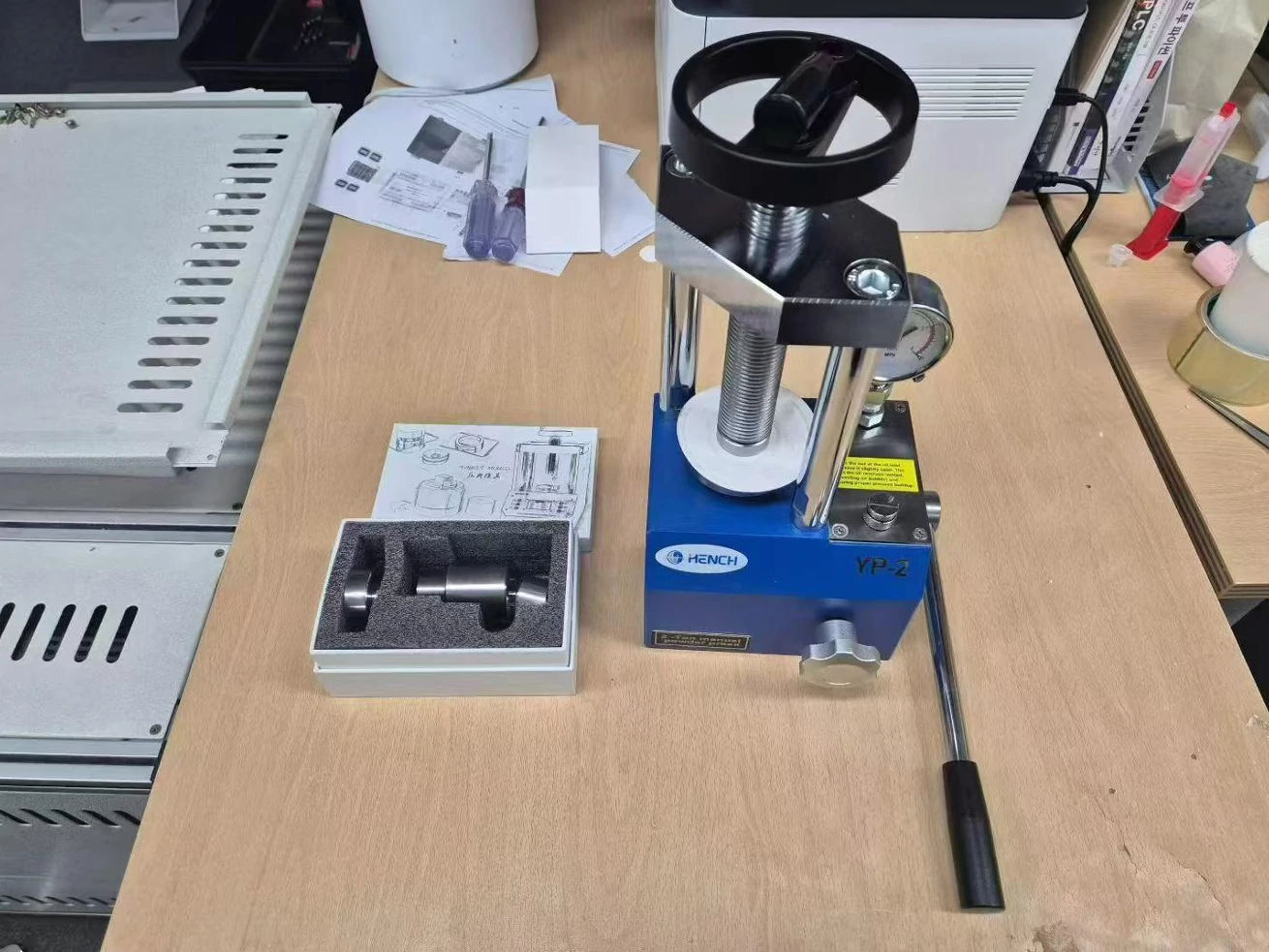
Manual presses are the simplest option for laboratories that prepare a limited number of pellets. The 2/3/5/12/15-ton YP manual press and the 15/24/30/40-ton YP press use a pointer gauge, while the YP-S digital press and 15/24/30/40-ton YP-S show the pressure digitally for better repeatability.
Digital and Electric Presses
The HDP-S electric lab tablet press covers 0.2–60 tons with electric pressure control, which reduces operator variation between pellets.
Automatic XRF Pellet Presses
For routine series, the HAP-S automatic powder tablet press and the HAP-FS modular automatic press run programmable pressure cycles. The FTP-X automatic fluorescent tablet press is configured for fluorescence sample preparation.
Isostatic Presses
Where density uniformity across a larger pellet matters, the HDP-J isostatic electric press and the HAP-J desktop isostatic press apply pressure from multiple directions.
Choosing the Right Tonnage
- 32 mm borate pellets: manual or digital presses in the 15–40 ton range are commonly used.
- 40–60 mm pellets: 40–60 ton presses provide the required pressure.
- Larger diameters and hard powders: 65–200 ton modular presses.
- Series work: automatic presses with programmable pressure and hold time.
The 40-ton manual pellet press guide describes a complete working procedure, and the die range covers the matching dies.
Frequently Asked Questions
Tonnage Selection for XRF Pellets
| Pellet diameter | Typical press | Notes |
|---|---|---|
| 32 mm borate pellets | 15-40 ton manual or digital press | Most common XRF format |
| 40-60 mm pellets | 40-60 ton press | Higher load for the larger area |
| Larger diameters | 65-200 ton modular press | Large-format pellets |
| Series work | automatic press | Programmable pressure and hold time |
Method Notes for XRF Presses
The press has to hold the load steadily for the full hold time: a gauge pressure that drops during the hold is a common reason for pellets that crack or delaminate after ejection. Record the tonnage, the hold time and the die diameter for each batch.
Can one press handle both XRF and FTIR samples?
Yes. Presses are selected by tonnage and die size, so one laboratory press can serve XRF pellets, KBr pellets and general powder compaction.
Do I need a hydraulic pump?
Manual and digital presses include their own hydraulic system; automatic models run the pressure cycle through their controller.
What else is needed to make a pellet?
A die matched to the required diameter, a mortar for grinding and, where used, a binder. See the XRF sample preparation page for the full workflow.
Need help choosing the right configuration? Request a quote and include your sample type, required pellet or die size and the press you are using.