Application of ATR Zinc Selenide Crystals in Infrared Spectrometer Sample Preparation
June 24, 2026
Attenuated Total Reflection (ATR) is one of the most widely used non-destructive sampling techniques in Fourier Transform Infrared (FTIR) spectroscopy. When combined with zinc selenide (ZnSe) crystals, it enables fast and reliable analysis of liquids, pastes, powders, polymers, rubber, and soft materials without complex preparation procedures.
This method has become a standard configuration in routine laboratory infrared analysis due to its efficiency, stability, and low consumable requirements, making it widely used in quality control, polymer testing, and chemical material identification.
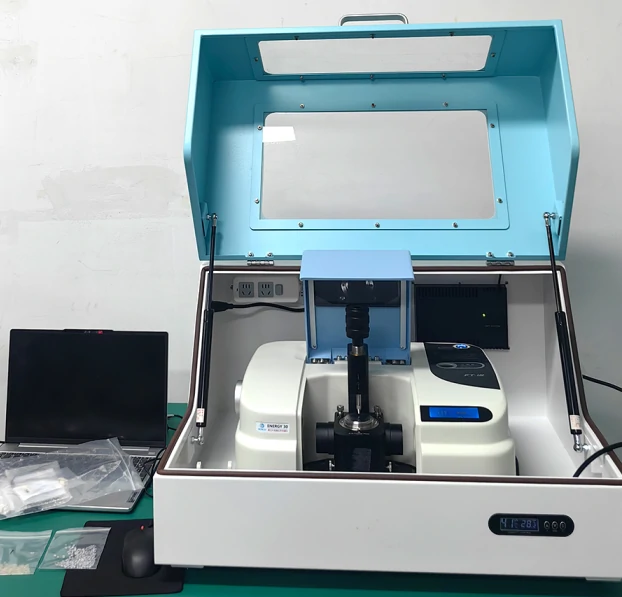
Transmission Performance and Material Characteristics of ZnSe Crystals
Zinc selenide crystals provide a broad infrared transmission range of 6500–650 cm⁻¹, fully covering the mid-infrared fingerprint region. This allows precise identification of organic functional group absorption peaks.
Compared with other ATR crystal materials, ZnSe offers a balanced performance profile:
- More cost-effective than diamond crystals
- More durable and stable than germanium crystals
- Suitable hardness for routine laboratory use
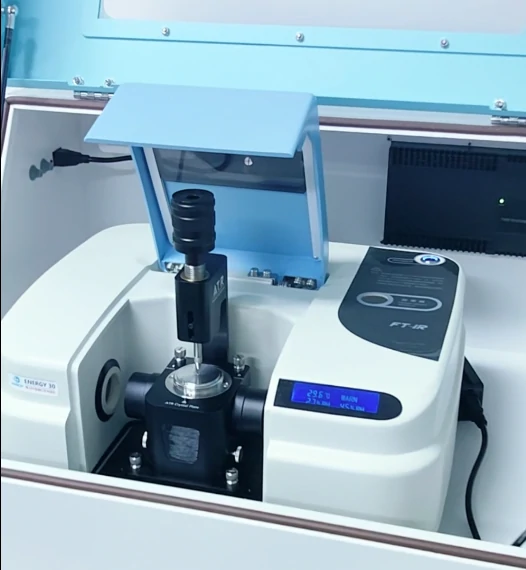
The crystal surface is smooth and chemically stable against most neutral organic solvents such as ethanol, acetone, and isopropanol, allowing easy cleaning after use.
However, ZnSe is not resistant to strong acids, strong alkalis, oxidizing agents, or high temperatures. Proper handling is required to avoid surface corrosion and spectral interference.
Standard ATR Sample Preparation Process
ATR sampling with ZnSe crystals is simple and does not require complex pretreatment, significantly reducing operational difficulty.
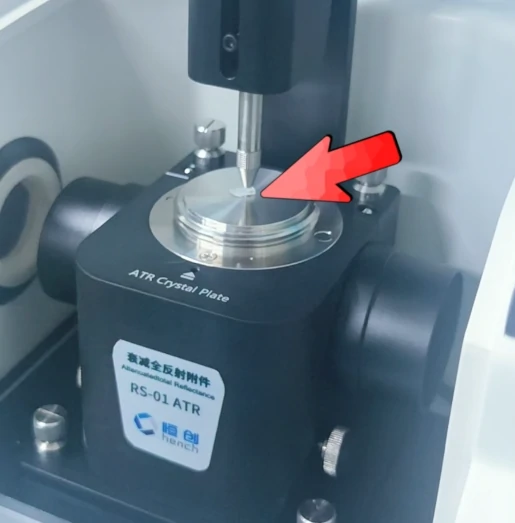
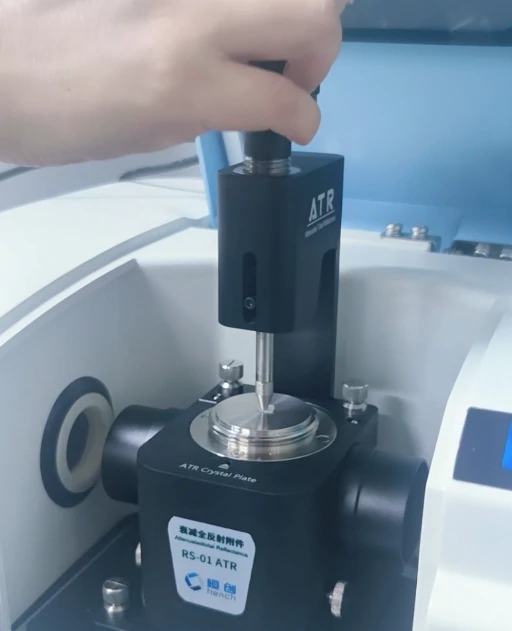
For solid powders, a small amount is placed directly on the crystal surface and pressed evenly to ensure full contact. Air gaps must be avoided, as they can cause baseline drift and weak absorption signals.
For viscous or paste samples, a thin and uniform layer is applied directly onto the crystal. Excess thickness should be avoided to prevent signal saturation.
For films and rubber materials, small pieces can be directly pressed onto the crystal surface without grinding or drying.
For liquid samples, 1–2 drops are sufficient to cover the detection area. Excess liquid should be removed to avoid contamination.
Compared with the traditional KBr pellet method, ATR eliminates grinding, pressing, and moisture-related issues, significantly improving efficiency and reducing spectral distortion risks.
Baseline Calibration and Cleaning Requirements
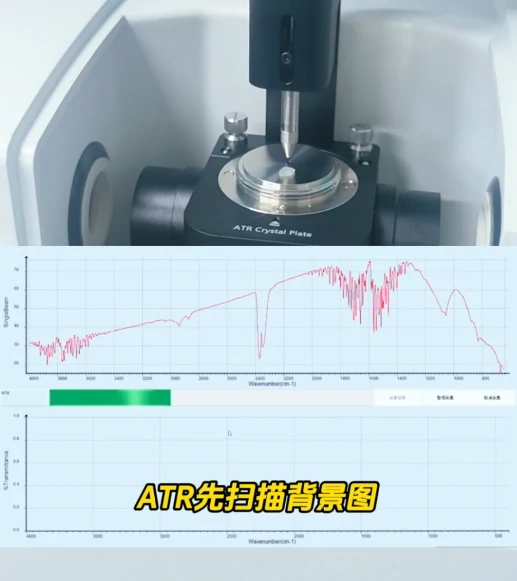
Before testing, the ZnSe crystal must be cleaned and dried, and a background spectrum should be collected to eliminate baseline interference.
After testing, the crystal surface should be immediately cleaned using absolute ethanol or isopropanol and wiped dry. If not used for a long time, it should be covered to prevent dust contamination and surface scratching.
Temperature control is also important. High-temperature samples should be cooled to room temperature before measurement to avoid accelerating crystal aging and affecting performance stability.
Key Advantages of ATR ZnSe Crystals
The combination of ATR technology and ZnSe crystals offers several significant advantages:
- Non-destructive testing with sample recovery
- No consumables required, reducing operating costs
- Fast analysis with results in minutes
- High repeatability and stable spectral output
This makes it suitable for polymer identification, coating additives, pharmaceutical excipients, rubber formulation analysis, and rapid material screening in both industrial and academic laboratories.
Conclusion
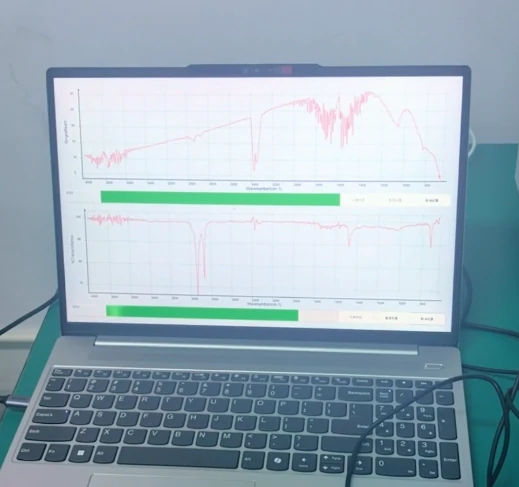
ATR FTIR systems equipped with zinc selenide crystals provide an efficient balance between performance, cost, and operational simplicity.
Compared with traditional potassium bromide pellet methods, ZnSe ATR significantly simplifies sample preparation while improving testing speed and reproducibility.
With proper maintenance and careful handling of corrosive samples, ZnSe crystals can deliver long-term stable performance, making them a preferred solution for modern infrared spectroscopy laboratories.