



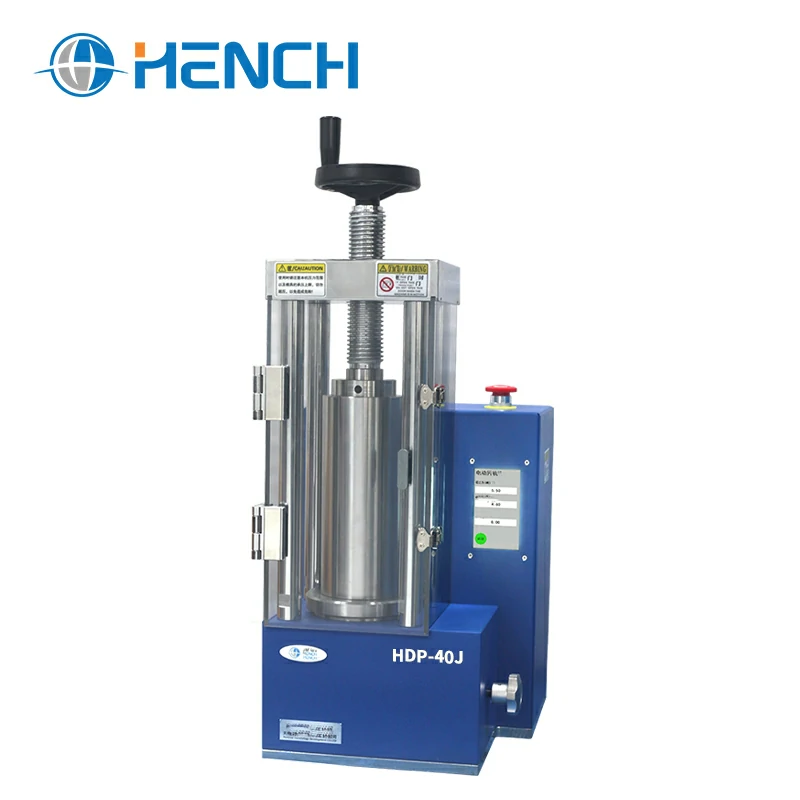
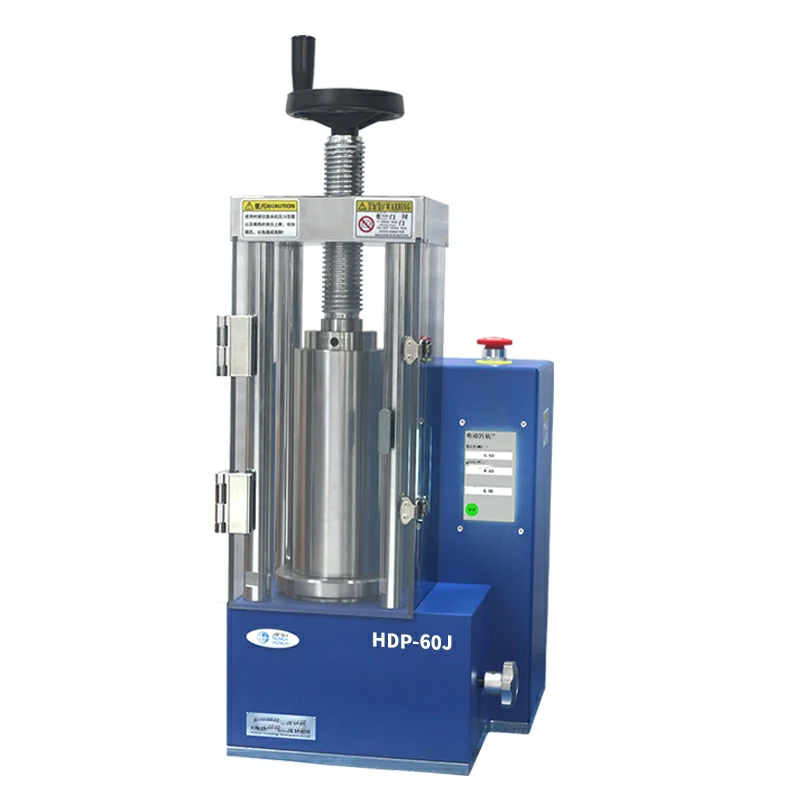
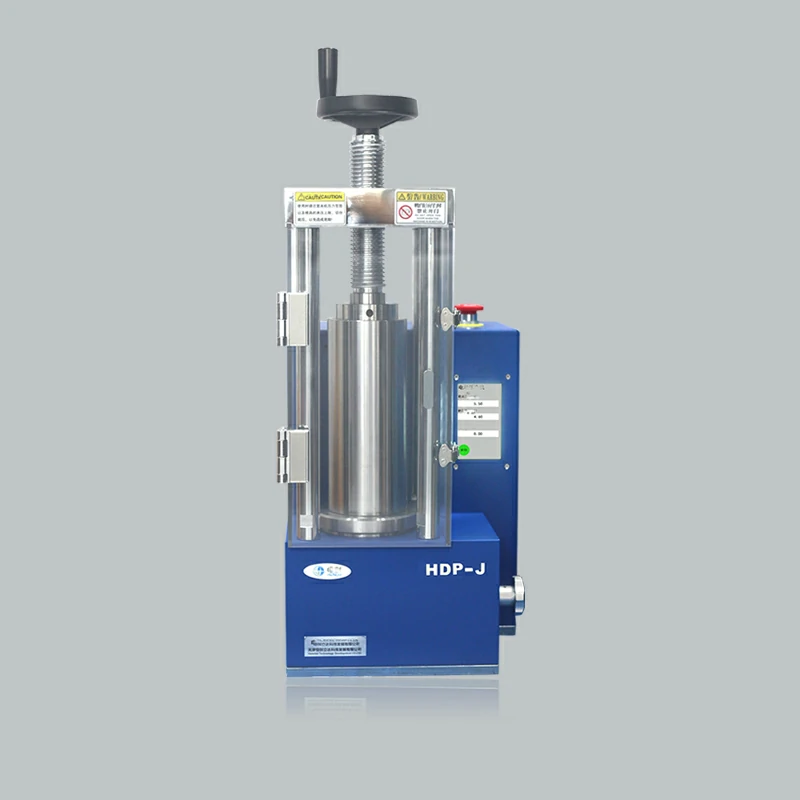
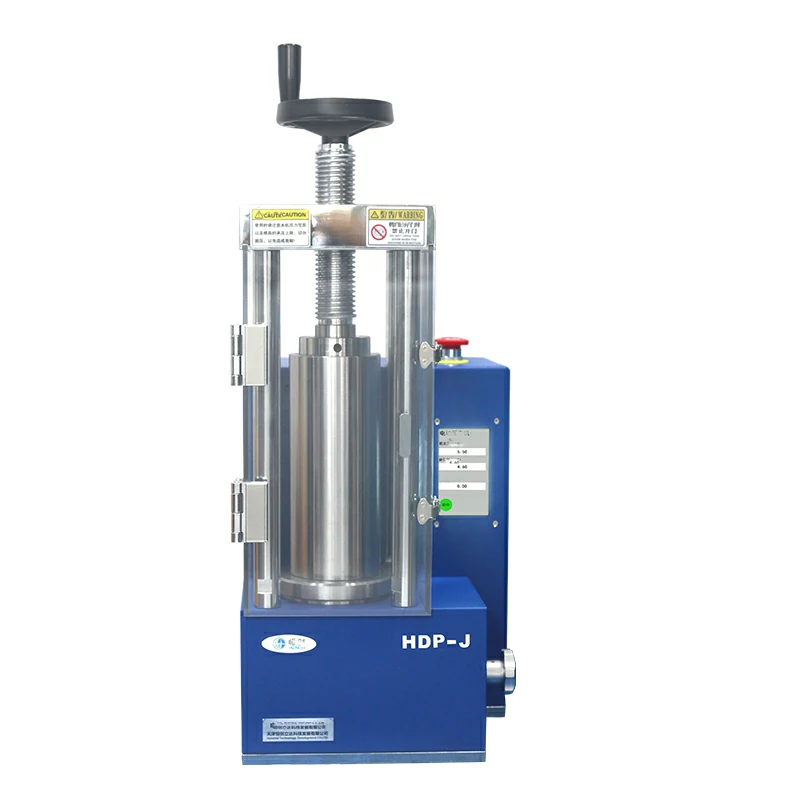
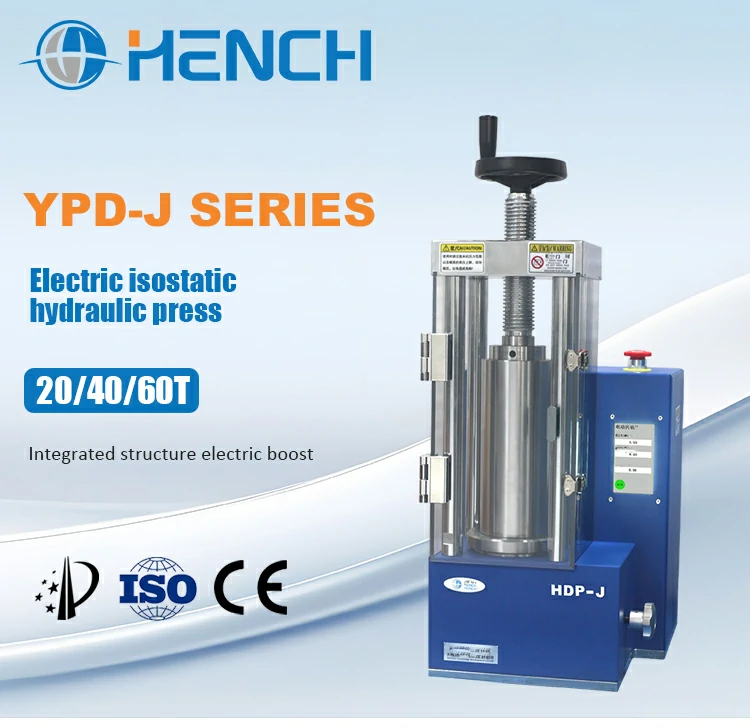
20/40/60-ton Isostatic Electric Press Machine HDP-J
Isostatic Electric Press Machine Overview
HDP-J Series is an advanced laboratory electric press machine engineered for materials scientists, industrial R&D centers, and universities requiring ultimate density uniformity in powder compaction. Available in multiple versatile configurations—including 12 Ton, 20 Ton, 40 Ton, and 60 Ton models—this electric cold isostatic press (CIP) delivers up to 305 MPa of ultra-balanced pressure. It eliminates the density gradients and internal structural defects commonly found in traditional single-axis hydraulic presses, providing highly consistent sample preparation for spectroscopic and structural analysis.
Technical Advantages
-
Omnidirectional Isostatic Pressure (Up to 305 MPa): Applies true balanced multi-directional force via a specialized liquid medium inside the sealed chamber. This guarantees ultra-uniform particle distribution, eliminates voids, and optimizes density for brittle or specialized powder complexes.
-
Digital Control & Crystal Display Monitoring: Replaces inaccurate analog meters with an integrated Liquid Crystal Display (LCD). Operators can set precise pressure limits, view digital pressure readouts, and track real-time load adjustments during critical sample cycles.
-
Integrated Dual Drive (Electric Boost & Manual Fine-Tune): Incorporates an automatic electric boost structure for rapid workload cycling alongside a precise manual pressure fallback valve, allowing researchers complete tactile control over dwell times and decompression profiling.
-
Smart Pressure Compensation: The advanced automated control loop features automatic pressure replenishment to mitigate material relaxation effects, paired with a slow pressure release mechanism to prevent structural fracturing or cracking during demolding.
-
Reinforced Laboratory Safety System: Fully enclosed by a durable organic glass protective shield to isolate the high-pressure workspace, complemented by an instantaneous emergency stop switch and a dedicated physical relief valve.
Hardware Structure & Component Breakdown
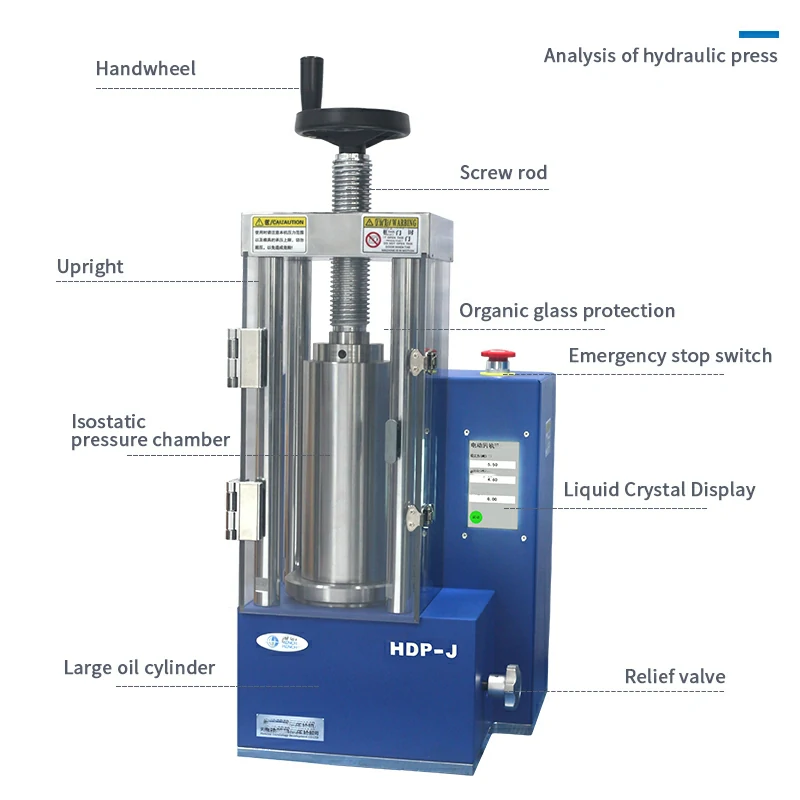
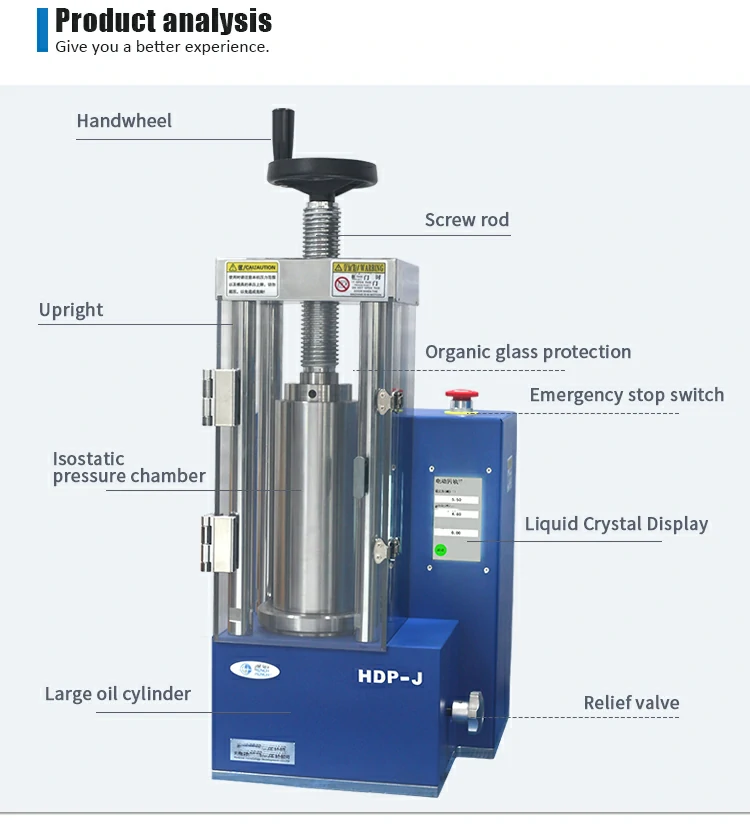
To provide an elite laboratory pressing experience, the HCFTIR HDP-J features a precision-engineered industrial layout where every premium component serves a dedicated performance and safety function:
-
High-Torque Handwheel: Located at the very top of the frame, allowing operators to easily adjust and lock the upper crosshead placement by hand before indexing cycles.
-
Heavy-Duty Screw Rod: A precision-threaded, high-carbon steel screw shaft that guides high-tonnage vertical force seamlessly while eliminating mechanical play.
-
Rigid Support Uprights: Heavy dual-column steel upright pillars form the core structural skeleton, minimizing frame deflection under ultimate 60-ton pressure loads.
-
Omnidirectional Isostatic Pressure Chamber: The core pressure-vessel core designed to hold specialized liquid media, ensuring true 305 MPa equalized hydraulic force distribution around sample molds.
-
Oversized Large Oil Cylinder: Positioned securely at the base to deliver smooth, high-capacity hydraulic fluid volume transmission for stable pressure ramp-ups.
-
Thick Organic Glass Protection Enclosure: A high-visibility physical safety shield that fully encloses the pressing workspace, protecting lab technicians without blocking the line of sight.
-
Instantaneous Emergency Stop Switch: A prominent, industrial-grade red e-stop button mounted on the control console for immediate power cut-off in abnormal conditions.
-
Intelligent Liquid Crystal Display (LCD): A multi-line digital operator panel providing sharp, real-time feedback on current pressure settings, limits, and dwell times.
-
Micro-Adjustable Relief Valve: A dedicated physical safety and bleed valve located at the base for highly controlled manual slow-pressure venting and quick mechanical de-indexing.
Practical Applications
Perfect for laboratories, R&D centers, and pilot production, the HDP‑J is suitable for pressing tablets, pellets, and composite materials. Its precision makes it an essential piece of lab supplies for research and experimental workflows.
-
FTIR Spectroscopy Sample Preparation: Produces uniform, ultra-dense pellets and matrices free of structural clouding or localized fracturing, ensuring pristine beam transmission during analytical scans.
-
Advanced Technical Ceramics: Perfect for forming structural ceramic components, oxides, nitrides, and carbide powders where consistent density is mandatory to mitigate firing shrinkage cracks.
-
Battery Material & Solid-State Electrolyte R&D: Allows precise density consolidation of cathode/anode particles and solid electrolyte interfaces to maximize electrical conductivity and lifetime performance.
-
Metallurgy & Powder Compaction Machine Testing: Provides quick-turn exploratory testing of custom metallurgical matrix compounds, refractory compositions, and high-performance composite alloys.
Technical Parameters
| Instrument Model | YPD-12J / HDP-12J | YPD-20J / HDP-20J | YPD-40J / HDP-40J | YPD-60J / HDP-60J |
| Pressure Limit | 0-12T (0-19 MPa) | 0-20T (0-22 MPa) | 0-40T (0-32 MPa) | 0-60T (0-36 MPa) |
| Isostatic Pressure Limit | 0 - 305 MPa (Omnidirectional) | |||
| Cylinder Diameter | 97 mm | 115 mm | 132 mm | 152 mm |
| Chamber/Cavity Size | 22 × 70 mm | 30 × 120 mm | 40 × 150 mm | 50 × 150 mm |
| Travel of Piston | 42 mm | 42 mm | 52 mm | 52 mm |
| Structure & Mode | Integrated structural body, electric boost / electric pressure & manual pressure options | |||
| Pressure Gage Type | Digital pressure display with micro-adjustable configuration via LCD | |||
| Aftercompaction Control | Automatic pressure replenishment / manual slow pressure relief tracking | |||
| Safety Protection Shield | High-transparency thick Organic Glass enclosure | |||
| Ambient Temperature | 10 °C – 40 °C | |||
| Machine Dimensions | 305×430×535 mm | 305×430×605 mm | 355×450×715 mm | 405×470×722 mm |
| Net Weight | 112 Kg | 121 Kg | 151 Kg | 199 Kg |
Working Principle & Mold Diagram
Operating an electric cold isostatic press involves a distinct, precise sequence to prepare flawless samples:
-
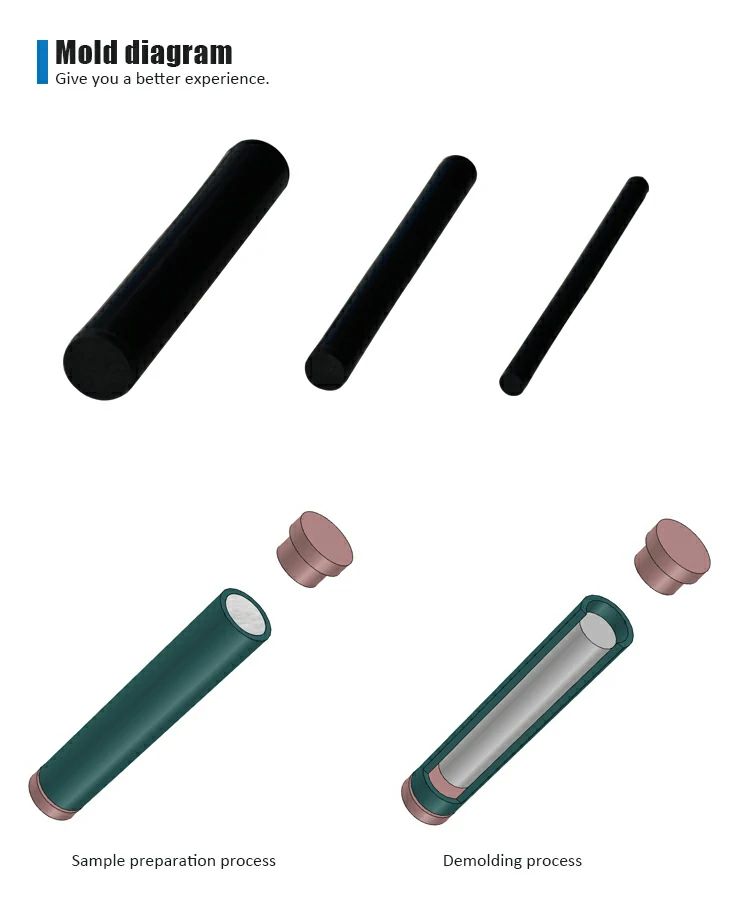
Chamber Hydraulics: The powder material is first pre-packed into a flexible, sealed rubber mold sleeve (as illustrated in our Mold Diagram). This assembly is submersed into the specialized fluid medium inside the isostatic pressure chamber.
-
Uniform Pressing: The electric boost system drives the large oil cylinder upward, compressing the liquid medium. The liquid transfers an equal, omnidirectional force surrounding the flexible sleeve, forcing the internal powder particles to lock together symmetrically.
-
Demolding Sequence: Once the digital holding dwell timer finishes, the operator utilizes the manual slow pressure system or relief valve to vent internal energies smoothly. The mold is extracted from the chamber, the end-plugs are removed, and the perfectly formed, crack-free green compact pellet is extracted during the demolding process.
Hench Advantage
Hench Technology Co., Ltd., based in Tianjin, China, is a leading hydraulic press supplier with decades of experience in laboratory and industrial press solutions. Hench provides durable, safe, and efficient presses that integrate seamlessly into laboratory and production workflows, supported by professional service and global quality standards.
People Also Ask
Q1: What is the distinct advantage of an electric isostatic press machine over a standard single-axis hydraulic press?
A: A single-axis hydraulic press applies force from only one vertical direction, creating significant friction against the mold walls and yielding uneven internal density distributions. An electric isostatic press machine applies equalized hydraulic pressure from all 360-degree directions through a liquid medium, resulting in uniform compaction, higher overall green density, and completely eliminating structural flaws or cracking during demolding.
Q2: Can the HDP-J series handle custom mold dimensions for different powder types?
A: Yes. The HDP-J series features internal cavity dimensions ranging from 22×70mm up to 50×150mm depending on the model selected (12T, 20T, 40T, or 60T). Custom flexible rubber or silicone molds can be easily integrated within these chamber spaces to accommodate distinct sample shapes.
Q3: What safety measures are built into the HCFTIR HDP-J laboratory pressing system?
A: Safety is paramount. The system is configured with an integrated thick organic glass safety shield enclosing the mechanical press frame, an immediate physical Emergency Stop Switch on the electronic enclosure console, a reliable manual over-pressure relief valve, and automated digital limit thresholds to prevent over-tonnage events.
Q4: Does the digital pressure display support dwell-time automation?
A: Yes, the built-in liquid crystal display system works in tandem with our automatic pressure replenishment logic, enabling precise target holding times, accurate load tracking, and continuous pressure stabilization during extended laboratory tests.