Análisis del sistema FTIR equipado con ZnSe (seleniuro de zinc) ATR
13 de marzo de 2026
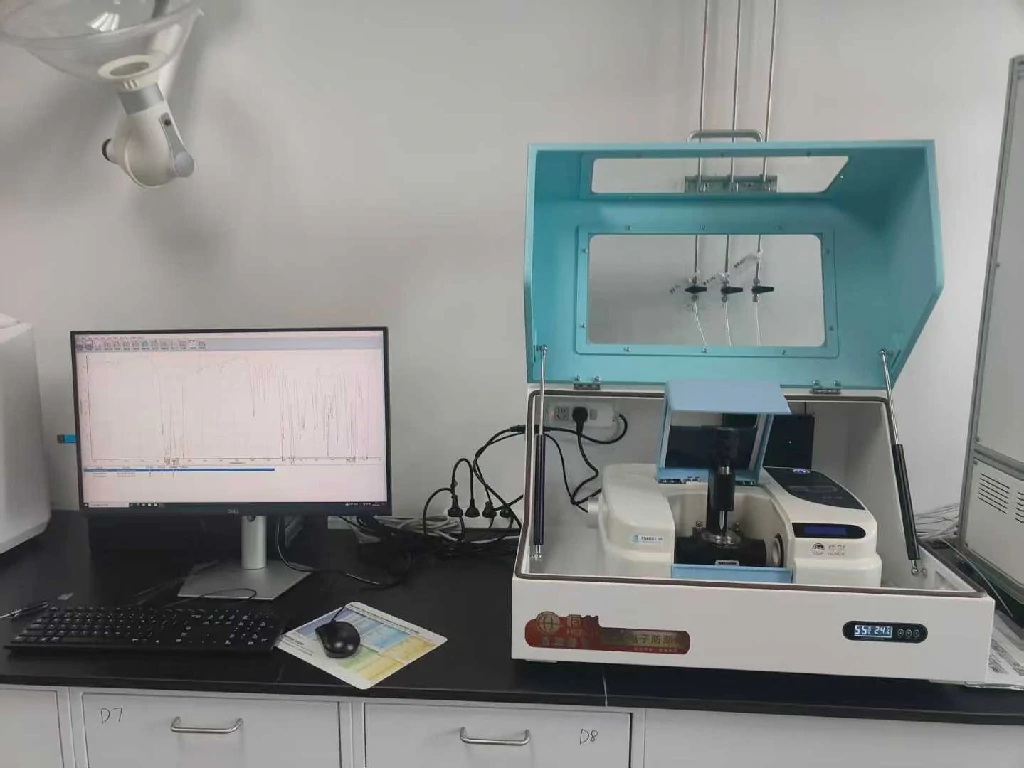
Los sistemas FTIR equipados con un accesorio ATR (reflexión total atenuada) de ZnSe se utilizan ampliamente para el análisis rápido de superficies de diversos materiales. Esta configuración permite obtener espectros infrarrojos directamente a partir de sólidos, líquidos, pastas y películas sin necesidad de procedimientos complejos de preparación de muestras, como el prensado de gránulos o la disolución. El módulo ATR de ZnSe proporciona datos espectrales fiables al tiempo que mantiene un buen rendimiento señal-ruido y eficiencia operativa.
Principios básicos y estructura
Mecanismo ATR (reflexión total atenuada)
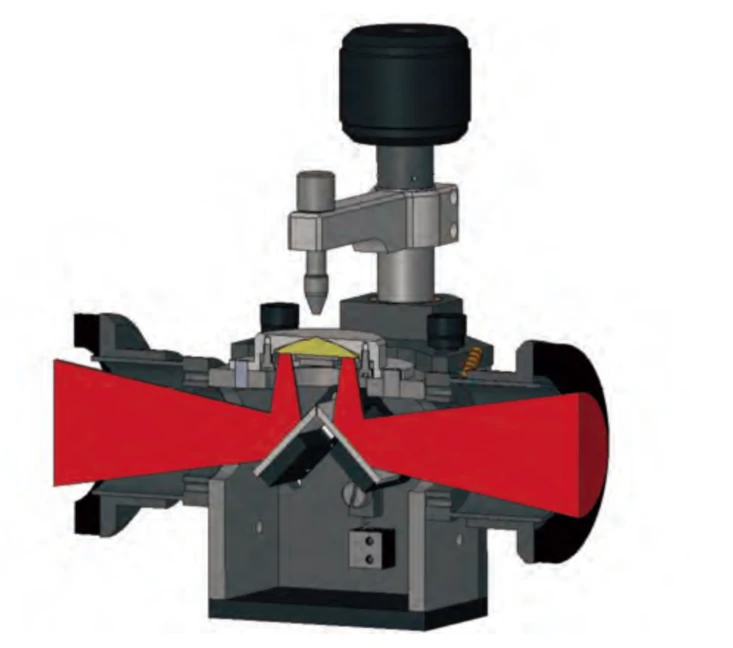
En el análisis ATR, la luz infrarroja sufre una reflexión interna total dentro del cristal de ZnSe. Durante este proceso, se genera una onda evanescente en la interfaz entre el cristal y la muestra. Esta onda evanescente penetra ligeramente en la superficie de la muestra, normalmente hasta una profundidad de 1-5 μm.
Cuando la muestra está en estrecho contacto con la superficie del cristal, grupos moleculares específicos absorben la radiación infrarroja a longitudes de onda características. La absorción provoca una reducción de la intensidad del haz infrarrojo reflejado, lo que permite al sistema FTIR registrar el espectro característico de la muestra.
Dado que el ATR mide la interacción superficial entre el haz de infrarrojos y la muestra, es posible analizar directamente materiales como sólidos, líquidos, pastas y películas finas sin necesidad de complicados tratamientos previos.
Módulo ATR de ZnSe
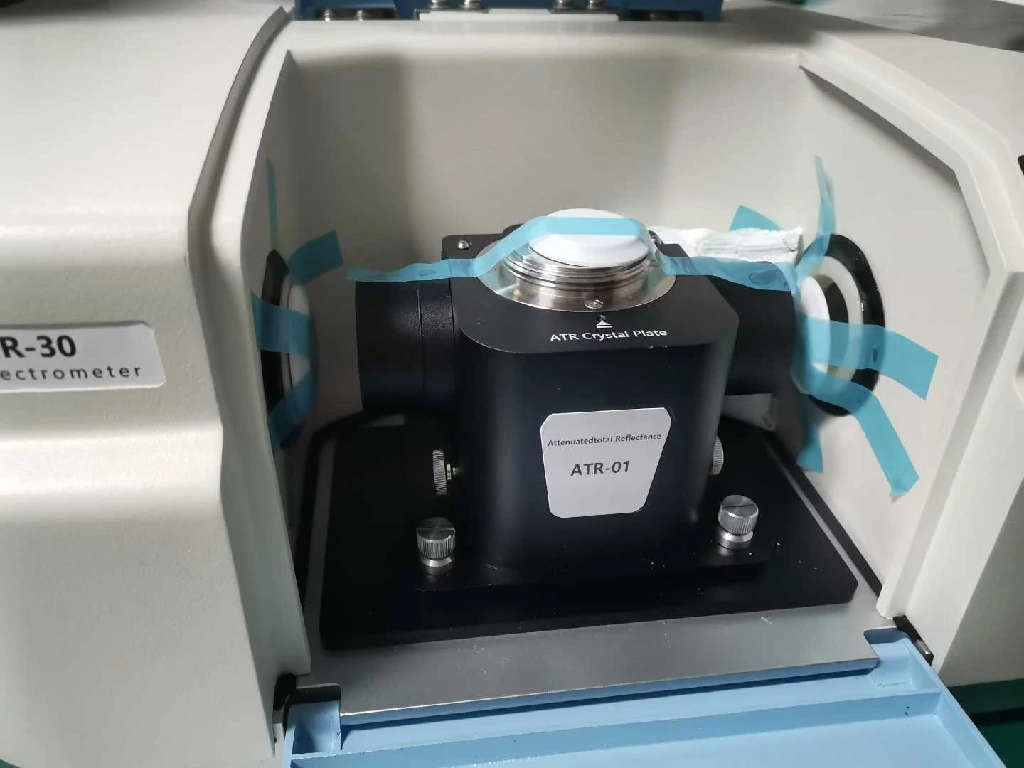
El módulo ATR de ZnSe suele adoptar una estructura de prisma de reflexión simple o múltiple, con un ángulo de incidencia que suele rondar los 45°. Está integrado en la cámara de muestras FTIR y suele incluir un cabezal de presión controlable para garantizar un contacto adecuado entre la muestra y el cristal.
Los cristales de ZnSe suelen producirse mediante deposición química en fase vapor (CVD). El cristal resultante es un material policristalino transparente de color amarillo claro. A menudo se aplica un revestimiento reflectante para aumentar el flujo de luz infrarroja y mejorar la eficacia óptica del sistema ATR.
Saber por qué
En un accesorio ATR, el área de contacto efectiva entre la muestra y el cristal ATR es muy pequeña. La aplicación de una presión controlada ayuda a que la muestra entre en estrecho contacto con la superficie del cristal. Incluso cuando la luz infrarroja sólo experimenta una reflexión efectiva dentro del cristal ATR, pueden obtenerse espectros de alta calidad.
Los accesorios ATR de reflexión simple son adecuados para el ensayo de una amplia gama de materiales, entre los que se incluyen:
- Muestras sólidas
- Fibras
- Polímeros duros
- Láminas de pintura
- Revestimientos finos sobre superficies de vidrio o metal
- Líquidos traza
La plataforma de cristal del accesorio ATR normalmente sólo expone un pequeño plano de unos 3 mm. Por lo tanto, durante la medición, se recomienda que la superficie plana de la muestra esté en estrecho contacto con la zona del cristal.
Cuando se utiliza ZnSe como material cristalino, la presión preestablecida suele ser de unos 20 kg. En estas condiciones, las muestras líquidas que pueden someterse a ensayo suelen estar comprendidas en un intervalo de pH de 5-9. No deben utilizarse ácidos ni bases fuertes con cristales de ZnSe. Los ácidos fuertes y las bases fuertes no deben ensayarse con cristales de ZnSe.
En comparación, los cristales de diamante soportan una mayor presión y tienen una gran resistencia química. Pueden analizar líquidos en un intervalo de pH más amplio, de 1 a 14, y son adecuados para muestras más duras. Otros materiales, como ZnSe, AMTIR, Ge y Si, también pueden utilizarse como cristales de reflexión ATR en función de los requisitos analíticos.
Ventajas, escenarios aplicables y limitaciones
Principales ventajas
Los accesorios ATR de ZnSe ofrecen varias ventajas prácticas:
- Menor coste en comparación con el ATR de diamante
- Alta transmitancia del infrarrojo medio y buena relación señal/ruido
- No requiere una preparación compleja de la muestra; los líquidos pueden dejarse caer directamente sobre la superficie del cristal y los sólidos pueden presionarse ligeramente
- Adecuado para pruebas rápidas por lotes
- Buena compatibilidad con accesorios de calefacción o baja temperatura
Aplicaciones típicas
Industria farmacéutica
El ZnSe ATR se utiliza habitualmente para el análisis de pomadas, geles, recubrimientos de comprimidos y para la identificación cualitativa rápida de materias primas farmacéuticas.
Materiales poliméricos
Las aplicaciones incluyen la comprobación de películas de plástico, materiales de caucho y componentes superficiales de adhesivos.
Industria química
Se utiliza ampliamente para el control de calidad de aceites, revestimientos, tintas y emulsiones.
Industria alimentaria
El ATR de ZnSe puede aplicarse para detectar componentes y deterioro en aceites, salsas y bebidas.
Para los laboratorios que requieren una mayor eficacia de medición o una mejor interacción de la señal, accesorios como el Accesorio reflectante Multi ATR pueden proporcionar vías de reflexión mejoradas y una mayor flexibilidad analítica.
Limitaciones
Aunque los cristales ATR de ZnSe se utilizan ampliamente, hay que tener en cuenta varias limitaciones:
- El cristal es relativamente blando y propenso a rayarse
- La resistencia a la corrosión química es más débil que la de los cristales de diamante
- La sensibilidad de las muestras muy absorbentes, como las soluciones oscuras muy concentradas, es inferior a la del ATR de germanio (Ge).
- No es adecuado para muestras muy abrasivas como polvos minerales
Puntos clave para el funcionamiento y el mantenimiento
Preparación de la muestra
La superficie sólida debe ser plana para garantizar un buen contacto con el cristal. Las muestras líquidas no deben contener burbujas y deben evitarse los medios fuertemente corrosivos.
Limpieza
Tras la prueba, la superficie del cristal debe limpiarse con etanol absoluto o alcohol isopropílico y limpiarse suavemente con un paño suave no tejido. No deben utilizarse acetona ni agentes de limpieza alcalinos fuertes.
Control de la presión
Debe utilizarse el cabezal de presión adecuado para evitar una presión excesiva sobre el cristal. Las muestras de polvo deben aplicarse como una capa fina y uniformemente distribuida.
Mantenimiento diario
- Limpiar el cristal inmediatamente después de la prueba
- Sella y protege el cristal de la humedad cuando no se utiliza durante periodos prolongados
- Evitar fluctuaciones drásticas de temperatura
- No toque la superficie del cristal con objetos duros
Corrección del espectro
Debe realizarse una calibración espectral periódica utilizando membranas de poliestireno o líquidos estándar. La sustracción de fondo ATR y la calibración de la longitud de onda ayudan a mantener la precisión espectral.
También debe garantizarse un contacto adecuado de la muestra para evitar la desviación de la línea de base causada por un mal contacto del cristal.
Comparación con otros cristales ATR
| Cristal | Índice de refracción | Rigidez | Muestras aplicables | Precio |
|---|---|---|---|---|
| ZnSe | 2.40 | Medio | Líquidos de absorción media-baja, sólidos blandos, pastas | Medio |
| Diamante | 2.41 | Muy alta | Muestras duras y muy corrosivas | Alta |
| Ge | 4.00 | Bajo | Muestras muy absorbentes o de color oscuro | Moderadamente bajo |
Pie de foto: Comparación de los materiales de cristal ATR más comunes utilizados en los accesorios FTIR.
Selección y compatibilidad con espectrómetros
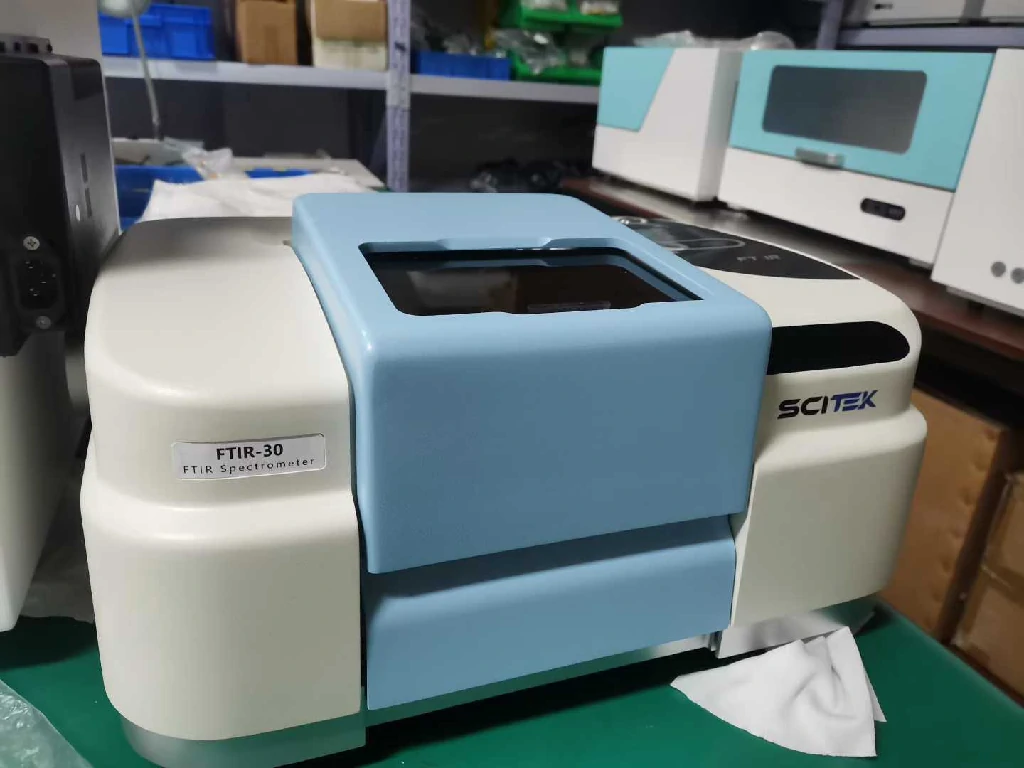
Los principales instrumentos FTIR suelen admitir módulos ATR de ZnSe estándar, que pueden instalarse directamente sin necesidad de recalibrar la ruta óptica.
Si es necesario medir muestras muy absorbentes, debe darse prioridad al ATR multirreflexión de ZnSe o Ge. Cuando se analizan muestras que contienen ácidos fuertes o agentes oxidantes fuertes, se recomienda el ATR de diamante debido a su mayor resistencia química.
En el modo ATR, la intensidad del pico espectral está relacionada con el número de onda debido a las diferencias en la profundidad de penetración. Por lo tanto, el análisis cuantitativo suele requerir algoritmos de corrección ATR como la corrección de Eriksson.
Durante el análisis, también debe mantenerse una sustracción de fondo constante para evitar la desviación de la línea de base causada por un contacto deficiente entre la muestra y el cristal ATR.