FTIR en la identificación de plásticos y polímeros: Principales aplicaciones y ventajas
15 de enero de 2026
Accesorios FTIR (Espectroscopia infrarroja por transformada de Fourier) se ha convertido en una herramienta analítica esencial para identificar plásticos y polímeros. El principio de la FTIR se basa en la absorción característica de la luz infrarroja por los distintos grupos funcionales de las moléculas de polímero. Al comparar el espectro de la muestra con una base de datos espectral, el FTIR permite un rápido análisis cualitativo, cuantitativo y estructural. Sus aplicaciones abarcan la investigación y el desarrollo, el control de calidad de la producción, las pruebas de conformidad y los procesos de reciclado.
Identificación rápida de materias primas y verificación de autenticidad
Existen varios tipos de plásticos: PE, PP, PVC, ABS, PET y PC, cada uno con una estructura molecular única y sus correspondientes picos de absorción infrarroja. Por ejemplo:
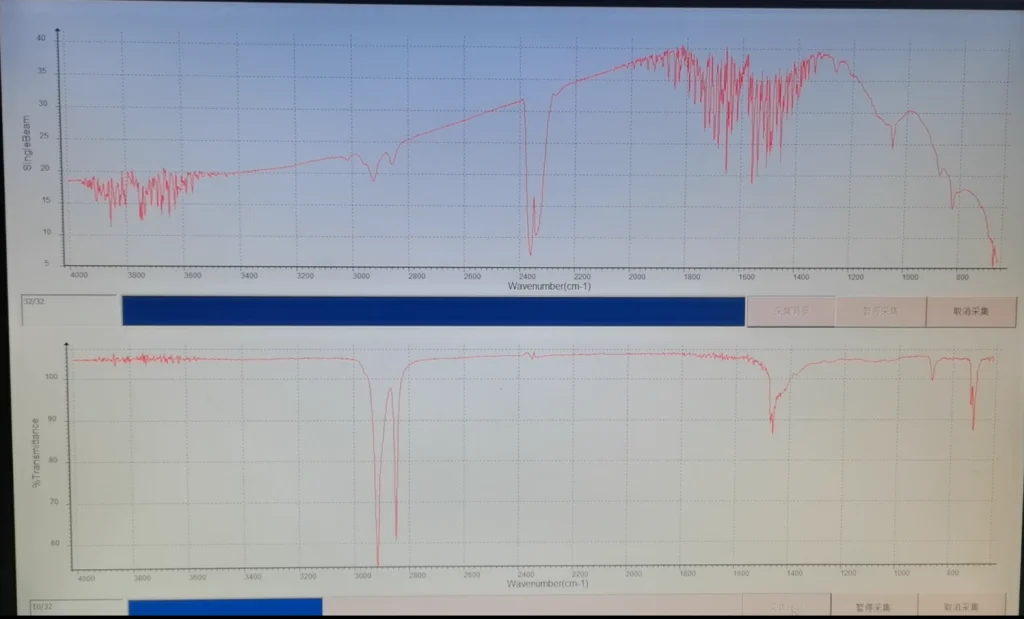
- El polietileno (PE) presenta fuertes picos de estiramiento C-H a 2920 cm-¹ y 2850 cm-¹, junto con un pico de flexión CH₂ a 1460 cm-¹.
- El cloruro de polivinilo (PVC) muestra una vibración adicional de estiramiento C-Cl cerca de 720 cm-¹.
FTIR permite a los fabricantes confirmar rápidamente si las materias primas entrantes cumplen las especificaciones del pedido, evitando problemas de calidad causados por mezclas de materiales. Las agencias de inspección de calidad también pueden verificar las declaraciones de autenticidad de los productos plásticos, ayudando a prevenir el fraude en el mercado.
Análisis de componentes de mezclas y polímeros compuestos
Muchos plásticos comerciales se producen como mezclas (por ejemplo, mezclas PP/PE, aleaciones ABS/PVC) o compuestos (por ejemplo, PA reforzado con fibra de vidrio, PP relleno). FTIR puede identificar cualitativamente múltiples componentes y proporcionar información semicuantitativa.
- En el caso de las mezclas, la intensidad relativa de los picos característicos puede indicar la proporción de cada componente.
- En el caso de los materiales compuestos, FTIR puede distinguir entre la resina matriz, los rellenos y los agentes de refuerzo, proporcionando una visión clara de la composición del material.
Esta aplicación apoya el desarrollo de formulaciones de polímeros y garantiza un rendimiento constante del producto en todos los lotes de producción.
Caracterización de la estructura del polímero y verificación de las modificaciones
FTIR es crucial en la investigación de la modificación de polímeros, incluidos el injerto, la reticulación y la copolimerización. La técnica detecta con precisión los cambios de grupos funcionales y confirma si las modificaciones se han realizado correctamente.
Por ejemplo:
- El polietileno injertado con anhídrido maleico muestra un nuevo pico a 1780 cm-¹ correspondiente a un grupo carbonilo del anhídrido.
- El polietileno reticulado (XLPE) muestra variaciones en el pico de vibración CH₂ debido a la formación de redes de cadenas moleculares.
FTIR también puede evaluar la ramificación de los polímeros, la cristalinidad y otros parámetros estructurales, ofreciendo una base teórica para la optimización del rendimiento de los materiales.
Control del envejecimiento y el comportamiento de degradación
Los plásticos se degradan con el tiempo debido a la exposición a la luz, el calor y la humedad, produciendo grupos oxidativos como el carbonilo y el hidroxilo. FTIR rastrea el envejecimiento controlando los cambios en los picos característicos.
Por ejemplo:
- El polipropileno (PP) envejecido desarrolla un pico de absorción de carbonilo (C=O) cerca de 1720 cm-¹, cuya intensidad aumenta con el tiempo.
Esta capacidad permite predecir la vida útil, realizar pruebas de resistencia a la intemperie y orientar la adición de estabilizadores como antioxidantes y estabilizadores de la luz para mejorar la durabilidad del material.
Detección de aditivos y control de conformidad
Los plásticos suelen contener aditivos, como plastificantes, retardantes de llama y antioxidantes, algunos de los cuales están regulados por normas medioambientales. FTIR puede detectar rápidamente estas sustancias.
- Los plastificantes de ftalato, por ejemplo, muestran absorción de éster carbonilo cerca de 1730 cm-¹ y estiramiento C-O-C alrededor de 1280 cm-¹.
Al cotejar estas características espectrales, FTIR garantiza el cumplimiento de normativas como RoHS y REACH, lo que es fundamental para el acceso al mercado mundial.
Identificación y análisis de pureza de plásticos reciclados
En el reciclaje, FTIR clasifica eficazmente los residuos plásticos mezclados, diferencia los tipos de polímeros (por ejemplo, PET frente a HDPE) e identifica impurezas como papel, metal u otros plásticos. Esto garantiza la pureza de los materiales reciclados y mejora la calidad de los productos reciclados.
Principales ventajas de FTIR en el análisis de plásticos
- Rápido y eficaz: Cada prueba dura sólo unos segundos, lo que resulta ideal para el cribado por lotes.
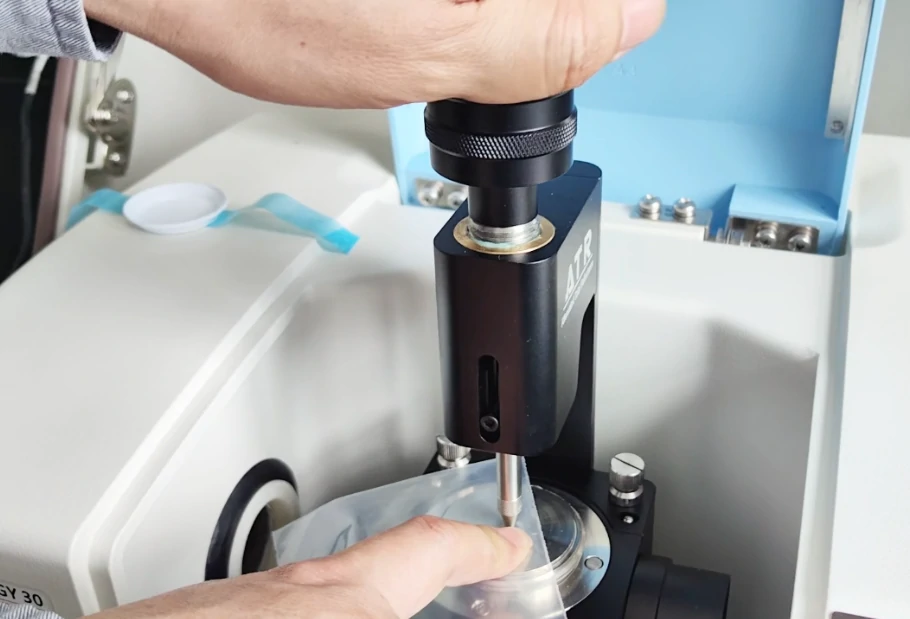
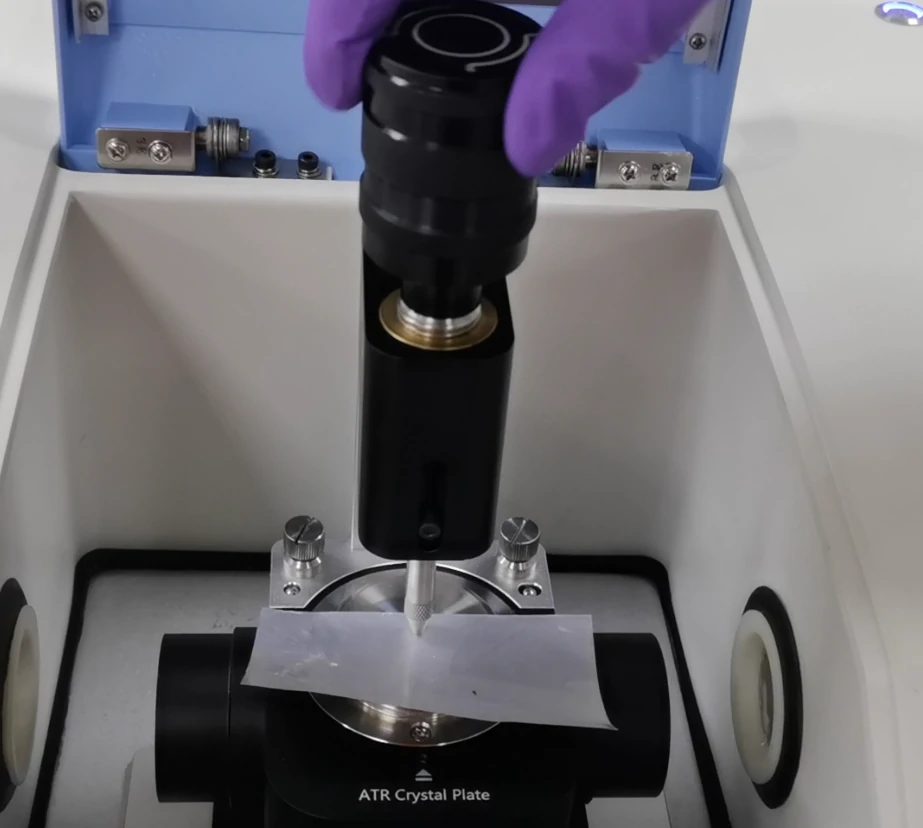
- No destructivo: El modo ATR permite analizar muestras sólidas, películas o partículas sin necesidad de preparaciones complejas.
- Rentable: En comparación con la EM o la RMN, el funcionamiento del FTIR es barato, por lo que resulta adecuado para el control de calidad rutinario en los laboratorios de producción e inspección.
FTIR ha demostrado ser indispensable para las industrias de plásticos y polímeros, ofreciendo velocidad, precisión y análisis rentables que apoyan las operaciones de I+D, garantía de calidad, conformidad y reciclaje.
| Tipo de plástico | Picos característicos FTIR | Escenario de aplicación | Enfoque de las pruebas |
| Polietileno (PE) | 2920, 2850 cm-¹ (C-H) | Identificación de materias primas | Verificar la composición del material |
| 1460 cm-¹ (CH₂) | |||
| Cloruro de polivinilo (PVC) | 720 cm-¹ (C-Cl) | Verificación de autenticidad | Detectar productos falsificados |
| Mezclas PP / PE | Picos mixtos C-H | Análisis de mezclas y compuestos | Determinar las proporciones de los componentes |
| Aleaciones ABS / PVC | Picos aromáticos y C-Cl | Análisis de materiales compuestos | Identificar la mezcla y los rellenos |
| Polipropileno (PP) envejecido | 1720 cm-¹ (C=O) | Control del envejecimiento y la degradación | Evaluar la oxidación y el envejecimiento |
| Plastificantes de ftalato | 1730 cm-¹ (C-O Ester) | Pruebas de aditivos y conformidad | Compruebe si hay aditivos restringidos |
| 1280 cm-¹ (C-O-C) | |||
| Plásticos reciclados | Varios picos mixtos | Reciclado y análisis de pureza | Identificación de polímeros e impurezas |