Fully Automatic Heating Laboratory Tablet Press HZT-800E/F/G
Fully Automatic Heating Laboratory Tablet Press Features
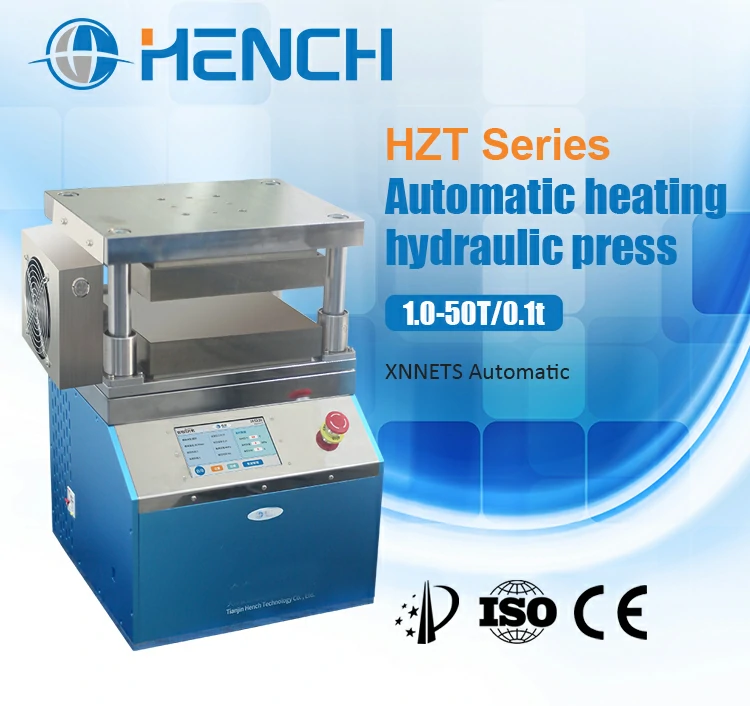
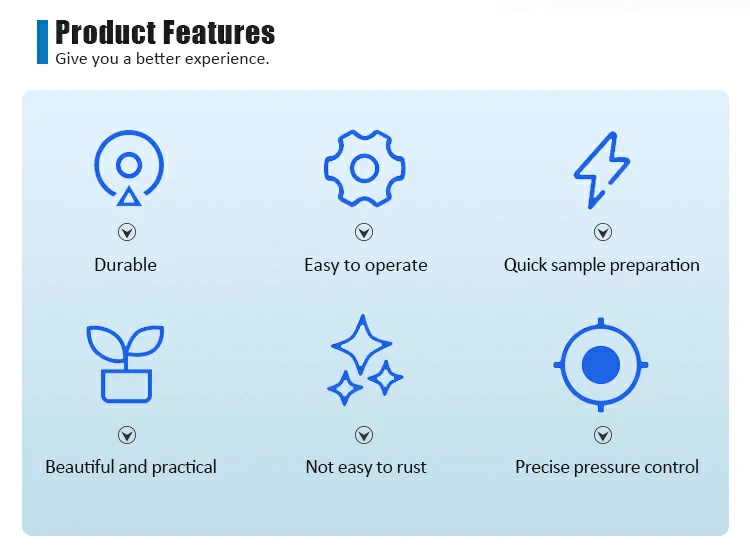
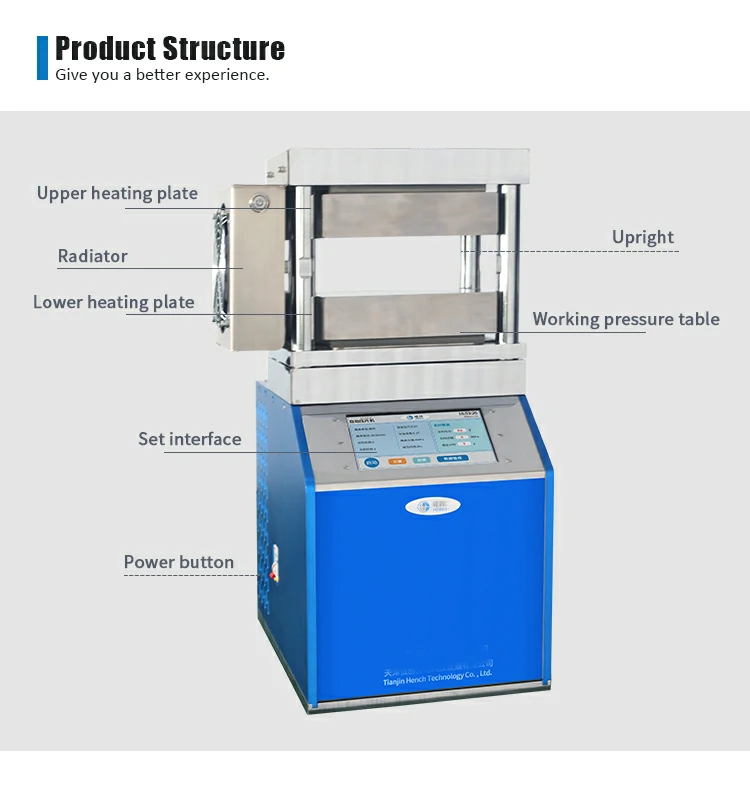
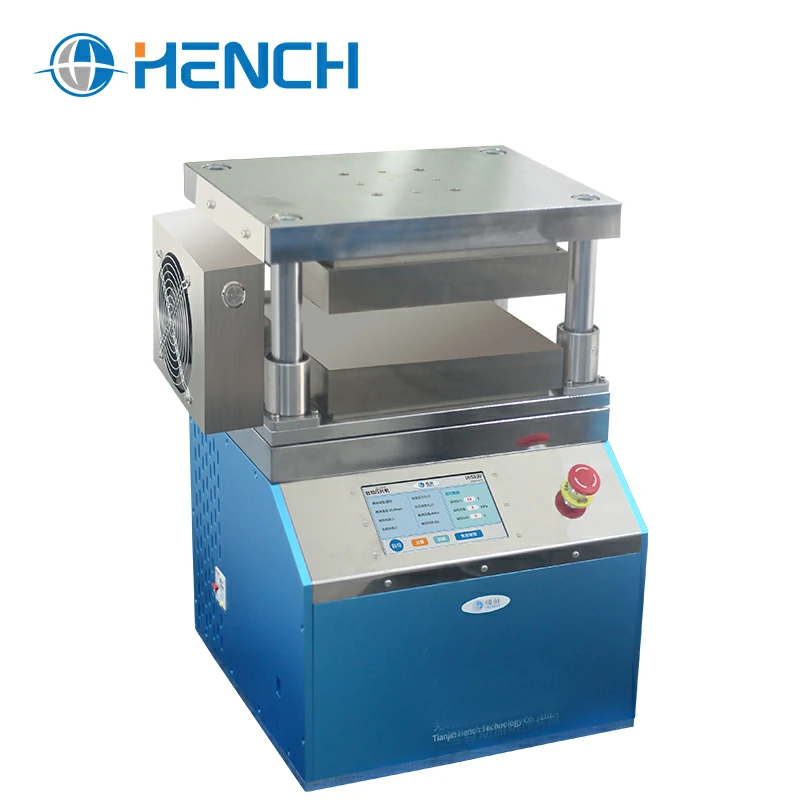
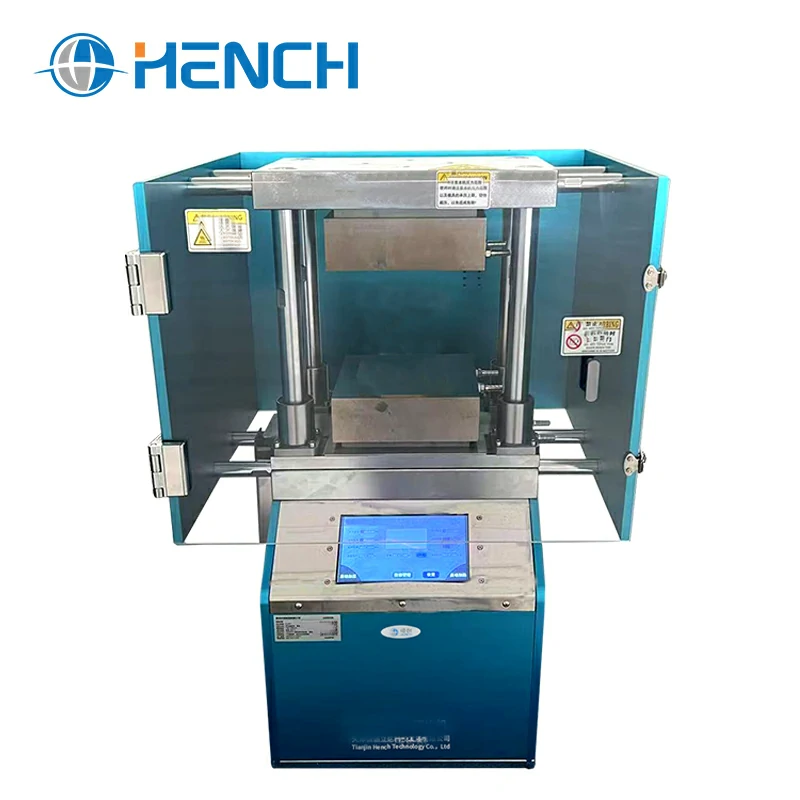
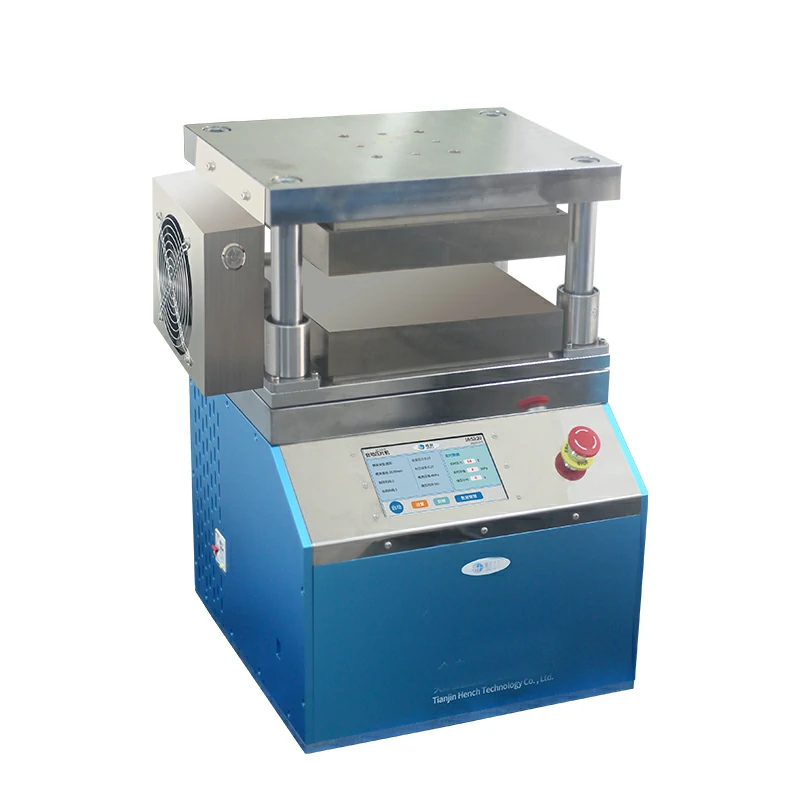
ZHT series hot press features an integrated structure, equipped with a dynamic hydraulic drive system, a four-column positioning setup, and an advanced thermal insulation assembly. Its lead screw-suspended hot plate design ensures smooth hoisting, complemented by advantages such as rapid pressurization, easy operation, and low maintenance. Furthermore, the multi-stage temperature control function precisely meets the processing requirements of various materials—including powders, plastic films, rubber, and solid blocks—under high-temperature and high-pressure conditions.
Key Features
-
Models & Pressure: Available in 0-30T / 0-40T variants.
-
Piston Diameter & Stroke: Options with 110mm / 130mm pistons, stroke ≈ 55 mm.
-
Temperature & Heating Range: Room temperature up to 600 °C; heating range options up to 300 °C or 500 °C depending on configuration.
-
Die Size & Effective Space: Die plate dimensions of 300×300 mm, 400×400 mm, or 600×600 mm; effective working height around 65 mm.
-
Power, Size & Weight: Models use from 3 kW up to 12.5 kW power; machine dimensions scale (e.g. 400×500×750 mm up to 700×800×1110 mm); weights between ~350 kg to ~450 kg depending on size.
Product Advantages
-
Fully automatic press with integrated structure, four-column positioning and heat insulation. Hot plate is suspended by lead screws, enabling smooth lifting, fast pressure application, and easier maintenance.
-
Multi-stage temperature control accommodates a variety of materials: powders, plastics, thin membranes, rubbers, or other solid samples that require high temperature and consistent pressure.
Product Description
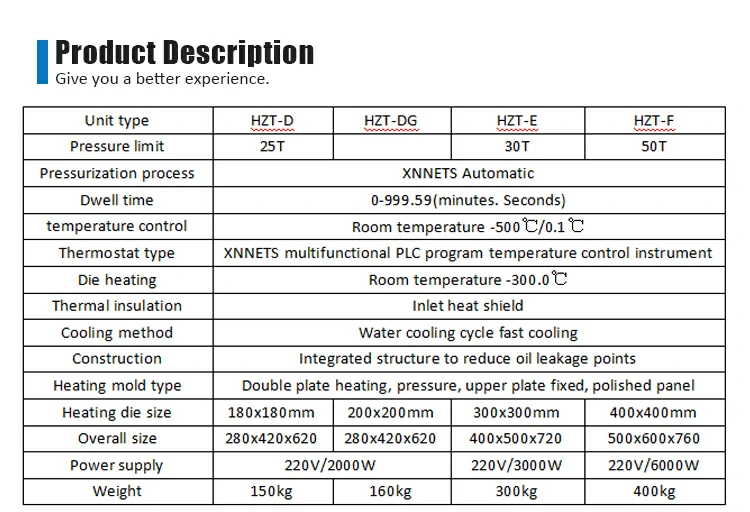
| Unit type | HZT-D | HZT-DG | HZT-E | HZT-F |
| Pressure limit | 25T | 30T | 50T | |
| Pressurization process | XNNETS Automatic | |||
| Dwell time | 0-999.59 (minutes. Seconds) | |||
| Temperature control | Room temperature - 500℃ / 0.1℃ | |||
| Thermostat type | XNNETS multifunctional PLC program temperature control instrument | |||
| Die heating | Room temperature - 300.0℃ | |||
| Thermal insulation | Inlet heat shield | |||
| Cooling method | Water cooling cycle fast cooling | |||
| Construction | Integrated structure to reduce oil leakage points | |||
| Heating mold type | Double plate heating, pressure, upper plate fixed, polished panel | |||
| Heating die size | 180×180mm | 200×200mm | 300×300mm | 400×400mm |
| Overall size | 280×420×620 | 280×420×620 | 400×500×720 | 500×600×760 |
| Power supply | 220V / 2000W | 220V / 3000W | 220V / 6000W | |
| Weight | 150kg | 160kg | 300kg | 400kg |
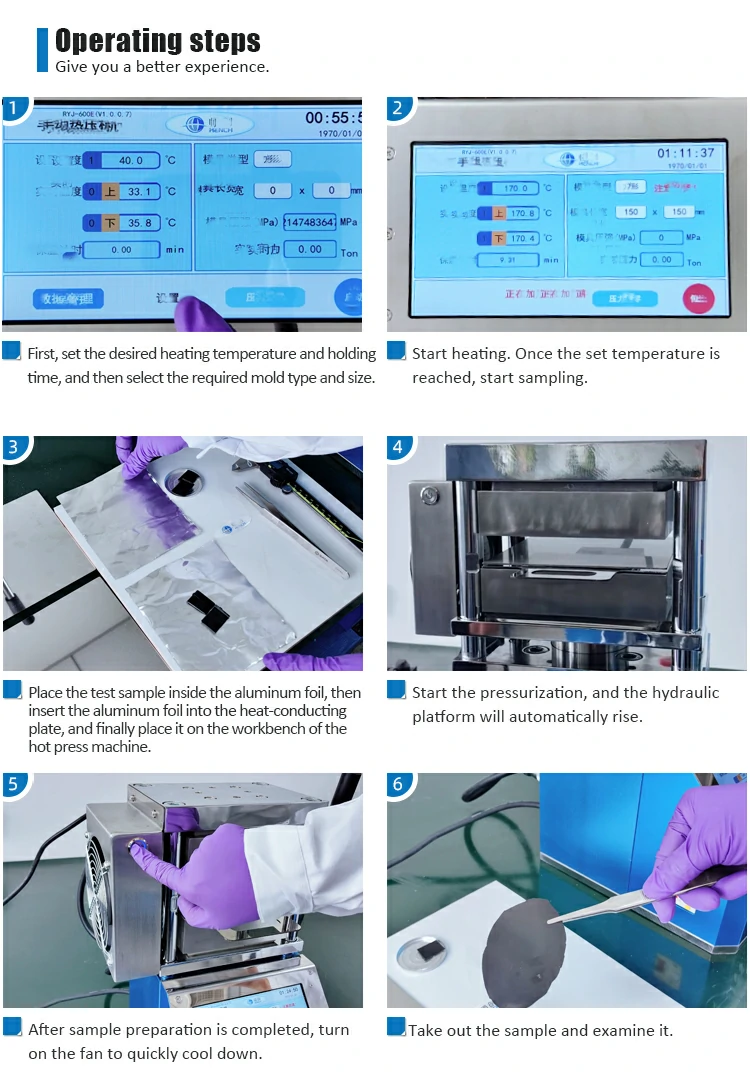
Operating Steps
-
Step 1: Parameter Setup: Configure the target heating temperature and holding duration via the touch screen, then select the appropriate mold type and dimensions.
-
Step 2: Preheating Phase: Initiate the heating cycle. Once the target temperature is stabilized, prepare the material sample.
-
Step 3: Sample Preparation: Encapsulate the test sample within aluminum foil, position it onto the thermal conductive sheet, and place the assembly precisely onto the pressing workspace.
-
Step 4: Automatic Pressurization: Start the pressing sequence; the hydraulic platform will automatically elevate and apply programmed pressure.
-
Step 5: Rapid Cooling: Upon completion of the heating and pressing cycle, activate the cooling fan for fast temperature reduction.
-
Step 6: Sample Extraction: Safely retrieve the finished sample using tweezers and proceed with quality inspection.
Why Choose Hench?
Hench Technology Co., Ltd., based in Tianjin, China, specializes in manufacturing high-precision lab equipment including heating tablet presses, infrared sample preparation systems, and full ranges of hydraulic press solutions. They are recognized among leading hydraulic press suppliers for combining robust engineering with tailored customer support.
Hench’s product offerings include state-of-the-art hydraulic press machine models as well as specialized hydraulic heat press machine lines. Their machines are designed with safety, repeatability, and ease of operation in mind—making them a strong partner for both academic and industrial users.