



What should be done if the laboratory tablet press die gets stuck?
December 4, 2025
During the experiment, we often encounter situations where the die cannot be removed easily or the die gets clogged with powder and cannot be pulled out. In this article, we will briefly introduce such situations and provide solutions!
I.What are the reasons causing powder clogging or difficulty in removing the die?
1.After adding the powder sample into the cavity, the die pressing rod was inserted but did not press down and rotate. As a result, the rod tilted inside the cavity and fell over, causing the die to get stuck and scrape the inner wall.
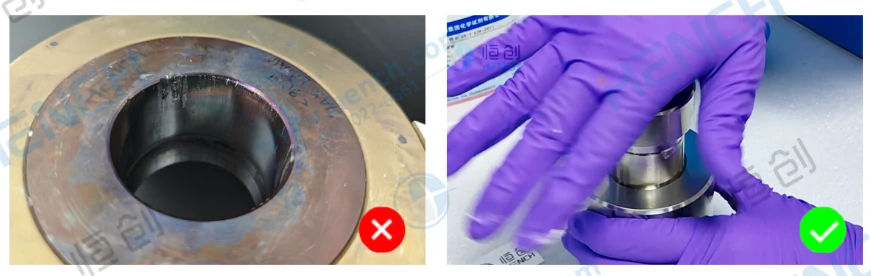
2. When making the tablets, place the die in the exact center of the tablet press. Inconsistent force application can also lead to difficulties in removing the tablets.
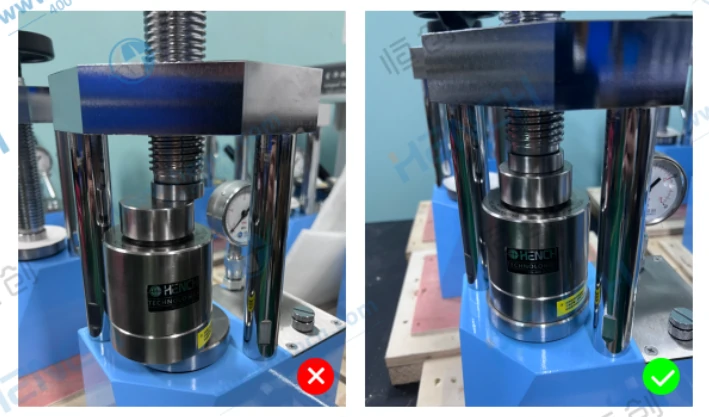
3.If the pressurizer of the machine exceeds the pressure range that the die can withstand (refer to the pressure matching table of the mold in the figure below; for other specifications, please consult the manufacturer for the table), it will also cause the press rod to be unable to be pulled out.

4. If too much sample powder is placed, or if the sample is too fine (coarse than 200 mesh), it can cause the die to get stuck. If the sample thickness exceeds 6mm, it will be difficult to shape and demold (it is recommended to use a split die)
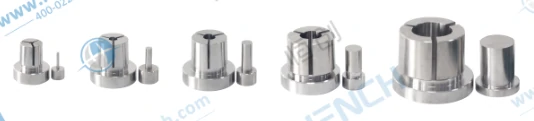
5. If the sample has an excessively high hardness and strong adhesiveness, and is prone to corrosion, then the appropriate pressing die (such as hard alloy) should be selected.
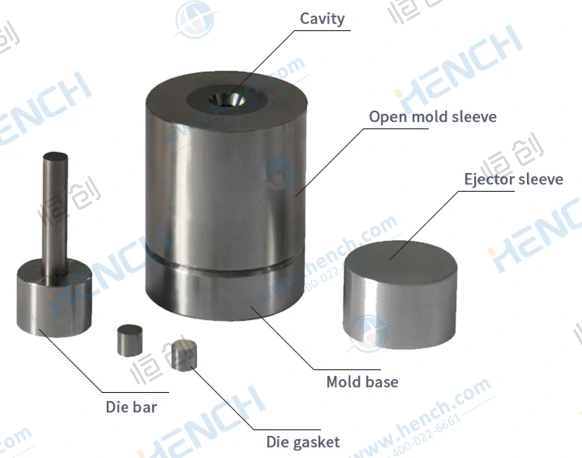
6. After each pressing operation is completed, timely cleaning and regular maintenance should be carried out to prevent the remaining powder on the inner and outer surfaces as well as the pressing rod from causing jamming during the next pressing process.
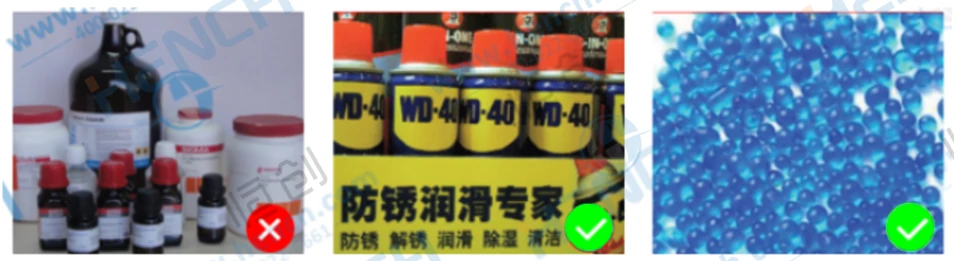
If there are any sample residues on the surface of the die that cannot be removed, do not clean or soak the die with water. (The materials of these dies are all high-quality quenched process steel dies. This type of steel has good toughness and high strength, but when exposed to water molecules, it will produce rust ions.) Many customers ask why stainless steel is not used. Stainless steel is a soft material and cannot be used as die steel.
If the die is not used for a long time, you can apply anti-rust oil on the surface of the die to prevent it from rusting. Additionally, you can store the die in a dry environment (such as a glass drying cabinet or a moisture-proof box).
II. How to deal with acne after treatment?
1. Manual Attempt: First, try to manually push the die upwards, using the pressure from the press machine to release the die.
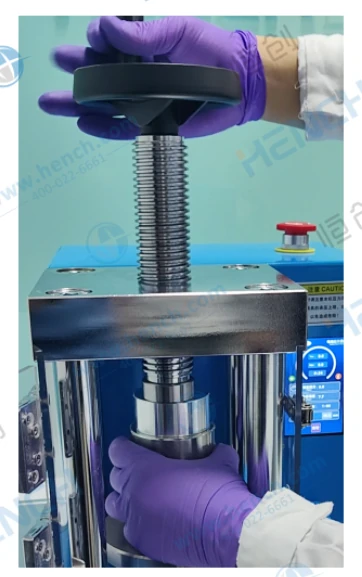
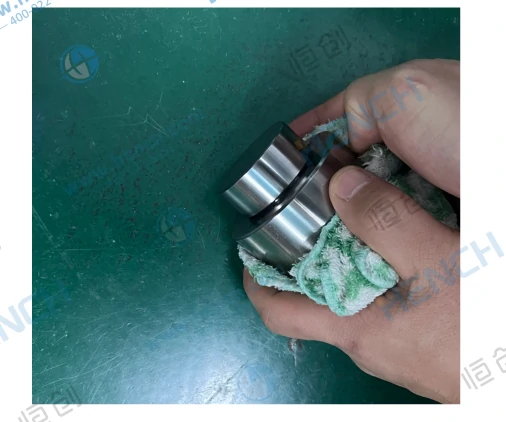
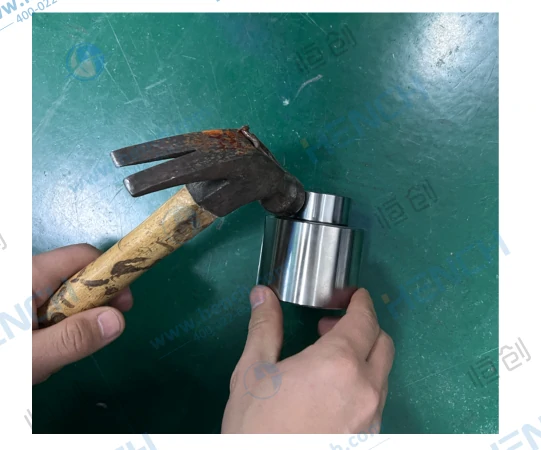
2. Gravity Impact Deformation Method: Wrap the trapped die with a towel and gently tap it along all sides on the ground to cause loosening inside the cavity. Then, pull out the locking pressure rod.
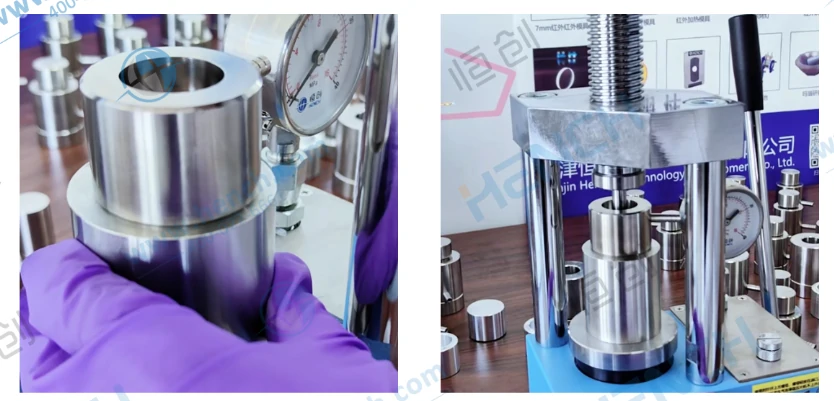
3. Insert die:
First, prepare a hollow sleeve tool. Place the mold upside down on the sleeve. Place a pressure rod smaller than the cavity diameter between the die and the press machine. The press machine applies pressure using force to push the trapped pressure rod out. If the customer does not have this tool, please contact the manufacturer for it.
4. Check whether the inner cavity of the mold has been scratched or corroded by foreign objects. If foreign objects are stuck, they need to be ground and cleaned using sandpaper; if the scratches are too severe, the mold needs to be sent back to the factory for grinding and repair.
The above are several common situations that often occur during daily experiments. The other situations will be elaborated separately. No matter which situation causes the die to get stuck or difficult to demold, we must not use blunt tools like hammers to smash it. Instead, we should promptly contact the manufacturer.
About Hench Technology
Hench Technology is a leading global supplier of high-precision pellet and tablet press tooling. Our pellet die series is designed and manufactured to the highest standards, using premium quenched steel, advanced heat-treatment processes, and rigorous quality control. The pellet dies from Hench are widely used in laboratories and pilot plants worldwide, trusted for their durability, precision, and reliability. Whether you need standard dies for routine formulations or customized tooling for special compounds, Hench delivers professional-grade solutions that stand up to demanding manufacturing conditions.