.png)
.png)


Lab Hydraulic Presses
Laboratory press is a precision hydraulic press machine designed specifically for scientific research, analytical sample preparation, and material testing. Unlike industrial hydraulic presses, which prioritize maximum force, lab hydraulic presses focus on controlled pressure, repeatability, safety, and compliance with industry standards.
Hench offers a comprehensive portfolio of laboratory hydraulic presses to meet diverse laboratory and light industrial requirements, covering applications from routine sample preparation to advanced material research.
| Press Type | Key Features | Typical Applications |
|---|---|---|
| Manual & Digital Presses | Compact bench-top design, manual or digital pressure control, precise force adjustment | Low-throughput laboratories, educational use, small-sample and analytical pellet preparation |
| Automatic Presses | Fully programmable operation, high repeatability, automated pressing cycles | High-throughput research labs, quality control environments, standardized sample preparation |
| Heated Presses | Integrated temperature control, stable heating system, pressure–temperature synchronization | Polymers, composites, thermoplastic materials, advanced material processing |
| Vacuum Presses | Vacuum-assisted pressing, minimized air entrapment, improved density uniformity | Sensitive powders, analytical samples, materials prone to oxidation or porosity |
| Isostatic Presses | Multi-directional uniform pressure, liquid pressure transmission principle | Ceramics, pharmaceuticals, powder metallurgy, specialized material research |
This full lineup ensures laboratories can find the right laboratory press or lab hydraulic press machine for FTIR, XRF, or general sample preparation, delivering precision, repeatability, and compliance with ASTM and ISO standards.
Contact us to get the latest lab hydraulic press machine prices.
-
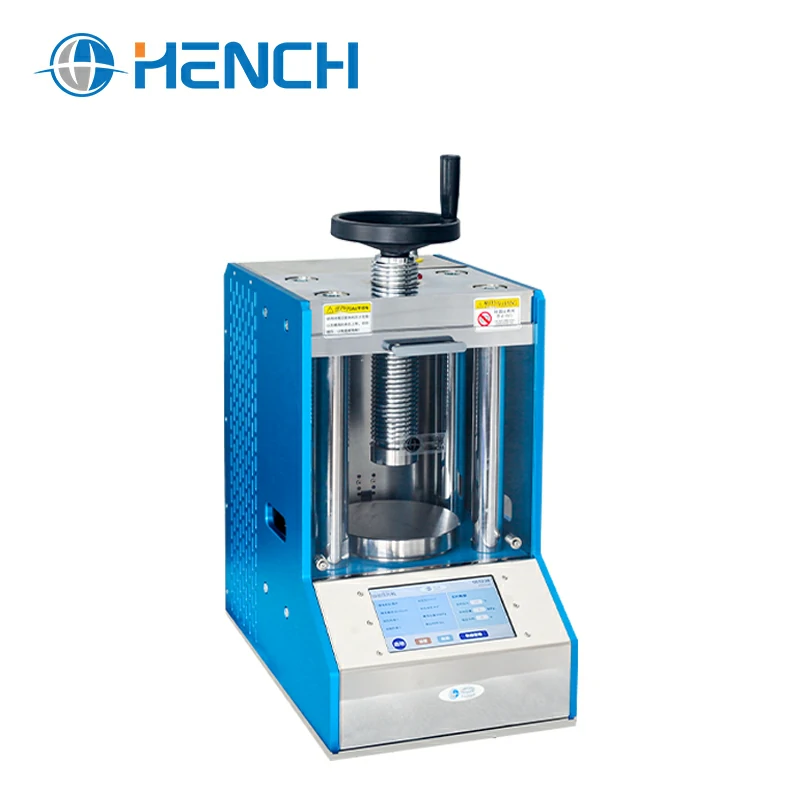
2/10/20/30/40/60-ton Fully Automatic Powder Tablet Press Machine HAP-S
Model:HAP-10/20/30/40/60S
Pressure limit:0.2-30T
Cylinder diameter:Φ110mm
Automatic control:Savta intelligent program control 5 sections of pressure/optional 15 sections of pressure
Pressure die:Program automatic pressure - automatic pressure - timing pressure - automatic pressure relief
Dwell time:Unlimited time (N seconds)
Pressure conversion:The system automatically converts the sample pressure (overpressure warning)
Device display:7 "touch LCD screen/English interface can be switched
Equipment protection:10mm high-strength aluminum oxide plate +6mm plexiglass protective door
Limit protection:Cylinder above the limit height automatic pressure relief
Host protection:Program pressure mechanical fault report emergency stop function, overpressure automatic pressure relief
Data administration:Can store 10,000 historical operation records, and can be exported to the U disk
Cylinder stroke:≤30mm
Ejection pressure:The pressure bearing range can be set by itself
Passive safety:Leakage protection + emergency stop switch
Intelligence operation:(Optional) Computer connection for remote operation/can be customized according to customer needs
Power supply:220V(50Hz/60Hz)/Customizable 110V
Equipment power:400W
Effective space:145x145x160mm
Size:230x395x435mm
Weight:96Kg
-
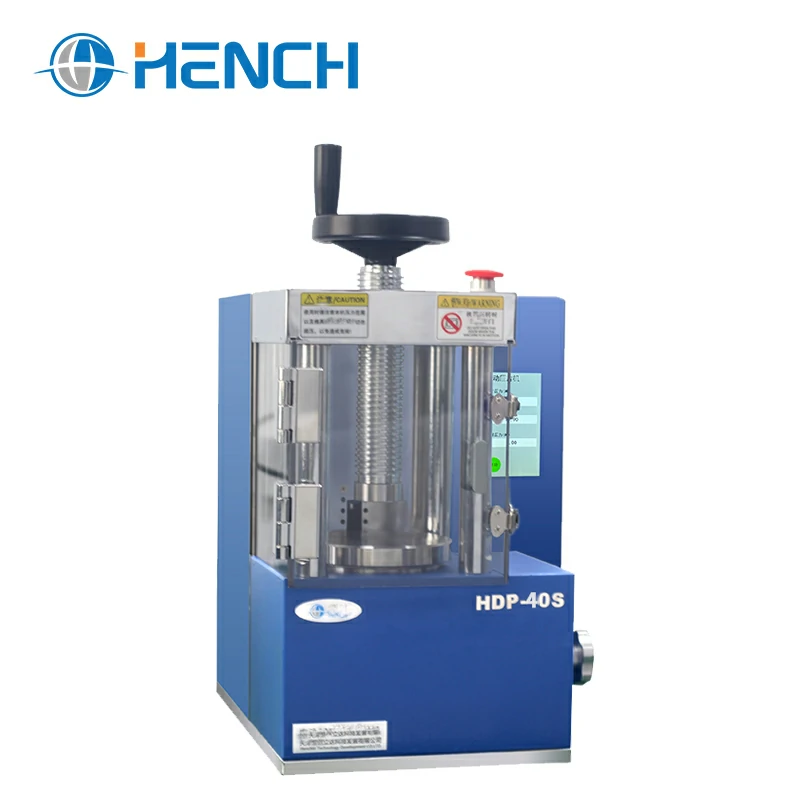
Electric Lab Tablet Press 0.2-60 Ton
Technical Table Model HDP-20/30/40/60S Pressure Range 0.2-60T (Optional) Pressure Dies Electric PCB program buffer pressure,
Automatic pressure,
Manual pressure reliefScreen Display 4.5-inch capacitive touch LCD screen
English interface can be setSafety Protection With plexiglass protective door, snap lock -
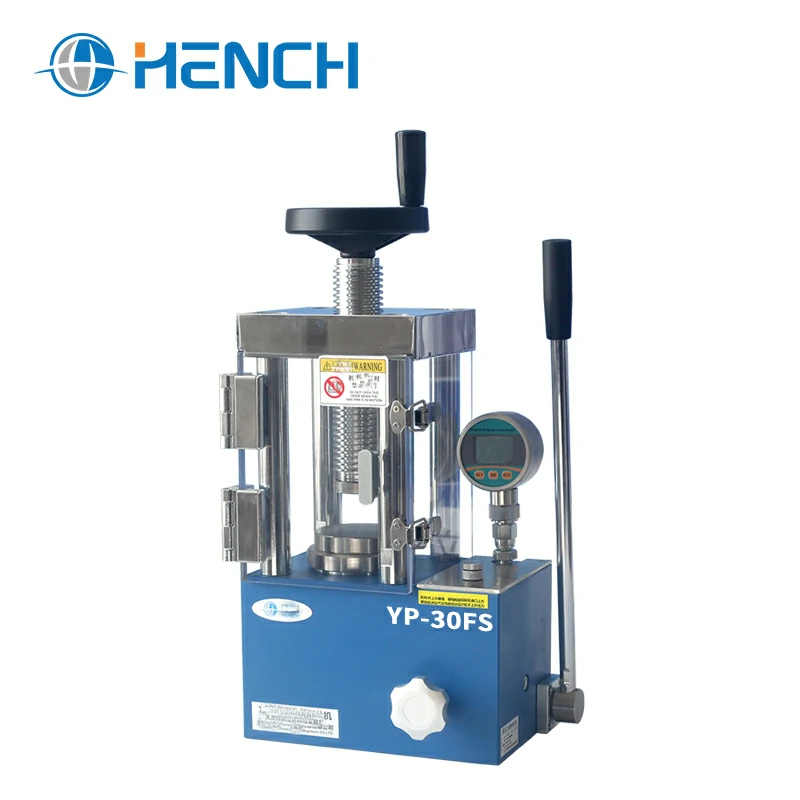
15/24/30/40/60-ton Manual Digital Display Protective Laboratory Hydraulic Press YP-FS
Model:YP-15/24/30/40/60FS
Pressure range:0-30T(0-32Mpa)
Cylinder diameter:110mm
Pressure conversion:1Mpa=0.95T
Pressure gage:DDNT high precision digital sensor display meter, tonnage display (T), can be switched Mpa, accuracy 0.01T
Travel of piston:30mm
Equipment protection:Side opening 5mm plexiglass protective cover, snap door lock, safe and convenient
Pressure stability:≤lMpa/10min
Table diameter:Φ120mm
Number ofcolumns:4 root
Effective space:112x112x160mm
Size:305x195x430mm
Weight:66Kg
-
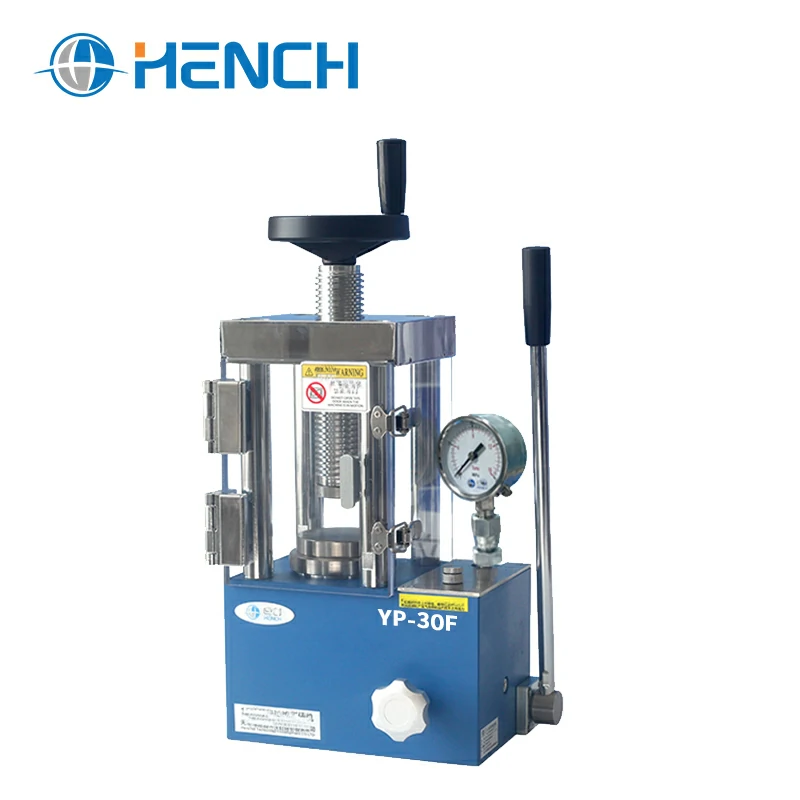
15/24/30/40/60-ton Manual Pointer Protective Lab Powder Pressing Machine YP-F
Model:YP-15/24/30/40/60F
Pressure range:0-30T(0-32Mpa)
Cylinder diameter:110mm
Pressure conversion:1Mpa=0.95T
Pressure gage:Pressure tonnage (T)/pressure Mpa dual scale display
Travel of piston:30mm
Equipment protection:Side opening 5mm plexiglass protective cover, snap door lock, safe and convenient
Pressure stability:≤1Mpa/10min
Table diameter:Φ120mm
Number of columns:4 root
Effective space:112x112x160mm
Size:305x195x430mm
Weight:66Kg
-
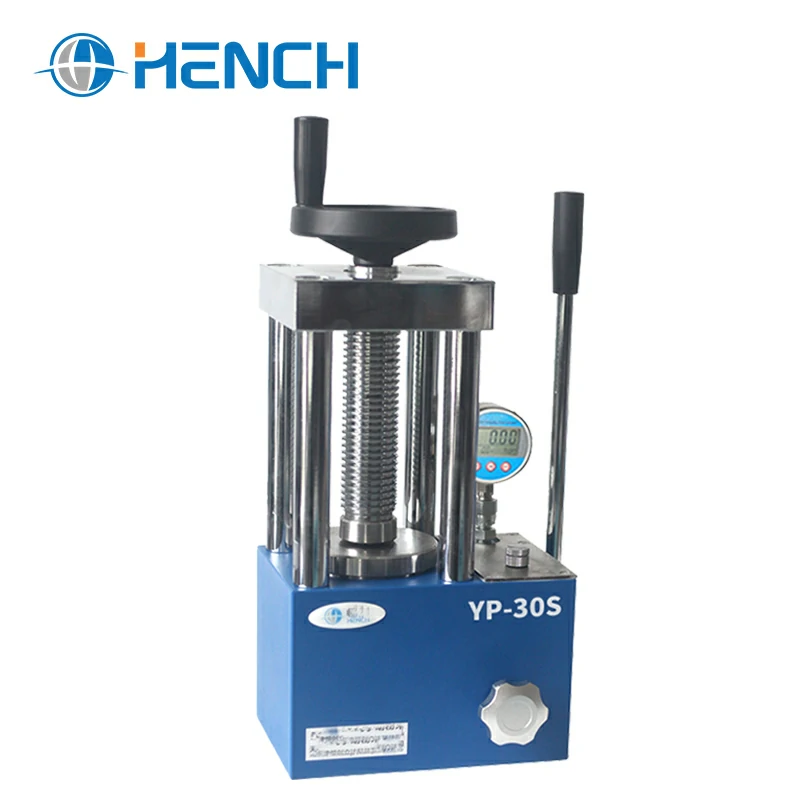
15/24/30/40-ton Manual Digital Laboratory Press Machine YP-S
Model:YP-15/24/30/40S
Pressure range:0-30T(0-32Mpa)
Cylinder diameter:110mm
Pressure conversion:1Mpa=0.95T
Pressure gage:DDNT high precision digital sensor display meter, tonnage display (T), can be switched Mpa, accuracy 0.01T
Travel of piston:40mm
Pressure stability:≤lMpa/10min
Table diameter:Φ120mm
Number of columns:4 root
Effective space:92x92x160mm
Size:275x210x475mm
Weight:57.5Kg
-
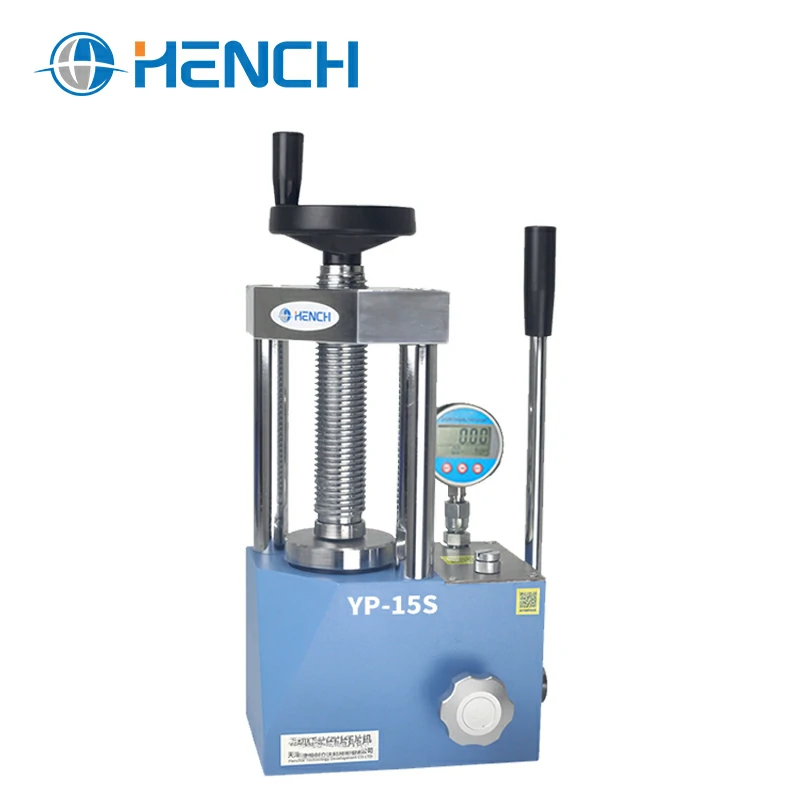
2/3/5/12/15-ton Manual Digital Hydraulic Laboratory Press YP-S
Model:YP-2/3/5/12/15S
Pressure range:0-15T(0-33Mpa)
Cylinder diameter:75mm
Pressure conversion:1Mpa=0.5T
Pressure gage:DDNT high precision digital sensor display meter, tonnage display (T), can be switched Mpa, accuracy 0.01T
Travel of piston:32mm
Pressure stability:≤1Mpa/10min
Table diameter:Φ80mm
Number of columns:2 root
Effective space:92x130mm
Size:230x160x385mm
Weight:28Kg
Lab Hydraulic Presses for Scientific Sample Preparation
Hench offers a complete range of laboratory hydraulic presses designed for FTIR, XRF, material testing, pharmaceutical research, and industrial sample preparation. Our presses combine precision, repeatability, and safety with compliance to international laboratory standards (ASTM / ISO), making them reliable solutions for both research and quality control laboratories.
Whether you need manual, digital, automatic, heated, or vacuum lab hydraulic presses, Hench provides machines suitable for various sample types and analytical workflows.
Laboratory Press Applications
Hench lab hydraulic presses are widely used in:
-
FTIR sample preparation (KBr pellets, transparent discs)
-
XRF pellet pressing for elemental analysis
-
Powder compaction for material characterization
-
Research and development of ceramics, catalysts, and composites
-
Pharmaceutical and chemical laboratory testing
Each laboratory pellet press ensures uniform pressure distribution, yielding consistent and reliable analytical results.
Laboratory Hydraulic Press Selection Guide
To help laboratories quickly identify the most suitable laboratory press for their application, Hench provides the following selection guide based on operation type and pressure capacity. This decision matrix simplifies comparison and ensures optimal performance for FTIR, XRF, and advanced material research.
1. Selection by Operation Type
Hench provides multiple types of lab hydraulic presses, each designed for specific laboratory applications:
Manual Laboratory Press
Hand-operated pumps generate pressure for routine sample preparation. Ideal for educational labs and low-throughput environments.
-
Compact bench-top design
-
Adjustable pressure up to 30–40 tons
-
Manual or digital display for accurate monitoring
-
Suitable for FTIR and XRF pellet preparation
Automatic Hydraulic Press Machine
Electrically powered, programmable presses with automated pressure ramps, dwell times, and release cycles. Suitable for high-throughput laboratories requiring repeatable results and minimal manual intervention.
-
Pressure range: 10–60 tons
-
Fully programmable cycles
-
Optional heating for polymer/composite testing
-
Compatible with multiple die sizes and materials
Vacuum Hydraulic Press
Applies pressure under reduced air conditions to minimize trapped air and improve pellet density, especially for sensitive or low-porosity materials.
-
Vacuum-assisted pressing
-
Optional heating and digital pressure control
-
Compatible with FTIR and XRF dies
-
Ensures uniform, high-quality sample preparation
Heated Laboratory Press
Combines controlled pressure with temperature regulation for polymers, composites, and advanced materials research.
-
Temperature control up to 300°C
-
Accurate pressure control with PLC/PID system
-
Safety interlocks for laboratory compliance
-
Optional data acquisition for reproducible results
Isostatic Pressing Machines
Used for specialized research and advanced material compaction, providing uniform pressure distribution in multiple directions. Suitable for ceramic, pharmaceutical, and materials research applications.
-
Manual and automatic models available
-
High-pressure uniformity
-
Optional heated or vacuum configurations
-
Supports experimental reproducibility
2. Selection by Pressure Capacity
Choosing the correct tonnage is critical for achieving proper sample density and analytical accuracy.
-
15 Ton Hydraulic Press
Recommended for FTIR KBr pellets, routine powder compaction, and small-diameter dies. -
24 Ton Hydraulic Press
Suitable for higher-density pellets, larger die sizes, and multi-purpose laboratory applications. -
40–60 Ton Hydraulic Press
Ideal for XRF sample preparation, battery materials, ceramics, and advanced materials research requiring higher compaction forces and superior uniformity.
Technical Specifications and Standards Compliance:
| Press Type | Pressure Range | Control Mode | Temperature Control | Industry Standard | Typical Applications |
|---|---|---|---|---|---|
| Manual Laboratory Press | 5–30 Ton | Manual pump | Ambient | ASTM / ISO compatible | FTIR sample prep, educational labs |
| Digital Laboratory Press | 5–40 Ton | Digital gauge | Ambient | ASTM / ISO compatible | FTIR & XRF pellet pressing |
| Automatic Hydraulic Press Machine | 10–60 Ton | Programmable | Optional heating | ASTM / ISO compliant | High-throughput analytical labs |
| Vacuum Laboratory Press | 10–40 Ton | Vacuum assisted | Optional heating | ASTM / ISO compliant | High-density pellets, sensitive powders |
| Heated Laboratory Press | 10–50 Ton | Pressure + temperature | Up to 300°C | ASTM / ISO compliant | Polymers, composites, advanced materials |
Contact us to get the latest lab hydraulic press machine prices.
Hench Advantages
Hench lab hydraulic presses integrate state-of-the-art control systems for precision and safety:
-
PLC & PID Control for precise pressure and temperature management
-
Digital touch-screen interface for monitoring and programmable cycles
-
Automated pressure ramping and release for repeatable pellet quality
-
Safety interlocks and emergency stop for operator protection
-
Optional data acquisition and recording for analytical documentation
These features ensure laboratory staff can maintain consistent sample quality while complying with safety regulations.
About Hench
Hench is a leading lab pressing machine manufacturer with over 20 years of experience. Our products are trusted worldwide in research institutions, universities, and industrial laboratories. We focus on precision, reliability, safety, and compliance, ensuring every laboratory press meets rigorous scientific requirements.
Our Advantages:
-
High-precision hydraulic press machines for consistent sample preparation
-
Multiple series covering manual, digital, automatic, vacuum, and heated applications
-
Fully compatible with FTIR and XRF pellet dies
-
Designed to comply with ASTM and ISO laboratory standards
-
Robust design ensures long-term stability and reliable performance
-
Dedicated technical support and after-sales service for laboratory clients
Trusted by Research and Industrial Labs
Hench lab hydraulic presses have been adopted by leading laboratories for FTIR, XRF, and material research, demonstrating our commitment to quality, compliance, and laboratory success.
Frequently Asked Questions
Q1: What is the difference between a laboratory press and an industrial hydraulic press?
Laboratory press is designed for precise, controlled pressure applications in small-scale sample preparation, focusing on repeatability, safety, and compliance with ASTM/ISO standards. An industrial press prioritizes high force for large-scale manufacturing but often lacks fine control suitable for lab samples.
Q2: Which Hench lab hydraulic press is suitable for FTIR or XRF sample preparation?
Hench digital, automatic, and vacuum laboratory presses are ideal for FTIR and XRF pellet preparation. These presses provide uniform pressure distribution, precise control, and compatibility with standard pellet dies. Heated or vacuum options may be selected based on sample material sensitivity.
Q3: Do Hench lab hydraulic presses comply with industry standards?
Yes. All Hench presses are designed to meet ASTM and ISO standards for laboratory sample preparation, including temperature uniformity, platen parallelism, and pressure accuracy. Compliance ensures reliable analytical results and laboratory safety.
Q4: Are Hench presses equipped with safety and automation features?
Absolutely. Our presses include:
-
PLC & PID control for precise pressure and temperature management
-
Digital touch-screen interface for programmable cycles
-
Automated pressure ramping and release
-
Emergency stop and safety interlocks
-
Optional data acquisition for record-keeping
Q5: Can Hench lab hydraulic presses be used for polymers, composites, or sensitive powders?
Yes. Heated presses are ideal for polymers and composites, while vacuum presses minimize air entrapment for sensitive powders. Hench offers multiple configurations to meet diverse lab applications.
Q6: How do I maintain and calibrate a Hench laboratory press?
Routine maintenance includes:
-
Checking hydraulic fluid levels and replacing if necessary
-
Inspecting seals, valves, and piston for leaks or wear
-
Cleaning platen surfaces before and after use
-
Calibrating pressure gauges and digital controls periodically
Hench provides detailed manuals and technical support to ensure long-term performance.