Cómo se utiliza FTIR en la industria farmacéutica para el análisis de API y excipientes
3 de febrero de 2026
Espectroscopia infrarroja por transformada de Fourier (FTIR) se ha convertido en una técnica analítica fundamental en la industria farmacéutica para la identificación, verificación y control de calidad de ingredientes farmacéuticos activos (API) y excipientes. Instrumentos como el Hengchuang ENERGY-30 FTIR son ampliamente adoptados porque combinan análisis rápidos, pruebas no destructivas, alta sensibilidad y fuerte especificidad molecular.
En la fabricación farmacéutica, debe responderse repetidamente a una pregunta crítica: ¿puede verificarse cada materia prima entrante y cada producto acabado de forma rápida, fiable y conforme a las normas reglamentarias? FTIR proporciona una respuesta clara y práctica. Permite el control de calidad a lo largo de todo el ciclo de vida de la producción de fármacos, desde la inspección de las materias primas hasta el desarrollo de la formulación y el lanzamiento del producto acabado.
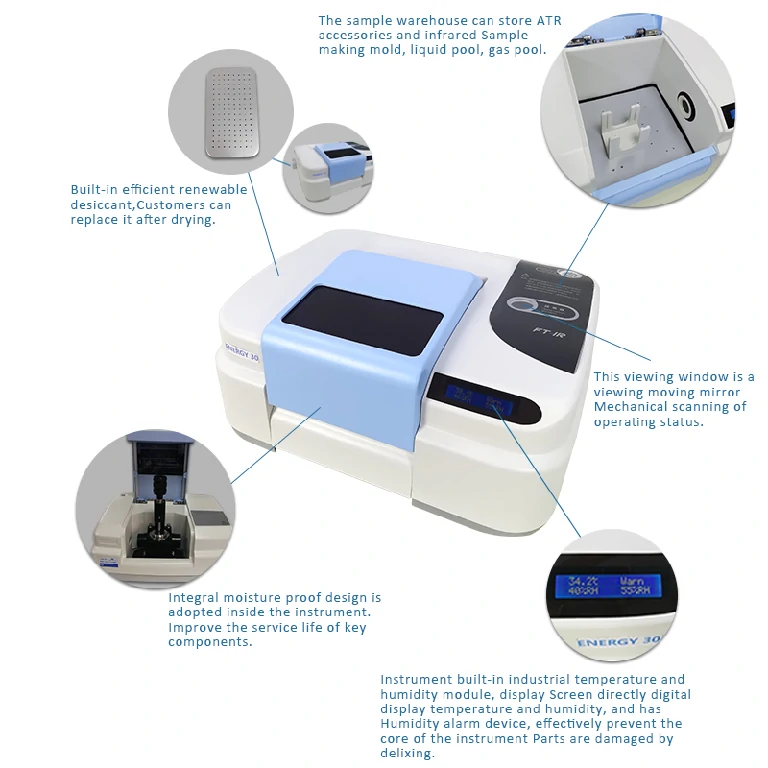
Principales aplicaciones de FTIR en el análisis de ingredientes farmacéuticos activos (API)
Los principios activos farmacéuticos determinan el rendimiento terapéutico y la seguridad de los medicamentos. Cualquier desviación en la estructura química, la forma cristalina o la pureza puede provocar una reducción de la eficacia, inestabilidad o incumplimiento de las normativas. FTIR desempeña un papel fundamental en el control de estos atributos de calidad críticos.
Confirmación estructural e identificación de la autenticidad de las API
El análisis FTIR se basa en el comportamiento vibracional molecular. Grupos funcionales como el hidroxilo (OH), el carbonilo (C=O), el amino (NH) y los anillos aromáticos absorben la radiación infrarroja a frecuencias características, formando una huella espectral única para cada compuesto.
En la práctica farmacéutica, esta capacidad es esencial tanto durante la investigación como durante la producción. Durante el desarrollo, FTIR confirma la estructura química de los API recién sintetizados. Durante la fabricación, se utiliza para la inspección de las materias primas entrantes para evitar que los API falsificados o de calidad inferior entren en el proceso de producción.
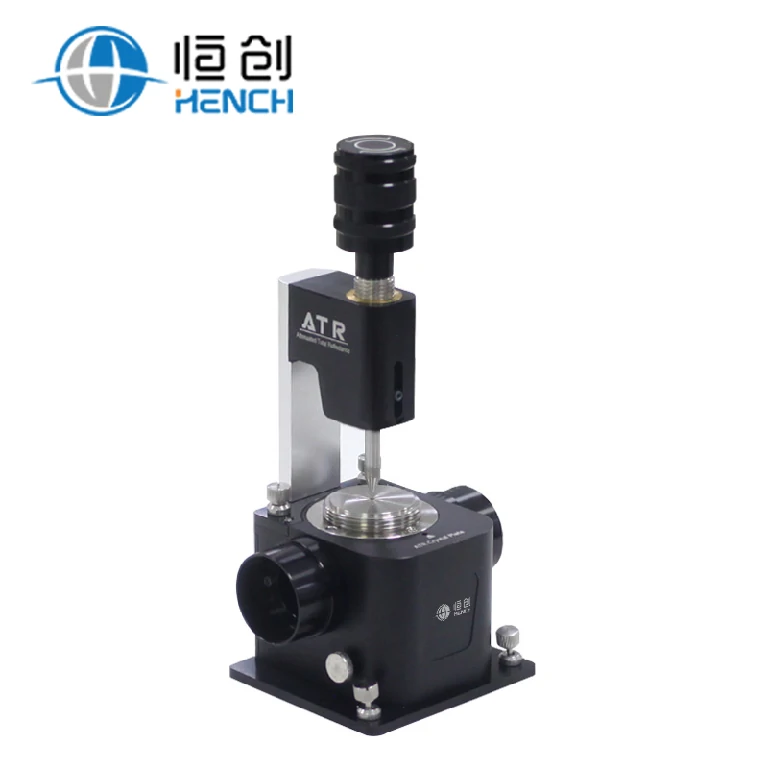
Se suelen utilizar dos métodos de muestreo. El método del gránulo de bromuro de potasio (KBr) consiste en mezclar el API con KBr seco, moler bien la mezcla y prensarla en un gránulo transparente. Este método proporciona una alta calidad espectral y está ampliamente aceptado como método estándar de farmacopea. El método de reflexión total atenuada (ATR) requiere una preparación mínima o nula de la muestra, lo que permite la medición directa de muestras sólidas o líquidas colocadas sobre el cristal ATR. El ATR es especialmente útil para muestras traza o materiales sensibles al calor.
La interpretación espectral se basa en la comparación con espectros de referencia certificados de farmacopeas o bibliotecas internas validadas. La coincidencia de las posiciones de los picos y las intensidades relativas confirman la identidad, mientras que los picos adicionales o los desplazamientos de los picos indican discrepancias estructurales o adulteración.
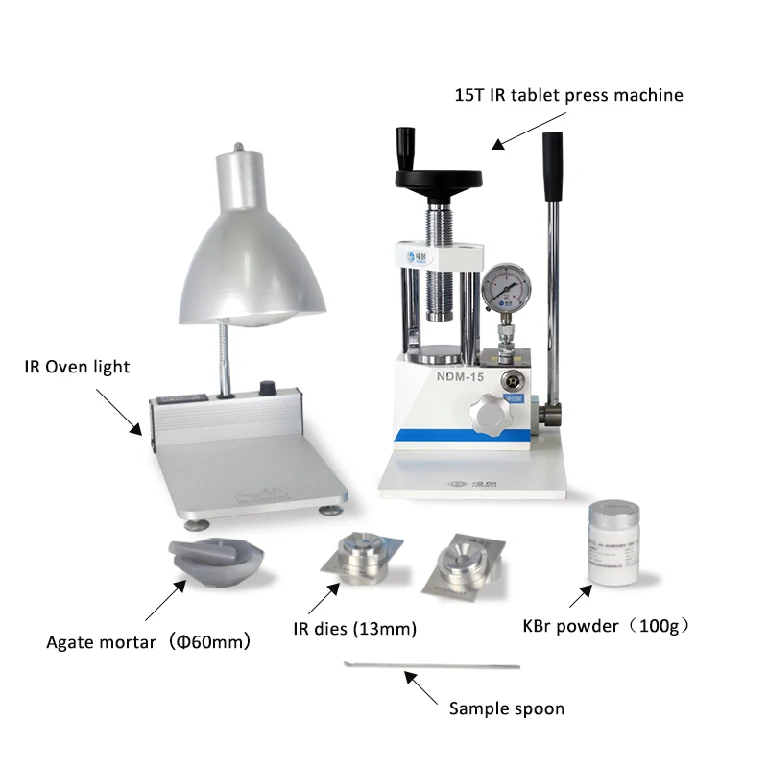
Aplicaciones típicas de FTIR para la confirmación estructural de API
| Aspecto del análisis | Foco de detección FTIR | Escenario de aplicación | Ventajas clave |
|---|---|---|---|
| Identificación de grupos funcionales | OH, C=O, NH, picos aromáticos | Verificación de la estructura de la API | Alta especificidad |
| Autenticidad de las materias primas | Coincidencia global de huellas dactilares | Inspección entrante | Detección rápida |
| Coherencia de los lotes | Comparación de la posición e intensidad de los picos | Control de calidad lote a lote | Alta repetibilidad |
| Análisis de trazas | Detección ATR sensible a la superficie | Muestras API limitadas | Uso mínimo de muestras |
Comparación de métodos de muestreo FTIR para APIs
| Parámetro | Método KBr Pellet | Método ATR |
|---|---|---|
| Preparación de las muestras | Molienda y prensado de pellets | Mínimo o ninguno |
| Muestra de consumo | nivel mg | μg-nivel |
| Destructividad | Destructivo | No destructivo |
| Calidad espectral | Muy alta | Alta |
| Uso adecuado | Análisis de referencia | Pruebas rutinarias rápidas |
Identificación de formas cristalinas y control de la pureza de los cristales
Muchos API presentan polimorfismo, es decir, la misma molécula puede existir en diferentes formas cristalinas. Estas formas difieren en las interacciones intermoleculares, como los enlaces de hidrógeno y las fuerzas de Van der Waals, lo que da lugar a cambios mensurables en el comportamiento de absorción de infrarrojos.
FTIR detecta diferencias polimórficas mediante desplazamientos, divisiones o cambios de intensidad en los picos característicos. En entornos de producción, esto permite una rápida supervisión de la consistencia de la forma cristalina durante la optimización del proceso y el control de calidad rutinario. Aunque la difracción de rayos X sigue siendo el método definitivo para la determinación de la estructura cristalina, FTIR proporciona una solución más rápida y económica para el cribado rutinario y la detección temprana de transformaciones cristalinas no deseadas.
Evaluación de la pureza de los API y detección de impurezas
FTIR es eficaz para detectar impurezas que introducen nuevos grupos funcionales o alteran los patrones de absorción existentes. Las impurezas orgánicas suelen generar picos adicionales, mientras que los contaminantes inorgánicos, como los sulfatos o los carbonatos, muestran bandas de absorción fuertes y características.
Los disolventes residuales también pueden analizarse mediante FTIR. Muchos disolventes orgánicos de uso común muestran características de absorción infrarroja distintas, lo que permite una evaluación cualitativa o semicuantitativa antes del análisis cromatográfico de confirmación.
| Tipo de impureza | Función IR | Propósito de la detección | Limitación |
|---|---|---|---|
| Impurezas orgánicas | Nuevos picos de grupos funcionales | Cribado cualitativo | Posible solapamiento de picos |
| Disolventes residuales | Bandas específicas para disolventes | Identificación rápida | Cuantificación limitada |
| Sales inorgánicas | Picos de fuerte vibración iónica | Detección cualitativa | Menor sensibilidad |
Estudios de estabilidad y control de la degradación
Durante las pruebas de estabilidad acelerada y el almacenamiento a largo plazo, los API pueden sufrir procesos de degradación como la oxidación o la hidrólisis. FTIR permite la monitorización continua de estos cambios mediante la identificación de nuevos picos de absorción o reducciones en las bandas características originales.
Esta capacidad facilita la determinación de la vida útil y ayuda a los fabricantes a comprender las vías de degradación, garantizando una calidad constante del producto durante todo el ciclo de vida previsto.
Principales aplicaciones de FTIR en el análisis de excipientes farmacéuticos
Aunque los excipientes carecen de actividad farmacológica, son esenciales para la formulación, la estabilidad y el rendimiento de los fármacos. FTIR se utiliza ampliamente para la identificación de excipientes, la evaluación de la pureza y la evaluación de la compatibilidad.
Identificación y verificación de la autenticidad de los excipientes
Los excipientes farmacéuticos comunes, como el almidón, la lactosa, la celulosa microcristalina y el estearato de magnesio, poseen espectros infrarrojos característicos. El FTIR permite diferenciar rápidamente entre excipientes de aspecto físico similar pero composición química diferente.
El FTIR basado en ATR es especialmente adecuado para la identificación de excipientes durante la inspección de entrada, ya que no requiere una preparación compleja de las muestras y minimiza el riesgo de errores de formulación causados por mezclas de materiales.
| Excipiente | Picos de absorción clave (cm-¹) | Asignación funcional |
|---|---|---|
| Almidón | ~3400, 1640, 1160 | estiramiento OH, enlaces glicosídicos |
| Lactosa | ~3400, 1640, 1080 | estiramiento OH y C-O |
| Celulosa microcristalina | ~3350, 1060, 898 | enlaces β-glicosídicos |
| Estearato de magnesio | ~1560, 1410 | Estiramiento COO |
Control de la pureza y evaluación de la humedad de los excipientes
FTIR puede detectar monómeros residuales, aditivos o productos de degradación en excipientes mediante la identificación de sus rasgos de absorción característicos. El contenido de humedad es otro parámetro crítico. El agua libre produce amplias bandas de absorción infrarroja, lo que permite una evaluación semicuantitativa de la humedad.
Aunque la cuantificación precisa de la humedad requiere métodos complementarios, FTIR proporciona una evaluación preliminar rápida y eficaz para apoyar las decisiones de control del proceso.
Estudios de compatibilidad API-Excipiente
La compatibilidad entre los API y los excipientes es esencial durante el desarrollo de la formulación. Las interacciones químicas o físicas pueden dar lugar a degradación, transformación de cristales o reducción de la biodisponibilidad.
En las pruebas de compatibilidad, las mezclas API-excipiente se almacenan en condiciones de estrés como temperatura elevada, humedad o exposición a la luz. Los espectros FTIR de las mezclas se comparan con los espectros de los componentes individuales.
| Observación FTIR | Interpretación | Juicio de compatibilidad |
|---|---|---|
| Superposición espectral simple | Ninguna interacción | Compatible |
| Nuevos picos de absorción | Interacción química | Incompatible |
| Turnos punta | Interacción intermolecular | Riesgo potencial |
| Pico de desaparición | Degradación | Inaceptable |
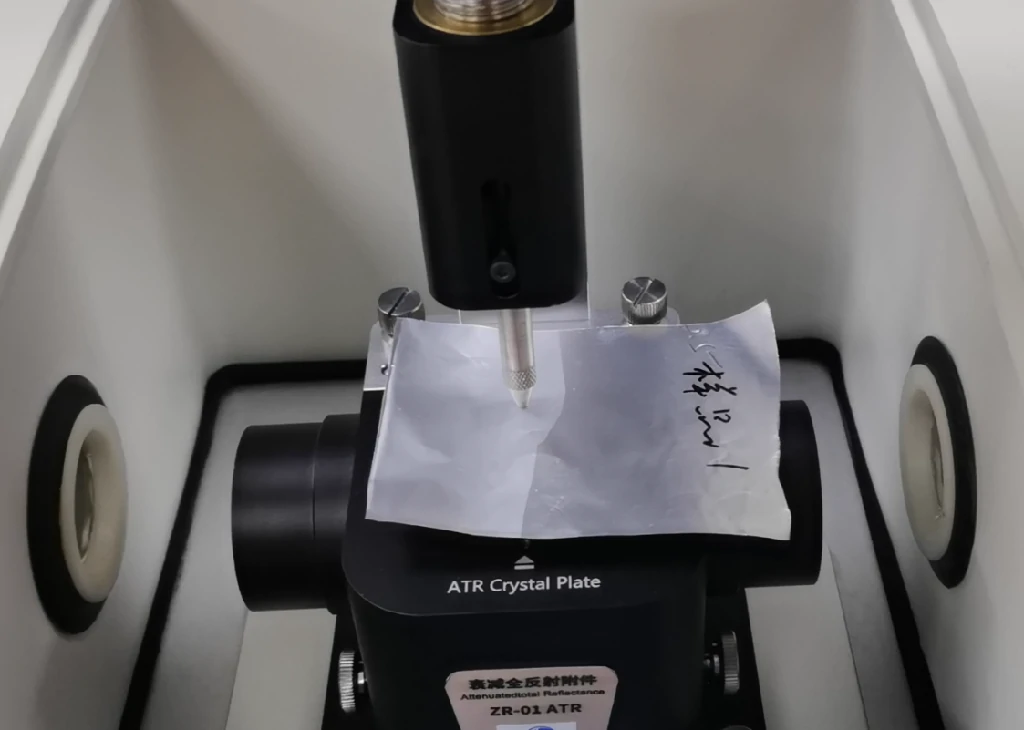
Ventajas y limitaciones prácticas del FTIR
FTIR ofrece un análisis rápido, un consumo mínimo de muestras y opciones de pruebas no destructivas. La alta automatización reduce la dependencia del operador y los métodos se ajustan a las normas farmacopeicas internacionales.
Sin embargo, es esencial una preparación cuidadosa de la muestra y unos estándares de referencia adecuados. El FTIR es principalmente cualitativo o semicuantitativo y debe combinarse con métodos cromatográficos para una cuantificación precisa.
Conclusión
FTIR es una herramienta analítica indispensable en la fabricación farmacéutica. Su capacidad para apoyar la identificación de API, el control de la forma cristalina, el cribado de impurezas, la verificación de excipientes y los estudios de compatibilidad la hacen esencial para garantizar la calidad, la seguridad y el cumplimiento normativo de los fármacos.
Referencias
- Espectros infrarrojos por transformada de Fourier: aplicaciones a sistemas químicos - texto fundacional sobre interpretación de espectros FTIR y aplicaciones en sistemas químicos.
https://www.sciencedirect.com/book/9780122541018/fourier-transform-infrared-spectra - Aplicaciones de la espectroscopia infrarroja por transformada de Fourier a los preparados farmacéuticos - revisión del uso de FTIR en la caracterización de fármacos y el control de calidad.
https://pubmed.ncbi.nlm.nih.gov/32116058/ - Aplicación de FTIR para el análisis cuantitativo de compuestos farmacéuticos - investigación sobre métodos de cuantificación FTIR en análisis farmacéuticos, mostrando la sensibilidad del método y su uso práctico.
https://pubmed.ncbi.nlm.nih.gov/25659814/ - El poder de la espectroscopia FTIR para formulaciones farmacéuticas más rápidas y seguras - Specac Ltd - recurso de la industria que explica las ventajas de FTIR en el desarrollo de formulaciones y el control de calidad.
https://specac.com/ftir-applications/the-power-of-ftir-spectroscopy-for-faster-safer-pharmaceutical-formulations/ - Espectroscopia infrarroja de reflectancia difusa por transformada de Fourier - Visión general técnica de una técnica de muestreo FTIR útil para polvos y muestras a granel.
https://en.wikipedia.org/wiki/Diffuse_reflectance_infrared_Fourier_transform_spectroscopy