Aplicaciones FTIR en la Industria Química: Identificación de materias primas y control de calidad
27 de enero de 2026
Identificación de materias primas y control de calidad desde la perspectiva del proveedor de instrumentos
En la industria química, la calidad de las materias primas es la base de la consistencia del producto, la estabilidad del proceso y la seguridad operativa. La identificación incorrecta de materiales, la falta de correspondencia de grados o la adulteración oculta pueden provocar fallos de reacción, rechazo de lotes, ensuciamiento de equipos e incluso incidentes de seguridad graves.
Espectroscopia infrarroja por transformada de Fourier (FTIR) se ha convertido en una técnica analítica fundamental para la inspección de materias primas (IQC) debido a sus ventajas de rapidez, análisis no destructivo, alta sensibilidad y gran especificidad química.
Al detectar la absorción infrarroja característica de los grupos funcionales, FTIR genera "espectros de huellas moleculares" únicos. Combinado con bibliotecas espectrales profesionales y modelos de calibración cuantitativos, FTIR permite a los fabricantes de productos químicos implementar un control de calidad de las materias primas en origen rápido, fiable y rentable.
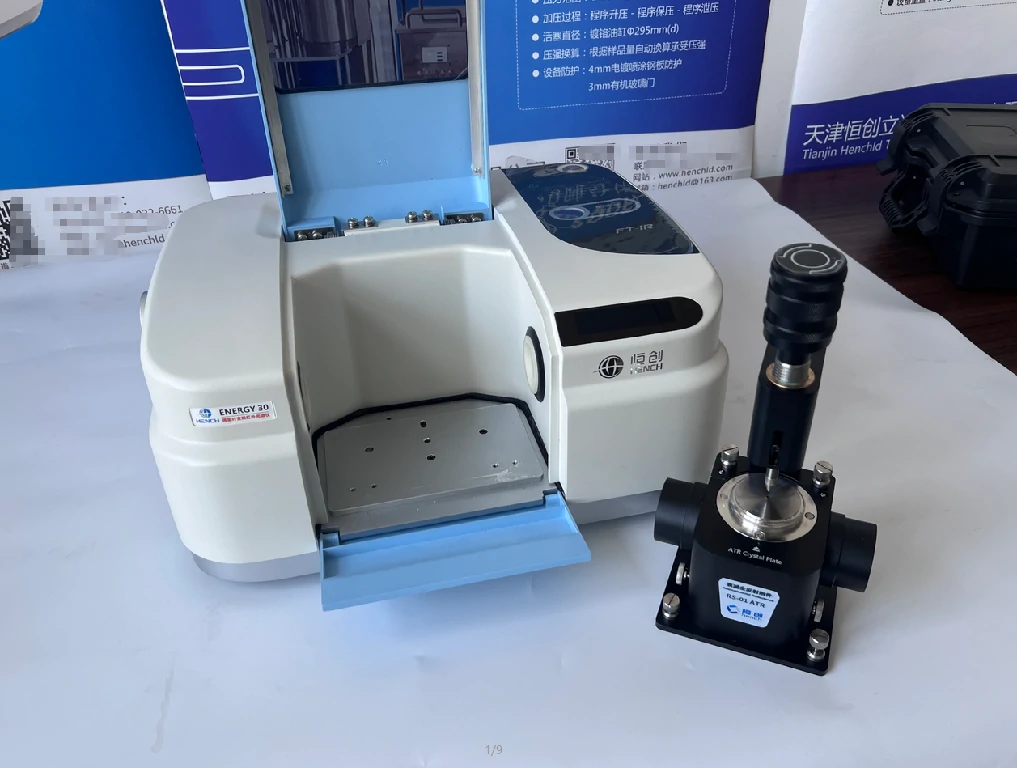
Por qué FTIR es ideal para el control de materias primas químicas
Las materias primas químicas abarcan una gama amplia y compleja, que incluye:
- Materiales orgánicosalcoholes, éteres, ésteres, hidrocarburos, monómeros, polímeros
- Materiales inorgánicos: sales, óxidos, carbonatos, silicatos, hidróxidos
- Materiales compuestosresinas con cargas, aditivos, modificadores
Estos materiales pueden presentarse en forma sólida, líquida o gaseosa, lo que a menudo requiere distintos enfoques analíticos.
La tecnología FTIR ofrece una adaptabilidad excepcional en todos estos escenarios:
- Preparación mínima de la muestra
- Análisis directo de sólidos, líquidos y gases
- Compatibilidad con pruebas de laboratorio, en línea de producción e in situ
Como resultado, FTIR se ha convertido en una herramienta analítica estándar en los sistemas químicos IQC, la verificación de procesos y los flujos de trabajo de resolución de problemas.
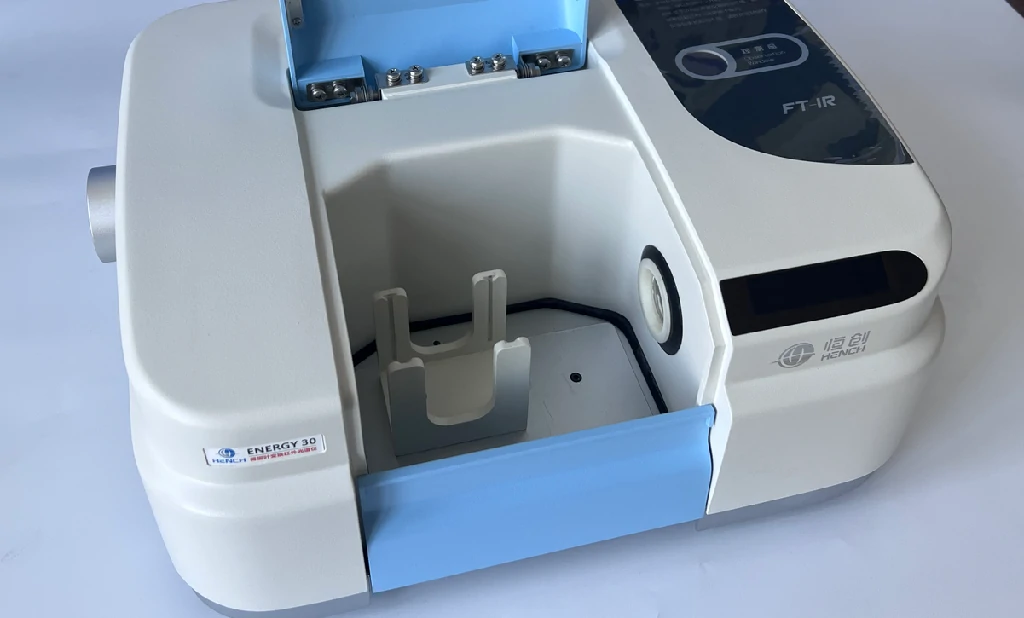
Identificación cualitativa y verificación de la autenticidad de las materias primas
Identificación precisa de materias primas químicas orgánicas
Muchas materias primas orgánicas presentan propiedades físicas similares, pero difieren en grupos funcionales y estructuras moleculares. Estas diferencias influyen directamente en las reacciones posteriores y en el rendimiento del producto final.
El FTIR permite una rápida diferenciación basada, por ejemplo, en los picos de absorción característicos:
- Alcoholes
- Metanol: amplia absorción de -OH alrededor de 3300 cm-¹, estiramiento de C-O cerca de 1030 cm-¹
- Etanol: -OH alrededor de 3350 cm-¹, C-O cerca de 1050 cm-¹
- Ésteres
- Acetato de etilo: Estiramiento C=O a ~1740 cm-¹
- Acetato de butilo: C=O cerca de 1735 cm-¹ con absorción más fuerte de C-H de cadena larga a ~2960 cm-¹
- Compuestos aromáticos
- Benceno: picos de vibración del anillo a ~1600 y 1500 cm-¹
- Tolueno: absorción adicional del C-H del metilo cerca de 2920 cm-¹
Comparando los espectros medidos con bibliotecas de referencia profesionales como Sadtler o NISTFTIR puede alcanzar típicamente identificación cualitativa fiable en cuestión de minutoscon niveles de confianza equivalentes por encima de 90%.
Confirmación del tipo de polímero y resina
Los materiales de alto peso molecular, como el PE, el PP, el PVC, las resinas epoxi, el poliuretano y las resinas fenólicas, suelen diferir en el grado de ramificación, la densidad de reticulación o el contenido de grupos funcionales. Estas diferencias se reflejan claramente en los espectros infrarrojos.
Las aplicaciones típicas son:
- Identificación del grado de PE
- El LDPE muestra una pronunciada vibración de flexión del metilo a ~1370 cm-¹
- El HDPE presenta un pico significativamente más débil en la misma posición
- Polipropileno (PP)
- Fuerte y característica absorción de metilo en torno a 1370 cm-¹, lo que permite distinguirlo rápidamente del PE.
- Resinas epoxi
- La absorción del anillo epoxi a ~910 cm-¹ confirma la presencia y la integridad de los grupos funcionales epoxi
FTIR permite a los fabricantes verificar el tipo y la estructura de la resina antes de su uso, evitando fallos en la formulación causados por materiales incorrectos o degradados.
Detección de adulteración y fraude de materias primas
La adulteración y la sustitución de grados siguen siendo riesgos comunes en la cadena de suministro de materias primas químicas. FTIR proporciona un método de detección eficaz al identificar picos inesperados o cambios anormales de intensidad.
Algunos ejemplos típicos son:
- Adulteración del glicerol
- El glicerol puro muestra una banda -OH fuerte y ancha cerca de 3300 cm-¹.
- La adición de agua introduce una vibración de flexión cerca de 1640 cm-¹
- El etilenglicol provoca cambios notables en la absorción de C-O
- Contaminación por aceite de silicona
- El polidimetilsiloxano puro presenta fuertes picos Si-CH₃ (~1260 cm-¹) y Si-O-Si (~1090 cm-¹)
- La adulteración del aceite mineral introduce una fuerte absorción C-H alifática cerca de 2920 cm-¹.
- Productos químicos alimentarios y farmacéuticos
- Las impurezas de grado industrial generan picos característicos adicionales, lo que permite un rápido cribado de conformidad
Identificación de materias primas químicas inorgánicas
FTIR también es muy eficaz para compuestos inorgánicos que contienen enlaces covalentes:
- Carbonato cálcico (CaCO₃)
- CO₃²- estiramiento asimétrico a ~1420 cm-¹
- Flexión fuera del plano a ~875 cm-¹
- Dióxido de silicio (SiO₂)
- Fuerte estiramiento Si-O-Si cerca de 1080 cm-¹
- Vibración de flexión en torno a 460 cm-¹
- Control de la degradación de las materias primas
- El hidróxido de sodio que absorbe CO₂ para formar Na₂CO₃ puede detectarse a través de los picos emergentes de carbonato
Esta capacidad es especialmente valiosa para controlar la absorción de humedad y el deterioro relacionado con el almacenamiento.
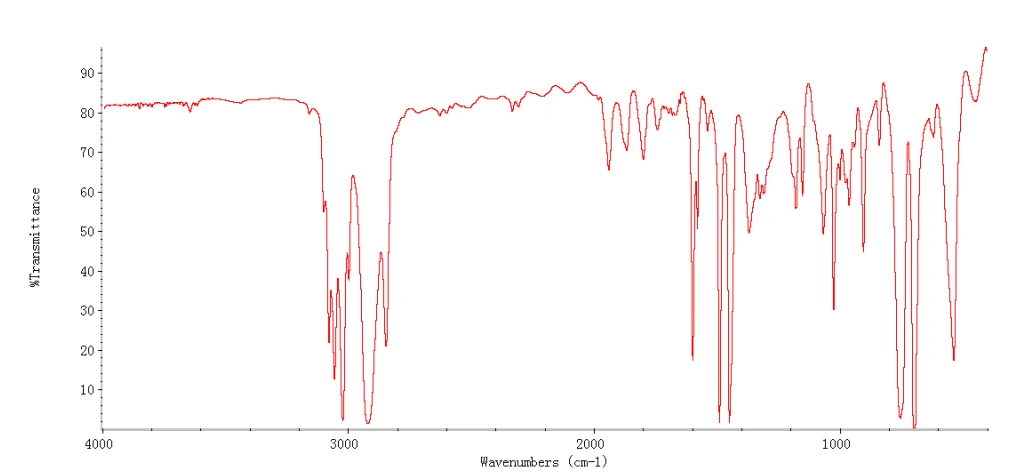
Ventajas técnicas del FTIR para el IQC químico
En comparación con la GC, la HPLC y la RMN, el FTIR ofrece varios ventajas insustituibles en el control de calidad de las materias primas:
- Alta velocidad de análisis
La identificación completa suele requerir sólo de 1 a 5 minutos, lo que resulta ideal para el control de calidad de lotes y el cribado en línea de producción. - Amplia compatibilidad con el estado físico
Se pueden analizar directamente sólidos, líquidos y gases con una preparación sencilla - Pruebas no destructivas o de daños mínimos
ATR-FTIR permite realizar mediciones directas sin alterar muestras valiosas - Bajo coste de explotación
No se necesitan columnas consumibles, fases móviles ni reactivos de referencia - Capacidad de supervisión in situ y en línea
Los sistemas FTIR portátiles facilitan las inspecciones de almacén y sobre el terreno
El FTIR en línea permite controlar las tuberías en tiempo real - Alta especificidad química
Los espectros de "huellas moleculares" permiten diferenciar con fiabilidad materiales estructuralmente similares
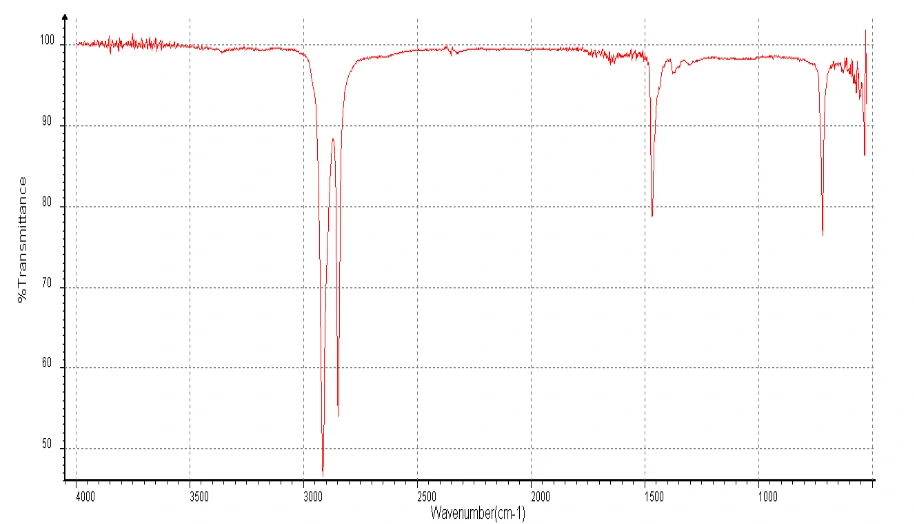
Pautas prácticas de aplicación para obtener resultados fiables
Desde la perspectiva de un proveedor de instrumentos, la metodología correcta es tan importante como el rendimiento de los instrumentos:
- Control de la preparación de muestras
Evitar la contaminación, la interferencia de la humedad y los efectos de la volatilización - Preferir ATR-FTIR para IQC de rutina
Ideal para materiales viscosos, de alto punto de ebullición o insolubles
Garantizar la limpieza del cristal ATR para evitar la contaminación cruzada - Utilizar bibliotecas espectrales específicas de la aplicación
Las bibliotecas orientadas al sector mejoran considerablemente la precisión de la identificación
Creación de bibliotecas internas para materiales propios o nuevos - Disciplina de calibración cuantitativa
Seleccionar picos característicos sin interferencias
Recalibrar periódicamente utilizando materiales de referencia certificados - Sistemas mixtos orgánico-inorgánicos
Aplicar la sustracción de fondo o la espectroscopia diferencial para aislar los componentes orgánicos.
Aplicaciones industriales típicas
- Plásticos y polímeros
Identificación del grado de resina, detección de monómeros residuales, cribado de material reciclado - Recubrimientos y tintas
Identificación de resinas y disolventes, control de la humedad y las impurezas - Química fina
Verificación de la pureza de sabores, fragancias y aditivos alimentarios - Industria del caucho
Identificación del tipo de caucho y análisis del contenido de antioxidantes y aditivos - Productos químicos inorgánicos
Identificación del relleno, absorción de humedad y detección de la degradación
Configuración de instrumentos y adaptación de aplicaciones
FTIR en laboratorio, IQC y línea de producción
La eficacia de FTIR en el control de calidad de materias primas químicas depende no sólo del principio analítico, sino también de configuración adecuada de los instrumentos en función de las aplicaciones específicas.
Los distintos entornos de inspección imponen requisitos diferentes en cuanto a sensibilidad, robustez, nivel de automatización y capacidad de tratamiento de datos.
Desde la perspectiva de un proveedor de instrumentos, los sistemas FTIR para aplicaciones químicas pueden configurarse normalmente para tres escenarios principales: análisis de laboratorio, control de calidad de las entradas (IQC) y supervisión de la línea de producción.
Configuración FTIR de laboratorio
Objetivos típicos de la aplicación
- Cualificación de materias primas y desarrollo de métodos
- Adquisición de espectro de referencia y construcción de bibliotecas
- Desarrollo y validación de modelos cuantitativos
- Análisis de las causas de las desviaciones de calidad
Configuración recomendada
- Espectrómetro FTIR de sobremesa
- Amplia gama espectral (normalmente 4000-400 cm-¹)
- Alta resolución espectral (≤ 4 cm-¹)
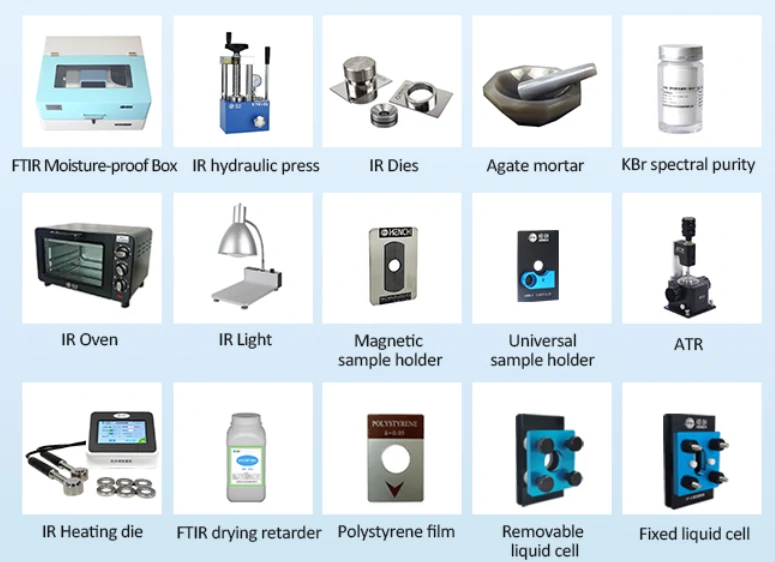
- Múltiples accesorios de muestreo:
- ATR (diamante o ZnSe)
- Células de transmisión (líquido y gas)
- Reflectancia difusa (DRIFTS) para polvos
Principales ventajas
- Gran flexibilidad analítica
- El más adecuado para sistemas de materiales complejos y optimización de métodos
- Admite la creación de bibliotecas espectrales internas para materiales patentados.
Orientaciones para la aplicación
El FTIR de laboratorio sirve como fundamento técnico del sistema de control de calidad.
Las bibliotecas espectrales, los criterios de aceptación y los modelos cuantitativos de calibración desarrollados en el laboratorio pueden transferirse posteriormente a los entornos de IQC y producción.
FTIR para el control de calidad entrante (IQC)
Objetivos típicos de la aplicación
- Verificación rápida de la identidad de las materias primas
- Comprobaciones de la coherencia de las categorías y los proveedores
- Control de adulteración y contaminación
- Apoyo a la decisión de liberación de lotes
Configuración recomendada
- Sistema FTIR de sobremesa o compacto
- ATR-FTIR como modo de muestreo primario
- Flujos de trabajo de identificación preconfigurados
- Software integrado de comparación de bibliotecas espectrales
Principales ventajas
- El tiempo de análisis suele ser de 1 a 3 minutos por muestra
- Preparación mínima de la muestra
- Baja dependencia del operador
- Alta repetibilidad para inspecciones rutinarias
Orientaciones para la aplicación
Para entornos IQC, robustez y sencillez tienen prioridad sobre la resolución máxima.
Los procedimientos ATR normalizados y los criterios predefinidos de apto/no apto ayudan a garantizar resultados de inspección coherentes en todos los operadores y turnos.
FTIR para la supervisión de la línea de producción e in situ
Objetivos típicos de la aplicación
- Verificación en tiempo real de la alimentación de materias primas
- Detección de una composición anormal durante la transferencia
- Control de calidad continuo
- Alerta temprana de contaminación o degradación
Configuración recomendada
- Sistema FTIR industrial o portátil
- Células de flujo ATR o células de gas para medición en línea
- Funciones automatizadas de adquisición de datos y alarma
- Integración con sistemas DCS o MES (opcional)
Principales ventajas
- Respuesta inmediata sin retrasos en el muestreo
- Reducción del riesgo de que materiales no cualificados entren en producción
- Apoya las estrategias preventivas de control de calidad
Orientaciones para la aplicación
Los sistemas FTIR de línea de producción deben hacer hincapié en estabilidad mecánica, tolerancia ambiental y fiabilidad de los datos.
Se recomienda el análisis automatizado de tendencias y las alarmas basadas en umbrales para apoyar la toma de decisiones en tiempo real.
Guía de selección FTIR para la industria química
Marco práctico para la selección de instrumentos
La selección del sistema FTIR adecuado para aplicaciones químicas requiere un equilibrio entre requisitos analíticos, condiciones operativas y objetivos de calidad a largo plazo.
El siguiente marco proporciona un enfoque estructurado para la selección de instrumentos.
Definir el objetivo principal de la aplicación
| Enfoque de la aplicación | Tipo FTIR recomendado |
|---|---|
| Desarrollo de métodos / I+D | FTIR de sobremesa de alta resolución |
| Inspección rutinaria IQC | FTIR compacto o de sobremesa basado en ATR |
| Almacén / inspección sobre el terreno | FTIR portátil |
| Control continuo | FTIR en línea o en proceso |
Selección del modo de muestreo
- ATR (reflexión total atenuada)
Preferido para la mayoría de las materias primas químicas
Adecuado para sólidos, líquidos, muestras viscosas y materiales insolubles - Transmisión
Adecuado para líquidos y gases puros con longitud de recorrido conocida
Mayor precisión cuantitativa en condiciones controladas - Reflectancia difusa (DRIFTS)
Adecuado para polvos y materiales inorgánicos
En IQC químico, ATR-FTIR se recomienda generalmente como configuración por defecto por su sencillez y versatilidad.
Requisitos de rendimiento espectral
Parámetros clave a tener en cuenta:
- Gama espectral: Debe cubrir los grupos funcionales objetivo
- Resolución: Normalmente 4 cm-¹ es suficiente para IQC; mayor resolución para aplicaciones de investigación.
- Relación señal/ruido (S/N): Fundamental para detectar impurezas de bajo nivel
Las especificaciones de mayor rendimiento sólo deben seleccionarse cuando lo justifiquen las necesidades de la aplicación, para optimizar la rentabilidad.
Software y gestión de datos
Para los usuarios industriales, la funcionalidad del software suele ser tan importante como el rendimiento óptico.
Las características recomendadas incluyen:
- Comparación automática de bibliotecas y puntuación de similitudes
- Umbrales de aceptación definidos por el usuario
- Análisis cuantitativo y seguimiento de tendencias
- Registro de auditoría y apoyo a la integridad de los datos
- Gestión de permisos multiusuario
Escalabilidad y normalización
Las empresas químicas suelen ampliar el uso de FTIR con el tiempo.
La selección del instrumento debe tener en cuenta:
- Coherencia de los datos espectrales entre distintos instrumentos
- Transferibilidad de bibliotecas y modelos de calibración
- Compatibilidad entre los sistemas de laboratorio, IQC y producción
Una plataforma FTIR estandarizada simplifica la formación, el mantenimiento y la integración del sistema de calidad.
Perspectiva del proveedor: Creación de una solución FTIR basada en aplicaciones
Desde el punto de vista de un proveedor de instrumentos, el éxito de la implementación de FTIR no se limita a la entrega de instrumentos. Incluye:
- Evaluación de aplicaciones y recomendación de configuraciones
- Guía de métodos y flujos de trabajo
- Apoyo a la transferencia de bibliotecas y modelos
- Servicio técnico a largo plazo y actualizaciones de aplicaciones
Al alinear la configuración de los instrumentos con las aplicaciones industriales reales, FTIR se convierte no sólo en una herramienta analítica, sino en un componente esencial de los sistemas de gestión de la calidad química.
Conclusión
Gracias a su capacidad de huella molecular, rápida velocidad de análisis y versatilidad entre los estados de los materiales, FTIR se ha convertido en una herramienta analítica indispensable para la identificación de materias primas químicas y el control de calidad.
Desde la confirmación cualitativa inicial y la verificación de la autenticidad hasta el cribado de impurezas, la evaluación de la estabilidad y la advertencia del deterioro, FTIR respalda todo el flujo de trabajo de control de calidad de las materias primas.
Para los fabricantes de productos químicos, la implantación del IQC basado en FTIR no sólo mejora la eficacia de la inspección y reduce los costes de las pruebas, sino que también evita que los materiales no cualificados entren en la producción en origen, lo que garantiza la calidad constante del producto y la seguridad operativa.
Como proveedor experimentado de instrumentos FTIR, no sólo nos centramos en el rendimiento de los instrumentos, sino también en ayudar a los clientes a crear soluciones analíticas fiables y orientadas a las aplicaciones que realmente respalden la gestión de la calidad industrial.
Referencias
- ASTM E1252-98(2021) - Práctica normalizada para las técnicas generales de obtención de espectros infrarrojos para análisis cualitativos
Esta norma ASTM describe las mejores prácticas para el análisis espectral infrarrojo cualitativo de materiales, abarcando sólidos, líquidos y gases. Se cita ampliamente en la metodología FTIR industrial.
🔗 https://webstore.ansi.org/standards/astm/astme1252982021 - ASTM D6348-12(2020) - Método de ensayo estándar para la determinación de compuestos gaseosos mediante espectroscopia FTIR de interfase directa extractiva
Esta norma proporciona un método para el análisis de gases multicomponentes mediante FTIR, ilustrando las aplicaciones de los métodos FTIR extractivos y de interfaz.
🔗 https://store.astm.org/d6348-12r20.html - NIST - Espectroscopia infrarroja por transformada de Fourier
El Instituto Nacional de Estándares y Tecnología (NIST) proporciona una visión general de los principios y capacidades de FTIR, incluyendo el análisis de grupos funcionales y el uso de accesorios ATR.
🔗 https://www.nist.gov/laboratories/tools-instruments/fourier-transform-infrared-spectroscopy - Smith, Brian C. (2011) - Fundamentos de la espectroscopia infrarroja por transformada de Fourier (2ª Edición)
Un libro técnico bien considerado que cubre la teoría FTIR, la instrumentación y las técnicas de análisis. Disponible en CRC Press / Routledge, se utiliza a menudo como referencia en el desarrollo de métodos espectroscópicos.
🔗 https://www.routledge.com/Fundamentals-of-Fourier-Transform-Infrared-Spectroscopy/Smith/p/book/9781420069297 - Capítulo del Manual Springer sobre Fundamentos de FTIR
Un capítulo académico sobre los fundamentos del FTIR y sus aplicaciones en la caracterización de grupos funcionales, a menudo utilizada en la investigación de materiales y espectroscopia analítica.
🔗 https://link.springer.com/chapter/10.1007/978-3-319-92955-2_9 - Wikipedia - Espectroscopia infrarroja con transformada de Fourier
Una visión general técnica y referenciada de los principios FTIR, el diseño de interferómetros y las aplicaciones típicas. Útil como resumen técnico conciso de referencia.
🔗 https://en.wikipedia.org/wiki/Fourier-transform_infrared_spectroscopy