



A Practical 2025 Buyer’s Guide to Infrared Spectrometer Price: 7 Factors to Consider
December 10, 2025
Abstract
The process of procuring a Fourier-transform infrared (FTIR) spectrometer in 2025 requires a nuanced understanding of the factors that constitute its final cost. An examination of the market reveals that the infrared spectrometer price is not a monolithic figure but a composite valuation derived from instrument performance, optical components, software capabilities, and long-term operational expenses. This analysis deconstructs the pricing structure, exploring the technical and economic trade-offs inherent in selecting a system. It considers the spectrum of instruments, from entry-level benchtop units to advanced research-grade systems with microscopic or portable configurations. Key cost determinants such as detector type (e.g., DTGS vs. MCT), optical materials, spectral resolution, and signal-to-noise ratio are evaluated in the context of specific application requirements. Furthermore, the role of software, regulatory compliance (e.g., 21 CFR Part 11), and total cost of ownership are examined to provide a holistic financial perspective for laboratories in diverse global markets, including Europe, Japan, and South America.
Key Takeaways
- Performance specifications like resolution and spectral range are primary drivers of cost.
- Detector and accessory choices significantly influence the final infrared spectrometer price.
- Software capabilities, from basic analysis to advanced chemometrics, add value and cost.
- Consider total cost of ownership, including consumables, maintenance, and support.
- Portable and microscope systems represent specialized, higher-cost investments.
- Brand reputation and local support impact upfront cost and long-term reliability.
Table of Contents
- A Deeper Inquiry into the Cost of Molecular Insight
- Factor 1: Instrument Configuration and Core Performance
- Factor 2: The Heart of the Machine: Detectors and Optics
- Factor 3: The World of Sampling: Accessories and Modules
- Factor 4: The Brains of the Operation: Software and Data Intelligence
- Factor 5: The Human Element: Brand, Warranty, and Support
- Factor 6: Navigating the Rules: Regulatory Compliance and Validation
- Factor 7: Beyond the Initial Purchase: Total Cost of Ownership (TCO)
- Frequently Asked Questions (FAQ)
- A Concluding Thought on Value and Investment
- References
A Deeper Inquiry into the Cost of Molecular Insight
To ask about the infrared spectrometer price is to pose a question not of simple arithmetic, but of value, purpose, and foresight. It is an inquiry that extends beyond a mere price tag into the very heart of a laboratory's mission. Whether the setting is a pharmaceutical quality control lab in Germany, a polymer research facility in Brazil, or an environmental testing center in Japan, the acquisition of an FTIR spectrometer represents a significant investment in the capacity to see the unseen. The instrument is not merely a box that generates spectra; it is a conduit to understanding molecular structure, a tool for ensuring safety, and an engine for innovation. The financial commitment, which can range from under $20,000 for a basic educational unit to well over $150,000 for a high-performance research system, reflects this profound utility.
The challenge for any laboratory manager, researcher, or procurement officer in 2025 is to navigate this complex landscape with wisdom. It requires a form of practical reasoning, a deliberation that weighs the immediate financial outlay against the long-term scientific and operational returns. One must resist the allure of specifications that exceed practical needs, just as one must avoid the false economy of an underpowered system that will soon become a bottleneck. This guide is conceived as an aid to that deliberation. It seeks to cultivate a deeper understanding of the seven fundamental factors that shape the infrared spectrometer price, moving the conversation from "How much does it cost?" to "What value will it bring to our work?". By dissecting each component of the cost, from the core interferometer to the nuances of software and support, we can approach the purchasing decision not as a simple transaction, but as a deliberate and informed choice about the future capabilities of our scientific endeavors.
Factor 1: Instrument Configuration and Core Performance
The physical form and fundamental capabilities of an FTIR spectrometer establish the foundational tier of its cost. The variations in design are not arbitrary; they are direct responses to the diverse environments and questions that scientists face. The choice between a stationary benchtop model, a nimble portable unit, or a high-magnification microscope system is the first and most consequential decision influencing the infrared spectrometer price.
Benchtop FTIR Spectrometers: The Laboratory Workhorse
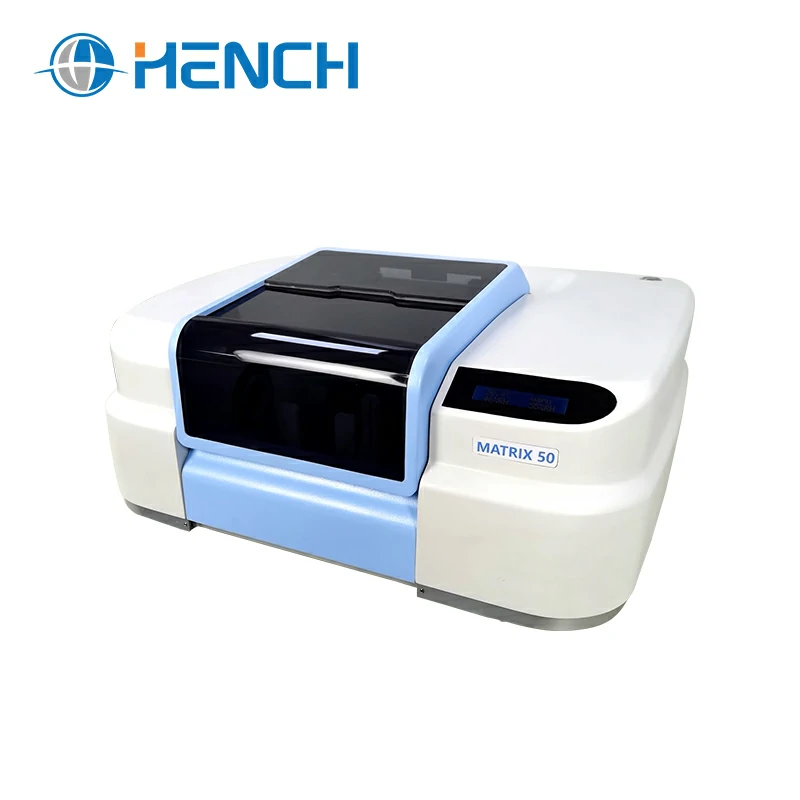
The benchtop FTIR spectrometer is the quintessential instrument for most quality control, academic, and general research laboratories. Its design prioritizes stability, performance, and versatility. Housed in a robust chassis, it is engineered to minimize the impact of environmental vibrations and temperature fluctuations, which is paramount for achieving reproducible and accurate spectral data (Guerrero-Pérez & Patience, 2020). The infrared spectrometer price for these systems represents the broadest range on the market.
An entry-level benchtop system, often targeted at academic teaching labs or routine quality checks, may have a starting infrared spectrometer price around $15,000 to $25,000. These instruments typically offer a standard spectral range (e.g., 7,800 to 350 cm⁻¹), a resolution of around 4 cm⁻¹, and a respectable signal-to-noise (S/N) ratio. They are perfectly adequate for identifying bulk materials, checking for gross contamination, or demonstrating the principles of vibrational spectroscopy to students.
As we ascend to mid-range and research-grade benchtop models, the infrared spectrometer price climbs accordingly, from $30,000 to over $80,000. This increase is justified by significant enhancements in core performance specifications.
-
Spectral Resolution: Resolution is the ability to distinguish between two adjacent spectral peaks. While 4 cm⁻¹ is sufficient for many liquid and solid samples where peaks are naturally broad, the analysis of gases or crystalline solids with sharp absorption bands demands higher resolution. A system capable of 1 cm⁻¹, 0.5 cm⁻¹, or even higher resolution requires a more precise interferometer with a longer optical path difference (OPD) and more sophisticated control electronics. This enhanced precision is a direct driver of the infrared spectrometer price. As a technical note from Newport (2025) explains, the resolution limit is inversely related to the maximum OPD, meaning a longer mirror scan path is needed for finer resolution.
-
Signal-to-Noise (S/N) Ratio: A higher S/N ratio allows the instrument to detect weaker spectral signals and analyze trace components or highly absorbing samples. Achieving a high S/N ratio (e.g., 50,000:1 or greater) involves optimizing the entire optical system: a more powerful infrared source, more efficient optics, a more sensitive detector, and advanced digital signal processing. Each of these improvements contributes to the overall infrared spectrometer price.
-
Spectral Range: While most standard mid-infrared (MIR) instruments cover the 4,000 to 400 cm⁻¹ range, some applications require access to the near-infrared (NIR) or far-infrared (FIR) regions. Extending the range necessitates different optical components—beamsplitters, windows, and detectors—that are transparent and efficient in those regions. For example, a system designed for FIR analysis might use a solid-state beamsplitter and a different detector, adding thousands of dollars to the infrared spectrometer price.
Portable and Handheld FTIR: Analysis in the Field
The development of portable and handheld FTIR systems has been a revolutionary step, liberating molecular analysis from the confines of the laboratory. These instruments are indispensable for applications like hazardous material identification, art conservation, and geological surveying. However, this portability comes at a premium. The engineering challenge is immense: miniaturizing the interferometer, optics, and electronics while ensuring they remain robust enough to withstand field conditions.
The infrared spectrometer price for a portable FTIR typically starts around $40,000 and can exceed $65,000. These systems must balance performance with size and durability. They often use rugged solid-state interferometers and attenuated total reflectance (ATR) sampling interfaces. While their resolution and S/N ratio may not match those of high-end benchtop systems, their value lies in providing immediate, on-site answers.
FTIR Microscopy: The Microscopic View
FTIR microscopy combines an optical microscope with an FTIR spectrometer, allowing for the chemical analysis of microscopic samples or specific regions of a larger sample. This technique is invaluable in fields like forensics (analyzing a single fiber), materials science (examining defects in a polymer film), and biomedical research (imaging tissue sections).
The addition of a microscope objective, a sensitive detector (often a Mercury Cadmium Telluride or MCT detector), and precision motorized staging significantly increases the system's complexity and cost. A complete FTIR microscope system represents a substantial investment, with the infrared spectrometer price often ranging from $80,000 to over $200,000. The cost is driven by the quality of the microscope optics, the sophistication of the imaging software, and the performance of the integrated detector. The ability to map the chemical composition of a surface with high spatial resolution is a powerful capability that commands a corresponding price.
| Instrument Type | Typical Price Range (USD, 2025) | Key Characteristics | Primary Applications |
|---|---|---|---|
| Entry-Level Benchtop | $15,000 – $25,000 | Resolution: ~4 cm⁻¹, Standard MIR range, Basic software | Academic teaching, Routine QC, Bulk material ID |
| Research-Grade Benchtop | $30,000 – $80,000+ | Resolution: ≤1 cm⁻¹, High S/N ratio, Expandable range (NIR/FIR) | R&D, Method development, Gas analysis, Trace analysis |
| Portable/Handheld | $40,000 – $65,000+ | Rugged design, Integrated ATR, On-site analysis | HazMat ID, Forensics, Art/Conservation, Geology |
| FTIR Microscope | $80,000 – $200,000+ | High spatial resolution (μm scale), Mapping/Imaging | Materials science, Forensics, Biomedical, Microplastics |
Factor 2: The Heart of the Machine: Detectors and Optics
If the interferometer is the soul of the spectrometer, the detectors and optics are its heart and circulatory system. They are responsible for generating, guiding, and sensing the infrared light that probes the sample's molecular vibrations. The materials and technologies used in these components have a profound impact on the instrument's performance, its suitability for different applications, and, consequently, the final infrared spectrometer price. A discerning buyer must look beyond the main specifications and understand the composition of these critical internal parts.
The Detector: Sensing the Vibrational Echo
The detector's role is to convert the attenuated infrared light—the signal that has passed through the sample—into an electrical signal that the computer can process. The choice of detector is one of the most significant decisions affecting both performance and cost.
Deuterated Lanthium α-Alanine doped Triglycine Sulphate (DLaTGS) Detectors
The standard detector found in most benchtop FTIR systems is the DLaTGS pyroelectric detector. This detector operates at room temperature, which is a major advantage in terms of simplicity and cost. It works by sensing the temperature changes caused by incident infrared radiation. DLaTGS detectors offer good sensitivity across the entire mid-infrared range, are reliable, and do not require cooling. Their inclusion helps keep the infrared spectrometer price for entry-level and mid-range systems accessible. For the majority of routine analyses involving polymers, liquids, and organic powders, a DLaTGS detector is more than sufficient.
Mercury Cadmium Telluride (MCT) Detectors
When an application demands higher sensitivity or faster scan speeds, the MCT (HgCdTe) photodetector becomes the component of choice. Unlike pyroelectric detectors, MCT detectors are photonic; they respond directly to incoming photons rather than heat. This mechanism makes them inherently more sensitive and provides a much faster response time. However, this superior performance comes with two significant costs.
First, MCT detectors must be cryogenically cooled to reduce thermal noise, typically using liquid nitrogen (LN₂). This adds operational complexity and a recurring expense for the LN₂. While some systems offer electrically cooled (Stirling cycle) options, these add substantially to the initial infrared spectrometer price. Second, the MCT detectors themselves are more expensive to manufacture. An MCT detector can add $5,000 to $15,000 or more to the system's cost compared to a standard DLaTGS detector. This added expense is justified for applications like FTIR microscopy, trace gas analysis, or kinetic studies where speed and sensitivity are paramount.
The Beamsplitter and Windows: Guiding the Light
The beamsplitter is the central optical component within the interferometer. Its job is to divide the incoming infrared beam into two paths and then recombine them. The material of the beamsplitter and the instrument's windows dictates the usable spectral range of the spectrometer.
-
Potassium Bromide (KBr): This is the most common material for mid-infrared beamsplitters and windows. It offers excellent transmission from the near-infrared down to about 400 cm⁻¹ (25 µm). KBr is relatively inexpensive, making it the standard for general-purpose instruments. Its primary drawback is that it is hygroscopic, meaning it readily absorbs moisture from the air. To prevent fogging and degradation, the optical bench of a spectrometer with KBr optics must be either sealed and desiccated or continuously purged with dry air or nitrogen. This requirement for environmental protection is a hidden aspect of the long-term cost of ownership.
-
Zinc Selenide (ZnSe): For laboratories in humid environments or for applications involving aqueous samples, ZnSe is a superior alternative. It is non-hygroscopic and robust. However, ZnSe is more expensive than KBr and has a more limited spectral range, typically cutting off around 650 cm⁻¹. Choosing ZnSe optics increases the initial infrared spectrometer price but can reduce long-term maintenance costs and provide greater durability.
-
Calcium Fluoride (CaF₂): CaF₂ is another robust, non-hygroscopic material often used in systems designed for near-infrared or combined NIR/MIR applications. Its transmission properties are excellent in the NIR region. The choice to include NIR capabilities, often requiring a CaF₂ beamsplitter and a quartz-tungsten-halogen source, represents a specific configuration that elevates the overall system cost.
The Infrared Source: The Origin of the Light
The source provides the broadband infrared radiation that illuminates the sample. The most common source in mid-infrared FTIR spectrometers is the Globar, a silicon carbide rod heated to over 1,000 °C. It is a reliable, long-lasting, and cost-effective component. While variations exist in terms of lifetime and output stability, the source itself is not typically a major variable in the infrared spectrometer price of standard benchtop systems. However, for specialized systems, such as those extending into the far-infrared or requiring extremely high intensity, more exotic sources might be used, which would add to the cost.
Understanding these components allows for a more sophisticated evaluation of an instrument's price. The infrared spectrometer price is not just for a black box, but for a carefully selected assembly of detectors and optical materials, each chosen to meet a specific range of analytical challenges.
Factor 3: The World of Sampling: Accessories and Modules
An FTIR spectrometer, in its basic form, is merely an engine for generating and detecting infrared light. Its true power and versatility are unlocked through the use of sampling accessories. These devices are the critical interface between the instrument and the sample, and the diversity of available accessories is a testament to the wide-ranging applicability of FTIR spectroscopy. Each accessory is designed to solve a specific analytical problem—how to get the infrared beam to interact with a solid, a liquid, a gas, a powder, or a surface in a meaningful way. The choice of accessories is a major component of the total system cost and directly impacts the infrared spectrometer price.
Attenuated Total Reflectance (ATR): The Modern Standard
ATR has become the most popular sampling technique for a reason: it is fast, easy, and requires minimal to no sample preparation. This is a significant departure from the traditional method of pressing KBr pellets, which is time-consuming and requires skill. In an ATR accessory, the infrared beam is directed into a crystal of high refractive index (the ATR crystal). The beam undergoes total internal reflection at the crystal's surface, creating an evanescent wave that penetrates a few micrometers into the sample placed in intimate contact with the crystal (Workman, 2025).
The infrared spectrometer price often includes a basic, single-bounce diamond ATR accessory, as it is the most versatile and robust option. Diamond is extremely hard, chemically inert, and suitable for a wide range of samples, from soft polymers to corrosive liquids. However, the world of ATR is more complex, and costs can vary:
-
ATR Crystal Material: While diamond is the workhorse, other materials are used for specific purposes. Zinc Selenide (ZnSe) is a less expensive option but is softer and can be scratched or damaged by hard samples or acidic solutions. Germanium (Ge) has a higher refractive index, resulting in a shallower penetration depth. This is useful for analyzing highly absorbing samples (like carbon-black-filled polymers) or for surface-sensitive measurements. A high-quality, single-reflection diamond ATR accessory can cost between $3,000 and $7,000, while ZnSe or Ge options might be less expensive.
-
Multi-Bounce ATR: For analyzing liquids with very low concentrations of an analyte or for thin films, multi-bounce ATR accessories are used. These use longer crystals that allow the beam to reflect multiple times (e.g., 3, 5, or 9 times) against the sample, increasing the effective pathlength and thus the absorbance signal. These are more specialized and carry a higher price than their single-bounce counterparts.
Transmission and Reflectance: Classic and Specialized Techniques
Before ATR became dominant, transmission was the primary method for FTIR analysis. It involves passing the infrared beam directly through the sample. While less common now for routine solids, it remains essential for certain applications.
-
Liquid and Gas Cells: Quantitative analysis of liquids and gases requires cells with a precisely known pathlength. Gas cells can range from simple 10 cm cells costing a few thousand dollars to complex multi-pass cells with effective pathlengths of many meters, used for trace gas detection, which can cost over $10,000. Liquid cells are used for quantitative analysis of components in solution. The choice of window material (e.g., KBr, NaCl, CaF₂) depends on the solvent and spectral range.
-
Diffuse Reflectance (DRIFTS): Diffuse Reflectance Infrared Fourier Transform Spectroscopy is the preferred technique for analyzing powdered or rough-surfaced solid samples. It collects the infrared light that scatters from the sample. A DRIFTS accessory, which includes specialized collection optics, can add $4,000 to $8,000 to the infrared spectrometer price. It is widely used in catalysis, soil science, and pharmaceutical powder analysis.
-
Specular Reflectance: This accessory measures the light reflected directly from a smooth, reflective surface, such as a coating on a metal substrate. It is a non-destructive way to measure film thickness or identify surface layers.
The investment in a comprehensive set of FTIR sample preparation tools and accessories can easily add 50% or more to the base infrared spectrometer price. A laboratory must therefore carefully consider its current and future application needs. It is often more cost-effective to purchase a package that includes the most commonly used accessories than to add them piecemeal later on.
| Accessory Type | Typical Price Range (USD, 2025) | Principle of Operation | Common Applications |
|---|---|---|---|
| Single-Bounce ATR | $3,000 – $7,000 | Evanescent wave probes sample surface | General purpose solids & liquids, QC, polymer ID |
| Multi-Bounce ATR | $5,000 – $10,000 | Multiple internal reflections increase pathlength | Trace components in liquids, thin films |
| DRIFTS | $4,000 – $8,000 | Collection of scattered IR radiation | Powders, rough solids, catalysts, soils |
| Gas Cell (10 cm) | $2,000 – $4,000 | Transmission through a fixed pathlength of gas | High-concentration gas analysis, process monitoring |
| Multi-Pass Gas Cell | $8,000 – $20,000+ | Long effective pathlength via multiple reflections | Environmental monitoring, trace gas detection |
| Specular Reflectance | $3,000 – $6,000 | Measures direct reflection from smooth surfaces | Thin films on reflective substrates, coatings |
Factor 4: The Brains of the Operation: Software and Data Intelligence
In the modern analytical laboratory, an instrument is only as powerful as the software that controls it and interprets its data. For an FTIR spectrometer, the software is not merely a user interface for starting and stopping scans; it is an integrated environment for data acquisition, processing, analysis, and reporting. The sophistication of this software is a critical, and often underestimated, component of the overall infrared spectrometer price. The transition from a raw interferogram to a meaningful chemical answer is a journey guided entirely by software algorithms (Workman, 2016).
Foundational Software Packages
Every new FTIR spectrometer comes with a basic software package. At a minimum, this software provides functionality for:
- Instrument Control: Setting up scan parameters such as resolution, number of scans, and spectral range.
- Data Conversion: Performing the Fast Fourier Transform (FFT) to convert the interferogram into a spectrum.
- Basic Spectral Processing: Applying essential corrections like baseline adjustment and atmospheric compensation for water vapor and CO₂.
- Peak Analysis: Identifying peak positions and intensities, and performing simple quantitative measurements based on peak height or area.
- Basic Library Searching: Comparing a sample's spectrum against a small, general-purpose spectral library to find potential matches.
For many routine applications, this foundational package is sufficient. However, as analytical needs become more complex, the limitations of basic software become apparent, and the value of advanced software packages becomes clear. The infrared spectrometer price often reflects the level of software included by default.
Advanced Software and Chemometrics
Chemometrics is the science of extracting information from chemical systems by data-driven means. In the context of FTIR, it involves using multivariate statistical methods to analyze entire spectra, rather than just individual peaks. This approach is incredibly powerful for analyzing complex mixtures, quantifying components in the presence of interferences, and classifying materials. Advanced software packages that include chemometrics tools are a significant value-add and a corresponding cost driver.
- Principal Component Analysis (PCA): A tool for exploring data sets. It can be used to identify outliers, group similar samples, and visualize trends in large batches of spectral data.
- Partial Least Squares (PLS) and Principal Component Regression (PCR): These are quantitative analysis methods that build calibration models based on the spectra of known standards. They are far more robust than simple single-peak methods and are the standard for quantitative analysis in industries like petroleum and food science. Developing a PLS model to predict the octane number of gasoline or the fat content of milk from their IR spectra is a common application.
Spectral Libraries: The Power of Reference
A spectrum of an unknown substance is just a collection of squiggly lines until it can be compared to a reference. Spectral libraries are vast, curated databases containing tens or even hundreds of thousands of FTIR spectra of known compounds. The ability to rapidly and accurately search these libraries is one of the most powerful features of modern FTIR.
The infrared spectrometer price may include a small, general-purpose library, but comprehensive and specialized libraries are typically sold separately or as part of premium software packages. These libraries can be a significant expense, with some large collections costing several thousand dollars. However, their value in saving time and providing confident identifications is immense. Specialized libraries are available for numerous fields:
- Polymers and Additives
- Pharmaceuticals and Excipients
- Forensic Materials and Illicit Drugs
- Solvents
- Pesticides
- Art Materials and Pigments
Regulatory Compliance: 21 CFR Part 11
For laboratories operating in regulated environments, such as the pharmaceutical or medical device industries, software must comply with regulations like the U.S. Food and Drug Administration's (FDA) 21 CFR Part 11. This regulation governs the use of electronic records and electronic signatures.
Software designed for compliance includes features such as:
- Secure, time-stamped audit trails: Recording every action performed on the data, from acquisition to final report.
- User-level access control: Ensuring that only authorized individuals can perform certain functions.
- Electronic signatures: Providing a legally binding equivalent to handwritten signatures.
Developing and validating software to meet these stringent requirements is a costly endeavor for manufacturers. Consequently, a 21 CFR Part 11 compliance package is a significant add-on to the infrared spectrometer price, often adding several thousand dollars. For a regulated lab, however, this cost is not optional; it is a mandatory part of doing business.
When evaluating the infrared spectrometer price, it is a profound mistake to view software as an afterthought. It is the intelligence that transforms data into knowledge. A powerful hardware system paired with inadequate software is an engine without a driver. A wise investment considers the complete analytical workflow and ensures the software is as capable as the spectrometer itself.
Factor 5: The Human Element: Brand, Warranty, and Support
The acquisition of a sophisticated scientific instrument like an FTIR spectrometer is not merely a purchase of hardware and software; it is the beginning of a long-term relationship with the manufacturer. The reputation of the brand, the robustness of the warranty, and the quality of the technical and application support network are intangible yet deeply significant factors that are woven into the fabric of the infrared spectrometer price. For laboratories in diverse regions like South America, Europe, and Japan, the value of reliable, accessible, and knowledgeable support cannot be overstated. It represents the human element in a world of high technology, providing assurance that the investment will remain productive for years to come.
The Weight of a Brand
In the world of scientific instrumentation, brand reputation is earned over decades of performance, reliability, and innovation. Established manufacturers have a track record of producing instruments that meet their stated specifications and withstand the rigors of daily laboratory use. This reputation for quality is a form of insurance for the buyer.
Purchasing from a well-regarded brand often entails a premium in the initial infrared spectrometer price. This premium is not just for the name itself, but for what it represents:
- Quality Control: Rigorous testing and validation of every component and every finished instrument before it leaves the factory.
- Engineering Expertise: Decades of accumulated knowledge in optical design, electronics, and mechanical engineering, leading to more stable and reliable interferometers and optical systems.
- Longevity: The assurance that the company will likely still be in business in five or ten years to provide spare parts, service, and support.
While emerging manufacturers may offer instruments with attractive specifications at a lower infrared spectrometer price, the buyer must carefully assess the potential risks associated with unproven designs and a limited track record. For a mission-critical application where instrument downtime is unacceptable, the premium paid for a trusted brand can be a wise investment in peace of mind.
Warranty: The Promise of Reliability
The manufacturer's warranty is a formal commitment to the quality of the instrument. A standard warranty for a new FTIR spectrometer is typically one year, covering parts and labor for defects in manufacturing. However, some manufacturers may offer longer warranty periods as a competitive differentiator or as part of a premium package.
Key optical components, such as the interferometer or the laser, may carry longer warranties (e.g., 5 or even 10 years). This reflects the manufacturer's confidence in the durability of these core components. When comparing quotations, it is essential to look closely at the details of the warranty. What is covered? For how long? Does it include on-site service by a factory-trained engineer? A more comprehensive warranty may contribute to a higher initial infrared spectrometer price, but it protects the laboratory from potentially large, unplanned repair costs in the future.
The Global Reach of Support
For a laboratory in São Paulo, Munich, or Osaka, the theoretical excellence of an instrument is meaningless without practical, local support. This is where the global infrastructure of a manufacturer becomes a critical value proposition. High-quality support encompasses several areas:
-
Technical Support: When an instrument malfunctions, having access to a local or regional service engineer who speaks the local language and can arrive on-site quickly is invaluable. This minimizes downtime and ensures repairs are done correctly. The cost of maintaining a global network of trained service professionals is substantial and is necessarily factored into the infrared spectrometer price.
-
Application Support: Beyond fixing broken hardware, application support helps users get the most out of their investment. An application scientist can provide guidance on method development, sample preparation, data interpretation, and troubleshooting complex analytical challenges. This support can be delivered via phone, email, or on-site training. Access to this expertise can dramatically accelerate a laboratory's ability to become proficient and productive with their new instrument.
-
Training: Proper training is essential for new users. Manufacturers typically offer on-site installation and basic operational training. More in-depth courses on advanced techniques, software, or specific applications may be offered at regional training centers or online for an additional fee.
When evaluating different offers, a laboratory must ask critical questions about the support structure. Where is the nearest service office? What is the guaranteed response time for a service call? Is application support included, or is it an extra cost? For international customers, the quality and accessibility of this human support network are as important as any specification on the data sheet and are a legitimate and necessary component of the infrared spectrometer price.
Factor 6: Navigating the Rules: Regulatory Compliance and Validation
In many scientific and industrial sectors, the generation of analytical data is not an end in itself. The data serves as evidence to support a claim, be it the purity of a pharmaceutical product, the safety of a medical device, or the compliance of a material with a specific standard. In these regulated environments, the integrity of the data is paramount. The process of formally verifying that an instrument is fit for its intended purpose is known as validation, and the costs associated with it can be a substantial, though often overlooked, part of the total infrared spectrometer price. This is a domain where rigor is not optional, and the instrument and its accompanying services must meet exacting standards.
The IQ/OQ/PQ Framework
Instrument validation is typically structured around a three-part framework: Installation Qualification (IQ), Operational Qualification (OQ), and Performance Qualification (PQ).
-
Installation Qualification (IQ): This is the documented verification that the instrument has been delivered and installed according to the manufacturer's specifications. The process involves checking that all components, cables, software, and manuals are present; that the installation site meets the required environmental conditions (e.g., temperature, humidity, power); and that the instrument is correctly connected and powers on.
-
Operational Qualification (OQ): This is the documented verification that the instrument's subsystems operate as intended by the manufacturer across their specified operating ranges. For an FTIR spectrometer, an OQ protocol would involve a series of automated tests to confirm that the instrument meets its core performance specifications. This typically includes tests for:
- Wavenumber accuracy, using a certified polystyrene standard.
- Photometric accuracy.
- Signal-to-noise (S/N) ratio.
- Resolution.
-
Performance Qualification (PQ): This is the documented verification that the instrument, in its normal operating environment, consistently performs according to the requirements of the specific analytical method. Unlike IQ and OQ, which are general tests of the instrument itself, PQ is method-specific. It involves repeatedly analyzing a known sample or standard to demonstrate the precision, accuracy, and robustness of the entire analytical procedure. The user is typically responsible for defining and executing the PQ protocol, but the manufacturer's software and support can be invaluable in this process.
The Cost of Compliance
Manufacturers offer comprehensive validation packages and services to assist customers in regulated industries. These are not free. The infrared spectrometer price for a system intended for a GMP (Good Manufacturing Practice) environment will be significantly higher than for a basic academic research instrument, for several reasons:
-
Validation Service Packages: The manufacturer will offer a service where a factory-trained and certified engineer performs the IQ and OQ on-site. This involves executing a detailed, pre-approved protocol and generating a comprehensive documentation package that can be presented to auditors. The cost for this service can range from $2,000 to $5,000 or more, depending on the complexity of the system.
-
Documentation and Certified Standards: The validation package includes extensive documentation, traceable certificates for the standards used (e.g., NIST-traceable polystyrene films), and pre-written protocols. The development and maintenance of this controlled documentation add to the manufacturer's costs.
-
Compliant Software: As discussed previously, software that complies with regulations like 21 CFR Part 11 is a major cost driver. The secure audit trails, electronic signatures, and access controls required for compliance necessitate significant software engineering and validation effort, which is reflected in the software's price.
For a pharmaceutical company, the cost of a failed audit can be catastrophic, potentially leading to product recalls, facility shutdowns, and massive fines. From this perspective, the additional infrared spectrometer price associated with a comprehensive validation package is not an expense but a critical investment in risk mitigation. It provides the documented proof necessary to defend the integrity of their data to regulatory bodies like the FDA in the United States, the EMA in Europe, or the PMDA in Japan.
When requesting a quotation for an FTIR spectrometer, laboratories in regulated fields must be explicit about their need for validation support. The quotation should clearly itemize the costs for the compliant software, the on-site IQ/OQ service, and the necessary documentation and standards. Failing to account for these costs upfront can lead to significant and unwelcome budgetary surprises down the line. The path of regulatory compliance is one of precision and documentation, and the chosen instrument and vendor must be able to walk that path with the laboratory.
Factor 7: Beyond the Initial Purchase: Total Cost of Ownership (TCO)
A prudent evaluation of an infrared spectrometer price must extend its gaze beyond the initial invoice. The purchase price is merely the entry ticket; the true, long-term financial impact of the instrument is captured by its Total Cost of Ownership (TCO). TCO is a holistic financial concept that encompasses all direct and indirect costs associated with an asset over its entire lifecycle. For an FTIR spectrometer, this includes not just the purchase price but also consumables, maintenance, service contracts, software upgrades, and training. A seemingly lower initial infrared spectrometer price can become a more expensive proposition over five or ten years if its running costs are high. An empathetic approach to procurement demands this long-term perspective, ensuring the laboratory is prepared for the sustained commitment the instrument requires.
Consumables: The Recurring Necessities
Even with a technique as "low-maintenance" as FTIR, there are recurring costs for consumables that must be budgeted for.
- Desiccant: For instruments with hygroscopic optics like KBr, the desiccant that protects the optical bench from moisture must be replaced periodically (e.g., every six months). While the cost is minor (perhaps $50-$100 per year), it is a necessary and ongoing expense.
- Infrared Source: The Globar or other infrared source is a consumable item with a finite lifespan, typically lasting 1-3 years depending on usage. Replacing a source can cost between $500 and $1,500.
- Laser: The HeNe laser used for internal wavelength calibration also has a limited lifetime, often 5-7 years. A replacement can cost $1,000 to $2,500.
- Purge Gas: If the instrument requires a nitrogen or dry air purge to eliminate atmospheric interference for sensitive measurements, the cost of the gas and the associated infrastructure (cylinders, regulators, tubing) must be considered. This can amount to several hundred dollars per year.
Maintenance and Service Contracts
After the initial warranty period expires, the laboratory faces a choice: pay for service on an as-needed basis (time and materials) or purchase an annual service contract. A single on-site service visit to diagnose and repair a major component like a failed circuit board or a faulty interferometer drive could easily cost $3,000 to $8,000.
An annual service contract is a form of insurance against such unpredictable expenses. A typical contract might cost 10-15% of the instrument's initial purchase price per year. For a $50,000 spectrometer, this would be $5,000 to $7,500 annually. A comprehensive contract usually includes:
- One scheduled preventative maintenance (PM) visit per year, where a technician cleans the optics, verifies performance, and replaces worn parts.
- Priority response for unscheduled repair visits.
- Coverage for all parts and labor.
- Telephone and email technical support.
While the annual cost may seem high, a service contract provides budget predictability and minimizes instrument downtime, which is often the most significant cost of a failure.
Software Upgrades and Training
Software is not static. Manufacturers periodically release updates that fix bugs, introduce new features, or ensure compatibility with new operating systems. While minor updates may be free, major version upgrades often come at a cost. Budgeting for potential software upgrades every 2-3 years is a wise practice.
Similarly, while initial installation training is usually included, staff turnover or the adoption of new, more complex applications may necessitate further training. Advanced training courses on chemometrics or specific sampling techniques can cost $1,000 to $3,000 per person.
A TCO Comparison
Let's consider a hypothetical 5-year TCO for two different systems.
- System A: A lower-priced instrument ($35,000) from a newer vendor with a 1-year warranty.
- System B: A mid-range instrument ($50,000) from an established brand with a 2-year warranty and a reputation for reliability.
| Cost Component | System A (Lower Initial Price) | System B (Higher Initial Price) |
|---|---|---|
| Initial Purchase Price | $35,000 | $50,000 |
| Service Contract (Years 2-5) | $4,000/yr x 4 yrs = $16,000 | $6,000/yr x 3 yrs = $18,000 |
| Consumables (Source, Laser, etc.) | $4,000 (assumes one source, one laser) | $3,000 (assumes one source) |
| Potential Unplanned Downtime | Higher risk, potential for lost revenue/productivity | Lower risk due to higher reliability |
| 5-Year Estimated TCO | $55,000 | $71,000 |
At first glance, System B appears significantly more expensive. However, this simple calculation does not account for risk. If System A suffers one major, uncovered failure in year 3, its TCO could quickly surpass that of System B. Furthermore, the higher reliability and better support associated with System B might translate into greater productivity and confidence in the analytical results. The calculation of TCO forces a shift in perspective, from the short-term pain of the initial infrared spectrometer price to the long-term health and productivity of the laboratory. It is the most complete and rational framework for making a truly wise investment.
Frequently Asked Questions (FAQ)
1. What is a realistic infrared spectrometer price for a new academic research lab in 2025? For a new academic lab focusing on general chemistry, materials, or biological research, a versatile benchtop FTIR system is the most common starting point. A realistic budget would be in the range of $30,000 to $50,000 USD. This price point typically secures a reliable instrument with good resolution (1-2 cm⁻¹), a high-quality DLaTGS detector, and a standard diamond ATR accessory, which is sufficient for a wide array of solid and liquid sample analyses.
2. How much does a portable FTIR for field analysis cost? The infrared spectrometer price for a robust, field-ready portable or handheld FTIR system generally falls between $40,000 and $65,000 USD. The cost reflects the complex engineering required to miniaturize the interferometer and optics while ensuring durability against environmental factors like dust, moisture, and vibration. This price typically includes an integrated diamond ATR and specialized software with libraries for on-the-spot identification of unknown substances.
3. Why do some FTIR spectrometers cost over $100,000? Systems exceeding $100,000 are highly specialized research instruments. This infrared spectrometer price is driven by advanced capabilities such as FTIR microscopy for chemical imaging of micro-samples, ultra-high resolution (e.g., <0.1 cm⁻¹) for gas-phase rotational-vibrational studies, or extension into the far-infrared (terahertz) region. These systems require expensive components like cryogenically cooled MCT detectors, precision-motorized stages, and specialized optics.
4. Does the infrared spectrometer price include software and spectral libraries? All new instruments come with basic operating software. However, the infrared spectrometer price often does not include advanced software packages or comprehensive spectral libraries. A package for quantitative analysis (chemometrics) or compliance with 21 CFR Part 11 can add $5,000 to $10,000. Large, specialized spectral libraries (e.g., for polymers, pharmaceuticals, or forensics) are also typically sold separately and can cost several thousand dollars each.
5. How much should I budget for annual maintenance and service? After the initial warranty period expires, it is wise to budget for ongoing maintenance. A comprehensive annual service contract, which includes a preventative maintenance visit and covers all parts and labor for repairs, typically costs between 10% and 15% of the instrument's initial purchase price. For a $40,000 system, this would be $4,000 to $6,000 per year. This provides budget predictability and minimizes costly downtime.
A Concluding Thought on Value and Investment
The journey through the factors shaping the infrared spectrometer price reveals a fundamental truth: the decision is not about finding the cheapest instrument, but about identifying the best value for a specific purpose. The final price is a reflection of capability. A higher price buys greater sensitivity, finer resolution, broader spectral range, or the ability to analyze microscopic samples. It buys robustness against humidity, compliance with stringent regulations, and the peace of mind that comes with reliable local support.
The task for the discerning scientist or lab manager is one of alignment—matching the instrument's capabilities, and thus its cost, to the questions the laboratory seeks to answer. An over-specified instrument is a waste of precious resources, while an under-powered one is a future frustration. The optimal choice is the one that empowers the lab's work today while providing a sensible pathway for the challenges of tomorrow. The infrared spectrometer price, therefore, should be viewed not as a cost to be minimized at all hazards, but as a strategic investment in the power of molecular insight itself.
References
Anton Paar. (2025). FTIR instruments. Anton Paar GmbH. Retrieved from
Guerrero-Pérez, M. O., & Patience, G. S. (2020). Experimental methods in chemical engineering: Fourier transform infrared spectroscopy—FTIR. The Canadian Journal of Chemical Engineering, 98(1), 25–33. https://doi.org/10.1002/cjce.23664
Infinita Lab. (2023). Working of FTIR spectrometer. Retrieved from https://infinitalab.com/astm/general-methods-instrumentation/working-of-an-ftir-spectrometer/
Newport. (2025). Technical note: Introduction to FTIR spectroscopy. Retrieved from
SelectScience. (2025a). FTIR spectroscopy: Sampling accessories to boost your research. Retrieved from https://www.selectscience.net/resource/ftir-spectroscopy-sampling-accessories-to-boost-your-research
SelectScience. (2025b). FTIR spectroscopy: Techniques & technologies driving innovation. Retrieved from https://www.selectscience.net/resource/ftir-spectroscopy-techniques-and-technologies-driving-innovation
Workman, J., Jr. (2016). The concise handbook of analytical spectroscopy: Physical foundations, techniques, instrumentation and data analysis. World Scientific Publishing–Imperial College Press. https://doi.org/10.1142/8800
Workman, J., Jr. (2025). FT-IR spectroscopy mini-tutorial: Principles, practice, and applications across disciplines. Spectroscopy Online. Retrieved from https://www.spectroscopyonline.com/view/ft-ir-spectroscopy-mini-tutorial-principles-practice-and-applications-across-disciplines