How Do Daily Calibration and Performance Verification Ensure Accurate FTIR Spectrometer Results?
January 22, 2026
In modern laboratories, the reliability and repeatability of Fourier Transform Infrared (FTIR) spectrometers are crucial for accurate material analysis. Daily calibration and performance verification are essential practices that ensure instruments deliver consistent results, minimize measurement errors, and maintain compliance with regulatory standards. But how exactly do these procedures work, and why are they indispensable for lab operations?
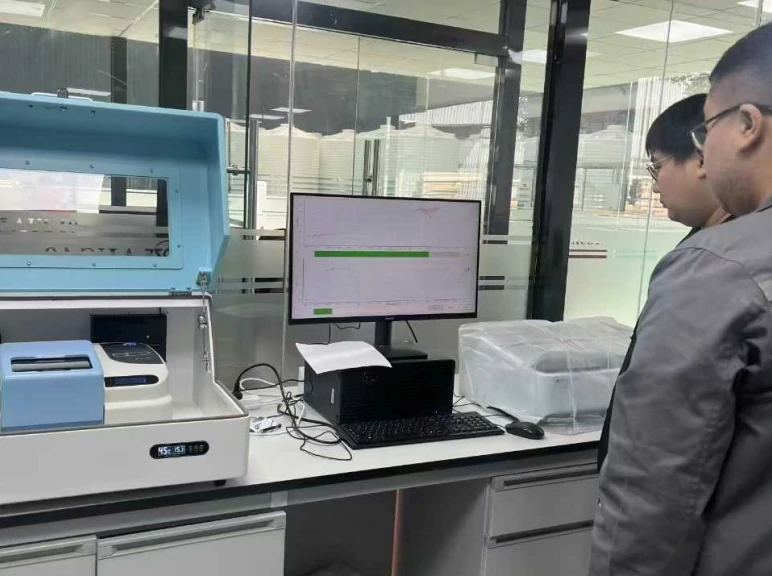
Daily calibration involves quick checks of the interferometer, baseline, light source, and detector, while performance verification ensures key indicators—wavenumber accuracy, resolution, and signal-to-noise ratio—meet the required standards. By performing these steps before any sample analysis, laboratories can trust their data and reduce the risk of costly measurement errors.
This blog explores the practical steps, standards, and best practices for daily calibration and performance verification of FTIR spectrometers, providing B2B decision-makers with a comprehensive guide for maintaining reliable operations.
Preparatory Work Before FTIR Calibration
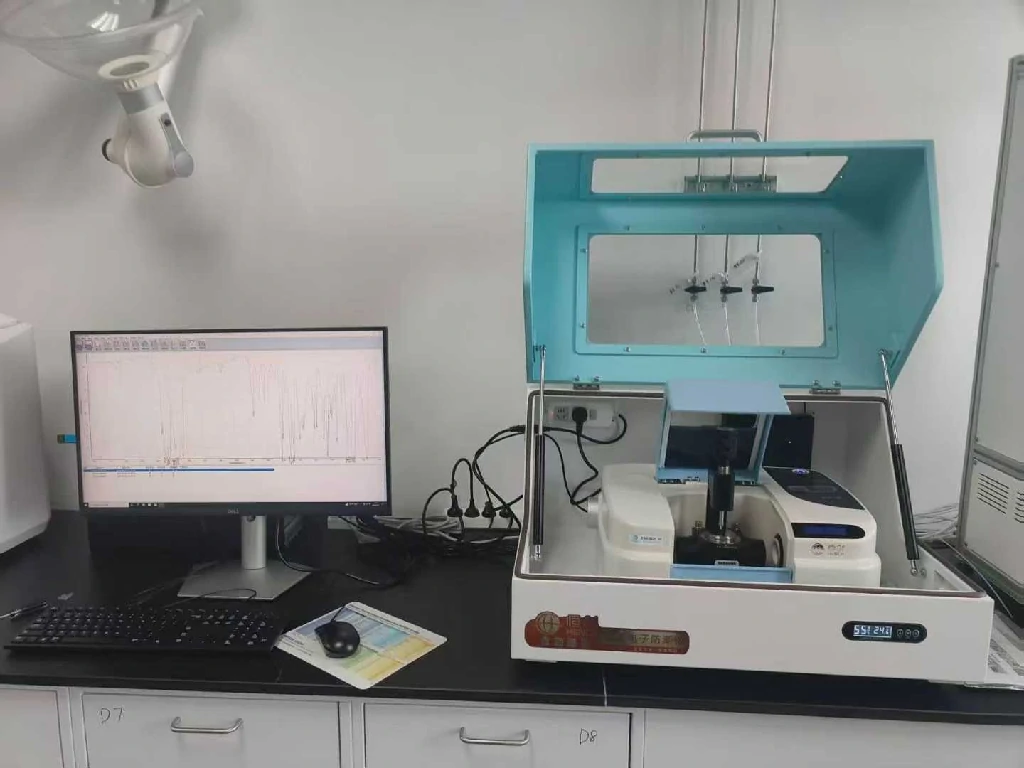
Environmental and Instrument Conditions
For accurate results, the FTIR spectrometer must operate in a stable environment:
- Temperature: 20–25 °C ±2 °C
- Relative humidity: 40–60 % ±5 %
- Avoid vibration, strong electromagnetic interference, and dust in the sample chamber.
Proper preheating of the instrument is essential. Turn on the main unit and workstation, allowing 30–60 minutes for thermal equilibrium of the interferometer, detector, and light source. Ensure all accessories like ATR crystals, sample holders, and KBr pellets are clean and dry.
Standard Substances and Reagents
Certified reference materials are critical for daily calibration:
- Polystyrene (PS) film, 100 μm thick, for wavenumber accuracy
- Potassium bromide (KBr), spectrally pure, for transmission baseline collection
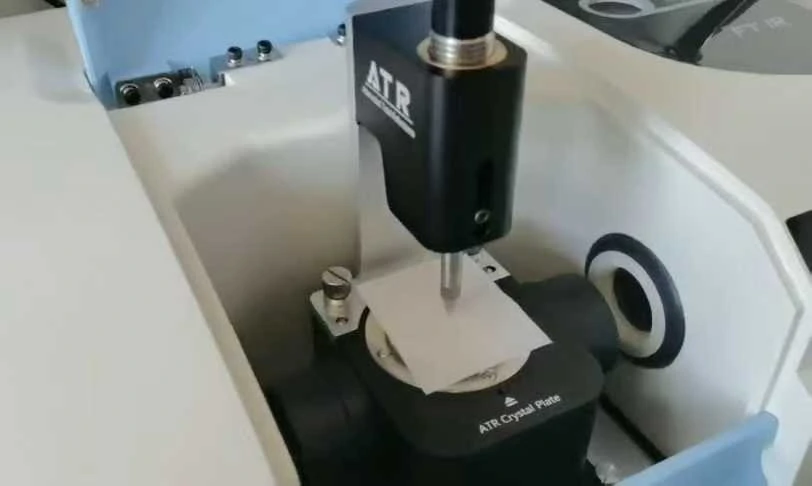
- Anhydrous ethanol, dust-free wipes, and ear syringe for cleaning ATR crystals
These standards allow laboratories to perform quick verification while adhering to core regulatory requirements.
Workstation Setup
Open the FTIR software, navigate to the calibration interface, and prepare a Daily Calibration and Performance Verification Record Form, capturing:
- Instrument model/number
- Operation date
- Temperature and humidity
- Calibration items and results
- Operator and remarks
Daily Basic Calibration Procedures
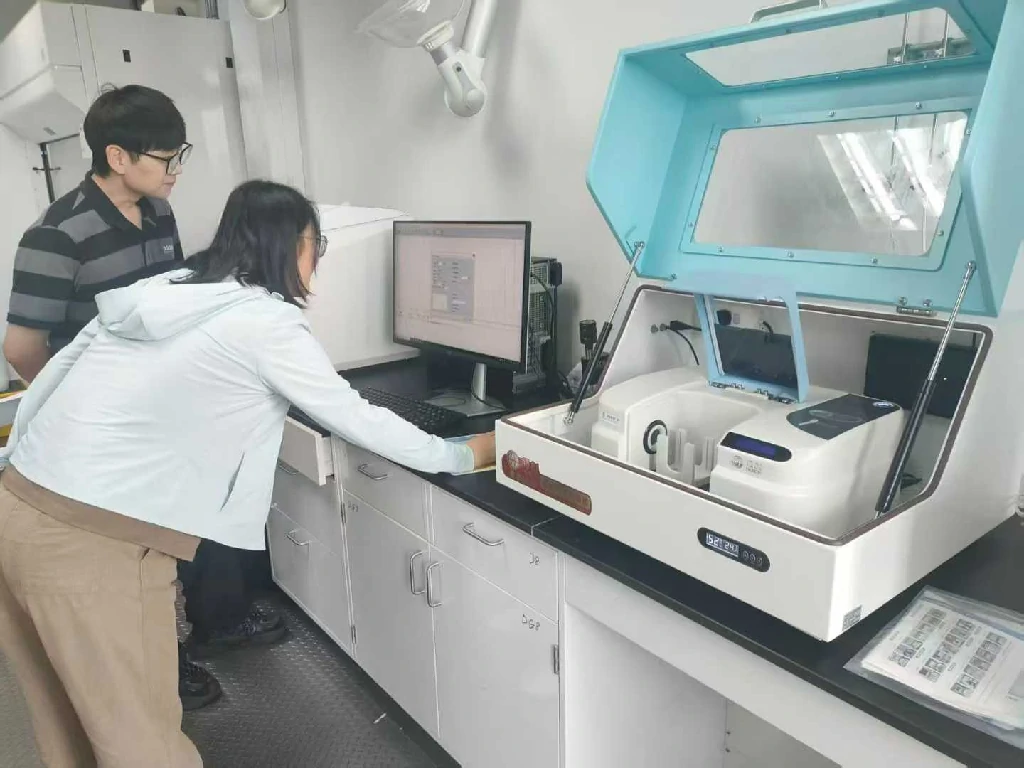
Interferometer Self-Calibration
Most FTIR instruments include built-in routines for interferometer calibration:
- Locate the “Interferometer Calibration” option
- Click to start; the instrument adjusts the optical path automatically
- Successful calibration shows “Calibration Pass” with a smooth interferogram
No manual adjustments are needed unless an error occurs.
Blank Baseline Calibration
Transmission mode: Place a dry KBr pellet at the center of the sample chamber, collect the baseline in the 4000–400 cm⁻¹ range.
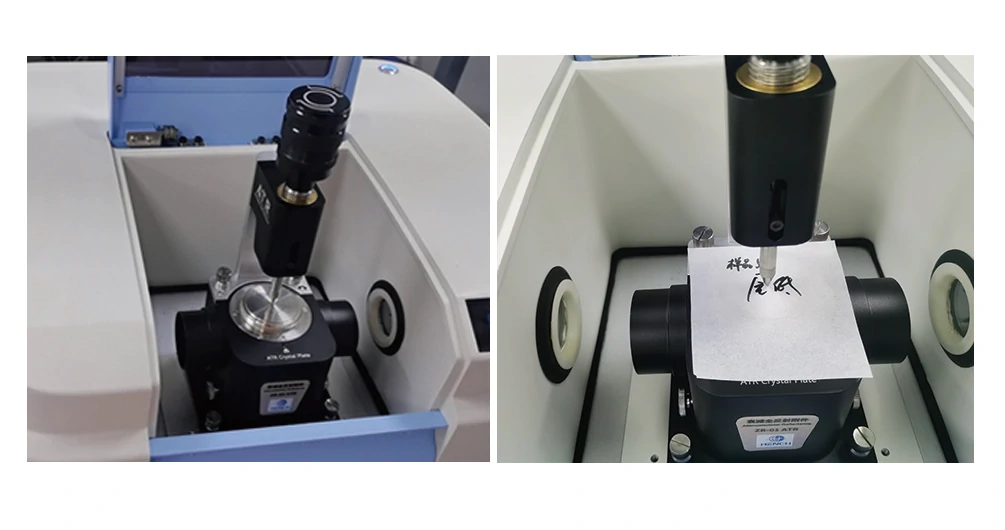
ATR mode: Clean the crystal with anhydrous ethanol, let it dry, and collect the background spectrum.
Passing standard: Baseline fluctuation ≤ ±0.01 AU at 2000 cm⁻¹.
Light Source / Detector Verification
Some FTIR instruments separate light source and detector calibration:
- The instrument measures the intensity and linearity
- Any deviation triggers error messages; otherwise, calibration is qualified
Non-compliance handling: Shut down, restart, preheat, and recalibrate. If issues persist, inspect the optical path or contact engineers.
Daily Key Performance Verification
Wavenumber Accuracy
The accuracy of wavenumbers ensures proper identification of sample peaks:
- Use PS film and standard scanning parameters (4 cm⁻¹ resolution, 16–32 scans)
- Check characteristic peaks: 2850.7 cm⁻¹, 1601.4 cm⁻¹, 1028.3 cm⁻¹
- Acceptable deviation: ≤ ±1 cm⁻¹
Resolution Verification
Resolution confirms the instrument can separate adjacent peaks:
- Observe PS peaks at 2850.7 cm⁻¹ and 2870 cm⁻¹
- Absorbance at valley ≤ 70% of average of peaks
Signal-to-Noise Ratio (S/N)
S/N reflects instrument sensitivity:
- Transmission: Measure blank KBr pellet at 2200 cm⁻¹
- ATR: Measure cleaned ATR crystal at 2200 cm⁻¹
- Qualification: S/N ≥ 1000:1
Low S/N may indicate optical contamination or aged light source. Nitrogen purge or cleaning may be required.
Special Verification for ATR Mode
- Clean ATR crystal with ethanol; air dry
- Apply 1–2 drops of ethanol; collect spectrum
- Verify peaks: 3340 cm⁻¹ (O-H), 2970 cm⁻¹ (C-H), 1050 cm⁻¹ (C-O)
Passing criteria: Sharp, interference-free peaks; absorbance within normal range (0.3–0.8 AU at 3340 cm⁻¹).
Daily Maintenance and Records
- Re-collect blank baseline every 2–3 hours during testing
- Clean sample chamber, compression molds, ATR crystal after use
- Record all calibration and verification data in the log sheet; retain ≥3 years
Daily Calibration and Performance Verification Table
| Verification Item | Standard Material | Acceptance Criteria | Notes |
|---|---|---|---|
| Wavenumber Accuracy | PS Film | ≤ ±1 cm⁻¹ | Recalibrate if deviation exceeds limit |
| Resolution | PS Film | Peaks clearly separated, valley ≤70% absorbance | Adjust optical path if insufficient |
| Signal-to-Noise Ratio (S/N) | KBr / ATR | ≥1000:1 | Clean optical path or replace light source |
| ATR Crystal Verification | Ethanol | Sharp peaks, absorbance 0.3–0.8 AU | Ensure crystal is undamaged |
For professional FTIR spectrometer solutions and technical support, contact us here: Hench Contact
FAQ
Q1: How often should daily calibration be performed?
A1: Before starting any sample measurements each day, and repeat every 24 hours if the instrument remains powered on.
Q2: What if the S/N ratio is below 1000:1?
A2: Clean the optical components, check the light source, replace desiccant, or perform a nitrogen purge before retesting.
Q3: Can ATR crystals be used for corrosive samples?
A3: No, avoid strong acids or bases to prevent crystal damage.
Q4: What records are required for compliance?
A4: Record calibration results, environmental conditions, operator, and any faults; retain for at least 3 years.
Why Choose Hench?
Hench provides reliable FTIR spectrometers and consumables for laboratories seeking precision and compliance. Our instruments are designed for accuracy, ease of use, and consistent daily performance. With comprehensive training, documentation, and after-sales support, Hench ensures your lab operates efficiently while meeting industry standards.