What should I do if the manual hydraulic press in the laboratory doesn’t apply pressure?
December 2, 2025
The manual tablet press is a mechanical device that compresses powdered or granular materials into tablets through a mold. Its basic working principle is to apply pressure to the filled materials through the relative movement of the upper and lower punches within the mold, causing them to form tablets with a certain shape and hardness within the mold. The press is mainly composed of a bottom oil cylinder, an upper pressing spring, a hydraulic oil circuit, and a hydraulic piston. Understanding the basic structure and working principle of the press is helpful for better understanding the causes of faults and the handling methods.
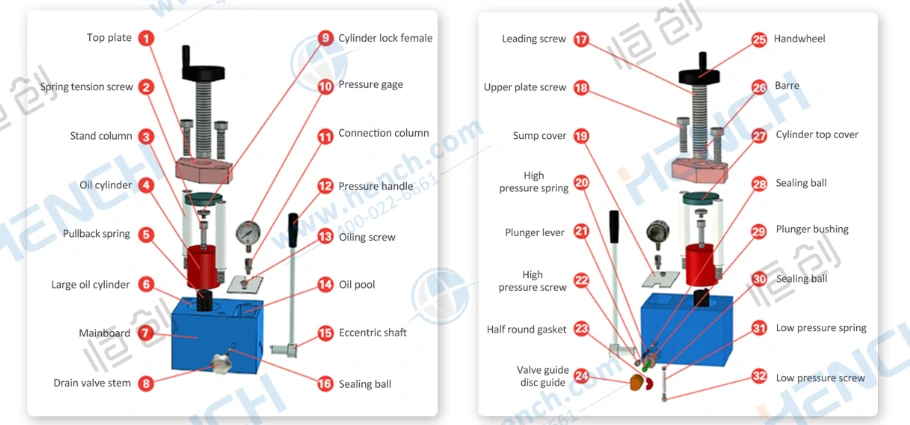
Targeted troubleshooting can effectively solve the problem. When the powder tablet press operates at a slow speed, meaning the pressure rises slowly or fails to reach the set pressure, it is one of the common faults during the operation process. This issue may be caused by factors such as blocked oil circuit of the cylinder, aging of the materials, failure to timely maintain the equipment, and improper operation.
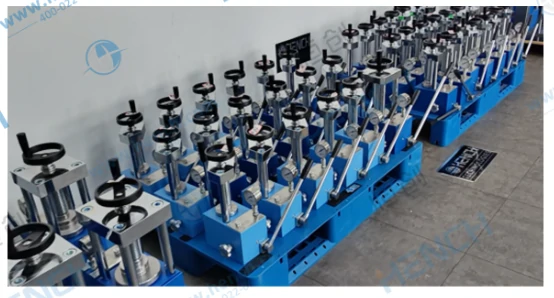
I. Comprehensive Investigation and Adjustment
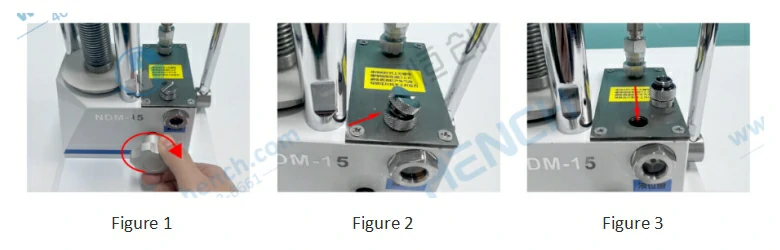
1. First, check if the front knob (pressure relief valve) is tightened to the right when applying pressure (refer to Figure 1).
2. Check if the oil injection screw is breathable (refer to Figure 2).
3. Then, remove the oil injection nut and observe the oil level inside to see if it is sufficient (refer to Figure 3). The normal oil level should be 1 cm away from the oil outlet.
4. Oil leakage inspection: If the oil spills from the workbench (as shown in Figure 1) or the plunger port (as shown in Figure 2), this indicates that the sealing ring has aged and developed cracks. Additionally, by observing whether there is still oil in the cylinder from the top oil port (as shown in Figure 3), if there is no oil, contact the manufacturer to provide the corresponding sealing ring (i.e., 68# wear-resistant hydraulic oil) and replace it yourself. 4. Oil leakage inspection: If the oil spills from the workbench (as shown in Figure 1) or the plunger port (as shown in Figure 2), this indicates that the sealing ring has aged and developed cracks. Additionally, by observing whether there is still oil in the cylinder from the top oil port (as shown in Figure 3), if there is no oil, contact the manufacturer to provide the corresponding sealing ring (i.e., 68# wear-resistant hydraulic oil) and replace it yourself.
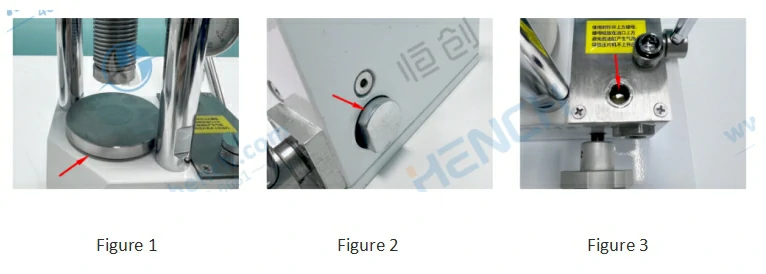
5.The intake air causes insufficient pressure. During the transportation process, the press machine shakes back and forth. The oil in the cylinder creates bubbles as it moves back and forth, and these bubbles block the oil supply line, resulting in insufficient pressure. Forthis operation, we need to insert the long conical internal six-tool that comes with the machine vertically from the oil port into the cylinder and press it to the center position. It will hit the bottom ball of the cylinder (see Figure 1). At this point, press with your left hand and rotate the crank with your right hand. Repeat this motion ten times, and the press machine will be able to generate pressure.
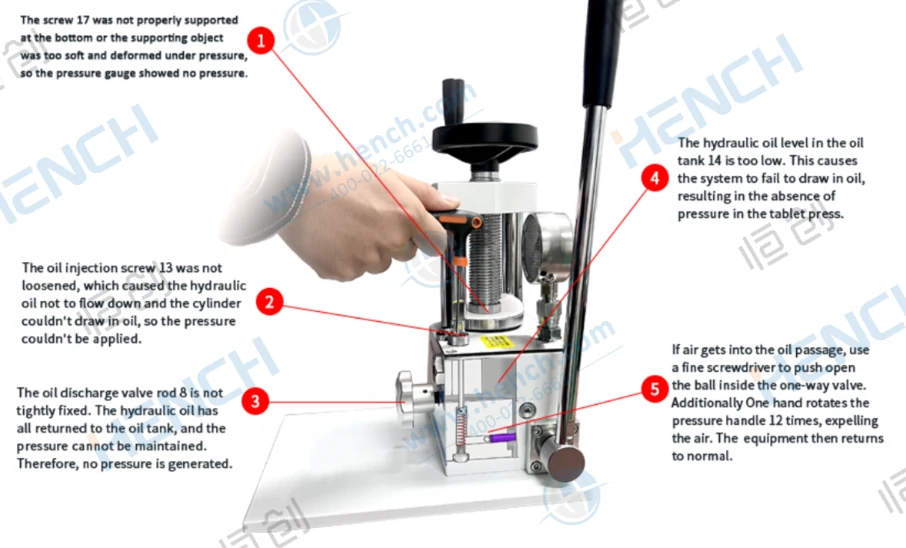
If the press machine still fails to press after following the above procedures, please contact the manufacturer’s after-sales service.
Ⅱ.Preventive equipment maintenance measures and optimization suggestions:
1. Cleaning and maintenance: Clean the equipment after each use to prevent residual materials from affecting the next use.
2. Spare parts management: Maintain a reasonable inventory of commonly used and easily damaged parts to shorten the repair waiting time.
3. Operating procedures: Develop detailed operating procedures to avoid human operational errors that may cause equipment damage.
4. Environmental control: Keep the working environment clean and control the appropriate temperature and humidity.
5. Safety and high quality: Strictly follow the manufacturer’s pressure guidance range and do not exceed the pressure limit.