Expert Guide to the Hot Isostatic Press Process: 5 Key 2025 Trends for Advanced Materials
November 21, 2025
Abstract
The hot isostatic press process (HIP) is a materials engineering technology that subjects components to elevated temperatures and isostatic gas pressure, typically using argon. This simultaneous application of heat and pressure eliminates internal porosity and micro-voids within materials, leading to a fully dense, homogenous microstructure. The process is foundational for enhancing the mechanical properties of critical components, including fatigue life, ductility, and fracture toughness. It is widely employed for cast metal parts, powder metallurgy components, and increasingly, for post-processing additively manufactured items. By healing defects at a microscopic level, the hot isostatic press process elevates material performance to its theoretical maximum, making it indispensable in demanding sectors such as aerospace, medical implants, energy, and automotive. Current advancements in 2025 focus on integrating HIP with digital manufacturing, expanding its application to novel materials like advanced ceramics and composites, and improving its overall efficiency and sustainability.
Key Takeaways
- HIP eliminates internal porosity in metals, ceramics, and composites for superior part performance.
- The process is crucial for post-treating 3D-printed metal parts to achieve full density.
- Use the hot isostatic press process to significantly enhance the fatigue life of critical components.
- Near-net shape HIP reduces material waste and subsequent machining requirements.
- Digital simulations are optimizing HIP cycles for greater efficiency and predictability.
- HIP is essential for producing high-reliability medical implants and aerospace structures.
- Material characterization after HIP is vital for quality assurance in high-stakes applications.
Table of Contents
- Understanding the Fundamentals of the Hot Isostatic Press Process
- Trend 1: Advancements in Additive Manufacturing Integration
- Trend 2: The Rise of HIP in Medical and Biomedical Applications
- Trend 3: Expanding Material Capabilities and Complex Geometries
- Trend 4: Digitalization and Smart HIP Systems
- Trend 5: Sustainability and Efficiency in HIP Operations
- The Critical Link: Material Characterization After the Hot Isostatic Press Process
- Frequently Asked Questions (FAQ)
- Conclusion
- References
Understanding the Fundamentals of the Hot Isostatic Press Process
To truly grasp the capabilities of modern materials science, one must first appreciate the methods that bestow upon materials their extraordinary properties. The hot isostatic press process, often abbreviated as HIP, stands as a pillar of this field. It is not merely a manufacturing step; it is a transformative procedure that elevates a good component into an exceptional one, capable of withstanding the most extreme environments imaginable. Let us begin by building an intuition for how this works, starting from its core principles and moving towards the sophisticated machinery that makes it possible.
The Core Principle: Pressure, Temperature, and Time
Imagine you are holding a sponge. It is filled with interconnected pores and empty spaces. If you were to simply squeeze it, you would compress it, but the pores would still exist, ready to expand again. If you were to simply heat it, you might alter its material, but the voids would remain. The genius of the hot isostatic press process lies in doing both, but in a very specific and powerful way.
At its heart, the process is a carefully choreographed dance between three parameters: temperature, pressure, and time.
-
Temperature: The component to be treated is placed inside a high-pressure vessel and heated to a temperature that is typically below its melting point. For a nickel-based superalloy used in a jet engine, this might be around 1,200°C. At this elevated temperature, the material becomes soft and plastic, almost like very firm clay. It doesn't melt, but its atomic structure has enough energy to allow for movement and deformation. The material's yield strength is significantly lowered.
-
Pressure: While the component is held at this high temperature, the vessel is filled with a chemically inert gas, most commonly argon. The gas is pressurized to extreme levels, often between 100 and 200 megapascals (MPa). To put that into perspective, 100 MPa is roughly equivalent to the pressure experienced at the bottom of the Mariana Trench, the deepest point in our oceans. The term "isostatic" is key here. It means the pressure is applied equally and uniformly from all directions. This is unlike a conventional press, which applies force in a single direction. The isostatic pressure acts on every single surface of the component, both external and internal, wherever the gas can penetrate.
-
Time: The component is "soaked" under these conditions of high temperature and pressure for a specific duration, typically a few hours. During this time, the combination of softened material and immense external pressure works its magic. The pressure squeezes the material, and because it is soft, the walls of any internal voids or pores begin to creep and move towards each other. The atoms at the surface of these voids diffuse across the gap, forming strong metallic bonds. The pore collapses, and the empty space is eliminated forever.
The result is a component that is 100% dense, or as close to it as physically possible. The internal voids, which act as stress concentrators and initiation sites for cracks, are gone. The material's microstructure has been healed and homogenized.
A Historical Perspective: From Lab Curiosity to Industrial Powerhouse
The concept of using pressure and heat to consolidate materials did not emerge overnight. It was developed at Battelle Memorial Institute in the mid-1950s as a method for diffusion bonding and cladding nuclear fuel elements (Atkinson & Davies, 2000). The initial challenge was to bond dissimilar metals without melting them, and the application of external gas pressure at high temperatures proved to be an elegant solution.
Early HIP units were small, experimental vessels, representing the frontier of high-pressure engineering. The potential, however, was immediately apparent. Researchers quickly realized that the same principle used to bond materials could also be used to densify them. The process was first applied to consolidate metal powders into solid forms and then, perhaps most importantly, to heal defects in investment castings.
Castings, particularly those with complex shapes like turbine blades, are prone to solidification shrinkage, which creates microscopic voids known as porosity. This porosity can severely compromise the mechanical strength and fatigue life of a part. Before HIP, the rejection rate for critical castings was high, adding enormous cost to manufacturing. The hot isostatic press process offered a way to salvage these parts, healing the internal porosity and restoring their properties. This application was the primary driver for the industrial adoption of HIP through the 1970s and 1980s, transforming it from a laboratory curiosity into a cornerstone of the aerospace and energy industries.
Distinguishing HIP from Other Pressing Methods
It is helpful to contrast the hot isostatic press process with other common manufacturing methods to fully appreciate its unique role. Each technique has its place, defined by its mechanism, cost, and the properties it imparts to the final product.
| Feature | Hot Isostatic Pressing (HIP) | Forging | Investment Casting |
|---|---|---|---|
| Pressure Application | Isostatic (uniform from all directions) | Uniaxial or Multiaxial (directional) | None (molten metal fills a mold) |
| Primary Goal | Eliminate internal porosity; achieve 100% density | Shape the material; refine grain structure | Create a complex, near-net shape |
| Starting Material | Cast part, powder, or 3D-printed part | Billet or ingot | Molten metal |
| Temperature | Below melting point | Below melting point (usually) | Above melting point |
| Shape Change | Minimal to none | Significant | Defines the initial shape |
| Key Advantage | Heals internal defects unreachable by other means | Excellent grain refinement and strength | High geometric complexity is possible |
| Common Use Case | Densifying aerospace castings; post-processing 3D prints | Creating crankshafts, connecting rods | Manufacturing turbine blades, medical implants |
As the table illustrates, HIP is not typically a primary shaping process. Instead, it is a finishing or healing process. It takes a part that is already in its near-final shape—created through casting or additive manufacturing—and perfects its internal structure. Forging creates shape and strength through brute, directional force, while casting excels at creating intricate initial geometries. The hot isostatic press process provides the final, crucial step of ensuring that the internal integrity of that geometry is flawless.
The Anatomy of a HIP System
A modern HIP system is a marvel of engineering, designed to safely contain immense pressures and temperatures. Thinking about its components helps to demystify the process.
- The Pressure Vessel: This is the heart of the system. It is a thick-walled cylindrical container, typically made from high-strength steel wound with pre-stressed steel wire. This wire-winding technology is critical; it places the cylinder's core under compression, which helps it counteract the immense internal pressure during a cycle. The vessel features a top and bottom closure, or "yoke," which is locked in place to seal the chamber.
- The Furnace: Inside the pressure vessel sits a high-temperature furnace. This furnace is responsible for heating the workload to the target temperature. It is typically made of graphite or molybdenum heating elements and is surrounded by a package of insulating materials to protect the pressure vessel walls from the extreme heat. The atmosphere within the furnace must be carefully controlled to prevent reactions with the parts.
- The Gas and Pressure System: A series of compressors, pipelines, and valves controls the flow of the inert argon gas. The gas is pumped into the vessel to raise the pressure and is later vented to a storage system for recycling, which is a key consideration for both cost and sustainability.
- The Control System: The entire process is automated and monitored by a sophisticated computer control system. This system precisely manages the rates of heating and pressurization, the duration of the hold at peak temperature and pressure, and the cooling and depressurization phases. Sensors continuously track temperature and pressure, ensuring the cycle proceeds exactly as programmed and that all safety interlocks are engaged.
Understanding these components allows one to visualize the journey of a part through the hot isostatic press process: it is loaded into the furnace, the vessel is sealed, and it embarks on a controlled, multi-hour journey into an environment of extreme heat and pressure, emerging with a microstructure transformed for the better.
Trend 1: Advancements in Additive Manufacturing Integration
The rise of additive manufacturing (AM), or 3D printing, has been one of the most transformative shifts in engineering in the 21st century. It allows for the creation of components with unprecedented geometric complexity, directly from a digital file. Yet, a challenge lies hidden within the layers of a 3D-printed metal part. The very nature of the layer-by-layer fusion process, whether by laser or electron beam, can introduce microscopic imperfections. The hot isostatic press process has emerged as the indispensable partner to AM, providing the critical post-processing step that unlocks the true potential of printed metals. This synergy is perhaps the most significant trend in HIP today.
Post-Processing for 3D-Printed Metals: Achieving Full Density
Metal AM processes, such as Selective Laser Melting (SLM) or Electron Beam Melting (EBM), build parts by melting and fusing fine layers of metal powder. While these technologies are incredibly advanced, small inconsistencies can occur. A momentary fluctuation in laser power, a slight irregularity in the powder bed, or gas entrapment during the rapid melting and solidification can create tiny voids within the finished part. These can be lack-of-fusion pores (where powder particles did not fully melt together) or keyhole pores (caused by gas bubbles trapped in the melt pool).
While a printed part might look perfect and achieve 99.5% to 99.9% density, that remaining fraction of a percent of porosity can be detrimental. These voids act as stress risers, concentrating mechanical loads and becoming the initiation points for fatigue cracks. For a component in a jet engine or a race car, this is an unacceptable risk.
This is where the hot isostatic press process provides the solution. By subjecting the 3D-printed part to high temperature and isostatic pressure, these internal voids are collapsed and welded shut at an atomic level (Uhlenwinkel et al., 2019). The process transforms a component with good density into one with full theoretical density, eliminating the stochastic defects inherent in the printing process and yielding material properties that are not just equivalent to, but can even exceed, those of traditionally wrought or cast materials.
Healing Internal Defects in Printed Parts
Imagine you are building a wall with bricks and mortar. If you occasionally leave a small air gap in the mortar, the wall may still stand, but its overall strength is compromised. A small, hidden flaw could become the starting point for a crack under load. The hot isostatic press process is like a magical force that permeates the wall, finds every single air gap in the mortar, and perfectly fills it, making the entire structure monolithic and sound.
This "healing" effect does more than just increase density. It dramatically improves key mechanical properties:
- Ductility: The ability of a material to deform without fracturing is significantly enhanced. As-printed parts can sometimes be brittle due to internal stress and micro-voids. HIP restores the material's inherent ductility.
- Fatigue Life: This is the most critical improvement. Fatigue is failure under repeated or cyclic loading, even at stresses well below the material's ultimate tensile strength. By eliminating the pore defects that initiate fatigue cracks, HIP can increase the fatigue life of a 3D-printed part by an order of magnitude or more. This is non-negotiable for any component that rotates, vibrates, or is subjected to cyclic loads.
- Property Uniformity: HIP homogenizes the microstructure, reducing the variability in properties both within a single part and from one build to the next. This makes the performance of printed parts predictable and reliable, a necessity for certified applications.
Case Study: Aerospace Components and the HIP-AM Synergy
Nowhere is the partnership between AM and HIP more evident than in the aerospace industry. Consider the manufacturing of a fuel nozzle for a modern jet engine. Traditionally, these were complex assemblies of 20 or more individually cast and machined pieces, which then had to be brazed or welded together. This approach involved numerous manufacturing steps and created many potential points of failure at the joints.
Using additive manufacturing, engineers can now print the entire fuel nozzle as a single, monolithic piece. This design consolidation is revolutionary, leading to a lighter part with improved fluid dynamics. However, the internal channels and complex geometry of this printed nozzle must be flawless to ensure engine safety and efficiency.
After printing, the fuel nozzle undergoes a hot isostatic press process cycle. The part, made from a high-performance nickel superalloy, is heated to over 1,200°C and subjected to 100 MPa of argon pressure. This cycle eliminates any residual porosity from the printing process, ensuring the part can withstand the extreme temperatures and pressures inside the engine's combustion chamber for thousands of flight hours. The combination of AM's geometric freedom and HIP's densification capability creates a component that is lighter, more efficient, and more reliable than its conventionally manufactured predecessor.
Future Outlook: In-Situ HIP and Hybrid Systems
The industry is constantly pushing to make this powerful synergy even more efficient. A key area of research in 2025 is the development of hybrid manufacturing systems that integrate the hot isostatic press process more closely with the printing process.
One concept is "in-situ" or "quasi-HIP," where pressure is applied within the build chamber of the 3D printer itself, either during or immediately after the build. While these systems may not reach the full pressures of a dedicated HIP unit, they aim to reduce porosity as the part is being made, potentially shortening or even eliminating the need for a separate post-processing step for some applications.
Another frontier is the development of faster, more agile HIP systems designed specifically for the smaller batch sizes and rapid turnaround times typical of additive manufacturing. These "rapid HIP" or "quench HIP" units can combine the densification cycle with a heat treatment cycle, simultaneously eliminating porosity and achieving the desired final material properties in a single, efficient step. This integration reduces lead times, energy consumption, and the overall cost of producing high-performance, 3D-printed metal components.
Trend 2: The Rise of HIP in Medical and Biomedical Applications
The human body is an incredibly demanding environment for any engineered material. An orthopedic implant, such as a hip or knee replacement, must be biocompatible, corrosion-resistant, and strong enough to endure millions of load cycles over a patient's lifetime without failing. The pursuit of absolute reliability in medical devices has made the hot isostatic press process a standard and indispensable technology in the manufacturing of high-performance implants. This trend is driven by an aging global population and a continuous demand for longer-lasting, more reliable medical devices.
Manufacturing High-Performance Medical Implants
The most common materials for orthopedic implants are titanium alloys (like Ti-6Al-4V) and cobalt-chromium (Co-Cr) alloys. These materials are chosen for their excellent combination of strength, biocompatibility, and corrosion resistance. Many implants begin their life as investment castings. For example, the femoral stem of a hip implant is cast into its complex, curved shape.
However, as with aerospace castings, the casting process can introduce microscopic porosity. In a medical implant, this porosity is a critical flaw. Each step a person takes applies a load to their hip implant. Over a year, this amounts to over a million cycles. An internal pore, no matter how small, acts as a stress concentrator and a potential starting point for a fatigue crack. A fatigue failure of an implant in-situ is a catastrophic event for the patient, requiring complex and painful revision surgery.
To eliminate this risk, virtually all cast Co-Cr and many titanium implants undergo a hot isostatic press process as a standard manufacturing step. The parts are placed in the HIP vessel and processed to close all internal voids. This densification dramatically increases the material's fatigue strength and fracture toughness, effectively "bulletproofing" the implant against mechanical failure. The use of HIP transforms a standard casting into a medical-grade component, providing the peace of mind that both surgeons and patients demand.
Enhancing Biocompatibility and Fatigue Life
The benefits of the hot isostatic press process in medical applications extend beyond simple fatigue life. The elimination of internal porosity also removes potential sites for crevice corrosion. While implant alloys are highly corrosion-resistant, a microscopic void that is open to the surface could, in theory, create a small, stagnant environment where the local chemistry changes, potentially initiating corrosion over many years. By creating a fully dense, pore-free surface, HIP enhances the long-term biocompatibility and stability of the implant.
Furthermore, the HIP cycle acts as a high-temperature homogenization treatment. It can help dissolve any brittle phases that may have formed in the alloy during casting and create a more uniform, refined microstructure. This contributes to improved ductility and toughness, making the implant more resistant to fracture from an unexpected impact, such as a fall. The confidence that HIP provides is a major reason why the lifespan of modern joint replacements is now measured in decades.
Porous Implants for Osseointegration: A Controlled HIP Approach
While the primary use of HIP is to create fully dense components, a fascinating and growing application uses the process to create materials with controlled porosity. For certain parts of an implant, particularly those that interface directly with bone, a porous surface is actually desirable. This allows for "osseointegration," where the patient's own bone tissue grows into the porous structure of the implant, creating a strong, biological fixation.
The hot isostatic press process is used here in a more nuanced way. One method involves creating a "foam" of metal powder or fibers and then using a gentle HIP cycle (often at lower pressures or temperatures) to lightly sinter the particles together, creating a solid but porous structure.
A more common technique is to apply a porous coating to a solid, dense implant core. For example, a solid, HIPed femoral stem might be coated with a layer of titanium beads. The entire assembly is then put through another HIP cycle. This cycle is carefully designed to be strong enough to diffusion bond the beads to the solid core and to each other, creating a robust, porous outer layer. The process must be precisely controlled to create strong bonds without collapsing the desired porous network. This dual approach—a fully dense, fatigue-resistant core for strength and a porous, HIP-bonded surface for bone in-growth—represents the state-of-the-art in implant design.
Regulatory Considerations and Material Validation
The medical device industry is, quite rightly, one of the most stringently regulated in the world. Regulatory bodies like the U.S. Food and Drug Administration (FDA) and equivalent authorities in Europe and Japan require extensive validation of every manufacturing process. When a company uses the hot isostatic press process for a medical implant, they must prove that the process consistently and reliably eliminates defects and produces the desired material properties.
This involves a rigorous validation protocol. Companies must demonstrate that their HIP cycle parameters (temperature, pressure, time) are correct for the specific alloy and part geometry. They must perform destructive testing on sample parts from a validation run, sectioning them and examining them under a microscope to confirm that no porosity remains. They must also conduct mechanical tests to verify that the fatigue strength and tensile properties meet or exceed the required specifications.
This is also where advanced material characterization techniques become vital. After the HIP process, it is not enough to assume the part is perfect. Verification is required. Techniques such as FTIR spectroscopy can be used to ensure no organic contaminants from cleaning or handling are present on the surface before implantation. This level of quality control, combining the transformative power of the hot isostatic press process with a battery of verification tests, is what ensures the safety and efficacy of modern medical implants.
Trend 3: Expanding Material Capabilities and Complex Geometries
For many years, the hot isostatic press process was primarily associated with a specific set of materials, namely nickel superalloys and certain steels and titanium alloys. However, one of the most exciting trends in 2025 is the dramatic expansion of HIP into new material frontiers. Engineers are now applying the technique to advanced ceramics, metal matrix composites (MMCs), and other exotic materials to solve some of today's most difficult engineering challenges. At the same time, HIP is being used more intelligently to create parts that are closer to their final shape, a concept known as near-net shape manufacturing.
Processing Advanced Ceramics and Composites
Technical ceramics, such as silicon nitride (Si₃N₄) or alumina (Al₂O₃), possess incredible properties. They are extremely hard, resistant to high temperatures, and chemically inert. This makes them ideal for applications like cutting tools, bearings, and armor. However, ceramics are notoriously brittle. Their Achilles' heel is porosity. Even a tiny pore can cause a ceramic component to shatter under load.
The hot isostatic press process is a game-changer for ceramics. By encapsulating a "green" (unsintered) or partially sintered ceramic part in a sealed container and then subjecting it to a HIP cycle, manufacturers can achieve full density. The isostatic pressure closes the pores before they can link up to form larger, critical flaws. HIPed ceramics exhibit dramatically improved strength and reliability, transforming them from a niche, brittle material into a robust engineering solution.
The same principle applies to metal matrix composites (MMCs). These materials consist of a metal alloy (like aluminum or titanium) reinforced with ceramic fibers or particles (like silicon carbide). The goal is to combine the toughness of the metal with the stiffness and strength of the ceramic. HIP is used to consolidate the metal powder around the reinforcement, ensuring a perfect, void-free bond between the metal matrix and the ceramic phase. This is critical for transferring load effectively from the matrix to the reinforcement and achieving the desired composite properties.
HIP Cladding and Diffusion Bonding for Multi-Material Parts
The hot isostatic press process is not limited to processing monolithic parts. Its unique ability to create perfect metallurgical bonds at temperatures below the melting point makes it an ideal tool for joining dissimilar materials. This is known as HIP cladding or diffusion bonding (Todai et al., 2017).
Imagine you need a component that requires a tough, inexpensive steel core but a highly corrosion-resistant surface. Instead of making the entire part from an expensive corrosion-resistant alloy, you can use HIP. A steel core is fabricated and then placed inside a container made from the corrosion-resistant alloy. The assembly is sealed and put through a HIP cycle. The high pressure and temperature cause the atoms at the interface between the steel and the cladding material to inter-diffuse, creating a perfect, full-strength metallurgical bond across the entire surface. There is no welding, no brazing, and no seam—just a single, integrated bi-metallic component.
This technique is used to manufacture components like corrosion-resistant pipes for the chemical industry, wear-resistant rollers for steel mills, and other parts that require tailored properties in different locations. It is a powerful method for creating cost-effective, high-performance, multi-material solutions.
Near-Net Shape Manufacturing: Reducing Waste and Machining Costs
Traditional manufacturing often involves "subtractive" methods. You start with a large block or billet of material and machine away everything you don't need, creating the final shape. This is effective but can be incredibly wasteful, especially when working with expensive materials like titanium or nickel superalloys. It is not uncommon for over 50% of the initial expensive material to be turned into chips on the machine shop floor.
Near-net shape (NNS) manufacturing aims to create a part that is as close as possible to its final, or "net," shape from the outset, minimizing the need for subsequent machining. The hot isostatic press process is a key enabler of NNS technology, particularly in powder metallurgy (P/M).
In NNS HIP, a mold or canister is fabricated in the inverse shape of the desired part. This canister is then filled with metal powder. After sealing, the entire canister is put through a HIP cycle. The process consolidates the powder into a fully dense solid that takes the shape of the canister. The canister material is then removed, typically by chemical etching or machining, leaving behind a fully dense part that is very close to its final dimensions.
This approach offers enormous advantages:
- Material Savings: Waste is dramatically reduced, as you start with just the amount of powder needed for the final part.
- Cost Reduction: Less machining means less time on expensive CNC machines and lower tooling costs.
- Complex Geometries: NNS HIP can produce complex internal and external shapes that would be difficult or impossible to machine from a solid block.
The table below illustrates the typical improvements in material properties that can be expected when applying the hot isostatic press process to a common cast alloy.
| Property | Typical As-Cast Ti-6Al-4V Alloy | Ti-6Al-4V After Hot Isostatic Press Process | Improvement |
|---|---|---|---|
| Relative Density | 95 – 99.5% | > 99.9% | Elimination of porosity |
| Ultimate Tensile Strength | ~900 MPa | ~950 MPa | ~5-10% Increase |
| Ductility (% Elongation) | 5 – 10% | 12 – 18% | ~50-100% Increase |
| Fatigue Strength (at 10⁷ cycles) | ~400 MPa | ~600 MPa | ~50% Increase |
| Property Scatter | High | Low | Improved reliability and consistency |
The role of laboratory hydraulic presses in preparing samples for FTIR
The role of laboratory hydraulic presses in preparing samples for FTIR (Fourier Transform Infrared) spectroscopy is a specialized yet vital aspect of material analysis. FTIR spectroscopy is a powerful technique for identifying chemical bonds within a substance by measuring its absorption of infrared light. For the analysis to be accurate, the sample must be prepared in a way that allows the infrared beam to pass through it uniformly. This is particularly important for solid samples.
One of the most common methods for preparing solid samples for FTIR is the creation of a potassium bromide (KBr) pellet. In this technique, a small amount of the solid sample (typically 1-2%) is finely ground and intimately mixed with high-purity KBr powder. KBr is used because it is transparent to infrared radiation in the typical analysis range. This mixture is then placed into a die and compressed under immense pressure using a laboratory hydraulic press.
The press exerts a force that causes the KBr powder to fuse into a thin, transparent or translucent disc, with the sample material evenly dispersed within it. This pellet can then be placed directly in the sample holder of the FTIR spectrometer. The quality of this pellet is paramount for obtaining a good spectrum. An improperly prepared pellet can scatter the infrared beam, leading to a noisy baseline and inaccurate results.
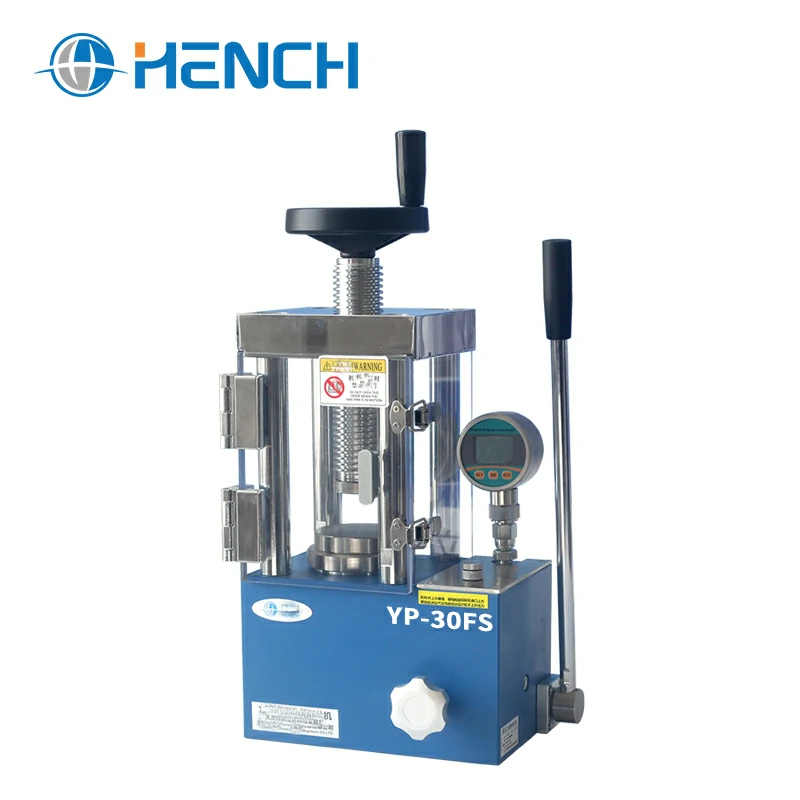
This is where a high-quality Hydraulic Press becomes indispensable. It allows for the controlled and repeatable application of the high pressures needed to create a uniform and transparent KBr pellet. This ensures that the resulting FTIR spectrum is of high quality, with minimal scattering and a clear representation of the sample's absorption characteristics. Therefore, the hydraulic press is a foundational tool in the sample preparation workflow for the FTIR analysis of solids.
Trend 4: Digitalization and Smart HIP Systems
The manufacturing world is undergoing a digital revolution, often called Industry 4.0. This is the move towards smarter, more connected, and more autonomous industrial systems. The hot isostatic press process, with its complex interplay of temperature, pressure, and material science, is a prime candidate for this digital transformation. The trend in 2025 is to move beyond simple automated cycles and towards intelligent HIP systems that use simulation, real-time data, and artificial intelligence to optimize every aspect of the process. This shift promises to make HIP more precise, reliable, and cost-effective than ever before.
The Role of Simulation and Modeling in Process Optimization
A hot isostatic press process cycle can take several hours and consumes a significant amount of energy. The parts being processed are often extremely valuable, sometimes worth tens of thousands of dollars each. Historically, developing the correct HIP cycle for a new part or a new alloy was often a matter of experience-based knowledge and a degree of trial and error. An incorrect cycle could fail to close all porosity or, in a worst-case scenario, could damage the part by causing unwanted distortion.
Today, advanced computational modeling and simulation software are changing this paradigm. Before a part ever enters the HIP vessel, engineers can create a digital model of it. They can simulate the entire HIP cycle, predicting how the temperature will distribute throughout the part's geometry and how the material will respond to the applied pressure. These simulations can:
- Predict Densification: The software can model the collapse of internal pores, predicting whether a proposed cycle will be sufficient to achieve full density in the thickest sections of the component.
- Anticipate Distortion: For near-net shape parts, it is vital to predict any minor shape changes that might occur during the HIP process. Simulation allows engineers to design the initial canister or part geometry to compensate for this, ensuring the final part is dimensionally accurate.
- Optimize Cycle Time: Simulation can help determine the minimum time required at peak temperature and pressure to achieve full densification. This avoids overly long cycles, saving energy, time, and money.
By running dozens of virtual experiments on a computer, engineers can arrive at an optimized HIP recipe without risking a single physical part. This front-loading of intelligence drastically reduces the time and cost of process development.
In-Process Monitoring and Data Analytics
A modern HIP system is equipped with an array of sensors that go far beyond simple temperature and pressure gauges. These can include thermocouples placed throughout the workload to monitor temperature uniformity, strain gauges on the vessel, and gas analysis sensors. This flood of data, collected in real-time throughout the cycle, is a valuable resource.
The trend is to not just record this data for quality assurance but to analyze it actively. By comparing the real-time sensor data to the predictions from the simulation, the system can verify that the cycle is proceeding as expected. Advanced analytics can detect subtle deviations that might indicate a problem, such as a failing heating element or an unexpected material response.
This data-rich environment provides unprecedented traceability. For every single part, there is a complete digital record of the exact thermal and pressure history it experienced. For critical components in aerospace or medical, this digital "birth certificate" is an invaluable part of its quality dossier.
Predictive Maintenance and AI-Driven Control
The next step in this evolution is the application of artificial intelligence (AI) and machine learning. By analyzing the data from thousands of previous HIP cycles, machine learning algorithms can begin to identify patterns that are invisible to human operators.
One key application is predictive maintenance. An AI system can monitor the sensor data from the vessel's components—pumps, heaters, valves—and detect the subtle signatures of impending failure. It could, for example, notice a slight increase in the time it takes for a compressor to reach a certain pressure, indicating wear. This allows maintenance to be scheduled proactively, before a component fails and causes costly downtime.
Even more advanced is the concept of AI-driven process control. An intelligent control system could, in the future, make minor adjustments to the HIP cycle in real-time. If it detects that a certain part of the workload is heating more slowly than expected, it could slightly adjust the furnace power distribution to compensate, ensuring a perfectly uniform thermal profile. This moves from a pre-programmed cycle to an adaptive, responsive cycle, guaranteeing optimal results every time.
Creating a Digital Twin of the HIP Cycle
The ultimate expression of this digital trend is the "digital twin." A digital twin is a dynamic, virtual replica of a physical asset—in this case, the HIP vessel and its workload. This is more than just a static simulation; it is a living model that is continuously updated with real-time sensor data from its physical counterpart.
The digital twin would mirror the state of the physical HIP system at all times. Operators could use it to visualize the conditions inside the sealed vessel, watching the predicted densification of the parts as the cycle progresses. They could run "what-if" scenarios on the twin in parallel with the real cycle to see the potential impact of a process adjustment before committing to it.
The digital twin serves as the central hub for all process data, simulation models, and analytics. It is the brain of the smart HIP system, providing a complete and holistic understanding of the process. This digital fusion of the virtual and physical worlds is the future of the hot isostatic press process, promising a new era of precision, control, and efficiency in the manufacturing of the world's most advanced materials.
Trend 5: Sustainability and Efficiency in HIP Operations
As industries worldwide face increasing pressure to reduce their environmental impact and improve operational efficiency, manufacturing processes are being scrutinized through a green lens. The hot isostatic press process, while incredibly powerful, is inherently energy-intensive. It requires heating large thermal masses to very high temperatures and compressing large volumes of gas. Consequently, a major trend in 2025 is the concerted effort to make HIP operations more sustainable and efficient, focusing on energy consumption, gas management, and economic viability.
Energy Consumption and Optimization Strategies
The furnace within a HIP vessel is a powerful electrical heater. Heating a multi-ton payload of parts and fixtures to 1,200°C and holding it there for hours consumes a significant amount of electricity. The primary goal of efficiency optimization is to minimize this energy consumption without compromising the metallurgical quality of the parts.
Several strategies are being employed:
- Improved Insulation: Modern HIP systems feature advanced furnace insulation packages. These use layers of high-performance materials to minimize heat loss from the furnace to the water-cooled walls of the pressure vessel. Even small improvements in insulation can lead to substantial energy savings over the life of the unit.
- Cycle Optimization: As discussed in the context of digitalization, simulation tools are used to determine the shortest possible cycle time that still guarantees full densification. Eliminating even 30 minutes from a cycle can save a considerable amount of energy, and when multiplied over thousands of cycles per year, the savings are immense.
- Load Maximization: Running a HIP cycle with a partially empty vessel is highly inefficient, as you are still heating the entire furnace and vessel. Efficient operation involves carefully planning production schedules to ensure that each cycle is run with the maximum possible workload, thereby maximizing the energy efficiency per part.
- Uniform Heating Technology: Advanced furnace designs, sometimes using multiple heating zones, allow for more precise and uniform heating of the workload. This avoids the need to "overheat" certain areas to ensure the coldest spots reach the target temperature, leading to a more efficient use of energy.
Argon Recycling and Gas Management
The inert gas used in the hot isostatic press process, almost always argon, is another significant cost and environmental factor. Argon is produced by the fractional distillation of liquid air, a process that is itself energy-intensive. While argon is not a greenhouse gas, its production has a carbon footprint.
Furthermore, high-purity argon is expensive. Venting the gas to the atmosphere after every cycle would be prohibitively costly and wasteful. For this reason, modern HIP facilities are closed-loop systems. After a cycle is complete, the high-pressure gas is not vented but is carefully returned to a series of storage tanks. This allows for over 99% of the argon to be recovered and reused for subsequent cycles.
The trend is toward even more sophisticated gas management systems. These systems continuously monitor the purity of the recycled argon, as trace amounts of impurities can outgas from the parts during a cycle. In-line purification systems can remove these impurities, ensuring the gas quality remains high. Efficient compressor and storage strategies also minimize the energy required for gas handling and re-pressurization, further contributing to the overall efficiency of the operation.
Reducing the Carbon Footprint of High-Performance Manufacturing
The drive for sustainability in the hot isostatic press process is part of a larger story. By enabling technologies like near-net shape manufacturing, HIP contributes to sustainability in a broader sense. Creating a part via NNS HIP instead of machining it from a large forging can reduce material waste by 80% or more. This saves not only the cost of the material but also the enormous amount of energy that was required to produce that material in the first place.
Similarly, by extending the life of critical components, HIP has a positive environmental impact. A HIPed turbine blade in a power-generation turbine might last longer, improving the overall efficiency and lifespan of the turbine and reducing the need for replacement parts. A lighter, AM-plus-HIP aircraft bracket reduces the weight of the aircraft, saving fuel over its entire service life.
Therefore, while the HIP process itself consumes energy, its application often leads to net savings in energy and resources across the entire lifecycle of a product. The goal is to maximize these downstream benefits while minimizing the direct energy and resource consumption of the process itself.
The Economic Case for Greener HIP
Importantly, the push for sustainability is not just about environmental responsibility; it is also about economic competitiveness. Energy is a major operational cost for any HIP provider. Reducing energy consumption directly translates to a lower cost per cycle, making the process more affordable and competitive. Efficient argon recycling directly reduces the cost of consumables.
As companies and consumers become more environmentally conscious, a manufacturer's carbon footprint is becoming a factor in purchasing decisions. A HIP provider that can demonstrate efficient, low-impact operations has a competitive advantage. The investments in modern, energy-efficient HIP equipment, smart simulation software, and comprehensive gas recycling systems pay dividends in the form of lower operating costs, increased throughput, and a stronger market position. The greenest HIP operation is also the most profitable one.
The Critical Link: Material Characterization After the Hot Isostatic Press Process
The journey of a high-performance component does not end when it comes out of the HIP vessel. The hot isostatic press process is a powerful transformative tool, but its success must be verified. For any application where failure is not an option—be it an aircraft engine, a medical implant, or a nuclear reactor component—it is not enough to simply trust the process. One must test and validate the result. This final step of material characterization is the critical link that closes the quality loop, and it is where techniques like Fourier Transform Infrared (FTIR) spectroscopy play a vital role.
Why Post-HIP Verification is Non-Negotiable
You can think of the hot isostatic press process as a sophisticated surgical procedure for a material. The surgeon may be highly skilled and the procedure may have a 99.9% success rate, but post-operative checks are still mandatory to ensure the patient is healing correctly. Similarly, after a HIP cycle, a battery of tests is performed to confirm that the "surgery" was successful.
This quality assurance protocol typically involves:
- Non-Destructive Testing (NDT): Techniques like ultrasonic testing or X-ray radiography are used to scan the part for any remaining defects. While HIP is extremely effective, NDT provides the final confirmation that the internal structure is sound.
- Destructive Testing: For process validation and spot checks, sacrificial parts or test coupons that went through the same HIP cycle are sectioned, polished, and examined under a microscope. This metallographic analysis provides direct visual confirmation that porosity has been eliminated and that the microstructure is correct.
- Mechanical Testing: Test bars are subjected to tensile tests to measure their strength and ductility, and to fatigue tests to confirm their lifespan under cyclic loading. These tests provide the quantitative data that proves the material properties meet the engineering specifications.
Using FTIR Spectroscopy to Verify Material Integrity
Beyond these structural and mechanical tests, there is a need to verify the chemical and surface condition of the part. This is where analytical chemistry techniques, such as FTIR spectroscopy, become essential. FTIR works by shining an infrared beam onto or through a sample and measuring which frequencies of light are absorbed. Since different chemical bonds absorb different, characteristic frequencies, the resulting spectrum acts as a "chemical fingerprint" of the material.
FTIR is particularly useful in several post-HIP scenarios:
- Detecting Surface Contamination: Before a medical implant is packaged and sterilized, its surface must be impeccably clean. FTIR can be used to detect trace amounts of organic residues, such as oils or cleaning agents, that might be left over from handling or processing. A clean spectrum confirms a clean part.
- Verifying Composite Materials: For polymer matrix or ceramic matrix composites that have undergone a HIP cycle, FTIR can be used to verify the chemical integrity of the matrix material. It can detect if any degradation or unwanted chemical reactions occurred during the high-temperature cycle.
- Analyzing Coatings: Many HIPed parts are subsequently coated for wear resistance or thermal protection. FTIR is an excellent tool for analyzing the chemical composition of these coatings and ensuring they have been applied correctly.
Preparing HIPed Samples for Advanced Analysis
To get a reliable result from an instrument like an FTIR spectrometer, the sample must be prepared correctly. The goal of sample preparation is to present the material to the instrument in a form that allows for accurate measurement. The requirements can be very specific.
For transmission FTIR analysis of a solid, for example, a common method is to create a KBr pellet. This involves grinding a tiny amount of the sample into a fine powder, mixing it with potassium bromide powder, and then using a press to form a thin, transparent pellet. This ensures the infrared beam can pass through the sample uniformly.
This is where a complete suite of sample preparation tools becomes a necessity for any serious materials characterization lab. High-quality grinders are needed to reduce the sample to a fine powder without contaminating it. Precise dies are needed to form the pellet, and most importantly, a reliable press is required to apply the immense force needed to create a perfect, transparent pellet. The quality of the analysis is directly dependent on the quality of the sample preparation. A laboratory that invests in a powerful hot isostatic press process to create perfect materials must also invest in the right tools to verify them.
Frequently Asked Questions (FAQ)
What is the main difference between hot isostatic pressing and sintering? Sintering is the process of forming a solid mass of material by heat and pressure without melting it to the point of liquefaction. It is a common method for consolidating powders. The main difference is the nature of the pressure. Conventional sintering often involves uniaxial pressure (pressing from one direction). The hot isostatic press process, by contrast, uses isostatic gas pressure, which is applied uniformly from all directions. This is far more effective at closing all internal pores, leading to higher final density and superior mechanical properties compared to conventional sintering.
Can the hot isostatic press process fix large cracks or surface-connected defects? No, the process is designed to eliminate internal porosity. The mechanism relies on the high-pressure gas surrounding the component to provide the force to collapse the voids. If a crack or pore is connected to the surface, the gas will simply fill the defect, equalizing the pressure inside and outside the flaw. This means there is no net pressure differential to close it. For the process to work, the defects must be sealed off from the external surface.
What materials are typically treated with the hot isostatic press process? A wide range of materials can be HIPed. The most common are nickel-based superalloys, titanium alloys, tool steels, and stainless steels. It is also widely used for aluminum and cobalt-chromium alloys. Beyond metals, the process is critical for densifying advanced technical ceramics like silicon nitride, alumina, and zirconia, as well as for consolidating metal matrix composites (MMCs) and certain high-performance polymers.
Does the HIP process change the shape or dimensions of a part? For a solid part with internal porosity, the densification will cause a small, uniform volumetric shrinkage. This is predictable and is typically on the order of a few percent, corresponding to the initial volume of porosity. For near-net shape powder consolidation, the part is designed to be slightly oversized to account for the significant compaction of the powder, ensuring the final part is dimensionally accurate after the HIP cycle.
Is the hot isostatic press process expensive? HIP equipment represents a significant capital investment, and the process consumes considerable energy and expensive argon gas. Therefore, it is a relatively expensive manufacturing step. However, its cost must be weighed against its benefits. For critical, high-value components, the cost of HIP is easily justified by the dramatic improvements in reliability, performance, and fatigue life. It can also be cost-effective by salvaging parts with casting porosity that would otherwise be scrapped, or by enabling near-net shape manufacturing that reduces material waste and machining costs.
How long does a typical HIP cycle take? The duration of a HIP cycle is highly dependent on the material being processed, the size and thickness of the parts, and the specific thermal profile required. A full cycle, including heat-up, soak time at peak temperature and pressure, and cool-down, typically ranges from 6 to 14 hours. The "soak" time at peak conditions is usually between 1 and 4 hours.
What is the role of the inert gas in the process? The inert gas, usually argon, serves two critical functions. First, it is the pressure-transmitting medium. It is the gas that is pressurized to exert the uniform, isostatic force on the component's surface. Second, it provides a protective, inert atmosphere. At the high temperatures used in the process, the parts would rapidly oxidize and be destroyed if they were exposed to air. Argon is chemically inert and does not react with the metal parts, even at extreme temperatures.
Conclusion
The hot isostatic press process represents a profound capability in the field of materials science—the ability to perfect a material from the inside out. By applying the fundamental forces of heat and immense, uniform pressure, it heals the microscopic imperfections that compromise the strength and reliability of engineered components. It is not merely an incremental improvement; it is a transformative step that allows materials to achieve their full theoretical potential.
As we have seen through the trends of 2025, the reach of this technology is expanding rapidly. Its symbiotic relationship with additive manufacturing is unlocking new paradigms in design and performance. Its role in ensuring the safety and longevity of medical implants is saving and improving lives. Its application to novel ceramics and composites is pushing the boundaries of what is possible in extreme environments. Simultaneously, the digitalization of HIP systems is making the process smarter and more precise, while a focus on sustainability is making it more efficient and environmentally responsible.
For engineers, designers, and scientists, understanding the hot isostatic press process is to understand a key that unlocks a higher echelon of material performance. It is the invisible force that guarantees the integrity of a jet engine's turbine blade as it spins at 10,000 RPM, and ensures the reliability of a hip implant through millions of steps. As we continue to demand more from our materials, this remarkable process will remain a quiet, powerful, and indispensable foundation of modern technology.
References
Atkinson, H. V., & Davies, S. (2000). Fundamental aspects of hot isostatic pressing: An overview. Metallurgical and Materials Transactions A, 31(12), 2981–3000.
Dahms, M., Uhlenwinkel, V., & Fischer, G. (2019). Hot isostatic pressing of additively manufactured parts for aerospace applications. Johnson Matthey Technology Review, 63(3), 184-191.
Grajcar, A., Morawiec, M., & Zalecki, W. (2020). Hot isostatic pressing of austempered ductile iron. Materials, 13(22), 5225. https://doi.org/10.3390/ma13225225
Mellor, B. G. (Ed.). (2006). Surface coatings for protection against wear. Woodhead Publishing.
Quintus Technologies. (2021). Hot isostatic pressing for medical implants.
Sychov, M. V. (2019). Digital twin development for hot isostatic pressing process. CIS Iron and Steel Review, 18, 46-50.
Todai, M., Umeda, J., Kondoh, K., & Imai, H. (2017). A review of hot isostatic pressing for joining and diffusion bonding of dissimilar materials. Materials & Design, 118, 148–161.
Uhlenwinkel, V., Binnig, A., & Lopez, E. (2019). Hot isostatic pressing of additively manufactured parts. Materials, 12(3), 473. https://doi.org/10.3390/ma12030473
Wanhill, R. J. H., & Barter, S. A. (2011). Fatigue of beta processed and beta heat-treated titanium alloys. International Journal of Fatigue, 33(9), 1184-1196.
Zhang, S., & Zhao, Y. Y. (2014). A review of the manufacturing and properties of metal-intermetallic laminate (MIL) composites. Journal of Materials Science, 49(14), 4725-4743.