



7 Data-Backed Hot Isostatic Pressing Advantages for Flawless Components in 2025
November 26, 2025
Abstract
Hot Isostatic Pressing (HIP) is a materials processing method that subjects a component to both elevated temperature and high-pressure gas simultaneously. The principal objective of this process is the elimination of internal porosity and micro-voids within a material, thereby achieving full densification. By applying isostatic pressure—pressure exerted uniformly in all directions—using an inert gas such as argon, the process effectively collapses and diffusionally welds internal defects in castings, powder metallurgy parts, and additively manufactured components. This consolidation results in a material with a microstructure that is significantly more homogeneous and refined. The consequent improvements in mechanical properties are substantial, including enhanced ductility, fracture toughness, fatigue life, and creep resistance. These hot isostatic pressing advantages are particularly valuable for components intended for mission-critical applications where structural integrity and reliability are paramount, spanning industries from aerospace and energy to medical and automotive manufacturing. The process is foundational for elevating the performance and service life of advanced materials.
Key Takeaways
- Achieve up to 100% theoretical material density by eliminating internal porosity.
- Significantly enhance mechanical properties like ductility, toughness, and strength.
- Dramatically extend the fatigue life of components by removing crack initiation sites.
- Explore the hot isostatic pressing advantages to upgrade additively manufactured parts.
- Enable the creation of unique bimetallic or composite parts via diffusion bonding.
- Improve the reliability of nondestructive testing and reduce part rejection rates.
- Heal internal defects in castings to salvage high-value components.
Table of Contents
- Understanding the Fundamentals: What is Hot Isostatic Pressing?
- Advantage 1: Attaining Near-Perfect Density and Eliminating Porosity
- Advantage 2: Revolutionary Enhancement of Mechanical Properties
- Advantage 3: Dramatically Improving Fatigue Life and Creep Resistance
- Advantage 4: Unlocking the Full Potential of Additive Manufacturing (3D Printing)
- Advantage 5: Enabling Solid-State Diffusion Bonding of Dissimilar Materials
- Advantage 6: Improving Material Homogeneity and Microstructure
- Advantage 7: Enhancing Inspectability and Reducing Lifecycle Costs
- Frequently Asked Questions (FAQ)
- Conclusion
- References
Understanding the Fundamentals: What is Hot Isostatic Pressing?
Before we can fully appreciate the profound capabilities of Hot Isostatic Pressing, or 'HIP' as it is commonly known in engineering circles, we must first build a foundational understanding of what it is and how it works. Imagine holding a sponge in your hand. It is light for its size because it is filled with interconnected holes, or pores. Now, imagine a solid block of metal that, to the naked eye, appears perfectly solid. Yet, on a microscopic level, it might contain tiny, disconnected voids, like minuscule bubbles trapped during its creation. These voids are a form of internal porosity, and they act as hidden weaknesses, compromising the material's strength and integrity. Hot Isostatic Pressing is the definitive industrial process designed to find and heal these internal wounds. It is a form of therapeutic metallurgy, a process that takes an imperfect component and makes it whole.
At its core, the process is a sophisticated combination of a furnace and a high-pressure vessel. Components are heated to a high temperature, typically around 50-80% of the material's melting point, within a sealed chamber. This heating makes the material soft and malleable on an atomic level. Simultaneously, the chamber is filled with a high-pressure, inert gas—usually argon—creating an environment of immense, uniform pressure that presses in on the component from every single direction. This is what the term 'isostatic' refers to: equal pressure from all sides. This combination of heat and pressure is the key. The heat softens the material, and the pressure provides the force to physically squeeze the internal voids shut.
The Core Principle: A Symphony of Heat and Pressure
To truly grasp the principle, let's consider the state of the material during the HIP cycle. The elevated temperature is not arbitrary; it is carefully selected to be high enough to reduce the material's yield strength and activate diffusion mechanisms. Think of the atoms in the metal's crystal lattice. At room temperature, they are relatively fixed in place. As we heat the material, these atoms gain energy and begin to vibrate more intensely, making it possible for them to move, or 'diffuse', from one location in the lattice to another. The material becomes plastic, not in the sense of melting, but in its ability to deform under stress.
Now, introduce the 'isostatic' pressure. Unlike a mechanical press, which applies force in one direction (uniaxially), the high-pressure gas envelops the component completely. It pushes on every external surface with the same immense force. This pressure is transmitted through the solid material, creating a pressure differential between the exterior of the part and the low-pressure vacuum or gas trapped inside a pore. The material, softened by the heat, cannot resist this external force. It yields and flows inward, collapsing the pore. The surfaces of the collapsed pore are then pressed together with such force and at such a high temperature that the atoms from opposing surfaces diffuse across the boundary, effectively creating a metallurgical bond. The void disappears, not just physically squeezed shut, but healed at an atomic level. The two sides become one, leaving no trace of the former defect. This synergy of heat enabling atomic movement and pressure directing that movement is the elegant heart of the hot isostatic pressing advantages.
A Step-by-Step Walkthrough of the HIP Process
To demystify the process, let's walk through a typical HIP cycle from start to finish. It’s a carefully choreographed sequence of events.
- Loading: The components to be treated are loaded into a basket or fixture. These parts must have a sealed outer surface; any pores that are open to the surface cannot be closed by HIP because the pressurizing gas would simply enter the pore, equalizing the pressure. For powder metallurgy, the metal powders are first sealed within a shaped canister or can.
- Vessel Sealing and Evacuation: The loaded basket is placed inside the HIP vessel, which is then sealed. The atmosphere inside the vessel is then pumped out, creating a vacuum. This step is vital to remove oxygen and other reactive gases that could contaminate or oxidize the components at high temperatures.
- Pressurization and Heating: The vessel is backfilled with a high-purity inert gas, most commonly Argon. The gas is then compressed to the target pressure, which can range from 100 to 200 MPa (approximately 15,000 to 30,000 psi) or even higher. For context, this is a thousand times atmospheric pressure, akin to the pressure found at the bottom of the deepest ocean trenches. Concurrently, the furnace within the vessel begins to heat the components according to a pre-programmed profile. The rates of pressurization and heating are carefully controlled to ensure thermal stability.
- Hold (Soak) Time: Once the target temperature and pressure are reached, they are held constant for a specific duration, typically one to four hours. This 'soak time' is when the real work happens. It allows sufficient time for heat to penetrate the thickest sections of the components and for the diffusional mechanisms to fully close and bond the internal porosity.
- Cooling and Depressurization: After the hold time is complete, the furnace is turned off, and the components are cooled in a controlled manner. The pressure is slowly released from the vessel. The cooling rate can be varied to achieve specific metallurgical outcomes, sometimes acting as a form of heat treatment itself.
- Unloading: Once the vessel has returned to near-ambient temperature and pressure, it is opened, and the densified components are removed. They are now fundamentally transformed, possessing an internal integrity they lacked before the cycle.
The Role of Inert Gas: Preventing Unwanted Reactions
One might ask, why use an inert gas like argon? Why not just use compressed air? The answer lies in the chemistry of materials at high temperatures. Most high-performance metals, such as titanium alloys, nickel-based superalloys, and specialty steels, are highly reactive with oxygen, nitrogen, and other elements at the elevated temperatures used in HIP. If air were used as the pressure medium, the oxygen would aggressively oxidize the surfaces of the components, forming a brittle scale and potentially altering the chemistry of the base metal. This would be catastrophically detrimental to the material's properties.
Argon, being a noble gas, is chemically inert. It does not react with the metal components even at extreme temperatures and pressures. It serves purely as a medium to transmit the physical force of pressure uniformly onto the part's surface. This ensures that the process is purely physical and metallurgical, without any unwanted chemical side effects. The purity of the argon is itself a critical process parameter, as even trace amounts of contaminants could have negative consequences for sensitive alloys. This commitment to a clean, controlled environment is a hallmark of the process and foundational to the hot isostatic pressing advantages that make it so powerful.
HIP vs. Other Technologies: A Comparative Overview
To place HIP in the proper context, it is useful to compare it with other common manufacturing and treatment processes. Each has its place, but HIP offers a unique capability.
| Feature | Hot Isostatic Pressing (HIP) | Forging | Casting | Sintering (without pressure) |
|---|---|---|---|---|
| Primary Goal | Eliminate internal porosity; achieve 100% density. | Shape metal using compressive forces. | Form a shape by pouring molten metal into a mold. | Fuse powder particles using heat alone. |
| Pressure Application | Isostatic (uniform from all directions). | Uniaxial or directional. | Hydrostatic pressure of molten metal. | None or minimal contact pressure. |
| Resulting Density | Up to 100% of theoretical. | High, but can have surface-connected flaws. | Typically 95-98%; contains shrinkage and gas porosity. | Typically 80-95%, with residual porosity. |
| Shape Change | Minimal to none. | Significant, intentional shape change. | Creates the initial net shape. | Some shrinkage occurs. |
| Typical Use | Densification of castings, AM parts, PM parts; diffusion bonding. | Creating strong, tough components like crankshafts, connecting rods. | Creating complex, near-net-shape parts. | Creating parts from powders (e.g., gears, bearings). |
| Microstructure | Homogeneous, fine-grained, equiaxed. | Can be directionally aligned (anisotropic). | Can have large, dendritic grains and segregation. | Porous, with inter-particle necks. |
This table illustrates that while processes like forging and casting are primarily for shaping, HIP is a therapeutic process focused on perfecting the internal quality of an already-formed part. It is not a competitor to casting but a partner, elevating a standard casting into a high-performance component.
Advantage 1: Attaining Near-Perfect Density and Eliminating Porosity
The single most celebrated benefit of Hot Isostatic Pressing is its unparalleled ability to eliminate internal porosity and achieve a density that approaches 100% of the theoretical maximum for a given alloy. This is not a marginal improvement; it is a transformative change to the very nature of the material. A part that enters the HIP vessel with 2% internal porosity (meaning 2% of its volume is empty space) can emerge with a measured density of 99.99% or higher. This near-perfect consolidation is the foundation upon which all other hot isostatic pressing advantages are built.
The Physics of Pore Collapse: How HIP Heals Internal Flaws
Let's delve deeper into the physics at play. The closure of a pore during HIP occurs through a combination of mechanisms, primarily plastic yielding and diffusional transport.
-
Plastic Yielding: In the initial stages of the HIP cycle, the combination of high temperature and high pressure causes the material surrounding a pore to exceed its yield strength. As we discussed, the material behaves plastically and flows inward, rapidly collapsing the bulk of the void. This is a relatively fast process that accounts for the majority of the volume reduction.
-
Creep and Diffusion: Once the pore has collapsed, the opposing surfaces are brought into intimate contact. However, simply pressing them together is not enough to create a perfect bond. This is where the magic of solid-state diffusion takes over. During the 'soak' period, atoms at the interface have enough thermal energy to migrate across the boundary. This process, known as diffusion bonding, effectively erases the interface. The separate surfaces merge into a continuous, homogeneous grain structure. It is this diffusional bonding that constitutes the 'healing' aspect of HIP. It's the difference between simply closing a gap and making the gap disappear as if it never existed. Any residual gas trapped in the pore can also diffuse into the surrounding metal lattice, provided the atoms are small enough (like hydrogen) or the gas is soluble in the metal.
The result is a fully dense, solid material. The former voids, which would have acted as stress concentrators and failure initiation points, are completely removed from the material's internal landscape.
From Casting Voids to AM Pores: A Universal Solution
The power of HIP lies in its versatility in healing defects from various manufacturing origins. Each process has its own characteristic type of porosity, and HIP is effective against them all, as long as the pores are not open to the surface.
-
In Castings: When molten metal solidifies in a mold, it shrinks. This can lead to shrinkage porosity—voids or spongy zones that form in the last regions to solidify. Gases dissolved in the molten metal can also come out of solution during cooling, forming spherical gas porosity. HIP is exceptionally effective at closing both types of casting defects, turning a standard commercial-grade casting into a premium, aerospace-quality component. This allows designers to use the geometric freedom of casting without compromising on internal soundness.
-
In Powder Metallurgy (PM) Parts: PM parts are made by compressing metal powder and then sintering it. Even after sintering, there is almost always some residual porosity between the original powder particles. HIP can be used as a post-sintering step to close this remaining porosity and achieve full density, dramatically improving the properties of the PM component. Alternatively, the powder can be sealed in a shaped can and HIPed directly to a fully dense part in a process called powder HIP.
-
In Additive Manufacturing (AM) Parts: Metal 3D printing, or AM, builds parts layer by layer, often by melting metal powder with a laser or electron beam. Imperfections in this process can lead to two main types of pores: lack-of-fusion voids (irregular shapes where powder didn't fully melt together) and keyhole porosity (spherical gas pores trapped by the moving melt pool). HIP is now considered an almost mandatory post-processing step for critical 3D-printed metal parts, as it effectively heals these inherent defects and makes the parts suitable for demanding applications.
Quantifying Density: The Journey to 100% Theoretical
The claim of "100% theoretical density" is a powerful one. How is this verified? Density is typically measured using the Archimedes method, where a part is weighed in air and then weighed while submerged in a fluid of known density. By comparing these weights, a very precise calculation of the part's volume, and thus its bulk density, can be made. This measured density is then compared to the theoretical density of the alloy, which is calculated based on its chemical composition and crystal structure.
For a typical investment-cast nickel-based superalloy, the as-cast density might be around 95-98% of theoretical. After a standard HIP cycle, it is common to see this value rise to over 99.9%. For many practical purposes, this is considered fully dense. The removal of that last 1-2% of porosity may seem small, but its effect on performance is anything but.
Case Study: Aerospace Turbine Blades
A classic example of this advantage is in the manufacturing of jet engine turbine blades. These components operate in one of the most hostile environments imaginable, experiencing extreme temperatures, high rotational stresses, and corrosive gases. They are typically made from nickel-based superalloys using a process called investment casting. Even with the most advanced casting techniques, microscopic shrinkage and gas porosity are unavoidable.
If left in the blade, these pores would act as initiation sites for fatigue cracks or creep voids, leading to premature failure of the engine. This is simply unacceptable. Therefore, it is standard industry practice for virtually all cast turbine blades and vanes to undergo HIP as a routine manufacturing step. The HIP process heals the internal casting porosity, ensuring that each blade has the maximum possible integrity and reliability. The hot isostatic pressing advantages in this context are not just about performance enhancement; they are about safety and enabling modern aviation. Without HIP, the high-performance, high-efficiency jet engines we rely on today would not be possible (Atkinson & Davies, 2000).
Advantage 2: Revolutionary Enhancement of Mechanical Properties
Eliminating porosity is the mechanism, but the true goal is to improve how the material behaves under load. The achievement of full density via Hot Isostatic Pressing translates directly into dramatic and quantifiable improvements in a material's mechanical properties. These are not minor tweaks but fundamental shifts in performance that can elevate a material from a standard grade to a high-performance one. Key properties such as ductility, toughness, and tensile strength all benefit significantly from the internal consolidation that HIP provides.
Boosting Ductility and Toughness
Perhaps the most dramatic improvements are seen in ductility and fracture toughness. Let's clarify these terms.
- Ductility is a measure of a material's ability to deform plastically under tensile stress before it fractures. Think of stretching a piece of taffy versus snapping a dry twig. The taffy is ductile; the twig is brittle. In metals, ductility is often measured as 'percent elongation' in a tensile test.
- Fracture Toughness is a measure of a material's resistance to the propagation of a crack. A material with high fracture toughness can tolerate the presence of small flaws without them growing into a catastrophic failure.
Internal pores are the natural enemies of both ductility and toughness. Under load, the stress in the material concentrates at the sharp edges of these voids. The material reaches its fracture point locally much sooner than it would in a perfectly solid material. The pores act as pre-existing micro-cracks, providing easy pathways for failure to propagate.
When HIP eliminates these pores, it removes the internal stress concentrators. The load is now distributed more evenly across the material's cross-section. The material can deform more uniformly and absorb significantly more energy before it fails. For cast aluminum alloys, for example, it is not uncommon to see ductility (percent elongation) increase by 50% to 300% after HIP. For titanium castings, HIP can double or even triple the fracture toughness, bringing the properties of the casting up to a level nearly equivalent to that of a much more expensive forged product. This enhancement is a direct result of healing the microscopic voids that would have otherwise limited the material's ability to deform and resist fracture.
The Impact on Tensile Strength and Hardness
While the improvements in ductility are often the most spectacular, tensile strength and hardness also see benefits, though typically more modest.
- Tensile Strength is the maximum stress a material can withstand while being stretched or pulled before breaking.
- Hardness is a measure of a material's resistance to localized plastic deformation such as scratching or indentation.
Because pores reduce the effective load-bearing cross-sectional area of a part, eliminating them logically increases the material's ability to carry a load. The Ultimate Tensile Strength (UTS) and Yield Strength (the point at which the material begins to deform permanently) generally increase after HIP. However, the increase is often less pronounced than for ductility. Why is this? Tensile strength is often more dependent on the bulk microstructure and chemistry of the alloy, which HIP does not drastically change (though it can refine it, as we'll discuss later).
A significant benefit of HIP is not just the increase in the average strength, but the reduction in the scatter of the data. In a batch of as-cast components, the size and location of the largest pore will vary from part to part, leading to a wide distribution of measured strength values. An engineer must design based on the minimum expected property, the "worst-case scenario." After HIP, the internal defects are largely eliminated, so the properties become much more consistent and predictable. The scatter band for tensile strength and fatigue life can be reduced by an order of magnitude. This allows designers to use higher design allowables, leading to lighter, more efficient components, a key consideration in industries like aerospace.
Data-Backed Improvements: Before and After HIP
Let's look at some representative data for a common aerospace alloy, Ti-6Al-4V, which is widely used for its high strength-to-weight ratio.
| Mechanical Property | As-Cast Condition | After HIP Treatment | Percentage Improvement |
|---|---|---|---|
| Ultimate Tensile Strength (UTS) | 890 MPa | 950 MPa | ~7% |
| Yield Strength (YS) | 810 MPa | 880 MPa | ~9% |
| Elongation (Ductility) | 6% | 15% | +150% |
| Reduction of Area | 12% | 35% | +190% |
| Fatigue Strength (at 10^7 cycles) | 250 MPa | 500 MPa | +100% |
Note: These are typical values and can vary based on specific casting and HIP parameters.
As the table clearly shows, while strength sees a respectable improvement, the properties related to ductility and fatigue life are radically transformed. An engineer looking at the 'As-Cast' elongation of 6% would classify the material as relatively brittle. After HIP, with an elongation of 15%, the same material is now considered a tough, ductile, and reliable structural material. This transformation is one of the most compelling hot isostatic pressing advantages.
Material Focus: Superalloys and Titanium
The benefits to mechanical properties are particularly pronounced in high-performance materials that are notoriously difficult to process.
-
Nickel-Based Superalloys (e.g., Inconel 718): These are the workhorses of the hot sections of jet engines and gas turbines. They are designed for strength at extreme temperatures. Casting is often the only economical way to form the complex shapes required, but they are highly susceptible to porosity. HIP is not just an option but a necessity for restoring the ductility and fatigue properties required for safe operation.
-
Titanium Alloys (e.g., Ti-6Al-4V): Titanium is prized for its strength, low weight, and excellent corrosion resistance, making it ideal for airframe components, landing gear, and medical implants. However, molten titanium is extremely reactive, which makes casting it without introducing defects a significant challenge. HIP allows designers to take advantage of titanium's properties in complex cast shapes that would be impossible or prohibitively expensive to machine from a solid billet. For medical implants like artificial hip stems, the improved toughness and fatigue resistance provided by HIP are paramount for ensuring the implant will last for decades inside the human body (Boyer, 2006).
Advantage 3: Dramatically Improving Fatigue Life and Creep Resistance
Beyond simple strength and ductility, the performance of a component over its lifetime is often dictated by two insidious failure mechanisms: fatigue and creep. Hot Isostatic Pressing offers a profound defense against both, significantly extending the reliable service life of critical parts. This is arguably one of the most economically and functionally significant hot isostatic pressing advantages, especially for components subjected to cyclic loading or high-temperature service.
Understanding Fatigue Failure: The Role of Internal Stress Concentrators
Fatigue is the weakening of a material caused by repeatedly applied loads. It is the primary cause of failure in most mechanical components, from aircraft wings to automotive crankshafts to medical implants. A part can fail under a cyclic load that is much lower than the load that would be required to break it in a single pull (its ultimate tensile strength).
How does this happen? Fatigue failure almost always initiates at a stress concentrator—a tiny feature that locally magnifies the applied stress. This can be a surface scratch, a sharp corner in the design, or, most dangerously, a hidden internal defect like a pore. At the edge of a microscopic void, the local stress can be many times higher than the nominal stress being applied to the part. Under each load cycle, a tiny crack forms at this pore. With subsequent cycles, the crack grows a little bit more. This process continues, cycle after cycle, until the crack becomes large enough that the remaining cross-section of the part can no longer support the load, and it suddenly fractures.
Because internal pores are the perfect initiation sites for fatigue cracks, a material riddled with them will have a very poor fatigue life. The largest, sharpest pore often dictates the lifespan of the entire component.
How HIP Eradicates the Seeds of Cracks
This is where HIP becomes a game-changer. By physically eliminating the internal pores, HIP removes the primary initiation sites for fatigue cracks. It smooths the internal landscape of the material, removing the stress risers where cracks are born. The result is a dramatic increase in fatigue life.
Think of it like this: an as-cast part is a minefield of potential failure points. The question is not if it will fail by fatigue, but when and from which pore. A HIPed part, on the other hand, is like a cleared field. For a crack to initiate, it must now form from a much smaller, less severe feature, or from mechanisms inherent to the material's microstructure itself, which requires many more cycles.
The data supports this unequivocally. As shown in the table in the previous section, it is common for the fatigue strength of a cast alloy (the stress it can withstand for a given number of cycles) to double after HIP. For a given stress level, the number of cycles to failure can increase by a factor of 10 or even 100. This is a monumental improvement. It means parts can be designed to be lighter for the same life expectancy, or they can last significantly longer in their current design, reducing maintenance and replacement costs.
Creep Resistance at High Temperatures: A Critical Benefit for Energy and Aerospace
Creep is another time-dependent failure mechanism, but it is driven by temperature as well as stress. It is the tendency of a solid material to move slowly or deform permanently under the influence of persistent mechanical stresses, even if those stresses are below the material's yield strength. It is a major concern for components that operate at high temperatures, such as turbine blades in power generation plants and jet engines.
Similar to fatigue, creep damage often initiates and accumulates at internal voids. The voids provide space for atoms to move and for micro-cracks to form and link up under the combined influence of heat and stress, a process known as creep cavitation. The presence of porosity accelerates the onset of creep and reduces the time to rupture.
By creating a fully dense and homogeneous material, HIP significantly improves creep resistance. With no pre-existing voids to act as nucleation sites, the creep process is slowed down considerably. The material maintains its shape and strength for much longer at elevated temperatures. For a power plant turbine, this improved creep resistance can translate directly into higher operating efficiency (because the turbine can be run hotter) and longer intervals between costly overhauls. The integrity provided by HIP is essential for pushing the boundaries of high-temperature material performance (Gessinger, 1984).
Statistical Evidence: Extending Component Lifespan
The effect on fatigue life is not just an increase in the average, but a tightening of the distribution. This is critically important for reliability engineering. A Weibull plot, a statistical tool used to analyze failure data, will show a much steeper slope for HIPed components compared to their as-cast counterparts. This steep slope signifies a much lower probability of early failure and a more predictable, reliable lifespan.
An engineer designing a critical aircraft component cannot afford to have even a 1-in-a-million chance of premature failure. By using HIP, they can narrow the statistical scatter of material properties to such a degree that they can design with confidence, knowing that the "weakest link" has been eliminated from the material. This statistical reliability is a core tenet of the hot isostatic pressing advantages and a primary reason for its adoption in safety-critical industries.
Advantage 4: Unlocking the Full Potential of Additive Manufacturing (3D Printing)
Additive Manufacturing (AM), popularly known as 3D printing, has been hailed as a revolutionary technology, promising unprecedented design freedom, rapid prototyping, and the ability to create complex geometries impossible to make with traditional methods. However, for metal AM parts intended for structural applications, there has always been a significant caveat: the inherent presence of process-induced defects. Hot Isostatic Pressing has emerged as the key that unlocks the full potential of metal AM, transforming near-net-shape parts into high-performance, mission-ready components.
The Inherent Challenge of Porosity in Metal AM
Metal AM processes, such as Selective Laser Melting (SLM) and Electron Beam Melting (EBM), build components by melting and fusing fine metal powders layer by excruciating layer. This complex, rapid melting and solidification process is difficult to control perfectly. Several types of defects can form:
- Lack-of-Fusion Porosity: If the energy from the laser or electron beam is insufficient, or if the scan paths do not overlap properly, some powder particles may not fully melt and fuse with the surrounding material. This leaves behind irregular, crack-like voids that are extremely detrimental to mechanical properties.
- Keyhole Porosity: If the beam energy is too high, it can vaporize the metal, creating a deep, unstable vapor cavity called a 'keyhole'. As the melt pool moves on, this cavity can collapse and trap the metal vapor, forming a small, spherical gas pore.
- Surface-Connected Porosity: Voids that are open to the part's surface can also form, which can be problematic for sealing and surface finish.
These defects, even if microscopic, act as the same stress concentrators we discussed earlier. As a result, an as-built AM part often exhibits poor ductility, low fracture toughness, and highly variable fatigue life, making it unsuitable for critical load-bearing applications. The promise of AM—to print a finished, ready-to-use jet engine bracket, for example—is undermined by this internal imperfection.
HIP as a Mandatory Post-Processing Step for Critical AM Parts
This is where HIP provides the crucial link. By subjecting the as-built AM part to a HIP cycle, these internal lack-of-fusion and keyhole pores can be completely healed. The process is identical to that for castings: the combination of high temperature and isostatic pressure collapses the voids and diffusionally bonds the surfaces together.
The effect is transformative. An as-built AM Ti-6Al-4V part might have a fatigue life that is highly scattered and, on average, 50-70% lower than the same alloy in its wrought (forged) form. After HIP, the fatigue properties are not only far more consistent but can be restored to a level that is equivalent, or in some cases even superior, to the wrought material (Uhlenwinkel et al., 2017). This is because HIP doesn't just remove pores; it can also help to homogenize the unique, fine-grained microstructure created by the rapid solidification of the AM process.
For industries like aerospace, defense, and medical, HIP is no longer seen as an optional extra for AM parts; it is considered an integral and often mandatory step in the production workflow. Standards from organizations like ASTM and SAE now explicitly include HIP as a required post-process for qualifying additively manufactured parts for critical applications. The ability to reliably produce fully dense, high-performance components is one of the most significant hot isostatic pressing advantages in the modern manufacturing landscape.
Improving Surface Finish and Internal Integrity
While HIP's primary function is to heal internal porosity, it can also play a role in surface quality. AM parts often have a rough, "as-built" surface finish. While HIP itself does not directly smooth the external surface, it can be combined with other technologies. For instance, a part can be encapsulated in a thin, flexible glass layer before HIP. During the cycle, the glass softens and, under the immense pressure, is forced against the part's surface, smoothing out some of the roughness.
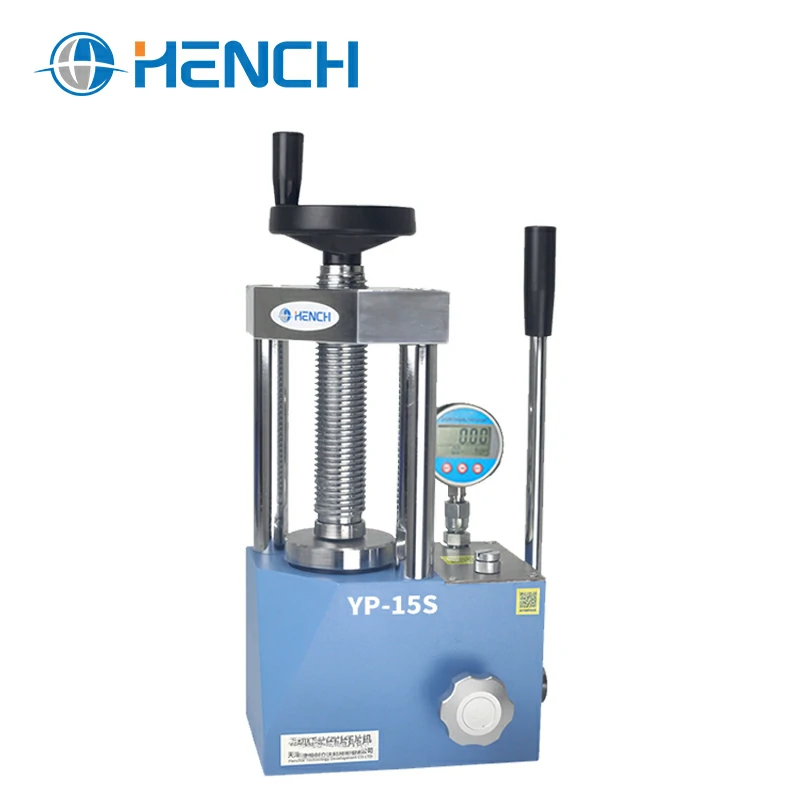
More importantly, verifying the internal quality of a complex AM part with a lattice structure or internal cooling channels can be extremely difficult using non-destructive testing (NDT). By applying HIP as a standard step, manufacturers can have a much higher degree of confidence that the internal structure is sound, even in areas that are difficult to inspect. This process assurance simplifies the quality control chain. The thoroughness of such processes often requires advanced lab equipment, and for tasks like preparing material samples for microscopic analysis, a high-quality manual lab press is an indispensable tool for metallurgists.
Case Study: 3D-Printed Medical Implants
A powerful example is the production of orthopedic implants, such as acetabular cups for hip replacements. AM allows for the creation of implants with a porous lattice structure on the surface that mimics the structure of bone. This 'osseointegrative' surface encourages the patient's own bone to grow into the implant, creating a strong, stable, long-term biological fixation.
However, the solid, load-bearing core of that same implant must be fully dense and possess excellent fatigue resistance to withstand millions of walking cycles over the patient's lifetime. The challenge is that the AM process that creates the porous surface can also leave behind unwanted porosity in the solid core.
The solution is HIP. The HIP cycle completely densifies the solid core of the implant, guaranteeing the high fatigue strength required for long-term in-vivo performance. At the same time, because the surface lattice structure is open and interconnected (surface-connected porosity), the HIP gas penetrates this network, and it is not crushed. The process selectively densifies the solid sections while leaving the functional porous surface intact. This elegant outcome—a solid core with the strength of forged titanium and an integrated porous surface for bone ingrowth—is a perfect demonstration of how HIP enables advanced biomedical designs that were previously impossible.
Advantage 5: Enabling Solid-State Diffusion Bonding of Dissimilar Materials
Beyond healing defects in a single material, Hot Isostatic Pressing offers a unique and powerful capability: the ability to join different materials together in the solid state through a process called diffusion bonding. This opens up a world of possibilities for creating novel, multi-material components with properties tailored to specific locations and functions. This capability is one of the more advanced hot isostatic pressing advantages, moving beyond simple densification into true materials engineering.
The Magic of Joining Materials Without Melting
Traditional joining methods like welding or brazing rely on melting. A filler material is melted, or the edges of the base materials themselves are melted, to fuse them. This melting and subsequent re-solidification can create a host of problems: brittle intermetallic compounds at the interface, residual stresses from thermal expansion mismatch, and a heat-affected zone (HAZ) where the properties of the base materials are degraded.
Diffusion bonding via HIP avoids these issues entirely. The process joins materials below their melting points. Here’s how it works: Two or more carefully prepared components, made of different materials, are assembled in intimate contact. This assembly is then sealed in a canister (if needed) and placed in the HIP unit. Under the HIP conditions of high temperature and pressure, the atoms at the interface of the two materials are energized. They begin to migrate, or diffuse, across the boundary. Atoms of material A diffuse into the lattice of material B, and vice-versa.
This inter-diffusion, sustained over the hold period of the HIP cycle, creates a strong, continuous metallurgical bond at the interface. There is no melting, no filler metal, and a minimal or non-existent heat-affected zone. The resulting joint can have a strength that is equal to or even greater than that of the weaker of the two parent materials. It is a true solid-state weld, creating a single, seamless component from disparate parts.
Creating Novel Components with Tailored Properties
The ability to diffusion bond dissimilar materials allows engineers to design components where the material is optimized for the local service conditions. This is the concept of a "functionally graded material."
Consider a component that needs to be extremely hard and wear-resistant on its surface but tough and ductile in its core to resist impact. Using traditional methods, one might make the entire part out of a hard material (making it brittle) or a tough material (which would wear out quickly). With HIP diffusion bonding, an engineer can create a bimetallic part. They can bond a layer of a hard tool steel or a ceramic-metal composite (cermet) onto a core of a tough, less expensive structural steel. The HIP process fuses these layers into a single, integral component that possesses the best properties of both materials, exactly where they are needed.
This technique allows for combinations that would be impossible to weld, such as bonding steel to copper, titanium to aluminum, or even metals to certain types of ceramics. The only major constraint is that the materials must have reasonably compatible thermal expansion coefficients to avoid generating high stresses during cooling.
Applications in Nuclear, Aerospace, and Tooling
This advanced capability has found critical applications in several high-tech fields.
- Tooling: In the manufacturing of cutting tools, drills, and dies, HIP is used to bond a layer of high-speed steel or carbide onto a less expensive, tougher steel shank. This creates a tool with a durable, wear-resistant cutting edge and a tough, shock-resistant body.
- Aerospace: Bimetallic turbine wheels have been developed where a high-temperature superalloy is used for the outer rim (which sees the hot gas) and is diffusion bonded to a lower-cost, high-strength steel for the central hub (which runs cooler but sees high rotational stress). This saves weight and a significant amount of expensive, strategic superalloy material.
- Nuclear: In nuclear applications, HIP is used to clad materials with corrosion-resistant layers, such as bonding a layer of zirconium alloy to a steel substrate, creating components with both structural integrity and environmental resistance.
Comparison with Traditional Welding and Brazing
To highlight the uniqueness of HIP diffusion bonding, a comparison is useful.
| Feature | HIP Diffusion Bonding | Fusion Welding (e.g., TIG, Laser) | Brazing |
|---|---|---|---|
| Process Temperature | Below melting point of parent materials. | Above melting point of parent materials. | Above melting point of filler, below parent. |
| Heat Affected Zone (HAZ) | Minimal to none; properties are preserved. | Significant HAZ with altered microstructure and properties. | HAZ is present, though often less severe than welding. |
| Material Combinations | Wide range of dissimilar materials, including metal-ceramic. | Limited by metallurgical compatibility; prone to brittle phases. | Limited by wetting and chemical reactions with filler. |
| Joint Strength | Can be as strong as the parent material. | Typically strong, but the weld and HAZ are weak points. | Strength is limited by the strength of the filler alloy. |
| Geometric Freedom | Can bond complex, large surfaces simultaneously. | Typically joins along a linear path or seam. | Requires tight joint clearance for capillary action. |
| Residual Stress | Low, due to uniform heating and cooling. | High, due to localized heating and rapid cooling. | Moderate, depends on process control. |
This table shows that while welding and brazing are excellent for fabrication and assembly, HIP diffusion bonding is a specialized process for creating integrated, high-performance, multi-material components that are simply not possible with conventional joining techniques. It represents a proactive design tool, not just a reactive assembly method.
Advantage 6: Improving Material Homogeneity and Microstructure
While the elimination of macroscopic voids is the most obvious effect of Hot Isostatic Pressing, the process also imparts subtle but profound benefits at the microscopic level. The combination of heat and pressure works to refine and homogenize the material's microstructure—the arrangement, size, and orientation of its crystalline grains. This improved microstructural uniformity contributes significantly to the predictability and isotropy of mechanical properties, representing a more nuanced but equally important aspect of the hot isostatic pressing advantages.
Refining Grain Structure Through Heat and Pressure
The microstructure of a metal is not static; it evolves in response to thermal and mechanical energy. The high temperature of the HIP cycle provides the thermal energy for processes like recrystallization and grain growth to occur.
- Recrystallization: In a cast or wrought material that contains internal stresses, the HIP temperature can allow new, strain-free grains to nucleate and grow, consuming the old, deformed grains. This results in a more uniform, equiaxed (roughly spherical) grain structure.
- Grain Growth Control: While high temperatures can cause grains to grow larger (which is often undesirable), the simultaneous application of high pressure can, in some cases, inhibit excessive grain growth. The overall HIP cycle—temperature, pressure, and time—can be tailored to achieve a target grain size.
For parts made from powder metallurgy, the HIP process is fundamental to developing the microstructure in the first place. It transforms a collection of individual powder particles into a fully dense, polycrystalline solid. The final grain size is typically very fine and uniform because it is related to the size of the original powder particles. This fine-grained microstructure is often beneficial for strength and fatigue resistance. For additively manufactured parts, HIP can help to break down the columnar grains that often form during the layer-by-layer build process, leading to a more isotropic (uniform in all directions) and favorable microstructure.
Eliminating Segregation in Castings
When a complex alloy solidifies from a molten state, the different elements in the alloy do not always solidify uniformly. Some elements may be enriched in the first parts to solidify (the dendrites), while others are pushed into the last liquid to freeze between the dendrites. This phenomenon, known as microsegregation, leads to chemical inhomogeneity on a microscopic scale. These small pockets of differing chemistry can be weak points or may melt at a lower temperature than the bulk alloy, a problem known as incipient melting.
The long hold time at high temperatures during a HIP cycle promotes thermal diffusion. Atoms have the time and energy to migrate over short distances, smoothing out these chemical concentration gradients. This homogenization process dissolves segregated phases and creates a more uniform chemical composition throughout the material. By eliminating these chemically distinct and often weaker regions, HIP further enhances the overall integrity and performance of the component, particularly its properties at high temperatures.
The Impact on Isotropic Properties (Uniformity in all directions)
Many manufacturing processes create materials with anisotropic properties, meaning their mechanical properties are different depending on the direction of testing. For example, a forged part is typically strongest in the direction of metal flow, while a rolled plate is strongest along the rolling direction. This is due to the elongation and alignment of grains and other microstructural features.
Casting and, particularly, HIPed powder or AM parts tend to have a more isotropic microstructure. The grains are typically equiaxed and randomly oriented. This means the material's properties—strength, ductility, toughness—are the same regardless of whether you pull on it longitudinally, transversely, or through its thickness. For many complex component designs, this uniformity is a significant advantage. It simplifies the design analysis, as the engineer does not have to account for directional variations in material properties. They can rely on the material behaving predictably in any orientation, which is a key benefit for parts subjected to complex, multi-axial stress states.
Microstructural Analysis: Visualizing the HIP Effect
The effects of HIP on microstructure are not theoretical; they can be directly observed. A metallurgist can take a small sample of a component before and after HIP. The samples are mounted, polished to a mirror finish, and then etched with a chemical that preferentially attacks the grain boundaries. When viewed under a high-powered optical or scanning electron microscope (SEM), the differences are striking.
- Before HIP: The micrograph of an as-cast sample might show large, dendritic grains, visible micro-shrinkage pores between the dendrite arms, and distinct regions of segregation. An as-built AM sample might show elongated columnar grains aligned with the build direction and tell-tale lack-of-fusion voids.
- After HIP: The micrograph of the same material after HIP will show a field free of any visible porosity. The grain structure will often be more refined and equiaxed. The stark evidence of segregation will be diminished, with the structure appearing much more uniform and clean.
This visual evidence is compelling. It provides direct confirmation that the HIP process has fundamentally improved the material from the inside out, creating a healthier, more robust microstructure that is ready for demanding service. The analysis itself, from cutting the sample to polishing it for the microscope, often involves equipment like a precision laboratory press to mount the sample in a polymer puck for easy handling.
Advantage 7: Enhancing Inspectability and Reducing Lifecycle Costs
While the technical improvements in material properties are the primary drivers for using Hot Isostatic Pressing, the process also delivers significant practical and economic benefits throughout a component's lifecycle. These advantages relate to improved inspectability, reduced manufacturing scrap rates, and a lower total cost of ownership, making HIP a financially sound decision for high-value components.
The Challenge of Nondestructive Testing (NDT) with Porous Materials
Once a critical component is manufactured, its internal integrity must be verified. This is done using Nondestructive Testing (NDT) methods like ultrasonic inspection or X-ray radiography. These techniques are designed to detect internal flaws like cracks, inclusions, and pores.
However, performing NDT on a component with a high level of inherent porosity is extremely challenging. In ultrasonic testing, a high-frequency sound wave is sent into the material. The sound reflects off the back wall of the part or any internal defect. In a porous material, the sound wave is scattered and attenuated by the countless small voids. This creates a "noisy" or "grassy" signal that can mask the reflection from a genuine, critical flaw like a crack. It becomes difficult, if not impossible, to distinguish the harmless background porosity from a dangerous defect.
Similarly, in X-ray inspection, the sensitivity is limited by the ability to detect a change in density. Fine, distributed porosity may not be detectable at all, yet it can still be detrimental to the part's fatigue life.
How HIP Creates a "Cleaner" Material for Inspection
HIP simplifies this problem immensely. By healing the fine background porosity, it creates a "clean," ultrasonically transparent material. After HIP, the sound waves can travel through the material with minimal scattering. The baseline signal is clean and quiet. Any reflection that now appears in the signal is highly likely to be a significant defect, such as a non-metallic inclusion (which HIP cannot remove) or a surface-connected crack.
This makes the NDT process faster, more reliable, and more sensitive. Inspectors can confidently identify and sentence true defects without the ambiguity caused by background porosity. This increased "inspectability" is a major advantage, especially for aerospace and nuclear components where the requirement for flaw detection is absolute. Some specifications even call for a part to be HIPed before final inspection for this very reason.
Reducing Rejection Rates and Scrap
In the manufacturing of high-value castings, such as large pump casings for the energy sector or complex structural components for aircraft, a certain percentage of parts will be rejected after inspection due to unacceptable levels of internal porosity. These rejections are extremely costly, representing wasted material, energy, and machine time.
By incorporating HIP as a standard step, manufacturers can salvage castings that would have otherwise been scrapped. The HIP process can heal the internal porosity, bringing the part back into specification. This ability to "heal" and reclaim high-value components dramatically reduces the overall scrap rate. While HIP adds an upfront cost to the process, this cost is often more than offset by the savings from reduced scrap, especially when dealing with components made from expensive superalloys or titanium that can be worth tens or even hundreds of thousands of dollars each.
The Economic Argument: Upfront Cost vs. Long-Term Savings
The decision to use HIP is often an economic one, balancing the cost of the process against the value it provides. The cost of HIP depends on the size of the unit, the temperature and pressure of the cycle, and the cycle time. It is not an insignificant expense.
However, the economic benefits are multi-faceted and extend across the component's lifecycle:
- Reduced Manufacturing Cost: As mentioned, reducing scrap rates can lead to direct and substantial cost savings. It also allows for the use of less expensive manufacturing processes, like casting, to produce parts with properties that approach those of more expensive forgings.
- Improved Performance and Efficiency: For components like gas turbine blades, the improved properties from HIP allow engines to run hotter and more efficiently, saving fuel over the engine's lifetime. The value of this fuel savings can far outweigh the initial cost of HIPing the components.
- Extended Component Life: The dramatic improvement in fatigue life means components last longer. This reduces the frequency of replacement, lowers maintenance costs, and increases the availability of the equipment.
- Reduced Risk and Liability: For safety-critical parts, the increased reliability and predictability afforded by HIP reduce the risk of in-service failure. The cost of a single failure—in terms of financial liability, brand reputation, and human safety—can be astronomical. From this perspective, the cost of HIP is a very small price to pay for the assurance of maximum material integrity.
When all these factors are considered, the lifecycle cost of a HIPed component is often significantly lower than that of a non-HIPed alternative. The upfront investment in quality pays dividends in reliability, performance, and long-term economic value. This holistic economic benefit is one of the most persuasive hot isostatic pressing advantages for manufacturers and end-users alike.
Frequently Asked Questions (FAQ)
What materials can be treated with Hot Isostatic Pressing? HIP is most commonly applied to a wide range of metallic materials, including nickel-based superalloys, titanium alloys, aluminum alloys, stainless and tool steels, and cobalt-chrome alloys. It is also highly effective for consolidating metal matrix composites (MMCs) and certain advanced ceramics like silicon nitride and alumina. The key requirement is that the material must have sufficient plasticity at the chosen HIP temperature to allow pores to close.
Is HIP an expensive process? HIP does represent an additional cost in the manufacturing chain. The equipment is capital-intensive, and the process consumes energy and high-purity argon gas. However, its cost-effectiveness depends entirely on the application. For low-cost, non-critical parts, it is likely not economical. For high-value, safety-critical components made from expensive materials, the cost of HIP is often easily justified by reduced scrap rates, improved performance, extended service life, and risk mitigation.
How does HIP compare to simple heat treatment? While both processes involve heating a material in a furnace, their purposes are fundamentally different. Heat treatment (like annealing, quenching, or tempering) is used to manipulate a material's microstructure to achieve specific properties like hardness or ductility, but it does so at atmospheric pressure. It cannot close internal voids. HIP, on the other hand, uses the additional force of high isostatic pressure specifically to eliminate porosity. A HIP cycle often incorporates a controlled cooling rate that can provide a heat treatment effect simultaneously, but its primary function is densification.
Can HIP change the dimensions of my part? Yes, but the change is small, uniform, and predictable. Since HIP removes internal porosity, the part will shrink slightly as it becomes denser. The amount of shrinkage is directly proportional to the volume percentage of porosity being removed. For a typical casting with 1-2% porosity, you can expect a linear dimensional shrinkage of about 0.3% to 0.7%. This is a uniform shrinkage, so the part's geometry is preserved. For precision components, this predictable shrinkage can be accounted for in the initial design of the mold or AM build file.
What is the typical cycle time for a HIP process? A complete HIP cycle, from loading to unloading, can take anywhere from 8 to 24 hours. A typical cycle for a superalloy casting might involve 2-4 hours of heating and pressurization, a 2-4 hour hold at peak temperature and pressure, and 4-8 hours of controlled cooling and depressurization. The exact time depends on the material being processed, the size and thickness of the components, and the specific thermal-mechanical goals of the cycle.
Is HIP only for new parts, or can it be used for rejuvenation? While HIP's primary use is for newly manufactured components, it also has a valuable application in life extension and rejuvenation. Components that have been in high-temperature service, such as gas turbine blades, can develop internal creep voids over time. HIP can be used during an overhaul to heal this service-induced damage, effectively "rejuvenating" the component and restoring its properties, allowing it to be safely returned to service for another operational period.
What is the difference between HIP and a hydraulic press? This is an excellent question that touches on the fundamentals of pressure application. A hydraulic press, like those used in forging or in a laboratory for sample preparation, applies a directional, or uniaxial, force. It uses hydraulic fluid to push a ram in a single direction to stamp, form, or compress a material. Hot Isostatic Pressing (HIP) is entirely different. It uses a gas medium to apply an equal, or isostatic, pressure on all surfaces of a component simultaneously. Think of the difference between squeezing something in a vise (hydraulic press) versus diving deep into the ocean where water pressure pushes on you from every direction (HIP).
Conclusion
The journey through the principles and capabilities of Hot Isostatic Pressing reveals it to be far more than a simple manufacturing step. It is a transformative technology that elevates the very integrity of engineering materials. By applying a carefully controlled regimen of heat and immense, uniform pressure, HIP performs a kind of microscopic surgery, healing the internal voids and defects that compromise the performance and reliability of components made by casting, additive manufacturing, and powder metallurgy.
The results of this process are not trivial. They manifest as dramatic increases in ductility, toughness, and, most critically, the fatigue life that governs the safety and longevity of so many modern machines. HIP closes the performance gap between cost-effective castings and expensive forgings, unlocks the true structural potential of revolutionary 3D-printed metals, and even allows for the creation of novel, multi-material components once thought impossible. It provides engineers with a more homogeneous, isotropic, and predictable material, simplifying design and inspiring confidence. The economic and safety implications are profound, reducing waste, extending service life, and underpinning the reliability of the critical technologies that define our world, from the jet engines above our heads to the medical implants that restore our quality of life. The hot isostatic pressing advantages represent a quiet but powerful force for progress in materials science, enabling the creation of stronger, safer, and more durable components.
References
Atkinson, H. V., & Davies, S. (2000). Fundamental aspects of hot isostatic pressing: An overview. Metallurgical and Materials Transactions A, 31(12), 2981–3000.
Boyer, R. R. (2006). An overview on the use of titanium in the aerospace industry. Materials Science and Engineering: A, 213(1-2), 103-114. (96)10233-1
Gessinger, G. H. (1984). Powder metallurgy of superalloys. Butterworth-Heinemann.
Harsle. (2024, November 28). The working principle of the hydraulic press machine. HARSLE. https://www.harsle.com/working-principle-of-the-hydraulic-press/
KINTEK Solution For Research. (2024, September 9). Comprehensive guide to hydraulic presses: Types, applications, and working principles. LinkedIn. https://www.linkedin.com/pulse/comprehensive-guide-hydraulic-presses-types-applications-nuecc
pressmachine-world.com. (2024, October 17). Comprehensive guide to hydraulic presses: Functionality, safety, benefits, drawbacks, and applications. https://www.pressmachine-world.com/a-news-comprehensive-guide-to-hydraulic-presses-functionality-safety-benefits-drawbacks-and-applications.html
Uhlenwinkel, V., Bolzoni, L., & Mädler, L. (2017). Powder-based additive manufacturing technologies. Advanced Engineering Materials, 19(9), 1700142.